Tuesday, April 12, 2022

REVISITING MILITARY SPENDING :WAR REENVIGORATES THE MILITARISTS WHILE DOMESTIC NEEDS GET IGNORED

(Although the essay below is old  (2012) and the argument familiar, referring to and updating the ICAN and Frank/Paul studies-see the bold text below-might provide a path to reductions in military spending. In addition the 2020 polling data, see the link below, suggests that Americans prefer “moving the money” from military to domestic needs and Barbara Lee has introduced useful legislation to do just that).

Harry Targ


“From Forrestal’s day to the present, semi-warriors have viewed democratic politics as problematic. Debate means delay. To engage in give-and-take or compromise is to forfeit clarity and suggests a lack of conviction. The effective management of national security requires specialized knowledge, a capacity for clear-eyed analysis and above all an unflinching willingness to make decisions, whatever the cost. With the advent of the semi-war, therefore, national security policy became the preserve of experts, few in number, almost always unelected, habitually operating in secret, persuading themselves that to exclude the public from such matters was to serve the public interest. After all, the people had no demonstrable “need to know.” In a time of perpetual crisis, the anointed role of the citizen was to be pliant, deferential and afraid.” (from a review of a biography of James Forrestal, the first Secretary of Defense by historian Andrew Bacevich in The Nation).

Andrew Bacevich reminds us that a permanent war economy has been part of the political and economic landscape of the United States at least since the end of World War II. The War Resisters League pie chart of total government spending for fiscal year 2013 indicates that 47 percent of all government spending deals with current and past military costs. Despite lower government estimates that mask true military spending, by adding the Social Security Trust Fund to total spending and regarding past military spending-- particularly veteran’s benefits-- as non-military, it is clear that roughly fifty cents of every dollar goes to war, war preparation, covert operations, and military contractors.

In addition “war support” contractors, such as KBR, have made billions of dollars in the twenty-first century from military spending. Top producers of military hardware, Lockheed Martin, Northrop Grumman, and Boeing earned 11, 8, and 5 billion dollars in contracts in 2010 alone. Ostensibly non-military corporations such as BP, FedEx, Dell, Kraft, and Pepsi received hundreds of millions of dollars in defense contracts in 2010. Virtually every big corporation is to some degree on the Department of Defense payroll.

A recent data-based report, “Don’t Bank on the Bomb,” prepared by the International Campaign to Abolish Nuclear Weapons (ICAN) identified “…more than 300 banks, insurance companies, pension funds and asset managers from 30 countries that invest significantly in 20 major nuclear weapons producers.” The report examined in detail financial connections to 20 major nuclear weapons companies. These 20 included US producers of nuclear weapons components such as Bechtel, Boeing, GenCorp, General Dynamics, Honeywell, and Northrop Grumman. US financial institutions investing in the nuclear weapons producers included Abrams Bison Investments, AIG, American National Insurance Company, Fidelity, Franklin Templeton, JP Morgan Chase, New York Life, and Prudential Financial.

Because of the economic crisis which began in 2007, debate about military spending has increased. In 2010 Congressmen Barney Frank and Ron Paul initiated a study addressing needed cuts. The report prepared for them in 2010, “Debt, Deficits, and Defense,” called for across the board reductions in spending-procurement, research and development, personnel, operations and maintenance, and infrastructure--of $960 billion over the next decade. The report noted that over the last decade 65 percent of federal discretionary spending went to the military.
(For a July, 2021 legislative proposal for cutting military spending see Congresswoman Barbara Lee’s press release below.*)

President Obama last January proposed more modest spending cuts of $480 billion over the next decade (reductions in projected increases not existing funding). He coupled announcement about future spending with a firm statement that the world must realize that the United States remains committed to maintaining its military superiority. The President indicated that spending reductions in the future will be tied to greater use of “special operations,” drones, and shifting existent forces from Europe to Asia.

The magnitude of military spending represents what Bacevich referred to as the permanent war economy articulated and defended by the “semi-warriors” dominating U.S. foreign policy in each administration since World War II. These semi-warriors gained influence after the Truman Administration accepted recommendations in National Security Document Number 68 (1950), which recommended that defense spending should always have priority over all other government spending. NSC 5412, approved by President Eisenhower, gave legitimacy to covert operations around the world allowing any president to “plausibly deny” any connections with such operations. Subsequently virtually each president proclaimed a doctrine--Eisenhower for the Middle East, Carter for the Persian Gulf, Reagan to rollback “the evil empire,” Clinton for “humanitarian interventions” and Bush for “preemptory attacks”-- justifying more and more military spending.

The Obama administration, through speeches and actions has constructed what might be called “the Obama Doctrine.” First, as the last remaining superpower and the beacon of hope for the world, the United States once again reserves the right and responsibility to intervene militarily to enhance human rights around the world. Second, U.S. humanitarian military interventions will be carried out from time to time with our friends. Third, new technologies such as drones will allow these interventions to occur without “boots on the ground.” They will be cheaper in financial and human cost (mostly for American troops). Finally, assassinations and covert killings have made it clear that the Obama Doctrine overrides recognized judicial proceedings and the sanctity of human life.

Since the establishment of the permanent war economy in the 1940s millions of proclaimed “enemies” have been killed and seriously injured, mostly in the Global South. Permanent physical and psychological damage has been done to U.S soldiers, predominantly poor and minorities as they too are victims of war. In addition, military spending has distorted national priorities and invested U.S. financial resources in expenditures that do not create as many jobs as investments in construction, education, or healthcare. And the permanent war economy has created a culture that celebrates violence, objectifies killing, dehumanizes enemies, and exalts super-patriotism through television, music, video games, and educational institutions.

These issues need to be more vigorously related to those raised by the grassroots campaigns that have sprung up to defend worker’s and women’s rights, oppose growing income and wealth inequality, and defense of working people’s homes from foreclosures. A long time ago in reference to the massive U.S. war in Southeast Asia and desperate needs of workers at home Dr. Martin Luther King described the fundamental connections that peace activists and all progressives must pursue: “I speak of the poor of America who are paying the double price of smashed hopes at home, and death and corruption in Vietnam.”

**************************************************************************

Polling data from 2020 suggests that a majority of the American people prefer reallocating military spending for domestic purposes.
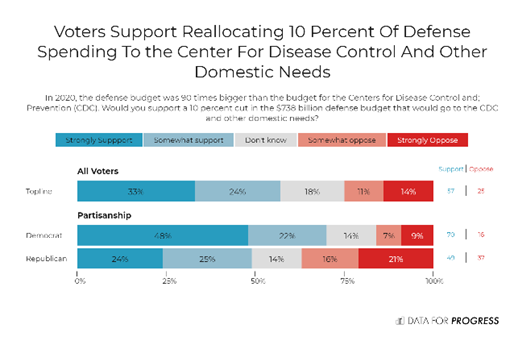

https://www.dataforprogress.org/blog/2020/7/20/cut-the-pentagons-budget

*********************************************************************


*CONGRESSWOMAN BARBARA LEE INTRODUCES LEGISLATION TO CUT $350 BILLION FROM PENTAGON BUDGET

June 16, 2021

Washington, D.C. – Congresswoman Barbara Lee (CA-13) recently introduced legislation detailing up to $350 billion in cuts to the Defense budget. Congresswoman Lee released the following statement:

“As we continue to fight a pandemic and economic crisis that has pushed millions into poverty, it’s clearer than ever that a bloated defense budget does not meet our national security needs. Instead of wasting billions of dollars on forever wars around the globe, we should be investing in housing, education, food assistance, clean water for our communities, as well as work to strengthen our diplomatic ties. 

“Over the past two decades, the United States has designated approximately $6.4 trillion toward military operations. For this year alone, the Pentagon’s budget totaled $740.5 billion, which proved to be ineffective in addressing the true national security threats we face today, including an unprecedented public health crisis and economic crisis.  

“Analysis shows that we can significantly reduce our defense spending without sacrificing our national security or reducing the support for our service members. As Co-chair of the Defense Spending Reduction Caucus, I’m leading this effort to redefine our nation’s priorities and work toward a more peaceful and prosperous world.”  

This legislation's proposals include: 

·         Cutting private service contracting by 15% to save $26 billion 

·         Eliminating Space Force to save $15.2 billion 

·         Cutting unnecessary, obsolete, and excessive weapons systems to save $57.9 billion 

Wednesday, April 6, 2022

DEFENDING ACADEMIC FREEDOM AND DISCUSSIONS OF RACISM, SEXISM, AND THE FUNDAMENTALS OF THE ECONOMIC AND POLITICAL SYSTEM

 Harry Targ

“To gauge student perception of free speech on Indiana’s public college campuses, the Indiana Commission for Higher Education will launch a survey to college students on April 5. The survey will be open throughout the month of April and will ask students to answer questions about free speech and academic freedom at Indiana public college campuses. Indiana Commission for Higher Education.” (Wednesday April 6, 2022, Purdue Today).

****

(With the return to colleges and universities for the fall, 2016 term, the issues of academic freedom have reappeared in the mainstream media. Recently a story was published about a letter the University of Chicago sent to its incoming students warning that all discourse was fair game, that “safe spaces” and warnings of uncomfortable subjects would not be encouraged in the classroom. The hallowed idea of academic freedom was justified by University of Chicago authorities and echoed by administrators at various universities. Ironically, as the essay posted below suggests, academic freedom has always been constrained or censured in higher education, not by radical students demanding more attention and sensitivity to issues of class, race, gender, sexual preference, and violence at home and abroad, but those who oppose such discussions. The defenses of academic freedom today are designed to stifle the demands for open discussion on these issues rather than encourage them. Harry Targ, September 8, 2016).

****

 The essay below was posted originally in 2015.With the creation and distribution of a survey of “student perception of free speech” one wonders if the intent of the survey is really about Indiana political institutions and university administrators seeking to censor vibrant discussion in colleges and universities of issues critical to future generations under the guise of free speech and academic freedom. April 6, 2022).

*****                                                          


THE UNHAPPY MARRIAGE OF POLITICAL CONTROL AND ACADEMIC FREEDOM IN HIGHER EDUCATION

Harry Targ

December 1, 2015

And at college after college in recent years, students have rallied to block appearances by speakers whose views don’t jibe with current campus orthodoxy. Most of those speakers are conservatives. (Rem Rieder, “Campuses Need First Amendment Training,” USA Today-Journal and Courier, November 29, 2015, 8B).

Stories about academic freedom and free speech have been appearing in newspapers more frequently over the last few weeks. And curiously enough political actors on and off campus who traditionally have been least likely to be concerned about these subjects are becoming its major advocates. 

Historically, universities, like most institutions in society, have been designed by and served the interests of the dominant powers. Higher education in the United States from the seventeenth century until the civil war educated theologians and lawyers to take leading positions in the political and economic system. As the nation was transformed by the industrial revolution, universities became training grounds and research tools for the rise of modern capitalism. Young people, to advance the needs of  the changing economic system, were educated to be scientists, engineers, mathematicians, and managers. Economists were produced to develop theories that justified the essential features of capitalism. 

After the rise of the United States as a world power in the twentieth century, higher education increasingly included studies of international relations, weapons systems, and the particular mission of powerful nations in the world. In sum, the historical function of the American university since the 1860s has been to mobilize knowledge and trained personnel to service a modern economy and a global political power.

The conception of the university articulated by intellectuals through the centuries, however, also implied a space where ideas about scientific truths, engineering possibilities, ethical systems, the products of culture, and societal ideals would be discussed and debated (these were to include unpopular ideas). During various periods in United States history, during and after the Spanish-American War, the Progressive era, World War I and its aftermath, the Great Depression, and the Vietnam War era, for example, the university became the site for intellectual contestation. But during most periods of United States history controversial ideas introduced in the academy by faculty or students were subject to repression, firings of faculty, and expulsion of students. This was particularly true during World War I and the depths of the Cold War. 

It was out of the many forms of repression that faculty and student associations advocated for the idea of academic freedom. Articulated by philosopher John Dewey early in the twentieth century and formalized by the American Association of University Professors (AAUP), the principle, not the practice, was enshrined in official statements by both university administrators and faculty.

Despite the broadly endorsed tradition faculty were purged from universities during the 1940s and 1950s, not primarily because of their teaching and research activities, but because of alleged political associations off campus. Others were fired or did not have contracts renewed because their teaching and research challenged reigning orthodoxies about economics, politics, and war and peace. In the 1960s, universities sought to restrict the free speech rights of students as well. 


For a time as a result of the tumult of the 1960s, universities began to provide more space for competing ideas, theories, approaches to education, and allowed for some discussion of fundamental societal problems including class exploitation, racism, sexism, homophobia, and long-term environmental devastation. 

But by the 1990s, reaction against the expanded meaning of academic freedom set in. The National Association of Scholars was created by political conservatives to challenge the new openness in scholarship and debate on campus. Right-wing foundations funded David Horowitz to launch a systematic attack on faculty deemed “dangerous.” Horowitz unsuccessfully tried to organize students to lobby state legislators to establish rules impinging on university prerogatives as to hiring of faculty and curricula. Politicians targeted scholars deemed most threatening including such noted researchers and teachers as Howard Zinn, William Ayers, Ward Churchill, and Judith Butler. The attacks of the last decade were based more on the ideas which “dangerous” professors articulated than their associations.

Since the upsurge in police violence against African Americans and terrorist attacks on Planned Parenthood, and rising Islamophobia and homophobia, a new generation of student activists has emerged challenging violence, racism, sexism, and homophobia. Students have protested against police shootings everywhere and they have linked the general increase in violence and racism to the indignities they suffer on their own campuses. 

In response to the events at the University of Missouri, student activists around the country have brought demands to administrators challenging the many manifestations of racism and other indignities experienced at their schools. The response at almost all colleges and universities has not been to address the demands raised by students but instead to change the discourse from the original issues to the protection of academic freedom and free speech. In other words, university administrators and media pundits, as the quote above suggests, have swept student complaints under the rug and have used the time-honored defense of academic freedom and free speech to ignore the reality of racism, sexism, and homophobia. The defense of free speech has become a smokescreen. 

Academic freedom and free speech must be defended. But it must be understood that today those who most loudly defend them are doing so to avoid addressing the critical issues around class, race, gender, homophobia, and violence that grip the nation and the world. 

**************************************************************************

Time will tell whether surveys of university students in Indiana and elsewhere in 2022 will be used by administrators and state politicians to stifle dissent in the name of “free speech.” It is of the utmost importance for those interested in preserving the sanctity of the colleges or universities as places for the discussion of serious ideas to remain vigilant about these surveys and how they are used.


Saturday, April 2, 2022

DELUSIONS AND UNITED STATES FOREIGN POLICY: Fantasies Continue

American leadership is what holds the world together. American alliances are what keep us, America, safe. American values are what make us a partner that other nations want to work with. To put all that at risk if we walk away from Ukraine, if we turn our backs on Israel, it’s just not worth it…We are, as my friend Madeleine Albright said, the indispensable nation. (Joe Biden, New York Times, October 19, 2023).

America’s destiny required the U.S. “…to set the world its example of right and honor…We cannot retreat from any soil where providence has unfurled our banner. It is ours to save that soil, for liberty, and civilization….It is elemental...it is racial. God has not been preparing the English-speaking and teutonic peoples for a thousand years for nothing but vain and idle self-contemplation and self-admiration. No! He has made us the master organizers of the world to establish system where chaos reigns. He has given us the spirit of progress to overwhelm the forces of reaction throughout the earth.” Senator Albert Beveridge, Indiana, Congressional Record, 56 Congress, I Session, pp.704-712, 1898).


********************************************************

An earlier version was reprinted in Portside

Harry Targ, Stephen David

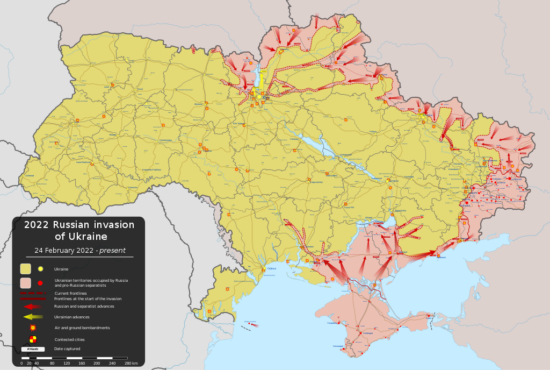
The brutal war in Ukraine continues. Russia attacks targets in various parts of the country, mostly in the South and East. Ukrainians and Russian soldiers die. Millions flee the violence as the  physical landscape of cities and towns are destroyed. And neither Russia, Ukraine, or NATO/the United States appear to engage in any serious negotiations to end the violence.

Meanwhile military spending in the United States and Europe increase at the expense of desperately needed social programs and transformations from economies based on fossil fuels. Presumably the Russian military/industrial complex (and perhaps the Ukrainian military establishment) experiences boosts in resources and legitimacy as is occurring in the west. And on all sides the mass media and cultural and educational institutions spin narratives about the righteousness, glory, and the efficacy of policy of the country from which the narratives are produced.

Spokespersons from the United States government and the US corporate media particularly have produced and disseminated stories about aspects of the Ukraine war that together constitute a series of interconnected delusions about the context and causes of the war in Ukraine; the US/NATO response; the deleterious impacts of the war on the Russian invaders; and, most importantly, the immediate and long-term impacts of the war on international affairs. A delusion is "an idiosyncratic belief or impression that is firmly maintained despite being contradicted by what is generally accepted as reality or rational argument."

If one goes beyond the US/Western corporate media and if one gives serious thought to the historical logic of such narratives it would be clear that core premises of US/NATO policies are delusional.

For example, there are at least seven kinds of delusions that are broadly accepted and/or articulated by the US government and the corporate media.


Delusion number one  is that the United States can reproduce the coalition of hegemonic forces that existed after World War 2. It is clear that the US Cold War international system cannot be replicated. After World War 2, the United States, the overwhelmingly hegemonic economic and military power,  institutionalized a world order based upon economics (the Bretton Woods system, the Marshall Plan, the subsequent development of the European Economic Community and the European Union),  military dominance (from the construction of the NATO alliance to a worldwide network of alliances, bilateral treaties, and military bases), and an ideology (the “free world versus communism” or in our own day “democracy” versus “authoritarianism”). While this hegemonic goal - economics, military and ideological - was never fully achieved it has been whittled away by multiple poles of economic power (particularly the rise of the Chinese economy), a declining ability of the United States to control the world militarily (as evidenced historically by military defeats from Korea, Vietnam, Afghanistan, Iraq, and even in the Western hemisphere), and growing global skepticism about what the United States means by “democracy.”

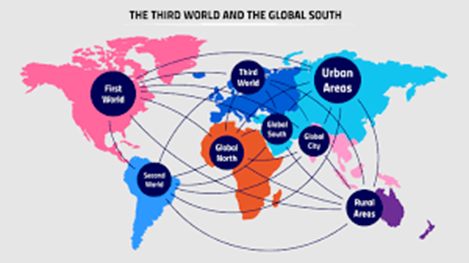
Delusion number two  suggests that the United States can remain the global hegemon. Here again any number of writers, and more importantly key leaders from countries in Europe, Asia, and throughout the Global South see the United States as a declining power economically, militarily, and politically. As the Ukraine crisis has unfolded many voices from the Global South have evidenced indifference to what appears to be a “white people’s war” that is being  used  to increase demands for fundamental changes in global economics and politics. Many around the world see the conflicts in Eastern Europe as a manifestation of the breakdown of North American and European power and control of what goes on in their countries. The most significant takeaway from the United Nations General Assembly resolution condemning the Russian intervention in Ukraine is the fact that 35 countries abstained in the vote; not only African and Asian countries but several from the Western Hemisphere. The population of those countries constituted about one-third of the population of the world. Not too long ago a loose coalition of big powers, the BRICS, began dialoguing about making modest demands for changes in power dynamics in global institutions and practice. Witnessing greater underdevelopment in developing countries instead of the promise of development, BRICS began charting a course not entirely dependent on the World Bank, IMF, and World Trade Organizations. While the BRICS (Brazil, Russia, India, China, and South Africa) talks have stalled, it is expected (particularly after upcoming elections in Brazil) they will resume. Some modest redistribution of decisioning power in major international institutions is in the air.

Delusion number three is that the United States can intimidate China. Since the 1980s, China has steered an economic course that involves encouraging foreign investment, utilizing technologies derived from these investments, and adopting an economic development model incorporating advanced capitalism and appropriate state controls. Not only is China about to surpass the United States in its gross domestic product but in its progress it has lifted 700 million Chinese out of poverty. And in terms of China’s global presence, it is establishing more attractive economic relations with nations all across the globe. Through its Belt and Road Initiative for example, China has already become the largest trading partner with the countries of Latin America. In this context, media reports of US threats if China maintains economic ties with Russia are matters of bluster and of little consequence.


Delusion number four is that the countries of the global south support the United States. Given the declining relative power of the United States on the global stage, the rising economic influence of China on the world stage, and the history of United States interference, (from sanctions to soldiers) in the affairs of other countries and peoples, nations of the Global South see the United States as the latest, perhaps last, imperial power. As V J Prashad pointed out, “all war is criminal” - both ‘hot’ and ‘cold’ wars. Therefore, economic exploitation and political interference in the  Global South is increasingly viewed with disdain and discomfort. Again, this disdain is suggested by the number of countries that refused to condemn the Russian invasion of Ukraine in the recent General Assembly vote. Yet despite such clear signs the US media continues to praise US sanctions against Cuba, Venezuela, Nicaragua, Syria, Afghanistan, Iran, and now Russia, without discussing the horrific impacts these sanctions have on ordinary people in these countries. Nor does the media report that the United States and the European Union currently have some kind of sanctions imposed on 39 nations. Sanctions alone make it very unlikely that victimized people from the Global South regard the United States with respect and admiration.*And alternative forms of payment and paths for international trade will be the logical outcome of weaponizing trade and the banking system.


Protesters demonstrate against police brutality in Nairobi, Kenya, on June 8, 2020. The protest against police brutality in Kenya was in support of the Black Lives Matter movement and in response to the recent killing of George Floyd by police officers in Minneapolis. 

Delusion number five is that the United States remains the ‘indispensable nation,” the “last resort,” the model of democracy and market economies for the world. For the reasons suggested above and the demonstrable racism, violence, environmental disasters more frequently associated with the United States itself (while admired for certain achievements such as in education and science) most global citizens regard the US as a failed state, surely one not to emulate. More recently the overbearing, unfair, and restrictive moves against Chinese competitive strength in the form of banning Huawei’s 5G technology and Tiktok compromises the notion of free-market fairness and a just global economic world order. The “American Dream” begins to morph into a hollow specter in the global context. Together they mark an unmistakable decline.

Delusion number six is that the United States cannot learn from others: Cuba, China, peoples on the Africa continent and elsewhere. It has historically been central to the consciousness of the hegemonic actors in the world, the imperial powers, that they are and can be the exemplars and teachers; and, the countries that have been conquered and/or been impoverished have nothing to teach the powerful and only have to follow. Meanwhile examples of alternative healthcare delivery systems, adaptations to the natural environment, or forms of workplace democracy in less powerful nations are ignored.

Cuban doctors travel around the world to help cure pandemics.

And delusion number seven suggests that global hegemony can be maintained or achieved without major (indeed nuclear) war and/or climate disaster. This is the most dangerous delusion because it suggests that the powerful countries can proceed with their drive to dominate without increasing the risk of nuclear war or speeding up the destruction of nature.

Therefore, one project the peace and justice movement in the United States and hopefully with peace and justice activists around the world can do is to challenge the delusions articulated by American and European leaders and to challenge the mythologies that are deeply embedded in the corporate media. And now, this includes developing an historically grounded analysis of the Ukraine war; one that denounces the initiation of the war but understands the history and mythologies that undergird it. With such understandings we can only improve our chances for a sounder basis for peace.


*Countries facing economic sanctions include: 1. Afghanistan, 2. Belarus, 3. Bosnia and Herzegovina, 4. Burundi, 5. Central African Republic, 6. China (PR), 7. Comoros 8. Crimea Region of Ukraine> 9. Cuba, 10. Cyprus, 11. Democratic Republic of the Congo, 12. Guinea, 13. Guinea Bissau, 14. Haiti, 15. Iran, 16. Iraq, 17. Kyrgyzstan, 18. Laos, 19. Lebanon, 20. Libya, 21. Mali 22. Mauritania 23. Moldova 24. Montenegro 25. Myanmar, 26. Nicaragua, 27. North Korea - DPRK, 28. Palestinian Territories, 29. Russia, 30. Rwanda, 31. Serbia 32. Somalia, 33. South Sudan, 34. Sudan, 35. Syria, 36. Tunisia 37. Venezuela, 38. Yemen, 39. Zimbabwe. https://sanctionskill.org/wp-content/uploads/2020/03/39SanctionedCountries3.pdf

Harry Targ is a long-time peace activist, writer, and teacher of courses on United States foreign policy. Stephen David is also a long-time peace activist, cultural critic, and participant in the struggles against apartheid in South Africa.


Patrick Chura, Mike Gold: The People’s Writer, SUNY Press, 2020.

Book Review: Socialism and Democracy, March 15, 2022

Harry R. Targ


Examining the Life of a Radical Writer: Mike Gold

    Mike Gold, was a literary critic, novelist, playwright, journalist, who learned his politics in the era of the construction of various radical movements-anarchist, socialist, syndicalist-in the context of being born and raised in impoverished tenements in the Jewish sector of the Lower East Side in New York City. In his mature years, he became a member of the Communist Party USA as editor of the New Masses and columnist in the Daily Worker. During this period he developed and articulated a critical stance and a more or less systematic analysis of the relationship between politics and art. He is credited with initiating an artistic genre he called "proletarian literature."

  Gold was born as Itzok Granich in 1893 in New York City. He attended school until the eighth grade, took one year of journalism courses at New York University (1912-1913), and spent one year as a special student at Harvard University in 1914. He published in the political magazine edited by Floyd Dell and Max Eastman, The Masses, and in the newspaper, The New York Call. Also he wrote three one-act plays that were performed by the Provincetown Players in 1916, 1917, and 1920. He spent time in Mexico during World War One to avoid the draft and upon return and in the atmosphere of the Red Scare of the early 1920s changed his name to Mike Gold. In 1920 he became the editor of The Liberator after The Masses was closed down by the government. In 1926 he became editor of the successor of The Liberator, The New Masses, (in the literary orbit of the Communist Party) which he edited for twenty years. In 1933 be began writing a column for the Daily Worker. His contributions to the Daily Worker continued until his death in 1967. Perhaps, most significant in Mike Gold's left literary career was the publication of his partially fictionalized account of growing up in the poverty of the Jewish tenements at the dawn of the twentieth century in his famous "proletarian novel," Jews Without Money. Mchael 

  Michael Folsum, a editor of one of three anthologies of his essays and columns wrote of his life, that Gold was a man who

   "... spent his literary life, as a Communist and a revolutionary, working to build socialism in America. There were lots of people who did that, once upon a time. But Gold stuck it out. He died a little tired after the ravages of the McCarthy period, and a little cynical after many a disappointment, like the truth about Stalin, the ‘Moscow trials,’ the defection of so many old comrades. But he died still holding to the dream of his youth."[1]

 On Proletarian Literature

   Mike Gold spent a career in class struggle and in contestation about what was "good art." In 1921 Mike Gold published an essay in The Liberator called "Towards Proletarian Art." In 1930, Gold published a series of remarks elaborating on the theme of the earlier article in The New Masses. This article in the Folsom anthology was given the title "Proletarian Realism.

   In the first essay, Gold presents a world in turmoil, one in which the demise of capitalism seems eminent. While this prediction in retrospect seems foolish, Gold reminds his readers of how pervasive the resistance to change is. "We have been bred in the old capitalist planet, and its stuff is in our very bones. Its ideals, mutilated and poor, were yet the precious stays of our lives. Its art, its science, its philosophy and metaphysics are deeper in us than logic or will....We cling to the old culture, and fight for it against ourselves." [2] Then, Gold offers a project for the artist to produce works that help people see the possibilities of the new in the bedrock of the old. And the old includes vivid renditions of the reality of human existence not some abstractions about "human nature," "good and evil," "the nature of beauty and love" or other images so common to artistic creation.

   For Gold, himself, it was most significant that "I was born in a tenement....It was in a tenement that I first heard the sad music of humanity rise to the stars...There, in suffering youth, I feverishly sought God and found Man....I saw him ,not as he has been pictured by the elder poets, groveling or sinful or romantic or falsely god-like, but one sunk in a welter of humble, realistic cares; responsible, instinctive, long-suffering and loyal; sad and beaten yet reaching out beautifully and irresistibly like a natural force for the mystic food and freedom that are Man's."

 Gold claims that all he knows comes from the tenements. He saw the compassion of mothers and fathers for their young, the courage of the sick factory worker, the children finding pleasure in the playing of fanciful games in the dark tenement hallways. Gold claims: "The tenement is in my blood. When I think it is the tenement thinking. When I hope it is the tenement hoping. I am not an individual; I am all that the tenement group poured into me during those early years of my spiritual travail."[3]

  Gold argues that artists born in tenements should not have to apologize for it or go beyond the experience and indeed should not forget it. For what is art but "...the tenement pouring out its soul through us, its most sensitive and articulate sons and daughters." Because life for us, he said, "...has been the tenement that bore and molded us through years of meaningful pain."[4]

  Gold contends that the artist has assumed the egoistic, solitary, and even competitive individual stance that comports with capitalism. As individual artist, she or he, combated with God, then Reason, then logic, so that now he wrote, "they have turned to the life of the moods..."Most critically "intellectuals have become contemptuous of the people..." "The people live, love, work, fight, pray, laugh; they accept all, they accept themselves, and the immortal urgings of Life within them. They know bread is necessary to them: they know love and hate. What do the intellectuals know?"[5] For Gold, the artist must root herself/himself in the life of the people.

 A Biography of Mike Gold

    Patrick Chura in Mike Gold: The People’s Writer, SUNY Press, 2020, does a wonderful job developing the life and times of Mike Gold. He highlights the context in which Gold lived and learned his radicalness; powerfully described in Gold’s under-appreciated novel, Jews Without Money. Not only does the novel help us understand the class and ethnic background that shaped Gold but it provides a window into Gold’s idea of proletarian literature, a concept he invented and promoted throughout his life in and around the left.

    Since older radicals were educated during the depths of the Cold War and anti-communism, their exposure to literature was framed by a “canon” which denied the value of  any fiction, poetry, drama or visual arts that which reflected upon the lived experiences of really existing working people and the exploited in general. Literature was judged by the interiority of the text, not the contexts in which fictional characters resided. To challenge this bourgeois conception of art, Gold spent a lifetime of activism.

    In addition to developing the centrality of Gold’s advocacy of proletarian literature, Chura provides us with a rich textured and sympathetic narrative of Gold’s life. Through it the reader is exposed to much of the literary left of the first half of the twentieth century: The New Masses, Floyd Dell, Max Eastman, Eugene O’Neil, John Reed, and others from The Masses. Later as a literary icon, editor of The New Masses, literary spokesperson for the Communist Party USA, and member of its John Reed Clubs, Gold was close to writers such as Richard Wright, John Dos Passos, and James T.Farrell. And, almost paradoxically, Chura touchingly describes Gold’s longstanding friendship with Dorothy Day even though their politics moved in different directions fro the end of World War One and the 1930s.

    Reading Chura is like reading a history of the literary left of the first half of the twentieth century and particularly giving rich examples of what Michael Denning called “The Cultural Front.”  And as the biographer points out, the lessons young Itzok Granich learns in the seamy tenements of New York city formed the basis of his politics and his lifes’ work as a writer.

    And Chura does not shy away from understanding, and probably embracing Gold’s advocacy of art forms that speak to and speak from the working class. The biography addresses the inextricable connections between the arts and the times in which they are produced: from the high tide of bourgeois art in the “roaring twenties,” to the art borne of economic misery in the 1930s, to the virulent anti-communism and the new criticism characteristic of  post-World War America. And throughout all this time and the varied political struggles of each generation Gold remained committed to artistic creations that spoke to and about the working class, the downtrodden, the victims of racism and sexism. And it is to this stance that the political culture of the 1960s and beyond makes sense. Perhaps the most important takeaway of this fine biography of Gold is that art and culture matter. The arts can give voice to human needs, can inspire political activism, and can speak truth to power.

    The only addition I would have preferred would have been a richer description of Gold’s relationship to the Communist Party, connections between party decisions and the content of The Masses, and Gold’s concrete role with the John Reed Clubs. Was Gold’s practice independent of the Party or a byproduct of Party decisions on matters of culture and the arts?


(For a rich grounding of Mike Gold’s work in the context of working class literature, politics, anti-racism, and immigrant experiences see Benjamin Balthaser, “Mike Gold, the Writer Who Believed Workers Could Speak for Themselves,” Jacobin, July 12, 2021. https://www.jacobinmag.com/2021/07/mike-gold-literature-jewish-american-proletariat-red-left)


    [1]Michael Folsom ed., Mike Gold: A Literary Anthology, International Publishers, 1972, 7-8.


    [2] Folsom 62.

    [3]Folsom, 64-5.

    [4]Folsom 65.

    [5]Folsom, 66.

Monday, March 28, 2022

WAR AND PEACE | Reflections on the War in Ukraine


HARRY TARG 

from The Rag Blog

Russian invasion of Ukraine / Viewsridge / Creative Commons.

By Harry Targ | The Rag Blog | March 10, 2022

Many of us in the peace movement have had useful conversations (and debates) stimulated by the war on Ukraine. We are discussing the causes of the invasion of Ukraine by Russia, both immediate and historical, and how the peace movement should respond to this important crisis.

I commend the Oliver Stone documentary to all as one detailed and informed narrative of a very complicated Ukrainian history. An important element of Stone’s narrative is the role of Ukrainian neo-fascists who were prominently active in the 2014 coup against the elected Ukraine government. These descendants of World War II neo-Nazis, Stone claims, now serve in the Ukraine army.

Also, most accounts of the Ukraine crisis today ignore the extraordinary expansion of NATO in the 1990s and the 2014 coup against the elected government of Ukraine carried out with the covert support of the United States. Including this in the accounts today adds important context, not for determining good guys and bad guys, but for figuring out what should be done and where peace forces should stand. And to be clear reflection on this context does not deny the immoral and inhumane Russian invasion of Ukraine.

My takeaways so far are the following:

1.Russia has fallen into a trap that will significantly and negatively impact on its economy. It also reduces Russian influence around the world and undermines Russia’s renewed economic ties with countries in the Western Hemisphere.

2.The invasion gives fuel to the emerging anti-China Cold War rhetoric for politicians of both parties and the corporate media who suggest that Taiwan will be next, presumably after a Chinese invasion.

3.The Ukraine war is an enormous plus for military/industrial complexes in the US and in Russia as well.

4.The Ukraine story transforms the global narrative from the critical discussion of exploitation by the Global North of the Global South to the Biden narrative of “authoritarians” vs. “democracies.” For example, see the powerful presentation by V J Prashad of the essential nature of the North/South struggle.

5.The impacts of the debate on progressive forces in the US and elsewhere are potentially devastating. In the US, our discourse is shifting from a progressive agenda including President Biden’s Build Back Better program for example to stories about the relationships between Putin and former President Trump and so-called “national security.”

Biden’s State of the Union address reflects his “shift to the center.” Now we have a cause all Americans can get behind: opposing the Russians. (I am reminded how the Soviet menace in the 1940s was used to defang CIO militancy, the drive for free health care, Henry Wallace’s call for US/Soviet dialogue and, of course, civil rights for all).

I think the Russian invasion and the incomplete and war-oriented narrative of the Ukraine crisis dominating the news from such sources as the Washington Post, The New York Times, National Public Radio, and CNN/MSNBC constitute a real setback for us. Media news is a commodity. War and portraits of American exceptionalism are profitable commodities for the increasingly concentrated corporate media.

For these reasons and more, I endorse the Code Pink demands that Russia withdraw its troops from Ukraine and the United States and its allies pull back NATO forces from their presence in Eastern Europe. In addition, diplomatic efforts should ensue to replace NATO with an organization that can provide security for Europe and the Global South. The Code Pink frame gives appropriate recognition to both the immorality of the Russian action and the context, including NATO expansion and the events in Ukraine since 2014.

Finally, I want to reintroduce the concept of “historical memory.” These memories are important for people and they are legitimate ways to think about what needs to change. The historical memory for many Russians probably includes the 27 million of their ancestors killed during World War II largely from invading German armies crossing through Ukraine. I assume that if I were a Russian such a memory would affect how I think about the world. I know from experience how deeply the Holocaust still affects Jewish people even today.

So peace activists will continue to debate root causes of this senseless war and what to do about it. But for now as Cold Pink and others demand: Stop the War, Withdraw Russian Troops From Ukraine, Reverse the Extension of NATO.

The Bookshelf

CHALLENGING LATE CAPITALISM by Harry R. Targ

Challenging Late Capitalism