Monday, June 10, 2024

D Day Hoopla is An Example of “Cognitive Warfare”

Harry Targ


(The recent visit of President Biden to the beaches of Normandy reflects the continued efforts of presidents to rewrite World War 2 history to celebrate the achievements of “democracy” over “authoritarianism.” The speech, however, reflects the ongoing “cognitive war” to convince the US citizenry, if not the world’s, of the special virtues of the United States and to proclaim:

 “Here we proved the forces of liberty are stronger than the forces of conquest.  Here we proved that the ideals of our democracy are stronger than any army or combination of armies in the entire world. “


And he pridefully reported that  “We established NATO, the greatest military alliance in the history of the world.  And over time … we brought more nations into NATO — the NATO Alliance, including the newest members: Finland and Sweden. …

Today, NATO stands at 32 countries strong.  And NATO is more united than ever and even more prepared to keep the peace, deter aggression, defend freedom all around the world.” 


As the material below suggests the Soviet Union and its Red Army bore the brunt of the war in Europe from its outset, while the allied leaders, Winston Churchill and Franklyn Roosevelt, postponed the invasion of Europe, the second front, for two years to further bleed the Red Army. In addition historian Gabriel Kolko suggested that the “the politics of war” meant that from at least 1943 on the “unnatural alliance” of the United States, Great Britain, and the Soviet Union involved each nation planning for a post-war world in which it would have maximum influence. As President Biden’s speech indicated., the US vision was to create a US dominated world based on an alliance system of which from 1949  on NATO would become a centerpiece.


These points and more suggest that the Biden speech at Normandy, was used by him, as presidents before, to conceptualize a world view of American exceptionalism and the need to continue to protect “democracies from authoritarian regimes.”)


*********************************************************


U.S. Foreign Policy during World War Il


After Nazi Germany had attacked the Soviet Union, France and Great Britain, and after U.S. entry into the war, an alliance of convenience was formed between Britain, the United States and the Soviet Union, what might be called “the unnatural alliance.” Wartime collaboration has been characterized by historian Gabriel Kolko (The Politics of War, 1968) as amicable until 1943, when all sides realized that the Nazis would be defeated. From that point on, each ally sought to maximize its own advantage in reference to postwar political influence.


The major source of conflict between the Soviet Union and the Western allies concerned plans for a cross-channel invasion of Europe. The Soviets fought the largest share of Germany's forces during most of the war. Consequently, they viewed the invasion of Europe promised by President Roosevelt in 1942 as of vital importance for relieving the pressure on the Red Army. Prime Minister Churchill of Great Britain repeatedly counseled Roosevelt to postpone the invasion and instead to carry out operations in North Africa, Greece, and Italy. The Soviets believed that the British strategy, accepted by the United States, was designed to weaken the Red Army, preserve the lives of Western armies, and consequently increase the power of the West after the war was over.


In June, 1944, after nearly three years of postponement, the Normandy invasion was carried out. While during most of the war the Soviets faced 70 to 75 percent of Germany's divisions, the cross-channel invasion increased the West's contact with German forces to 81 of its 181 divisions. British and U.S. confrontation with German forces peaked only in January, 1945, when they were engaged against 42 percent of the German army.


Further, the United States, Britain, and the Soviet Union established contacts with political factions or movements from Eastern and Western European countries that represented political tendencies closest to the interest of each. The United States and Britain collaborated with conservative political forces, such as landed aristocrats from Eastern Europe and military officers from Eastern and Western Europe. Despite the fact that Britain and the United States often favored different clients, each supported political figures that were least likely to seek radical social change within their societies after the war.


While the Soviet Union often encouraged Communist and other left resistance fighters to cooperate with their more conservative countrymen to defeat fascism in Western Europe, they were not interested in supporting those political figures in Eastern Europe that were anti-Soviet.


A critical example of the latter were the Polish ex iles in London, who called for an Eastern European bloc after the war that would contain the Soviet Union. Since Poland had been the traditional point at which the Soviet Union had been invaded from Europe, the status of the postwar Polish government was of critical importance to the Soviet leadership. Early in the war Stalin had said that the Soviet Union would not tolerate a bloc of anti-Soviet states on its western borders. The London Poles represented just such a prospect.


Therefore, the wartime experience had been one of jockeying for position among the allied powers. The late date of the cross-channel invasion and the kinds of exile and resistance fighters each side supported indicated to the Soviet leadership that allied collaboration was indeed fragile.


This was the background for the famous wartime conference held February 4-11, 1945, at Yalta, when Churchill, Roosevelt, and Stalin met to begin to settle outstanding postwar issues. The major accords resulting from the Yalta conference dealt with Asia, Eastern Europe, and postwar policy toward Germany.


Regarding hostilities in Asia, the Soviet Union promised to enter the war against Japan within three months after the formal end to the war against Germany. As a result of the Soviet Union's commitment to the final phase of the Asian war, the USSR was to gain control of the Kurile Islands, and the Sakhalin Islands. The Port of Dairen and Port Arthur would be internationalized. All of these concessions restored the status of these areas to what they had been at the time of the Russo/Japanese war during the first decade of the twentieth century. The Soviet Union was to control the Manchurian railroad jointly with the Chinese government of Chiang Kai-shek and agreed to sign a treaty of friendship with the Nationalist Chinese forces. Finally, a joint trusteeship was to be set up between the United States and the Soviets for the postwar occupation of the Korean peninsula. The Soviet Union would occupy Korea north of the 38th parallel—the United States south of it.


The accords on Eastern Europe were to provide the initial point of conflict between the United States and the Soviet Union. Poland's eastern and western frontiers were to be moved westward, giving land to the Soviet Union and taking land away from Germany. The issue of the governance of Poland after the war was discussed, and the great powers agreed that the government of the Lublin Poles, supported by the Soviet Union, should be broadened as a result of elections to include representatives from other political tendencies. The United States and Britain were particularly interested in representation from the conservative London Poles. In reference to Eastern Europe in general, the allied powers were to assist in the establishment of free governments throughout the area.


The last issue of major consequence involved the disposition of Germany after the war. Each wartime ally, including France, was to administer a zone of Germany, and policy affecting all of Germany was to be subject to the decisions of an Allied Control Council, The United States agreed in principle to reparations to the Soviets to be extracted from Germany. Stalin had mentioned a figure of $20 billion, but no final decision was made on the precise figure. Finally, it was agreed that German industrial capacity for military purposes would be eliminated.


Within two months of the Yalta Conference, President Roosevelt had died and his successor, Harry Truman, acknowledged the fact that no elections had yet been held in Poland. The language of the accords on Poland was ambiguous, allowing for political participation of "all democratic and anti-Nazi parties," which by some standards could exclude the London Poles. It was clear, nevertheless, that the London Poles represented forces hostile to the Soviet Union. Truman and his key advisors, such as Admiral Leahy and Averell Harriman, ambassador to the Soviet Union, decided that it was time to pressure the Soviets to reduce their influence in Eastern Europe. Harriman reiterated the charge that he had been making throughout the war: 'I believe that Stalin hoped to get to the Atlantic, and that was perhaps the reason why he didn't carry out the Yalta agreements. The prospects for Communist takeover seemed too good" (Harriman, in Howard Bliss and M. Glenn Johnson ed., Consensus at the Crossroads, 1972, 102-111)


Two weeks after Roosevelt's death, on April 23, 1945, Truman met with Foreign Minister Molotov of the Soviet Union and scolded him because no elections had been held in Poland. On May 5, 1945 lend-lease shipments to the Soviet Union were abruptly canceled without formal notice to the Soviets. Further, a $6 billion loan request the Soviets had sent to Washington was "lost. " The goal of this hardening policy towards the Soviets was to pressure them to withdraw from the affairs of Eastern Europe. The Open Door for U.S. economic and political influence then could be exercised there as it had been before World War Il.


The seeming concern for "free elections' in Poland, which served as a signal to the world of the United States's unilateral dismissal of allied collaboration, was somewhat deceitful. Stalin had repeatedly said throughout the war that he would not tolerate a belt of anti-Soviet states bordering the Soviet Union. It was clear that the London Poles sought just that. Also, when Truman attacked Molotov, only two months had passed since Yalta. Further, the Soviets had not violated their Yalta commitment regard ing Asia and Germany, so that in retrospect it becomes clear that Truman's conduct, immediately on taking office, constituted a conscious movement away from cooperation to confrontation. Harriman's position was that the dire economic situation in the Soviet Union would force it to capitulate to the demands of the United States for a postwar world order based on the Open Door.


To maintain the façade of alliance, Truman sent Harry Hopkins, a close advisor to Roosevelt, to negotiate with Stalin on these emerging conflicts in May, 1945. As a result of Hopkins's deliberation with Stalin, the latter agreed to include some London Poles in a new Polish government. The new Polish government that was established was recognized on June 21, 1945, by the United States and Great Britain.


The last wartime conference was held at Potsdam in July, 1945. While minor agreements were reached on the administration of Germany, the meeting -attended by Churchill (and his replacement, Clement Attlee, who had just defeated Churchill in British elections), Stalin, and Truman was filled with acrimony. By the outset of the conference, Truman had heard of the successful test of the atomic bomb. He realized that economic pressure on the Soviets could then be coupled with the implied threat of using the most destructive weapon the world had ever seen.


Truman, Attlee, and Chiang Kai-shek issued a proclamation during the conference calling for the unconditional surrender of the Japanese. This public statement was made without the prior knowledge of the Soviets. During the weeks preceding Potsdam, the Japanese had been negotiating with the Soviets over surrender. They only wished to preserve the Emperor as their spiritual leader. It was clear, however, that the United States no longer needed or wanted the Soviet Union to intervene in the Asian war or aid in securing Japan's surrender now that the atomic bomb was operational.


On the German question the allies agreed at Potsdam to take reparations from their own zones. The Western zones would give the Soviets ten percent of their reparations because the Western zones included the industrial sectors of Germany. Also, fifteen percent of Western reparations taken were to be exchanged for agricultural products from the Soviet sector. These agreements were soon to be dishonored.


Despite the communiqués between the Japanese and the Soviets about possible surrender, the United States dropped an atomic bomb on Hiroshima on August 6, 1945, killing 80,000 people. The Soviet Union sent their armies into Manchuria on August 8, 1945 and on August 9 a second atomic bomb was dropped on Nagasaki, leveling the city. The United States had become the first power in world history to use nuclear weapons.

The Cold War Heats Up


In October, 1944, Stalin and Churchill had reached an agreement whereby the Soviet Union would have dominant influence in Romania and Bulgaria after the war, and the British would have dominant influence in Greece. Both nations were to have equal influence in Yugoslavia and Hungary. While this arrangement was made without formal approval of President Roosevelt, many analysts argue that Stalin assiduously honored the arrangement after World War Il, until the Western nations began to pressure Stalin to reduce Soviet influence in Eastern Europe.


This pressure began almost immediately after the United States dropped the atomic bomb in the summer of 1945. The U.S. secretary of state, James Byrnes, publicly attacked the Soviets for a lack of democracy in the Bulgarian election, which was subsequently postponed until 1946. While the Soviets did influence Bulgarian politics, in what had been a country allied with Germany, at the same time they did not engage in political pressure in support of the left in Greece, Hungary, or Yugoslavia. Consequently, the public attack on the Soviets was probably seen by them as a repudiation of the Churchill-Stalin agreement of 1944. Further, as Horowitz suggests:

The deeper significance of Byrnes' statement was that it indicated to the Russians that the West was no longer in terested in working with them, and indeed was ready to use its preponderant power to prevent the Soviet Union from organizing a sphere of influence (in accord with previous agreements) in the vital East and Central European area. Thus, on the very day the second atomic bomb was dropped on Nagasaki, and while Washington was staking out its own sphere of influence in the Pacific, President Truman declared that the East European countries were "not to be spheres of influence of any one power." This was the effective end of the coalition (David Horowitz, The Free World Colossus, 1971, 57).


After an acrimonious meeting of the Council of Foreign Ministers of the big powers in September, 1945, the foreign ministers met in Moscow in December. Secretary of State Byrnes agreed to draft treaties concerning former German satellite countries: Romania, Bulgaria, and Hungary. When Byrnes returned to the United States, he was castigated by the media and more impor tingly by President Truman for his "appeasement" of the Soviet Union. In a memorandum dated January 5, 1946, Truman made his position on the Soviet Union clear. It was only a matter of time for this policy to be institutionalized militarily, politically, and economically:


There isn't a doubt in my mind that Russia intends an invasion of Turkey and the seizure of the Black Sea Straits to the Mediterranean. Unless Russia is faced with an iron fist and strong language, another war is in the making. Only one language do they understand-"how many divisions have

I do not think we should play compromise any longer. We should refuse to recognize Russia and Bulgaria until they comply with our requirements; we should let our position in Iran be known in no uncertain terms and we should continue to insist on the internationalization of the Kiel Canal, the Rhine-Danube waterway and the Black Sea Straits, and we should maintain complete control of Japan and the Pacific. .


We should insist on the return of our ships from Russia and force a settlement of the Lend-Lease debt of Russia. I'm tired of babying the Soviets (Alonzo L. Hamby, Beyond the New Deal : Harry S. Truman and American Liberalism, 1971, 117).


The growing hostility to the Soviet Union in 1945—46 was coupled with a naval buildup in the Mediterranean, a $13 billion defense expenditure, further atomic bomb tests, and initial efforts to secure U.S. air bases around the world. With dissent emerging within the Truman administration, Secretary of Commerce Henry Wallace wrote Truman on the import of these policies:


These facts make it appear either ( l ) that we are preparing ourselves to win the war which we regard as inevitable or (2) that we are trying to build up a predominance of force to intimidate the rest of mankind. How would it look to us if Russia had the atomic bomb and we did not, if Russia had 10,000 mile bombers and air bases within I ,000 miles of our coastline and we did not? (Richard J. Walton, Henry Wallace, Harry Truman and the Cold War, 1976, 90)


Shortly after this memorandum to Truman, the ex-prime minister of Great Britain came to the United States and spoke at a small college in Fulton, Missouri. President Truman was on the podium when Churchill called for a United States-British military alliance against a "totalitarian" and expansionist Soviet Union. He proclaimed that "from Stettin in the Baltic to Trieste in the Adriatic, an iron curtain has descended across the continent" (Halle 103—4). While not publicly endorsing the Churchill view, Truman did not disavow it either.


                                                    Wallace Global Fund

This essay is taken from:

Strategy of an Empire in Decline: Cold War II ( free book download)

https://heartlandradical.blogspot.com/2018/05/strategy-of-empire-in-declinecold-war.html


Tuesday, June 4, 2024

THE WEST LAFAYETTE CITY COUNCIL REJECTS A CEASEFIRE RESOLUTION

 Harry Targ

June 4, 2024

                                    Photo by Dave Bangert

Those of us from the Jewish community who speak out against the genocidal policy of Israel are outraged when we, as others, are criticized as being “antisemitic.” For us, the historic pain and suffering of our ancestors is being used to justify global imperialism, racism, and militarism.

And we resent the moral numbness of a West Lafayette City Council that cannot bring itself to endorse a call for the bombing of thousands of people, including children, to stop. As our only community voice, we see the City Council of our community as an important place to express our points of view.

Finally, and the only positive outcome of the City Council meeting was to see and hear articulate, reasoned, historically grounded, morally sensitive and respectful comments from those who spoke for the Cease Fire resolution, particularly young people.


On the Misuse of Antisemitism (April 23, 2024)

Today the corporate media and lobby groups like the American Israel Public Affairs Committee (AIPAC) and the Anti-Defamation League (ADL) are seeking to squash debate concerning Israel’s war on Gaza and the US three billion dollars a year perpetual military aid to Israel. Criticism of Israel’s brutal bombing of Gaza is defined as threatening to Jewish students and more generally is defined as antisemitism. Using charges of antisemitism as the excuse for repressing dissenting views and protest on campuses all across the United States has become common. Charges of antisemitism have become the McCarthyite “threat of communism” of our own day.

Last week the Congress, the media, politicians everywhere have reignited claims about the threat of antisemitism.  The House Committee on Education and the Workforce reassembled to interrogate th President of Columbia University for four hours. And, in response, university authorities arrested 100 students protesting Columbia’s complicity with the state of Israel.

A Congress, a media, politicians who historically ignore the sensitivities of those who are not Christian, and at various points in time in US history have refused to admit Jews fleeing oppression and threats of massacre, wax eloquent about how Jews are being made ‘uncomfortable.” USA Today reported on the dramatic increase in antisemitism in all states of the US. Their “proof” included someone punched in the nose, or a person feeling that she must cover up the mezuzah on her door. Of course, no one should be made to feel uncomfortable in their daily lives but paradoxically that discomfort is being fueled by this nefarious campaign of warnings of antisemitism.

https://www.usatoday.com/.../antisemitism.../73165421007/

And who is making the claims of antisemitism? The Anti-Defamation League is one such publicist. The ADL in recent years has become an organization pursuing antisemitism and defending Israel. Other groups, whose task is primarily to defend the state of Israel, such as The American Israel Public Affairs Committee (AIPAC), have been fueling the nationwide hysteria.

And why the hysterical campaign now? First, the charges are designed to cover up and distort criticisms of the state of Israel’s genocidal bombings and starving of the people of Gaza and the growing violence against Palestinians in the West Bank.

Second, while there is no necessary connection to antisemitism at home, it is claimed, that to combat antisemitism in the United States greater military support of Israel is necessary (incidentally military aid to Israel leads to their purchase of guns, bombs, tanks, and drones, from US military contractors such as Lockhead Martin and Raytheon).

Third, control of the Middle East and Eastern Europe has been central to the geopolitical thinking of British and then US policymakers. Western militarists and diplomats have theorized that the imperial country (or its proxy) that controls the Middle East and Eastern Europe (the gateways to Asia) can control the international system. Both Israel and Ukraine are key US proxies in the worldwide struggle of the West to maintain global hegemony.

Finally, U,S, electoral politics has always been ethnic and racial. Raising the specter of antisemitism trumps (the pun intended) the vicious attacks on emigres from Latin America, Muslims, and Asians. The outrage against antisemitism shows the world that politicians are not racists.

And again, those of us from the Jewish community who speak out against the genocidal policy of Israel are outraged when we, as others, are criticized as being “antisemitic.” For us, the historic pain and suffering of our ancestors is being used to justify global imperialism, racism, and militarism.


Friday, May 31, 2024

Higher Education and the New Cold War: Purdue as an Example of Weaponizing Universities

 Harry Targ


Purdue university in 2021 established what is called the Krach Institute for Tech Diplomacy. Its goal, its website says, is to integrate “technology expertise, Silicon Valley strategies, and foreign policy tools to build the Global Trusted Tech Network of governments, companies, organizations and individuals to accelerate the innovation and adoption of trusted technology and ensure technology advances freedom.” 

New Purdue president Mung Chiang reported that when he returned to the the university from the State Department as the Science and Technology Adviser to the U.S. Secretary of State, his vision was based on the view that “technology must advance freedom.” And the Krach Institute, named after another State Department operative was created to:

“put the Purdue Equation, “Transformation to the Power of Trust,” to the test by embarking on a global campaign to challenge the market dominance of Chinese tech firms through the Clean Network. The strategy united countries and companies around a commitment to a set of trust principles in technology adoption, data privacy, and security practices. In this highly successful strategy, Krach’s team transformed US diplomacy and created a new model based on trust called Tech-Statecraft by integrating Silicon Valley strategies with traditional foreign policy tools. As Bloomberg wrote, “The Clean Network’s effort to create a united economic front is to China what George Kennan’s historic “long telegram” of 1946 was to the Soviet Union.” 

https://www.lifeandnews.com/articles/purdue-forms-worlds-first-institute-for-tech-diplomacy-through-transformation-and-trust/

 And recently according to the Taipei Times:

 Purdue University is launching a center to advocate for Taiwan as a trusted partner and encourage US investment in the nation, former US undersecretary of state for economic growth, energy and the environment Keith Krach told a news conference in Taipei yesterday

Krach, chairman of the Krach Institute for Tech Diplomacy at Purdue, first announced plans for the establishment of the Taiwan Center for Innovation and Prosperity before his arrival in Taiwan on Wednesday for a four-day visit.\

The center would be a partnership between public and private sectors in the US and Taiwan to “advocate for Taiwan internationally and attract more global partners,” the institute said. Purdue launching center to advocate for Taiwan

https://www.taipeitimes.com/News/taiwan/archives/2023/08/12/2003804626?utm_source=sfmcPT&utm_medium=email&utm_campaign=230815PurdueToday&utm_term=Purdue+launching+center+to+advocate+for+Taiwan&utm_id=773245&sfmc_id=0038c00003HUJYnAAP

The question remains for the citizenry of Indiana and the nation as to whether higher education should be weaponized, particularly in a world of conflict and the profusion of nuclear weapons. Not too long ago over 200 colleges and universities supported programs in Peace Studies. These included curricula and research on war and peace. They were not based on assumptions about the inevitability of war, presumptions about enemies, or even American exceptionalism. However, they were motivated by the recognition that war and violence were among the most prominent afflictions in human history and education and research could play a role in reducing their occurrence.

2024 - 05 - 28 - 2000 - Grass Is Greener - HarryTarg On Campus Censorship by WXRW riverwestradio.com 104.1fm


Sunday, May 26, 2024

A Memorial Day Question: Why a New Cold War With China?

Harry Targ 

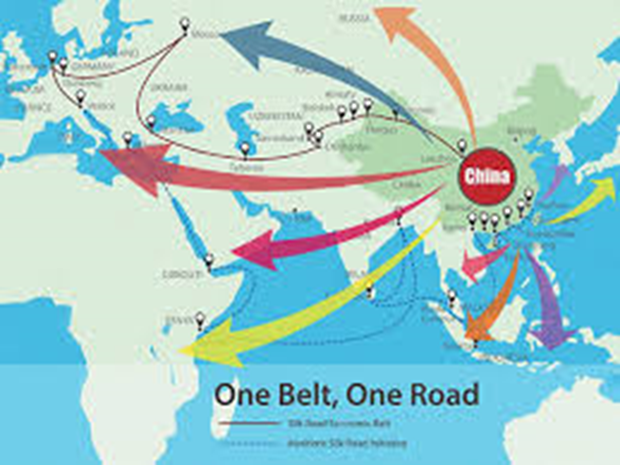
Why is United States foreign policy, from Trump to Biden, returning to a policy hostile to China, perhaps creating a “New Cold War?” The answer has several parts. First, as Alfred McCoy has described (In the Shadows of the American Century: The Rise and Decline of US Global Power, Haymarket Books, 2017), the United States, relatively speaking, is a declining power. As to economic growth, scientific and technological developments, productivity, and trade, the US, compared to China particularly, is experiencing stagnation or decline. China has engaged in massive global projects in transportation, trade, and scientific advances and by 2030 based on many measures will advance beyond the US as to Gross Domestic Product.

According to McCoy, the United States has embarked on a path to overcome its declining relative economic hegemony by increasingly investing in military advances: a space force, a new generation of nuclear weapons, cyber security, biometrics, and maintaining or enhancing a global military presence particularly in the Pacific (what Obama spokespersons called “the Asian pivot”). In other words, rather than accommodating to a new multipolar world in the 21st century, the United States is seeking to reestablish its global hegemony through military means.


Second, the United States is desperately seeking to overcome the end of its monopoly on technological advances. In computerization, transportation, pharmaceuticals, it is challenging Chinese innovations, claiming that China’s advances are derived not from its domestic creativity but from “pirating” from United States companies. For example, the prestigious and influential Council on Foreign Relations issued a report in 2019 entitled “Innovation and National Security: Keeping Our Edge.” The report warned that “…the United States risks falling behind its competitors, principally China.” China is investing significantly in new technologies, CFR claims, which they predict will make China the biggest inventor by 2030. Also, to achieve this goal they are “exploiting” the openness of the US by violating intellectual property rights and spying. Therefore, the CFR concluded, since technological innovation is linked to economic and military advantage and since US leadership in technology and science is at risk, the nation must recommit to rebuilding its scientific prowess.

Third, while the United States is engaged in efforts at regime change around the world and is using brutal economic sanctions to starve people into submission (such as in Venezuela, Cuba, Iran and 36 other countries victimized by economic sanctions), China is increasing its economic ties to these countries through investments, trade, and assistance. And China opposes these US policies in international organizations. In broad terms Chinese policy stands with the majority of countries in the Global South while the United States seeks to control developments there.


Fourth, although Biden’s foreign policy as well as his predecessors, is designed to recreate a Cold War, with China as the target, a policy also embraced by most Democrats, there is at the same time counter-pressure from sectors of the capitalist class who have ties to the Chinese economy: investment, global supply chains, and financial speculation. Moreover, sectors of Chinese capital own or have substantial control over many US corporations and banks. In addition, the Chinese government controls over $1 trillion of US debt. For these sectors of US capital, economic ties with China remain economically critical. In addition, some writers, such as Jerry Harris, point to the emergence of a “transnational capitalist class” whose interests are not tied to any nation-state (Global Capitalism and the Crisis of Democracy, Clarity Press, 2016).

Consequently, while the trajectory of US policy is toward a return to cold war, there is some push back by economic and political elites as well. Although with the emphasis on domestic investments in technology highlighted in the 2022 National Security document mentioned by Sanger, it appears the advocates of a New Cold War with China seem to be in control of US foreign policy. (The CHIPS and Science Act of 2022 reflects this renewed commitment to technological advance in the United States).

https://www.nytimes.com/2022/10/12/us/politics/biden-china-russia-national-security.html


Fifth, American domestic politics provide an additional cause of the transformation of US/China policy. The popularity of the Democratic Party and President Biden remain low. Therefore, a classic antidote for politicians experiencing declining popularity is to construct an external enemy, “an other,” which can redirect the attention of the public from their personal troubles. It is this external enemy that becomes the source of domestic problems in political discourse. In this context the President is talking tough with the “enemy” of the United States, and, as former Secretary of State Pompeo suggested, it was about time that the US government gave up illusions about working with China.

Finally, the ideological package of racism, white supremacy, and American Exceptionalism so prevalent in United States history resurfaced in dramatic ways in the Trump years and continues today. White supremacy at home is inextricably connected with American Exceptionalism abroad. For example, President Theodore Roosevelt in 1910 claimed that the white race has been critical to civilization.  Years later Madeleine Albright, the Secretary of State in the Clinton Administration (and more recently President Barack Obama) spoke about the United States as the “indispensable nation,” a model of economics and politics for the world. For President Biden, the US stands with “democracy” against the world’s leading “authoritarians.” This sense of omniscience has been basic to the ideological justification of United States imperial rule.

Each of these elements, from the changing shape of economic and military capabilities to political exigencies, to the pathologies of culture, require a peace and justice movement that stands for peaceful coexistence, demilitarization, building a world of economic justice, rights of people to determine their own destiny, and inalterable opposition to racism, white supremacy, and exceptionalisms of all kinds.

And for scholars and diplomats, the question for now is whether it is better to work for a world of respect, cooperation, recognition of multipolarity and multilateralism, or for war with China.


Friday, May 17, 2024

COGNITIVE WARFARE CONTINUES

 Harry Targ


The Cognitive Domain is a new space of competition, beyond the land, maritime, air, cybernetic and spatial domains.
© NATO Innovation Hub

Harry Truman on free institutions versus totalitarian ones:

At the present moment in world history nearly every nation must choose between alternative ways of life. The choice is too often not a free one.

One way of life is based upon the will of the majority, and is distinguished by free institutions, representative government, free elections, guarantees of individual liberty, freedom of speech and religion, and freedom from political oppression.

The second way of life is based upon the will of a minority forcibly imposed upon the majority. It relies upon terror and oppression, a controlled press and radio; fixed elections, and the suppression of personal freedoms.

I believe that it must be the policy of the United States to support free peoples who are resisting attempted subjugation by armed minorities or by outside pressures.

I believe that we must assist free peoples to work out their own destinies in their own way. (from the Truman Doctrine speech, March 12, 1947)

And President Biden’s articulation of the struggle between democracy and authoritarianism:

“It is clear, absolutely clear … this is a battle between the utility of democracies in the 21st century and autocracies,” Biden said. “That’s what’s at stake here. We’ve got to prove democracy works.” https://www.cnn.com/2021/03/25/politics/biden-autocracies-versus-democracies/index.html)

On NATO’S Conception of Cognitive Warfare:

In cognitive warfare, the human mind becomes the battlefield. The aim is to change not only what people think, but how they think and act. Waged successfully, it shapes and influences individual and group beliefs and behaviours to favour an aggressor’s tactical or strategic objectives. In its extreme form, it has the potential to fracture and fragment an entire society, so that it no longer has the collective will to resist an adversary’s intentions. An opponent could conceivably subdue a society without resorting to outright force or coercion.

In cognitive warfare, the human mind becomes the battlefield. The aim is to change not only what people think, but how they think and act. Waged successfully, it shapes and influences individual and group beliefs and behaviours to favour an aggressor’s tactical or strategic objectives. In its extreme form, it has the potential to fracture and fragment an entire society, so that it no longer has the collective will to resist an adversary’s intentions. An opponent could conceivably subdue a society without resorting to outright force or coercion. https://www.nato.int/docu/review/articles/2021/05/20/countering-cognitive-warfare-awareness-and-resilience/index.html)

On Cognitive Warfare

This NATO document, of course, is addressing the world of international relations but the concept of “cognitive warfare” seems to parallel efforts “to change not only what people think, but how they think and act.” This project animates the efforts of media conglomerates-print, electronic, social media platforms. Changing how people think and act has its historic roots in campaigns to convince citizens to support wars, consume cigarettes, forget climate disasters, and to find flaws in populations because of class, race, gender, sexual preference, and/or religion. Creating images of enemies is central to launching wars. The processes of “branding” are similar in all realms of human experience.

On the Media


The media and political, economic, educational, religious, and entertainment institutions shape our consciousness. People are told, inspired, coerced, and manipulated to think in certain ways, usually ways that support the economic and political interests of the rich and powerful. Sometimes theoretical arguments about “ideological hegemony” are too abstract or too immobilizing. However, specific efforts at thought control  can be understood and identified. And campaigns to challenge them are feasible.

On Ideology

The economic and political structure of capitalism requires “an ideology, a consciousness, a way in which the citizenry can be taught to accept the system as it is. This ideology has many branches but one root, the maintenance and enhancement of the capitalist economic system. The elements of the dominant political ideology include: privileging individualism over community; conceptualizing society as a brutal state of nature controlled only by countervailing force; acceptance of the idea that humans are at base greedy; and, finally, the belief that the avariciousness of human nature requires police force and laws at home and armies overseas.”

The Battle of Ideas Matter

Statements by prominent Americans from the nineteenth century on have celebrated American exceptionalism. The frequency and intensity of such messages have been correlated with the rising of challenges to economic and political hegemony and orthodoxies that have arisen to challenge the status quo. As Howard Zinn and others have vividly pointed out resistance has been as much a fabric of US history as celebration. But to challenge resistance educational, information, and cultural institutions have intensified the prevailing mythologies. This cognitive warfare, of course, always includes efforts to censure uncomfortable and challenging alternatives.

So today, the US is faced with global challenges as its support of Israel, Ukraine and NATO are resisted. And more and more citizens are questioning rising militarism and police repression. It is in response to all this that the frank NATO call for a “cognitive war” was raised.

And for those of us who work for peace and justice it is worth remembering that the battle over ideas matter; in educational, media, cultural, and religious institutions.

***************************************

And for more:

https://heartlandradical.blogspot.com/2024/01/old-ideas-still-hegemonic-as-we-greet.html

The Bookshelf

CHALLENGING LATE CAPITALISM by Harry R. Targ

Challenging Late Capitalism