Wednesday, March 30, 2016
Chinese Radio International discussion of President Obama's Visit to Cuba
Chinese Radio International (English) Discussion of US President Barack Obama's Historic Visit to Cuba:
Harry Targ,Purdue University
Dr. Wu Hongying, Director of the Institute of Latin American Studies at the Beijing-based China Institute of Contemporary International Relations
________________________________________
http://mod.cri.cn/eng/features/pik/2016/03/0322pik.mp3


Monday, March 21, 2016
PRESIDENT OBAMA'S VISIT TO CUBA: TWO QUOTES AND A FABLE
Harry Targ
Two
statements from articles in the New York Times
At
the heart of Mr. Obama’s policy is a gamble that the thaw will eventually force
changes on Cuba’s communist government by nurturing the hopes of its citizens,
particularly a younger generation more interested in Internet access and
business opportunities than in Cuba’s grievances against the United States.
(Julie Hirschfeld Davis, “Obama Hopes Cuba Visit Can be Harbinger of Political
Change,” New York Times,, March 19, 2016.
Elizardo
Sanchez flew to Havana from Miami on Saturday, looking forward to meeting
President Obama with other Cuban dissidents invited to the United States
Embassy here on Tuesday. But at the airport, Cuban officials decided he would
have to wait.” (Damien Cave and Frances Robles, “Cuba’s Message to its People: Be On Your Best
Behavior for Obama,” New York Times, March
20, 2016.
A
Fable
The presidential plane touched down at the Havana
airport early in the afternoon, Sunday, March 20. A full plane of dignitaries,
politicians of both political parties, business people and State Department
personnel eagerly lined up to exit the aircraft and stand on Cuban soil, many
for the first time. Among the dignitaries were representatives of a variety of
U.S. groups, who for years had lobbied, protested, educated, and demanded an
end to the economic blockade of the island which was initiated by President
Eisenhower in the summer, 1960.
The President, his wife, and daughters disembarked,
walked over to embrace the welcoming Cuban dignitaries. The President spoke
very briefly indicating that he was truly excited to be reestablishing a long
broken relationship. The President suggested that while he was in Cuba he would
be discussing pressing diplomatic matters--ending the embargo, closing the U.S.
base at Guantanamo Bay, and opening up a new era of close collaboration that
might mend the historic animosities that have divided the United States and
most of the countries of Latin America.
The entourage drove from the airport to the city,
viewing thousands of Cubans exuberantly welcoming their guests. The visiting
party registered at the historic Hotel National, where Hollywood stars,
gangsters, and other former prominent members of the Hemisphere elite tied to
Cuban dictators had resided in the past. The President and his family then began
a brief tour of the exciting historic 500 year-old city.
First stop was Old Havana, a UNESCO World Heritage
site. The Presidential family met with members of Old Havana cooperatives who
are engaged in renovating the old city. Some earnings from tourism are used to
rehabilitate old buildings. Schools in Old Havana educate young people in renovation
studies.
As the party walked through Old Havana, they were
told that the Cuban government, in consultation with literally hundreds of
thousands of Cubans, decided in 2011 to begin shifting the Cuban economy from
one dominated by the state sector to the private sector. The private sector
would consist of two elements: small entrepreneurs and workplace cooperatives.
While Cubans differ on which directions the economy
should pursue, many Cubans are beginning to participate in cooperative forms of
enterprise ownership and decision-making in the cities as well as the
countryside. Some regard the work cooperatives as the centerpiece of a 21st
century socialism. They expect cooperatives to continue the revolutionary
project launched in 1959; creating economic equality, political participation,
and continuing the society’s commitment to access to health care, education,
adequate housing, sensitivity to the environment, and combatting existing
racism and sexism. The President praised the vision and noted that the United
States is far from achieving these goals and might take back some ideas from
the Cuban experience that could be adapted to circumstances in the United
States.
The President told his tour guides that he had heard
a lot about the Cuban health care system. He particularly wanted to visit the
Latin American School of Medicine (ELAM). Since 2005, 23,000 students graduated
from ELAM mostly from poor countries around the world. Currently there are
10,000 medical students at ELAM, with small numbers from the U.S. Students
participating in the free medical training are encouraged to return to their
home country and apply their skills to treat underserved populations. One newly
credentialed U.S. doctor trained in Cuba has committed herself to provide
health care for African American males in Cook County jail in Chicago.
Visiting ELAM the President confirmed how impressed
he was with the youthful enthusiasm, commitment, and international solidarity
described by the students he met. The President made it clear that ELAM was one
excellent example of Cuban international solidarity.
After stopping in various communities across Havana,
chatting with residents, the family returned to the Hotel National for a
well-deserved rest and the President’s final drafting of his speech.
The next morning, bright and early, the Presidential
party traveled to the huge Plaza of the Revolution, a vast open space that
sometimes holds a million Cubans. On one building is a several story image of
Che Guevara and across the plaza a statue of iconic hero Jose Marti stands
boldly in front of a museum honoring him. As hundreds of thousands of Cubans
assembled President Raul Castro approached the podium at the base of the Marti
statue. He marked the historic visit of the president and indicated that while
each country has some differences of values and priorities, the two have had a
vast, complicated and intimate historic relationship. He welcomed unraveling
the relationship, recognizing the common histories of descendants of Africans
who play such a prominent role in the history of both countries.
The President was introduced, stepped to the podium,
and presented a long and eloquent speech part of which is reproduced here:
“Mr. President, Ministers, and my Cuban Companeros
and Companeras, I appreciate your welcome to the President of the United
States. We have had many disagreements over the last sixty years and frankly
the United States bears responsibility for most of them. Along with our
repeated efforts to overthrow the Cuban government, led so passionately by
Fidel Castro, we have engaged in an economic blockade of Cuba for most of that
time. We are here to send a message to the Cuban people and to all the peoples
of our hemisphere that the United States will now be embarking on a new foreign
policy. I call it “A New Good Neighbor Policy,” named after the program
announced by former President Franklyn Roosevelt many years ago. Only this time
the policy will be different and will be sustained long into the future.
I have visited a few of your health care facilities
and one of your medical schools, I’ve walked in your communities, and strolled
along your beautiful coastal highway, the Malecon. I have talked with some of
you personally and I see that you are a proud people. While you desire greater
access to goods, improved housing, more resources to travel, I realized that
you are proud of your revolutionary heritage. We may not always agree with you,
or your friends in other countries, such as Venezuela, Bolivia, and Ecuador.
However, from this time forward we declare our commitment to you that we will
not take away what every man and woman desires, the power to decide their own
destiny. The United States has failed in this before, but I am here to promise
you that we learned the lesson of your stubborn resistance to our interference
and it will not happen again.”
In closing I remember the words of your poet and
patriot Jose Marti: “Patria es humanidad.”
Monday, February 29, 2016
HILLARY CLINTON AND THE DECLINING AMERICAN EMPIRE
Harry Targ
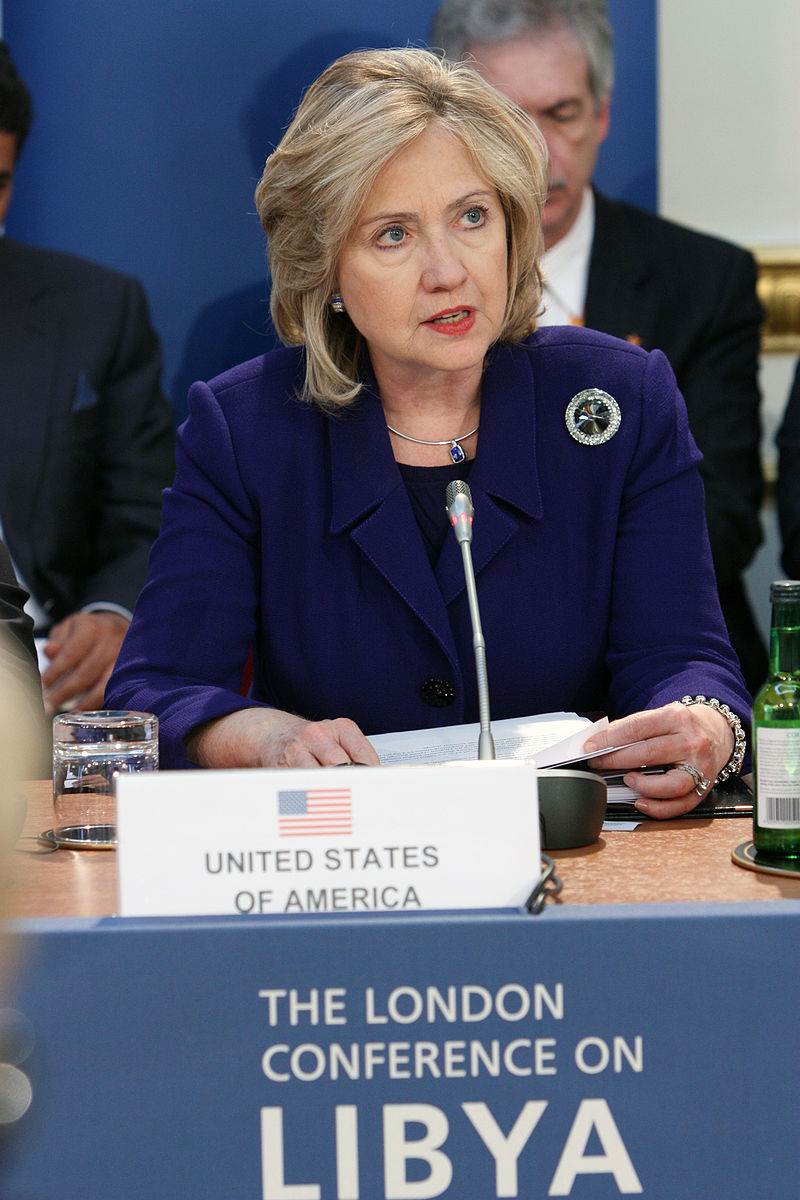
I
think President Obama made the right decision at the time. And the Libyan
people had a free election the first time since 1951.And you know what, they
voted for moderates, they voted with the hope of democracy. Because of the Arab
Spring, because of a lot of things, there was turmoil to follow.”(Hillary
Clinton quoted in Conor Freidersdorf, ‘Hillary Defends Her Failed War in
Libya,” The Atlantic, October 14,
2015, theatlantic.com).
Nearly
three and a half years after Libyan rebels and a NATO air campaign overthrew
Muammar al-Qaddafi, the cohesive political entity known as Libya doesn’t
exist.” ( Frederic Wehrey quoted in Conor Friedersdorf)
Building
an Empire
In a recent book by distinguished diplomatic
historian Lloyd Gardner (“Three Kings: The Rise of an American Empire in the Middle
East After World War II,” The New Press, 2009), the author describes the last
day of the historic Yalta Conference just before the end of World War II in
which the leaders of the allied powers met: President Franklin Roosevelt,
Soviet leader Joseph Stalin, and British Prime Minister Winston Churchill.
The President informed his colleagues that he had to
leave the next day to fly to Egypt. Stalin, according to Gardner, protested
saying that there was still unfinished business to discuss (The Yalta
Conference in February, 1945 was the last conference the three leaders held
before the end of World War II in Europe. In it they were deciding on the shape
of the post-war international system).
Gardner reports that FDR explained his surprising
departure by saying that he had “three kings waiting for him in the Near East,
including Ibn Saud.” Churchill correctly believed that the premature departure
and visit to Egypt was part of a United States plan to, in Churchill’s words,
develop “some deep laid plot to undermine the British Empire in these areas”
(16). And Gardner goes on: “It did not take a suspicious mind to observe that
World War II had provided the United States with economic and political
weapons—starting with the prewar Lend Lease Act—for Uncle Sam to commence
rearranging remnants of the old European empires into an American-styled world
order” (17).
What is called the Middle East today for centuries
had been the cross-roads of civilizations and the center of worldwide
religions. From the thirteenth to the twentieth century much of the area was
dominated by the Ottoman Empire, of which Turkey is the current survivor. That
empire, weakened and destroyed during World War I, was replaced by the
declining British and French empires. After the war Britain and France secured
“mandates” to divide up and rule the countries formerly under the yoke of the
Ottoman Empire. The Sykes-Picot agreement (a secret arrangement between these
countries) divided up the region such that France would dominate Syria and
Lebanon while Britain would control Palestine, Iraq, and Transjordan. The
British already had influence over Egypt, Iran, and Aden (Yemen). Minor power
Italy occupied Libya in 1911. The British also promised European Zionists that
Palestine would become a homeland for Jewish people in the Balfour Declaration
and Arab leaders that Arab peoples would have sovereign control of their own
lands. The British influenced the rise of Gulf States and military/political
forces in the region led to the emergence of the Kingdom of Saudi Arabia in the
1930s. Central to the competition for empire was the discovery of massive
reserves of oil in the region.
Roosevelt’s announcement that he was leaving Yalta
early to visit Middle East dictators presaged a major thrust of United States
foreign policy. The vision was not only to weaken the influence of the Soviet
Union but to replace the declining European empires as the hegemonic world
powers. To achieve that goal required control of oil and the Middle East and
the Persian Gulf states had the world’s largest reserves of that natural
resource.
Defending
an Empire
To build the American empire after World War II the
United States reached out to construct alliances with pliable Middle East
elites, made deals with those who were modestly independent, or undermined,
invaded, and overthrew regimes which represented a threat to US hegemony.
First, President Roosevelt constructed an informal
alliance in perpetuity with Saudi Arabia whereby guarantees of military
security, arms sales, and trade would be exchanged for Saudi oil and support
during periods of instability in the region.
Second, the United States overthrew the regime of the
elected Prime Minister, Mohammad Mosaddegh in Iran because he had nationalized
his country’s oil resource. In his place, a pliant autocrat, the Shah Mohammad
Pahlavi was installed and seven United States oil companies gained control of
forty percent of Iran’s oil. When the Iranian people overthrew the Shah in
1979, the United States tilted toward Iran’s hostile neighbor, Iraq. During the
1980s, the United States provided arms, including weapons of mass destruction,
to Iraq, as an eight-year war ensued, leading to a million Iranian/Iraqi
deaths.
Third, Iraq invaded Kuwait in 1990, mistakenly
believing the United States would support its action. Changing sides, President
George Herbert Walker Bush, built a coalition to launch Gulf War I. The Iraqi
military was forced from Kuwait, and subsequently a long economic embargo was
imposed on Iraq followed by repeatedly bombing targets in that country.
Fourth, the United States supported the creation of
the state of Israel in 1948 and by the late 1960s made the latter its number
one military and economic aid recipient on a per capita basis. President
Eisenhower in a 1957 speech labeled the Eisenhower Doctrine declared that the
Middle East was vital to US national security. American policymakers opposed
secular nationalism in Egypt and Syria, particularly Egyptian President
Nasser’s attempt to form a United Arab Republic with Syria in 1958. The Carter
Doctrine enunciated in 1980 just one year after the Iranian Revolution,
proclaimed the Persian Gulf region another area of prime concern to US
security. The United States continued to stand on the side of Israel in
military conflicts with Palestinians, encouraging the Israeli invasion of
Lebanon in 1982. During the Reagan
years, the United States tilted toward Iraq and in 1986 bombed targets in Libya
with the clear intention of killing that country’s leader.
In sum, since President Roosevelt’s symbolic meeting
with Middle Eastern leaders, the United States has engaged in a consistent
foreign policy designed to replace the historic empires—Ottoman, British, and
French—with its own; using diplomacy, economic ties, subversion, and force.
Confronting
an Empire in Decline
The construction of an empire in the Middle East has
been confounded by multiple challenges over the years. The overthrow of the
Shah of Iran in 1979 was one. Another was the periodic emergence of leaders in
countries who based their popularity on appeals to nationalism; that is the
rejection of control from old or new empires. Nasser in Egypt was an example as
were Qaddafi in Libya and Saddam Hussein in Iraq. When leaders emerged who
claimed to be supportive of building secular states, American policymakers
sought to network with theocratic opponents, such as Osama bin Laden in the
case of Afghanistan in the 1980s. To justify support from the American people,
policies were explained by referring to the communist threat, the perils of
national security, the threats against Israel, facilitating economic
development, and building democracies in the region. The most dramatic
grassroots opposition to dictatorship at home and empire abroad was the 2011
Arab Spring; encompassing popular protest from Tunisia, to Bahrain, to Egypt. Arab Spring would be used one year later not
to support the grassroots in the region but as a rationale for the US war on
Libya.
In response to the mass murders committed at the
World Trade Center and the Pentagon on September 11, 2001, the George Walker
Bush Administration launched a “war on terrorism.” This trope which would guide
popular defense of US foreign policy ever since would justify aggression as a
necessary response to claimed threats of foreign and domestic enemies. The Bush
Administration invaded Afghanistan, and, based on lies, initiated the war on
Iraq. With these two wars, stability in the region began to deconstruct.
Although most United States troops were withdrawn after President Obama assumed
office, interventions continued all around the region using private armies, military aid, and increasing
drone warfare. US military operations were carried out in Pakistan, Iraq,
Yemen, Somalia, Syria and a military command structure called AFRICOM was
established to send US troops into African countries. In each of these locations terrorists groups emerged and grew in response.
Then came the war on Libya, a war against the Qaddafi
regime that was enthusiastically endorsed by Secretary of State Hillary
Clinton. The United States secured a United Nations Security Council resolution
authorizing using air power to protect dissenters opposed to the regime. The
United States and its NATO allies used the authority of the United Nations
resolution to launch a massive bombing campaign that destabilized Libya. The brutal
bombing campaign facilitated the destruction of the regime. Qaddafi was
captured and killed. In the aftermath of the US/NATO war on Libya competing
political forces emerged destroying the social fabric of the country. As Frederic
Wehrey suggests “the cohesive political entity known as Libya doesn’t exist.”
And
Now the 2016 Election
While Hillary Clinton offers her active support for
the Libyan War as proof of her experience and wisdom in guiding foreign policy,
the years since 2011 have shown just the opposite. A Libyan government no
longer exists. Hundreds of thousands of Libyans and migrants from elsewhere
have been forced to flee. Terrorist organizations, not there before 2011, have
operations in that country, launching assaults across North Africa and the
Persian Gulf, and the relative stability and wealth of the country have been
destroyed.
In addition, it has become clear that US policy
toward Libya was not about “democracy,” what some call “humanitarian
interventionism,” but forestalling Qaddafi’s efforts to build a new, vibrant,
independent African Union that would oppose US troops on the continent (AFRICOM), limit US corporate investments in
natural resource extraction in the Sahel, and encourage growing Chinese
commerce in Africa.
The Sanders campaign for the Democratic presidential
nomination has been correctly based on opposition to the excessive
consolidation of wealth and power in the United States. The issues comprising
this agenda are vital to the health, well-being, and future of the American
people. The future also is dependent upon the abandonment of the United States
empire. The rise of the military/industrial complex and the tragic loss of life
and treasure are inextricably tied to a foreign policy motivated by the vision
of US global hegemony.
There is a direct lineage between President
Roosevelt’s early departure from the peace conference at Yalta to visit Middle
East dictators and candidate Hillary Clinton’s prideful defense of the overthrow
of the regime in Libya. The results of this historic drive for empire have been
and continue to be growing anger in the region, terrorism, mass migrations,
enormous human suffering, and a bloated commitment to military/spending and
pro-war sentiment in the United States.
Saturday, February 27, 2016
THE AMERICAN LEGISLATIVE EXCHANGE COUNCIL (ALEC) AND THE THEORY OF THE "DEEP STATE"
Harry Targ
The American Legislative Exchange Council (ALEC)
was founded in 1973 by Paul Weyrich, other noted conservatives such as Senator
Jesse Helms, and the billionaire Koch Brothers, to raise money and to
coordinate the creation of a counter-revolution in the American political
system. Its vision was one of deregulation, privatization, weakening workers’
rights, and the facilitation of the unbridled accumulation of private wealth.
The result of these policies would reverse positive
government; the idea that for societies to function public energies,
resources, and commitments are needed to create and maintain institutions to
serve the people.
ALEC established a network of prominent
politicians at the national and state levels, created well-funded lobby
groups, supported “research” to justify
reactionary public policies, and funneled money to conservative political
candidates running for office virtually everywhere and at all levels of government. ALEC created “model” legislation to be
introduced verbatim in legislative bodies everywhere on subjects including
right-to-work, charter schools, and privatization of pensions. While
politicians pay dues to join ALEC, over 98 percent of ALEC’s budget comes from corporate contributions
from such economic and political influentials as Exxon/Mobil, the Koch Brothers,
the Coors family, and the Scaife family.
ALEC claims to have 2,000 legislative members
and over 300 corporate members. Corporations which have benefited legislatively
from their affiliations with ALEC include but are not limited to Altria/Philip
Morris USA, Humana, United Healthcare, Corrections Corporation of America, and
Connections Academy.
One of ALEC’s prominent projects is the
creation of the “State Policy Network,” a collection of think tanks in almost every
state (funded up to $83 million) to generate research “findings” to justify the
rightwing model legislation generated by ALEC. SPN studies have been
disseminated on education, healthcare, workers’ rights, energy and the
environment, taxes, government spending, and wages and income equality (Center
For Media and Democracy, “Exposed: The State Policy Network,” November, 2013,
p.6, alecexposed.org).
Of particular concern to workers are the ALEC
model bills that have been introduced in states including:
-right-to-work legislation
-rules increasing the freedom of governments to
hire non-union contractors
-reducing pensions for government employees
-repealing minimum wage laws
- eliminating prevailing wage laws for
construction workers
-encouraging so-called “free trade” to
outsource work
-privatizing public services
-gutting workers’ compensation
The
Deep State
The role of ALEC, the Koch Brothers,
and the largest multinational corporations and banks in America suggest that
politics increasingly occurs at two levels. First, at the level of transparency
we observe politics as “games,” largely about electoral contests, gossip and
frivolous rhetoric. News junkies avidly consume this first level glued to the
television or computer.
However, Mike Lofgren, a former
Republican Congressional aide has introduced the idea of another level of
politics, what he calls the “deep state.” Lofgren defines the “deep state”
as “… a hybrid association of elements
of government and parts of top-level finance and industry that is effectively
able to govern in the United States without reference to the consent of the
governed as expressed through the formal political process.” (Mike Lofgren, “Anatomy of the ‘Deep State’:
Hiding in Plain Sight,” Online University
of the Left, February 23, 2014).
Others have referred in similar ways to invisible power structures that
rule America (from C. W. Mills’ 1950s classic The Power Elite, Oxford University Press, 2000 to Robert Perrucci,
Earl Wysong, and David Wright, The New
Class Society: Goodbye American Dream?, Rowman and Littlefield, 2013).
The distinction between politics as contests
vs. the deep state suggest that the power to make critical decisions reside not
in the superstructure of the political process; the place where competitive
games are played for all to see, but in powerful institutions embedded in
society that can make decisions without requiring popular approval. In domestic
politics, the “deep state” apparatus such as ALEC and its network of
organizational ties has initiated a resource-rich campaign--from the school
board and city council to the state and nation--to destroy the links between
government and the people. And the public face of the deep state includes the
selective and manipulative character of experts, pundits, and major sources of
news in the media.
Indiana
Politics
Perhaps the starkest fact to note in
reference to the growing economic insecurity in the state of Indiana over time
is that in 1970 forty percent of Hoosier workers were in unions. Today only 11
percent of Indiana workers are in trade unions. The most recent legislative
defeats Indiana workers have suffered include passage of a right- to-work law
and repeal of the state version of prevailing wage. The Daniels/Pence
administrations have used charter schools and vouchers to destroy teachers
unions. (In addition, in his first day in office in January, 2004, newly
elected Governor Mitch Daniels signed an executive order disallowing state
employees the right to form unions).
In 2005 the Indiana state government
(legislature and governor) passed the first and most extreme voter
identification law. Michael Macdonald a University of Florida political
scientist estimated that requiring voter IDs reduces voter participation by 4-5
percent, hitting the poor and elderly the hardest. In addition, Indiana law
ends voter registration in the state one month before election day (the polar
opposite of same-day registration). And, polls close at 6 p.m. election day,
among the earliest closing times in the country. Finally, requests for absentee
ballots require written excuses.
Republican control of the executive and
both legislative branches since 2010 led to redistricting which further
empowered Republicans and weakened not only Democrats but the young and old and
the African American community. As to the state legislature, in 2014 of 125
state legislative seats up for election, 69 were uncontested. Most shockingly,
2014 Indiana voter turnout was 28 percent, the lowest state turnout in the
country.
Traditionally when Democrats were in
the Governor’s mansion and/or controlled a branch of the legislature, they too
tended to support neoliberal economic policies, but less draconian, and had
been more moderate on social policy questions. In recent years, in part as a
result of support from ALEC, the two most recent governors and the state
legislature have become Republican and most of the draconian ALEC legislative
agenda has been passed.
With ALEC money, some active Tea
Party organizations, the growth of rightwing Republican power, and centrist
Democrats, Indiana government has initiated some of the most regressive
policies in the country in reference to voting rights, education, taxing, and
deregulation. And the political economy of Indiana has increased the suffering
of the vast majority of working families in the state including the worsening
of access to health care, education, the environment, transportation, and
physical infrastructure.
ALEC money, influence, and control
have played a significant role in shifting state policy in a reactionary
direction, weakening public institutions, redistributing wealth and income to
the very few, increasingly marginalizing people of color, and threatening the
foundations of democratic institutions. And perhaps most threatening for the
state’s future is the fact that transparency is being subverted by the
emergence of the “deep state.”
For further information see “ALEC Exposed” at www.alecexposed.org
Subscribe to:
Posts (Atom)
The Bookshelf

-
Harry Targ Confusion in the Moment The combination of social media, media “breaking news” stories, the politics of the spectacle, th...
-
Harry Targ SIXTY YEARS OF BLOWBACK: IRAN Chalmers Johnson wrote in 2001 about “blowback” that it is a CIA term first used in March 1954 in ...
-
Chicago Resists State Repression November 24, 2025 8 pm (Eastern), 7 pm (Central) The Committees of Correspondence for Democracy and Sociali...


