Sunday, November 13, 2022

THE BUSH YEARS AND THEIR CONSEQUENCES: WARS AND ECONOMIC DISASTER

Harry Targ

(an earlier version appeared on January 23, 2009)


Purdue Today, October 22, 2022.

 “President Bush to join President Daniels for final Purdue Presidential Lecture Series event” (December 6, 2022).

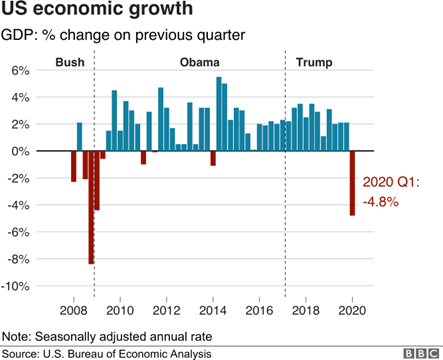
“Bush served as the 43rd U.S. president from 2001-09. As commander in chief, President Bush worked to expand freedom, opportunity, and security at home and abroad. At home, he championed the No Child Left Behind Act to raise standards in schools and cut taxes for every federal income taxpayer, restoring economic growth after the 2000-01 recession, and launching an unprecedented 52 straight months of job creation.”

“After a 15-year career in private business, Daniels was confirmed as President Bush’s director of the Office of Management and Budget by a U.S. Senate vote of 100-0, serving from January 2001 until May 2003. In this role, Daniels also was a member of the National Security Council and the Homeland Security Council.”

**************************************************************************

Elisabeth Bumiller, “Threats and Responses: The Cost; White House Cuts Estimate of Cost of War With Iraq” New York Times, December 31. 2002.


The administration's top budget official estimated today that the cost of a war with Iraq could be in the range of $50 billion to $60 billion, a figure that is well below earlier estimates from White House officials….In a telephone interview today, the official, Mitchell E. Daniels Jr., director of the Office of Management and Budget, also said there was likely to be a deficit in the fiscal 2004 budget, though he declined to specify how large it would be.

 *********************************************************

Dylan Matthews, “The enormous costs and elusive benefits of the war on terror.Vox. Com, September 11, 2021.

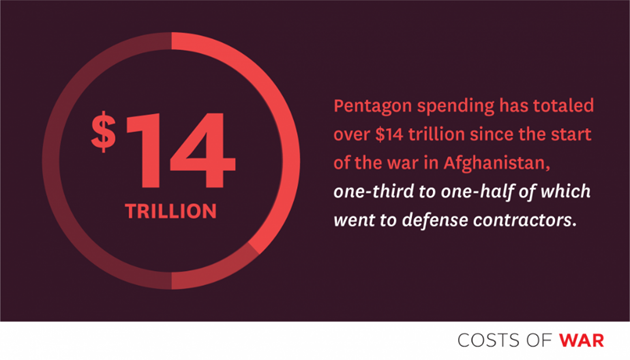
Meanwhile, according to the most recent estimates from Brown University’s Costs of War Projectat least 897,000 people around the world have died in violence that can be classified as part of the war on terror; at least 38 million people have been displaced due to these wars; and the effort has cost the US at least $5.8 trillion, not including about $2 trillion more needed in health care and disability coverage for veterans in decades to come.


An assessment of the Bush years (2001-2008) must be grounded in an understanding of the almost thirty years of a failed ideology that guided domestic and foreign policy. This failed vision of government and public policy has its modern roots in the so-called Reagan "revolution."


Domestically the Reagan administration embraced a governmental philosophy that claimed that government can never help solve social, political, and economic problems. Rather, government was the problem. In keeping with this philosophy, Presidents Reagan, George Herbert Walker Bush, Clinton, and the last Bush reduced government by cutting social services; redistributed more of society's wealth from the majority to the tiny minority by cutting taxes for the rich; reduced funding for mass transportation and public education and attempted to gut long-standing programs that have served the needs of the population well, such as Social Security. This century government became disabled such that when an enormous tragedy such as Hurricane Katrina occurred, the Bush administration was totally unprepared to come to the aid of people in need.


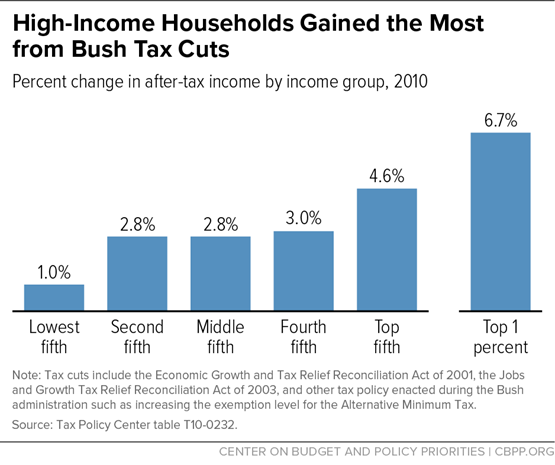
Twenty-first century government served the people less than government did thirty or forty years ago. The Bush administration through taxes and selective government programs tilted societal resources further toward the rich. The top 1% of wealth holders in the United States control over 42% of the country's wealth, an increase of about 10% over the 1970s. On foreign policy, Bush embraced the neo-conservative global vision. Basically, neo-conservatives in the Bush administration-­­- Dick Cheney, Donald Rumsfeld, Lewis Libby, Richard Perle, and a host of others-- argued that as the last remaining superpower the United States has the right and responsibility to impose its wishes, its vision of government and public policy, and its institutions on the world. If people resist, the neo-conservatives said, the United States should impose its domination by force.


In response to the tragedy of 9/11 the Bush team launched a war on Afghanistan, began a campaign to convince the American people that Iraq was a threat to US national security, and the state needed to approve policies to give the administration the authority to make war overseas and endorse further surveillance at home, including the Patriot Act, to allegedly forestall any further acts of terrorism. 

Since the 9/11 wars, the Costs of War Project of Brown University reported that “at least 929,000 people have been killed by direct war violence in Iraq, Afghanistan, Syria, Yemen, and Pakistan. …Thousands of United States service members have died in combat, as have thousands of civilian contractors…. More than 387,000 civilians have been killed in the fighting since 2001…. The U.S. post-9/11 wars have forcibly displaced at least 38 million people in and from Afghanistan, Iraq, Pakistan, Yemen, Somalia, the Philippines, Libya, and Syria. This number exceeds the total displaced by every war since 1900, except World War II.” At the same time the 9/11 wars were a source of incredible profits for the five major US military contractors.


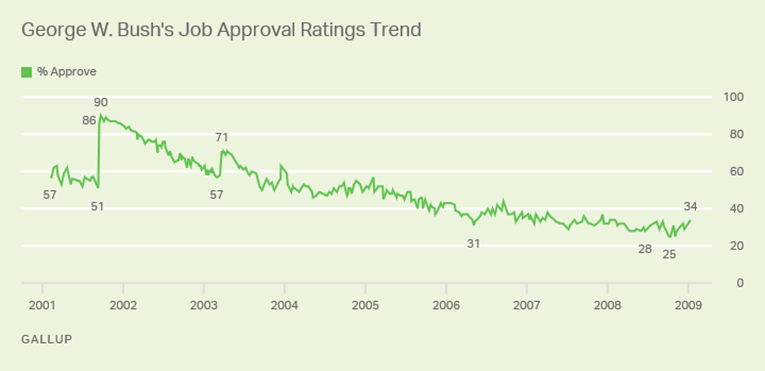
In the end, the Bush administration tried to undermine government domestically and expanded militarily all around the world. As 2009 dawned the United States was in the midst of an economic depression that reminded some people of the Great Depression of the 1930s with massive unemployment, growing mortgage foreclosures, and declining social services. And the United States was bogged down in two wars and lived in a world in which most nations and peoples no longer respected the United States.


The economic crises and unending wars of the twenty-first century are in many ways the result of Bush administration policies: a thirty-year tradition of government for the rich and visions of creating a global order based on US dominance. Those administrations that followed Bush inadequately returned to the view that government can and must help those in need. And subsequent presidents also failed to shift from a foreign policy based on threats and military interventionism to negotiation and working with other governments in international organizations. 

The twenty-first century world economically, politically, militarily, and environmentally was significantly shaped by the Bush Administration. To say as the Purdue Today states that “As commander in chief, President Bush worked to expand freedom, opportunity and security at home and abroad” is belied by the historical record.


                                                                                                             *******************************************************                                                                                                                                                              

Some enduring consequences of Bush policies on higher education: https://heartlandradical.blogspot.com/2019/08/universities-and-new-cold-war.html

The militarization of Purdue University:

https://covertactionmagazine.com/2022/06/15/while-its-humanities-programs-suffer-from-budget-cuts-purdue-university-increases-its-focus-on-the-military/


Monday, November 7, 2022

MOVING BEYOND ELECTIONS

 Harry Targ


What Do They Want Us to Think?

We have been living with the 2022 elections ever since November 2020. Day after day the corporate media has speculated about which candidates for public office were in the lead and whether the Congress will continue in Democratic hands or Republicans will win majorities in one or both houses. And lurking behind every news story has been the ominous vision of Donald Trump, the threat of fascism. and the extent to which the 2022 elections will determine whether the US chooses “democracy” or “authoritarianism.” And finally, the trope suggests, on November 8 the election will determine whether progressives will declare victory and assume the battle is won or lose and retire in despair.

At least, that is what the corporate media and its clients hope will happen. And it will happen if progressives forget that social change is a long and arduous process with victories and defeats. But if it is true that majorities of Americans crave affordable healthcare, remunerative work, the hope of some reduction in environmental disaster, and access to food, housing, transportation, and education, they will continue the struggles to achieve these goals whoever wins at the polls. So while the finality of the election trope, victory or defeat, is what has pervaded public discourse for months it is critical to recognize that whatever the outcome the battle for a just and humane future will continue, irrespective of Tuesday’s outcomes.

Protest Movements in the United States:

Left Unity Projects

          Data confirms that there has been a continuation and expansion of activist groups and protest activities all across the face of the globe since the dawn of the twenty-first century. For example in the United States, Mark Solomon reported in an important essay “Whither the Socialist Left? Thinking the ‘Unthinkable’” that there has been a long history of socialism in the United States despite the brutal repression against it, damaging sectarian battles on the left, and the small size of socialist organizations. Yet paradoxically the growing sympathy for the idea of socialism among Americans, particularly young people, exists extensively today. For that reason, he called for “the convergence of socialist organizations committed to non-sectarian democratic struggle, engagement with mass movements, and open debate in search of effective responses to present crises and to projecting a socialist future.”  https://portside.org/2013-03-06/whither-socialist-left-thinking-unthinkable

Solomon’s call a few years ago stimulated debate among activists around the idea of “left unity.” The appeal for left unity he said was made more powerful by socialism’s appeal, the current global crises of capitalism, rising mobilizations around the world, and living experiments with small-scale socialism such as the construction of a variety of workers’ cooperatives.

Effective campaigns around “left unity” in recent years have prioritized “revolutionary education,” drawing upon the tools of the internet to construct an accessible body of theory and debate about strategy and tactics that could solidify left forces and move the progressive majority into a socialist direction. The emergence of Online University of the Left (OUL), an electronic source for classical and modern theoretical literature about Marxism, contemporary debates about strategy and tactics, videos, reading lists, and course syllabi, constituted one example of left unity. The OUL is also one example among many of available resources for study groups, formal coursework, and discussions among socialists and progressives.

Mass Movements

The Occupy Movement, first surfacing in the media in September 2011, initiated and renewed traditions of organized and spontaneous mass movements around issues that affected people’s immediate lives such as housing foreclosures, debt, jobs, wages, the environment, and the negative role of money in U.S. politics. Perhaps the four most significant contributions of the Occupy Movement included:

1.Introducing grassroots processes of decision-making.

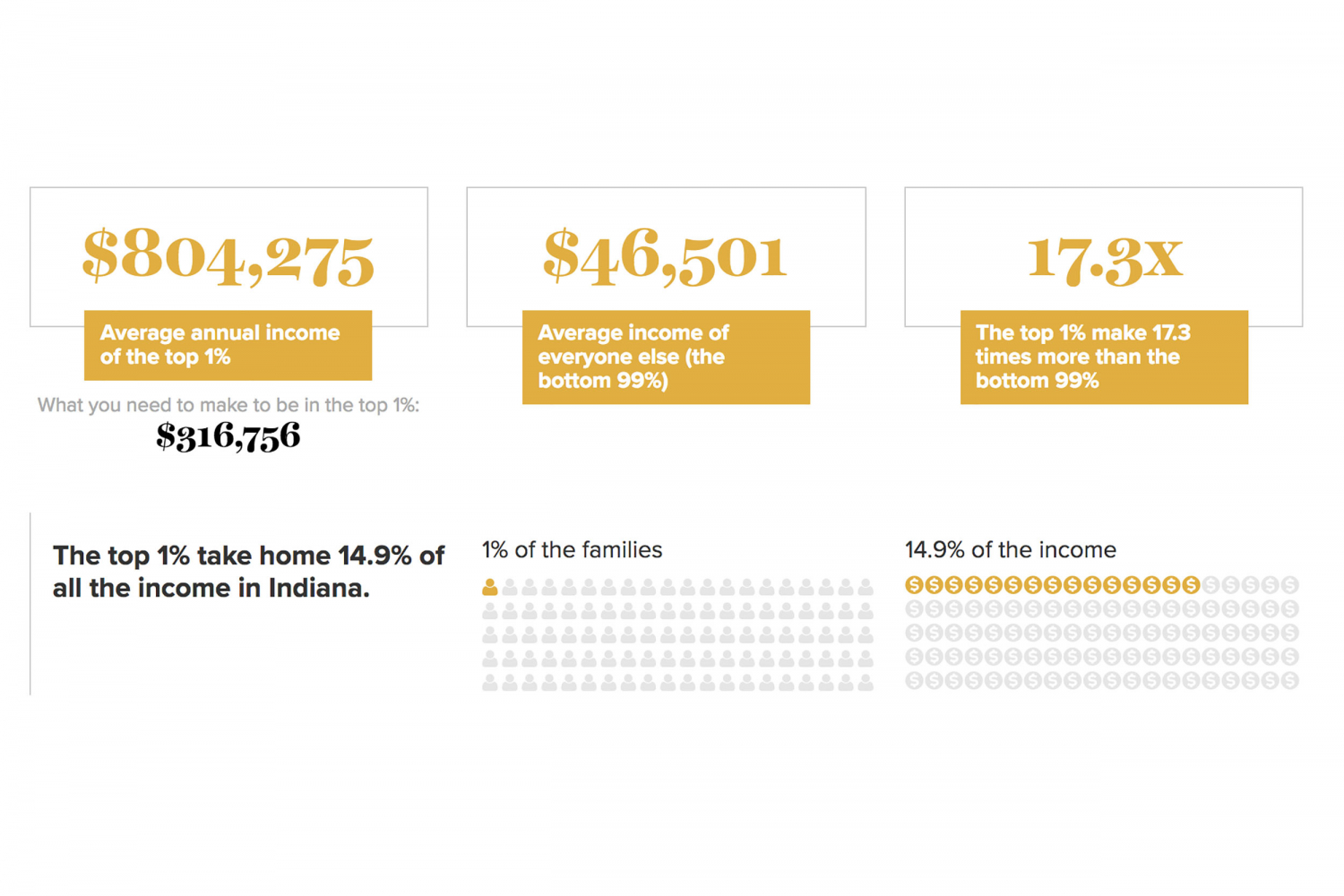
2.Conceptualizing modern battles for social and economic justice as between the one percent (the holders of most wealth and power in society) versus the 99 percent (weak, economically marginalized, and dispossessed, including the precariat).

3.Insisting that struggles for radical change be spontaneous, often eschewing traditional political processes.

4.Linking struggles locally, nationally, and globally.

During the height of Occupy’ s visibility some 500 cities and towns experienced mobilizations around social justice issues. While Occupy campaigns are gone today activists correctly ground their claims in the long and rich history of organized struggle and remain inspired by the bottom-up and spontaneous uprisings of 2011. And in 2020 the explosion of street actions to protest the police murder of George Floyd led to thousands of protest demonstrations around the country, inspired by the Black Lives Matter movement. https://acleddata.com/2020/09/03/demonstrations-political-violence-in-america-new-data-for-summer-2020/


 Building a Progressive Majority

Along with left unity projects and those who were inspired by Occupy, many have embraced a third approach to political change, “building a progressive majority.” This approach assumes that large segments of the U.S. population agree on a variety of issues. Some are activists in electoral politics, others in trade unions, and more in single issue groups. In addition, many who share common views of worker rights, the environment, health care, undue influence of money in politics, immigrant rights etc. are not active politically. The progressive majority perspective argues that the project for the short-term is to mobilize the millions of people who share common views on the need for significant if not fundamental change in economics and politics.

Often organizers conceptualize the progressive majority as the broad mass of people who share views on politics and economics that are ‘centrist” or “left.” Consequently, over the long run, “left” participants see their task as three-fold. First, they must work on the issues that concern majorities of those at the local and national level. Second, they struggle to convince their political associates that the problems most people face have common causes (particularly capitalism). Third, “left” participants see the need to link issues so that class, race, gender, the environment, and peace for example, are understood as part of the common problem that people face.

At this point in time, as the recent data set called “Start” shows there are 500 leading organizations in the United States working for progressive change on a national level. https://www.startguide.org/orgs/orgs00.html “Start” divides these 500 organizations into twelve categories based on their main activities. These include progressive electoral, peace and foreign policy, economic justice, civil liberties, health advocacy, labor, women, and environmental organizations.  Of course, their membership, geographic presence, financial resources, and strategic and tactical vision vary widely. And many of the variety of progressive organizations at the national level are reproduced at the local and state levels as well.


START Study, Think, Act, Respond Together

In sum, when looking at social change in the United States at least three emphases are being articulated: left unity, the legacies of the Occupy and Black Lives Matter movements and building a progressive majority. Each highlights its own priorities as to vision, strategy, tactics, and political contexts. In addition, the relative appeal of each may be affected by age, class, gender, race, and issue prioritization as well. However, these approaches need not be seen as contradictory. Rather the activism borne of each approach may parallel the others.

Co-Revolutionary Theory Becomes Practice: The Road Ahead


David Harvey has written about a “co-revolutionary theory” of change (The Enigma of Capital and the Crisis of Capitalism, New York: Oxford 2011). In this theory Harvey argues that anti-capitalist movements today must address “mental  conceptions;” uses and abuses of nature; how to build real communities; workers relations to bosses; exploitation, oppression, and racism; and the relations between capital and the state. While a tall order, the co-revolutionary theory suggests the breadth of struggles that need to be embraced to bring about real revolution.

Harvey’s work mirrors many analysts who address the deepening crises of capitalism and the spread of human misery everywhere. It is increasingly clear to vast majorities of people, despite media mystification, that the primary engine of destruction is global finance capitalism and political institutions that have increasingly become its instrumentality. Harvey’s work parallels the insights of Naomi Klein, Joseph Stiglitz, Robert Reich, Noam Chomsky, and a broad array of economists, historians, trade unionists, peace and justice activists and thousands of bloggers and Facebook commentators.

Of course, these theorists could not have known the ways in which the connections between the co-revolutionary theory and practice would unfold. Most agreed that we are living through a global economic crisis in which wealth and power is increasingly concentrated in fewer and fewer hands (perhaps a global ruling class), and human misery, from joblessness, to hunger, to disease, to environmental devastation is spreading.

But history has shown that such misery can survive for long periods of time with little active resistance. Even though activists in labor, in communities of color, in anti-colonial/anti-neo-colonial settings are always organizing, their campaigns usually create little traction. But sometimes, such as in 2011 (and in response to the police killing of George Floyd in 2020), mass mobilizations occur. And they facilitate the ongoing organizing that already is going on. In 2016 the Bernie Sanders candidacy inspired a generation of activists. Since then, many joined existing socialist organizations as a new round of militancy grew among youth, women, African Americans, workers, environmentalists, and peace activists. Since 2016 a broad array of people began to publicly say “enough is enough.”

Where do we go from here? I think “co-revolutionary theory” would answer “everywhere”. Marxists are right to see the lives of people as anchored in their ability to produce and reproduce themselves, their families, and their communities. The right to a job at a living wage remains central to all the ferment. But in the twenty-first century this basic motivator for consciousness and action is more comprehensively and intimately connected to trade unions, education, health care, sustainable environments, opposition to racism and sexism, and peace. So all these motivations are part of the same struggle. And activists are beginning to make the connections between the struggles. As Harvey suggests, “An anti-capitalist political movement can start anywhere…. The trick is to keep the political movement moving from one moment to another in mutually reinforcing ways.”

On Resistance

As this recent election season comes to a close, activists need to see their work as part of an historic process. Whatever the outcomes of the 2022 elections the multiple struggles for progressive change, and indeed movement towards socialism will continue. Electoral work will continue. Movement building work will continue. And addressing singular issues such as health care, the environment, workers’ rights, anti-racism, anti-patriarchy will also continue.

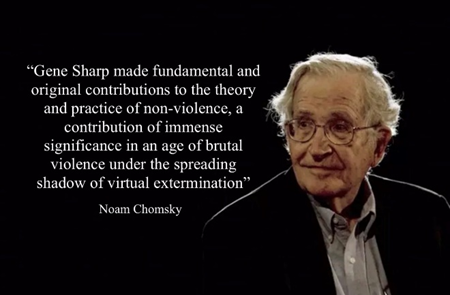
And some time these movements and campaigns will need to address the question of resistance. Gene Sharp, peace researcher, identified 198 non-violent ways in which activists can resist repression and build for social change. He and others have argued that in the long-run non-violent actions have yielded significant positive results. https://www.brandeis.edu/peace-conflict/pdfs/198-methods-non-violent-action.pdf


And Dr. King in his historic “Letter from a Birmingham Jail” has argued that some times resistance requires embracing a “higher law” when civil law does not address profound human grievances. In sum, education, advocacy, and organizing requires action as well and that action might pit the activists in contradistinction to those who resist humane and necessary change.

In the end, the election trope promulgated by the powerful and their friends in the corporate media serve to minimize the mass impulse to endorse and work for social change. If progressives lose, the message is that pursuing change is hopeless. If progressives win, the trope suggests, the need for waking the sleeping giant, the masses, is not necessary.

However, whatever the election outcome, the struggle must continue.

***************************************************************

"What the establishment says to you is that you are powerless. Let's prove them wrong. Let’s transform this country.” Bernie Sanders


Assessments of prior election outcomes: 2012-2022:

ANOTHER ELECTION ASSESSMEN1 (003).docx


https://fb.watch/gEb7qfWVNj/

Thursday, November 3, 2022

WORKERS SUFFER IN RED STATE INDIANA

Harry Targ

This is an example of "ideological hegemony" at work in higher education; how a major university has become a manufacturer of rightwing narratives. This occurs while a United Way study shows that 39 percent of Indiana households live below a livable income.

Cornerstone for Business Conference 2025 - Purdue Business
business.purdue.edu
Cornerstone for Business Conference 2025 - Purdue Business
You’re invited to join a distinguished gathering of business-minded leaders exploring the intersection of markets and moral sentiments. This unique forum brings together academics, business leaders, policymakers, and innovators to delve into critical questions about the role of business in society...


Social and Economic Wellbeing Survey Shows No Progress

A flurry of newspaper stories appeared the first week of February, 2017 in several Indiana newspapers reporting on data from a “health and wellness” national survey about the performance of the 50 states. Indiana according to several measures was ranked as the fourth “worst state” in the country. The national survey consisted of data from 177,281 people interviewed by the Gallup and Healthways organizations. Data included responses to questions about feelings of community support and pride, physical health, and financial security.

According to the survey The Times of Northwest Indiana, (February 8, 2017) reported, “31.3 percent of Indiana residents are obese, 30.6 smoke, and 29.4 percent don’t exercise at all.” Only 24.9 percent of the population had a bachelor’s degree (one of the lowest percentages of any state).  The NWIT article indicated that median household income of Hoosiers was $5,000 less than the national median income. On many measures Indiana’s rank was only ahead of Oklahoma, Kentucky, and West Virginia.

Previous Data on the Indiana Economy

The centerpiece of Indiana public policy since 2004 has been corporate and individual tax cuts and reduced budgets for education, health care, and other public services. Indiana was one of the first states to begin the privatization of the public sector, including transferring educational funds from public to charter schools. It established a voucher system to encourage parents to send their children to private schools. Also, Indiana sold public roads; privatized public services; and recruited controversial corporations such as Duke Power to support research at the state’s flagship research universities. Meanwhile the manufacturing base of the state shifted from higher paying and unionized industrial labor (automobiles, steel, and durable goods) to lower paying service jobs and non-union work such as at the Amazon distribution center.

A positive narrative about Indiana economic growth presented by the former Governor Mike Pence varied greatly from data gathered between 2012 and 2014. For example, between 2013 and 2014, despite enticements to business, Indiana grew at a 0.4 percent pace while the nation at large experienced 2.2 percent growth.

Indiana’s economy historically was based on manufacturing but has experienced declines since the 1980s (with only modest increases in recent years).  However, newer manufacturing between 2014 and 2016 was mostly in low-wage non-unionized sectors.   For example, the Indiana Institute for Working Families reported on data from a study of work and poverty in Marion County, which included the state’s largest city, Indianapolis.  Four of five of the largest growing industries in the county paid wages at or below family sustainability ($798 per week for a family of three) and individual and household wages declined significantly between 2008 and 2012 (Derek Thomas, “Inequality in Indy - A Rising Problem With Ready Solutions,” August 13, 2014, (www.iiwf.blogspot.com).

Further, Thomas quoted a U.S. Conference of Mayors’ report on wages and income:  “…wage inequality grew twice as rapidly in the Indianapolis metro area as in the rest of the nation since the recession.” This is so because new jobs created paid less on average than the jobs that were lost since the recession started.

Thomas pointed out that the mayors’ report had several concrete proposals that could address declining real wages and stimulate job growth. These included “raising the minimum wage, strengthening the Earned Income Tax Credit, public programs to retrain displaced workers,” and developing universal pre-kindergarten and programs to rebuild the state’s crumbling infrastructure. They may have added that declining real wages also related to attacks on unions in both the private and public sectors and the dramatic reduction in public sector employment.

Thomas recommended in 2012 that Indianapolis (and Indiana) should have taken these data seriously because in Marion County “poverty is still rising, the minimum wage is less than half of what it takes for a single-mother with an infant to be economically self-sufficient; 47 percent of workers do not have access to a paid sick day from work, and a full 32 percent are at or below 150 percent of the federal poverty guidelines ($29,685 for a family of three).” 

More recently, November 10, 2014, the Indiana Association of United Ways issued a 250-page report on the state called the “Study of Financial Hardship.” The study, parallel to similar studies in five other states and prepared by a research team at Rutgers University, introduced the concept of  Asset Limited, Income Constrained, Employed or (ALICE). ALICE refers to households with incomes that are above the poverty rate but below “the basic cost of living.” The startling data revealed that:

-a third of Hoosier households cannot afford adequate housing, food, health care, child care, and transportation.

-specifically, 14 percent of households are below the poverty line and 23 percent above poverty but below the threshold out of ALICE, or earning enough to provide for the basic cost of living.

-570,000 households are within the ALICE status and 353,000 below the poverty line.

-over 21 percent of households in every Indiana county are above poverty but below the capacity to provide for basic sustenance.

Referring to those within the ALICE category of wage earners who have struggled to survive but earn less than what it takes to meet basic needs, Kathy Ertel, Board Chairperson of Indiana Association of United Ways said: “ALICE is our child care worker, our retail clerk, the CAN who cares for our grandparents, and our delivery driver” (Roger L. Frick, “Groundbreaking Study Reveals 37% of Hoosier Households Struggle With the Basics,” Indiana Association of United Ways, November 10, 2014, Roger.Frick@iauw.org).

The United Way published a revised ALICE survey in 2020 concluding that “In 2018, eight years after the end of the Great Recession, 37% of Indiana’s 2,592,262 households still struggled to make ends meet. And while 13% of these households were living below the Federal Poverty Level (FPL), another 24% — almost twice as many — were ALICE households: Asset Limited, Income Constrained, Employed. These households earned above the FPL, but not enough to afford basic household necessities.” https://iuw.org/alice/

In 2022  Aaron Renn wrote that “The Hoosier state has had a Republican governor since Mitch Daniels was elected in 2004. It has been a Republican “trifecta” state, with GOP majorities in both houses of the legislature, since 2011… its average disposable income had actually declined to 89.5 percent of the national level….When Daniels was elected, Indiana’s per capita disposable income was only 90.5 percent of the U.S. average.” Aaron Renn,Indiana under Republican Rule: ‘Pro-Business’ Policy Disappoints outside the Sunbelt” American Affairs,Winter 2021 / Volume V, Number 4

But a recent Alec (the American Legislative Exchange Council, a Koch Foundation economically libertarian lobby group) co-sponsored study Rich States Poor States says the following: “Indiana is currently ranked 7th in the United States for its economic outlook. This is a forward-looking forecast based on the state’s standing (equal-weighted average) in 15 important state policy variables. Data reflect state and local rates and revenues and any effect of federal deductibility.” The Rich States, Poor States  variables used to rank states included personal, property, and corporate tax rates, levels of workers compensation, whether the state was a so-called “right to work state’, minimum wage laws, and other pro-business measures. The more beneficial to business, the higher the ranking the state was given. https://www.richstatespoorstates.org/states/IN/ 

In contradiction to this ALEC sponsored report,  David Ricks, CEO of Eli Lilly said that “Indiana’s focus for so long, over so many years of Republican leadership, has been to create a tax climate and a regulatory structure that is friendly enough to business that companies can’t help but consider Indiana for major projects.” He referred to national data indicating that the cost of living and business climate in Indiana were strong but, in his words, “Our education attainment in the state is not good. The ability to reskill the workforce, I think, could improve. Health, life and inclusion, overall, I think, conditions rank poorly nationally in our state. And also workforce preparedness, also related to reskilling, is a liability for us.” https://www.wishtv.com/news/indiana-news/lilly-ceo-takes-critical-stance-against-indiana-economy/

In other words, Indiana’s economy, particularly in the years of Republican one-party rule is one of prioritized tax cuts, deregulation, privatization, and business incentives at the expense of education, health care, wages, worker rights, and public institutions, And this is the contradiction: Indiana being “currently ranked 7th in the United States for its economic outlook” versus the dramatic ALICE estimate that 37 percent of Indiana households live below a livable wage. As Renn summarizes it: “since 2000, the state ranks a dismal forty-sixth in median wage growth, and the growth in median earnings has been at only half the rate of the rest of the country. Only 42 percent of workers in the state earn a living wage (adjusted for cost of living) and have employer-provided health insurance.”

Assessing these recent studies and the 2017 report cited at the outset leads to the conclusion that an evaluation of the current state of the Indiana economy depends upon where one is located in terms of economic, political, or professional position. Those Indiana men, women, and children who come from the 37 percent of households who earn less, at, or slightly above the poverty line probably have a negative view of their futures. For them, the tax breaks for the rich and the austerity policies for the poor are not positive. 

Indiana Politics

Perhaps the starkest fact to note in reference to the growing economic insecurity in the state of Indiana over time is that in 1970 forty percent of Hoosier workers were in unions, then the state with the third highest union density. By the dawn of the second decade of the twenty-first century only 11 percent of workers were in trade unions. Recent legislation has disadvantaged Hoosier workers including passage of a Right to Work law and repeal of the state version of prevailing wage. The Mitch Daniels/Mike Pence administrations (2004-2016) have used charter schools and vouchers to weaken teachers’ unions. In addition, in his first day in office in January, 2004, newly elected Governor Mitch Daniels signed an executive order abolishing the right of state employees to form unions. 


In 2005 the Indiana state government (legislature and governor) passed the first and most extreme voter identification law. Voters were required to secure voter identification photos. Michael Macdonald a University of Florida political scientist estimated that requiring voter IDs reduces voter participation by 4-5 percent, hitting the poor and elderly the hardest. In addition, Indiana law ended voter registration in the state one month before election day. And polls close at 6 p.m. election day, among the earliest closing times in the country. Finally, requests for absentee ballots require written excuses. 

Republican control of the executive and both legislative branches led to redistricting which further empowered Republicans and weakened not only Democrats but the young and old and the African American community. Nine solidly Republican congressional districts were drawn in 2000.  In 2014, of 125 state legislative seats up for election, 69 were uncontested.  2014 Indiana voter turnout was 28 percent, the lowest state turnout in the country. The Governor’s office has been held by Republicans since 2004 and Republicans have had majorities in both legislative bodies since 2010, when statewide redistricting was implemented.

Traditionally when Democrats were in the Governor’s mansion and/or controlled a branch of the legislature, they too tended to support neoliberal economic policies, but less draconian, and had been more moderate on social policy questions. In recent years, many legislators and the two most recent governors have been friends of or received support from the American Legislative Exchange Council (or ALEC) funded by major corporations and the Koch brothers. 

With ALEC money, some active Tea Party organizations, the growth of rightwing Republican power, and centrist Democrats, Indiana government has been able to initiate some of the most regressive policies in reference to voting rights, education, taxing, and deregulation in the country. And as the data above suggests, the political economy of Indiana has increased the suffering of the vast majority of working families in the state. Other data suggests that the quality of health care, education, the environment, and transportation have declined as well.

The political picture is made more complicated by the fact that Indiana is really “three states.” The Northwest corridor, including Gary and Hammond, are cities which have experienced extreme deindustrialization, white flight, and vastly increased poverty. Political activists from the area look to greater Chicago for their political inspiration and organizational involvement. Democratic parties are strong in these areas but voter participation is very low. 

Central Indiana includes a broad swath of territory with small cities and towns and the largest city in the state, Indianapolis. Much of the area is Republican, many counties have significant numbers of families in poverty, and some smaller cities have pockets of relative wealth. Democrats hold some city offices but the area is predominantly Republican.

The southern part of the state, south of Indianapolis, in terms of income, political culture, and history resembles its southern neighbor Kentucky, more than the northern parts of the state. The state of Indiana was the northern home of the twentieth century version of the Ku Klux Klan. In the 1920s, the KKK controlled Indiana state government. That reality, the institutionalized presence of overt racism, remains an aspect of Hoosier history that may still affect state politics.

In sum, the working people of Indiana enter the coming period with little economic hope, a politics of red state dominance. And as Renn puts it: “Republican leadership, exemplified by Mitch Dan­iels, has chosen to prioritize the preferences of businesses, or at least a subset of them, over those of its citizens. The sentiment is captured in the state’s slogan, 'a state that works,' which is emblazoned along with a sprocket logo on the side of the state office building in downtown Indianapolis. In practice, Indiana has pandered to low-wage employers, and sided with businesses over citizens in many policy disputes."

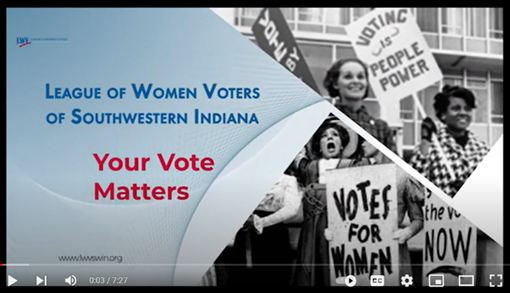
Social change in Indiana, as with the nation at large, will require a vibrant, active progressive movement in Indiana. It is clear that in the 2022 elections and beyond, Hoosier’s, the vast majority workers, must vote to end single-party red state politics, at the same time that mass movements direct their attention to improving the lives of the 99 percent.


mp/msohtmlclip1/01/clip_image004.png">

Monday, October 31, 2022

THE REALITIES OF IMPERIALISM AND DEPENDENCY: STILL RELEVANT TODAY

 Harry Targ

Council on Foreign Relations, October 31, 2022

Leftist former President Luiz Inácio Lula da Silva, commonly known as Lula, won Brazil’s presidential runoff (Reuters) yesterday, defeating incumbent Jair Bolsonaro by less than two percentage points. Bolsonaro did not concede the election last night nor make any public statement. Heads of state from around the world congratulated Lula on his victory.


Imperialism

Students of imperialism appropriately refer to the polemical but theoretically relevant essay authored by Marx and Engels, The Communist Manifesto. In this essay, the authors argue that capitalism as a mode of production is driven to traverse the globe, for investment opportunities, for cheap labor, for natural resources, for land. One can argue that Marx and Engels were among the first to theorize about globalization.

Lenin advanced the theory of imperialism in his famous essay Imperialism, the Highest Stage of Capitalism. In addition to the inspiration from Marx and Engels, he drew from the sophisticated writings of Rudolf Hilferding and John Hobson. For him, writing in the midst of the bloodshed of World War I and revolutionary ferment in Russia, there was a need to understand the connections between the expansionist needs of capitalism, competition among capitalist states, and imperialist war. With that motivation, Lenin postulated five key features of what he called imperialism, the highest stage of capitalism. This new stage of capitalist development in the twentieth century included:

1) The concentration of production and capital developed to such a high stage that it created monopolies, which play a decisive role in economic life.

2) The merging of bank capital with industrial capital, and the creation, on the basis of this, "finance capital," or a "financial oligarchy."

3) The export of capital, which has become extremely important, as distinguished from the export of commodities.

4) The formation of international capitalist monopolies, which share the world among themselves.

5) The territorial division of the whole world among the greatest capitalist powers is completed.

Lenin’s descriptions of these five features of twentieth century imperialism were prescient as to their long-term vision. Imperialism was not just a way in which powerful states acted in the world but a global stage of capitalism. The political, military, and economic dimensions of the world were inextricably connected in a profoundly new way, different from prior periods of human history.

In this stage national economies and the global economy were dominated by monopolies. That is, small numbers of banks and corporations controlled the majority of the wealth and productive capacity of the world. (The Brandt Commission in the early 1980s estimated, for example, that 200 corporations and banks controlled twenty-five percent of the world’s wealth). Monopolization included a shrinking number of economic actors that controlled larger and larger shares of each economic sector (steel, auto, fossil fuels, for example) and fewer and fewer actors controlling more of the totality of all these sectors.

Lenin added that twentieth century finance capital assumed a primary role in the global economy compared to prior centuries when banks were merely the bookkeepers of the capitalist system. Corporate capital and financial capital had become indistinguishable. This, in our own day, became known as "financialization.”

The development of finance capital, Lenin argued, led to the export of capital, the promotion of investments, the enticement of a debt system, and the expanding control of all financial transactions by the few hundred global banks. Capitalism was no longer just about expropriating labor and natural resources, processing these into products for sale on a world market but it now was about financial speculation, the flow of currencies as much as the flow of products of labor. It was in this stage of capitalism that the financial system was used as a lever to transform all of the world’s economies, particularly by increasing profits through imposing policies of austerity. Austerity included cutting government programs, deregulating economies so banks and corporations could act more freely, and, further, instituting public policies to maximize the privatization of virtually every public institution. Also, and of particular relevance to the Brazilian case, was the opening up of natural resources and land to global corporations. These policies were referred to as “neoliberal.”

And lastly, Lenin observed, world politics was shaped by economic and political collusion of international monopolies to collaborate, routinize, and regulate economic competition. But, as he saw in 1916, that world of routinized global finance capital had broken down, states representing their own financial conglomerates engaged in massive violence, in World War, to maintain their share of territory and wealth. So that imperialism, the highest stage of capitalism, always had embedded within it, the seeds of ever-expanding war between states driven by their own monopolies.

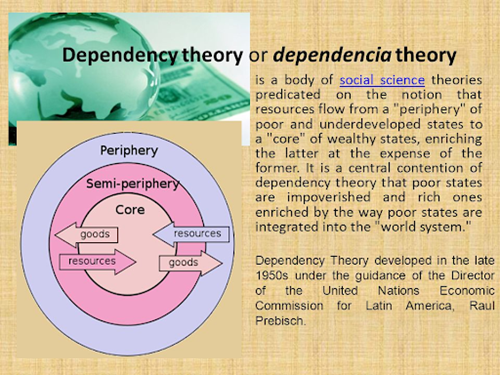
Dependency

T\\

Theorists and revolutionaries from the Global South found Lenin’s theory of imperialism to be a compelling explanation of the historical development of capitalism as a world system and its connections to war, violence, colonialism, and neo-colonialism. However, they argued that Lenin’s narrative was incomplete in its description of imperialism’s impact on the countries and peoples of the Global South. Several revolutionary writers and activists from the Global South added a “bottom up” narrative about imperialism. Theorists such as Andre Gunter Frank, Samir Amin, Frantz Fanon, Walter Rodney, Fernando Cardoso, Theotonio Dos Santos, and Jose Carlos Mariategui added an understanding of “dependency” to the discussion of imperialism. And today the writings of V J Prashad and his colleagues at Tricontinental carry on the tradition.

Dependency theorists suggested that the imperialist stage of capitalism was not enforced in the Global South only at the point of a gun. Dependency required the institutionalization of class structures in the Global South. Ruling classes in the Global South, local owners of factories, fields, and natural resources, and their armies, collaborated with the ruling classes of the global centers of power in the Global North. In fact, the imperial system required collaboration between ruling classes in the global centers with ruling classes in the periphery of the international system. And ultimately, imperialism, the highest stage of capitalism, was a political and economic system in which the ruling classes in the centers of power worked in collaboration with the ruling classes in the Global South to exploit and repress the vast majority of human beings in the world.

Dependency theory, therefore, added insights to the Leninist analysis. First, the imperial system required collaboration from the rich and powerful classes in the centers of global power, the Global North, developing and recruiting the rich and powerful classes in the countries of the Global South. It also meant that there was a need to understand that the imperial system required smooth flows of profits from the Global South to the Global North. Therefore, there was a mutuality of interests among ruling classes everywhere. The addition of dependency theory also argued that people in the periphery, workers and peasants in poor countries, had objective interests not only opposed to the imperial countries from the north but to the interests of their own national ruling classes. And, if this imperial system exploited workers in the centers of power and also in the peripheral areas of the world, then there ultimately was a commonality of interests of the poor, oppressed, and exploited all across the face of the globe.


Relevance for the Twenty-First Century

Although the world of the twenty-first century is different from that of the twentieth century, commonalities exist. These include the expansion of finance capital, rising resistance to it everywhere, and conflicts in the Global North and the Global South between powerful ruling classes and masses of people seeking democracy and economic well-being. In the recent past, the resurgence of protest by workers, students, farmers and peasants, the popular classes, has been reflected in mass movements against neoliberal globalization and international financial institutions. These include Arab Spring, the Fight for Fifteen, and a number of campaigns that challenge racism, sexism, joblessness, the destruction of the environment, land grabs, and removal of indigenous peoples from their land. The electoral victory of Lula is the most recent example.

In Latin America, movements emerged that have been labeled “the Pink Tide” or the “Bolivarian Revolution.” These are movements driven by struggles between the Global North and the Global South and class struggles within countries of the Global South. Workers and peasants from the Global South have been motivated to create, albeit within powerful historical constraints, alternative economic and political institutions in their own countries. The awakening of the masses of people in the Global South constitute one of the two main threats to Imperialism, the Highest Stage of Capitalism. The first threat is the movements that are struggling to break the link between their own ruling classes and those of the North. That includes working with leaders who are standing up against the imperial system (leaders such as in Venezuela, Bolivia, and, of course Cuba). The other threat to Imperialism, the Highest Stage of Capitalism, is, as Lenin observed in 1916, war between imperial powers.

In sum, as activists mobilize to oppose US war against the peoples of Latin America, the Middle East, Africa, and Asia, it is critical to be aware of the imperial system of finance capital, class systems in the Global North and Global South, and to realize that solidarity involves understanding the common material interests of popular classes in both the Global North and South. In 2022, solidarity includes opposing United States militarism in Latin America, economic blockades against peoples seeking their own liberation, and covert operations to support current and former ruling classes in their countries that collaborate with imperialism.

Concretely, this means supporting the Bolivarian Revolution in Venezuela and throughout the Western Hemisphere, protests in Haiti, of course, the Cuban Revolution, and now the transition to democracy in Brazil.


Tuesday, October 25, 2022

Rethinking the Peace Movement in 2022: a video and power point


https://www.globaljusticecenter.org/videos/rethinking-peace-movement-2022

What we used to call “the peace movement” is facing an extraordinary array of problems in 2022. The war in Ukraine is escalating and combatants are talking about the use of nuclear weapons. How to address the escalating conflict, debates about root causes, understanding imperialisms etc. are subject to debate even among the left. US military spending has at least tripled since the dawn of the new century and the culture and economics of militarism is penetrating US society now perhaps more than ever. A new Cold War is being discussed with the United States escalating tensions, not only with Russia but with China as well.  And voices from the Global South are raising demands that progressives envision international relations in a new way; not just in terms of “great power” conflict but violence and exploitation from the Global North against the Global South.

Harry Targ, former coordinator of the Purdue University Committee on Peace Studies, activist with the Committees of Correspondence for Democracy and Socialism (CCDS), member of the steering committee of Wisconsin Peace Action, and essayist at Diary of a Heartland Radical, will address the issues facing the peace movement today and how that movement or movements have responded. 

Power Point:

RETHINKING THE PEACE MOVEMENT IN 2022.pptx


 revitalizing the tradition of peace movements.


The Bookshelf

CHALLENGING LATE CAPITALISM by Harry R. Targ

Challenging Late Capitalism