Global challenges to the international order
(Originally posted 10 Aoril,
2013 in The Rag Blog)
Harry Targ

We are experiencing a dramatic transformation
of international relations. Central features of it involve the relative decline
of US/NATO hegemony and the growing integration of policy preferences of
countries of the Global South. One element of this story is “dedollarization.”
This 4-minute video below describes what is happening.
https://www.youtube.com/watch?v=OkMgqg_wFuM&t=5s
These changes pose fundamental questions
about how and in what ways the US peace and justice movements should proceed
(June 4, 2023)
Latin American and African dependency theorists and “bottom-up” historians have argued for a long time that resistance must be part of the understanding of any theory of imperialism.
A whole generation of activists has “grown up”
conversant with the central place of empire in human history. Children of the
Cold War and the “Sixties” generation realized that the United States was the
latest of a multiplicity of imperial powers which sought to dominate and
control human beings, physical space, natural resources, and human labor power.
We learned from the Marxist tradition, radical historians, scholar/activists
with historical roots in Africa, and revolutionaries from the Philippines and Vietnam
to Southern Africa, to Latin America. But we often concluded that imperialism
was hegemonic; that is it was all powerful, beyond challenge.
A “theory of imperialism” for the 21st century should include four
interconnected variables that explain empire building as well as responses to
it.
First, as an original motivation for empire, economic interests are primary.
The most recent imperial power, the United States, needed to secure customers
for its products, outlets for manufacturing investment opportunities, an open
door for financial speculation, and vital natural resources such as oil.
Second, the pursuit of military control parallels and supports the pursuit of
economic domination. The United States, beginning in the 1890s, built a
two-ocean navy to become a Pacific power, as well as institutionalizing its
control of the Western Hemisphere. It crushed revolutionary ferment in the
Philippines during the Spanish, Cuban, American War and began a program of
military intervention in Central American and the Caribbean. The “Asian pivot”
of the 21st century and continued opposition to the Cuban and Bolivarian
revolutions reflect the 100-year extension of the convergence of economics and
militarism in U.S. foreign policy.
Third, as imperial nations flex their muscles on the world stage they need to
rationalize exploitation and military brutality to convince others and their
own citizens of the humanistic goals they wish to achieve. In short, ideology
matters. In the U.S. case, “manifest destiny” and the “city on the hill,” that
is the dogma that the United States has a special mission as a beacon of hope
for the world, have been embedded in the dominant national narrative of the
country for 150 years.
However, what has often been missing from the left-wing theoretical calculus is
an understanding of resistance. Latin American and African dependency theorists
and “bottom-up” historians have argued for a long time that resistance must be
part of the understanding of any theory of imperialism. In fact, the imperial
system is directly related to the level of resistance the imperial power
encounters.
Resistance generates more attempts at economic hegemony, political subversion,
the application of military power, and patterns of “humanitarian
interventionism” and diplomatic techniques, called “soft power,” to defuse it.
But as recent events sugge, resistance of various kinds is spreading throughout
global society.
The impetus for adding resistance to any understanding of imperialism has many
sources including Howard Zinn’s seminal history of popular movements in the
United States, The People’s History of the United States. Zinn argued
convincingly that in each period of American history ruling classes were
challenged, shaped, weakened, and in a few cases defeated because of movements
of indigenous people, workers, women, people of color, middle class
progressives, and others who stood up to challenge the status quo.
More recently, Vijay Prashad, author of The Darker Nations, compiled a
narrative of post-World War II international relations that privileged the
resistance from the Global South. World history was as much shaped by
anti-colonial movements, the construction of the non-aligned movement,
conferences and programs supporting liberation struggles and women’s rights, as
it was by big power contestation. The Prashad book was subtitled A
People’s History of the Third World.
The 21st century has witnessed a variety of forms of resistance to global
hegemony and the perpetuation of neoliberal globalization all across the face
of the globe. First, various forms of systemic resistance have emerged. These
often emphasize the reconfiguration of nation-states and their relationships
that have long been ignored.
The two largest economies in the world, China and India, have experienced
economic growth rates well in excess of the industrial capitalist countries.
China has developed a global export and investment program in Latin America and
Africa that exceeds that of the United States and Europe.
In addition, the rising economic powers have begun a process of global
institution building to rework the international economic institutions and
rules of decision-making on the world stage. On March 26-27, 2013, the BRICS
met in Durban, South Africa. While critical of BRICS shortcomings Patrick Bond,
Senior Professor of Development Studies and Director of the University of
KwaZulu-Natal Centre for Civil Society, in a collection of readings on the
subject, introduces BRICS with an emphasis on its potential:
In Durban, five heads of state meet to assure the rest of Africa that their countries’ corporations are better investors in infrastructure, mining, oil and agriculture than the traditional European and U.S. multinationals. The Brazil-Russia-India-China-SA summit also includes 16 heads of state from Africa, including notorious tyrants. A new "BRICS bank" will probably be launched. There will be more talk about monetary alternatives to the U.S. dollar.
On the Latin American continent, most residents of the
region are mourning the death of Hugo Chavez, the leader of the Bolivarian
Revolution. Under Chavez’s leadership, inspiration, and support from oil
revenues, Venezuela launched the latest round of state resistance to the
colossus of the north, the United States.
Along with the world’s third largest trade bloc MERCOSUR (Argentina, Brazil,
Paraguay, Uruguay, Venezuela and associate memberships including Bolivia,
Chile, Colombia, Ecuador, and Peru), Latin Americans have participated in the
construction of financial institutions and economic assistance programs to
challenge the traditional hegemony of the International Monetary Fund, the
World Bank, and the World Trade Organization.
The Bolivarian Revolution also has stimulated political change based on various
degrees of grassroots democratization, the construction of workers’
cooperatives, and a shift from neoliberal economic policy to economic populism.
With a growing web of participants, Bolivia, Ecuador, Brazil, Argentina,
Uruguay, Nicaragua, El Salvador, and, of course, Cuba, the tragic loss of
Chavez will not mean the end to the Bolivarian Revolution. It might lead to its
deepening.
But the story of 21st century resistance is not just about countries,
alliances, new economic institutions that mimic the old. Grassroots social movements
have been spreading like wildfire all across the face of the globe. The story
can begin in many places and at various times: the new social movements of the
1980s; the Zapatistas of the 1990s; the anti-globalization/anti-IMF campaigns
going back to the 1960s and continuing off and on until the new century; or
repeated mass mobilizations against a Free Trade Agreement for the Americas.
Since 2011, the world has been inspired by Arab Spring, workers’ mobilizations
all across the industrial heartland of the United States, student strikes in
Quebec, the state of California, and in Santiago, Chile. Beginning in 2001 mass
organizations from around the world began to assemble in Porto Alegre, Brazil,
billing their meeting of some 10,000 strong, the World Social Forum.
They did not wish to create a common political program. They wished to launch a
global social movement where ideas could be shared, issues and demands from the
base of societies could be raised, and in general the neoliberal global agenda
reinforced at the World Economic Forum in Switzerland could be challenged.
The World Social Forum has been meeting annually ever since in Latin America,
Asia, Africa, and the United States. Most recently, the last week in March,
2013, 50,000 people from 5,000 organizations in 127 countries from five
continents met in Tunis, the site of the protest that sparked Arab Spring two
years ago. Planners wanted to bring mass movements from the Middle East and
North Africa into the collective narrative of this global mobilization.
Medea Benjamin, founder of Code Pink, reported that a Tunisian student, when
asked whether the Social Forum movement should continue, answered in the
affirmative. The student paid homage to the Tunisian street vendor, Mohamed
Bouazizi, who committed suicide and launched Arab Spring. He declared that “for
all those who have died struggling for justice, we must continue to learn from
each other how to build a world that does not respond to the greed of
dictators, bankers or corporations, but to the needs of simple people like
Mohamed Bouazizi.”


Harry Targ
(a repost)
Fighting
for Peace: Veterans and Military Families in the Anti-Iraq War Movement by
Lisa Leitz. Minneapolis: University of Minnesota Press, 2014. (306 pages; paper)
One of the biggest scholarly secrets about social
movements since the Vietnam War is the magnitude and vibrancy of the anti-war
movement inside the military. “Sir! No Sir!” a 2005 film documented the
militant anti-war movement that spread throughout the United States military in
the late 1960s and early 1970s. The movement included acts of civil
disobedience at military bases, networks of coffee houses near military
installations, anti-war newspapers targeted to military readers, and a
spreading network of anti-war families and loved-ones as the movement
percolated throughout U.S. society.
Fighting
for Peace by Lisa Leitz, Assistant Professor of Sociology and
Director of Project Pericles at Hendrix College, fast-forwards in a rigorous
way to the study of the military anti-war movement from 2005 to 2012; involving
veterans of wars in Iraq and Afghanistan, loved-ones of those serving, extended
families, and networks of military families. The volume uses a variety of
methods--questionnaires, extended interviews, archival materials, and ethnographies
of organizations and individual military anti-war activists and their families.
While surveying anti-war movements against the wars in Iraq and Afghanistan,
Professor Leitz concentrates on the participation, vision, rhetoric, activism, tactics,
and contradictory “identities” of five organizations: Veterans for Peace,
Military Families Speak Out, Iraq Veterans Against the War, Gold Star Families
for Peace, and Gold Star Families Speak Out.
The narrative begins with the formation of some of
these groups and growing tensions between them arising after the dramatic
anti-war protests initiated by Cindy Sheehan, mother of a son who was killed in
Iraq. The site of this demonstration in Crawford, Texas was adjacent to the
summer residence of President George Walker Bush. For Leitz, the camp site that was created and
named after Sheehan’s deceased son, Camp Casey was “a watershed moment for this
movement.” In addition to inspiring the anti-war movement generally “…the vigil
brought together veterans of the current wars, veterans of past wars, families
of dead military service members, and families of current service members who
were all critical of the Iraq War” (3).
The volume presents in-depth research on each of the
anti-war military organizations. It addresses their composition: current
military and veterans; families of service members and those killed and
injured; and veterans of prior U.S. wars, particularly the Vietnam War. It
examines the collaborations and tensions between the veterans and military families
and the larger peace movement. It
describes policies, programs, and strategies. These involve anti-war positions and demands for increased services for
soldiers on the ground and those returning veterans with health needs. It
describes debates about how the military and military families should use their
special legitimacy, experiencing war directly or through loved ones, in the
mass movement. And the narrative describes how the military anti-war movement
(rather than the peace movement in general) became a platform for debate between
some socialist organization members who wished to incorporate it in a larger
campaign to radically transform society versus those who argued that the
military anti-war movement should concentrate on the more limited goal of
ending the U.S. wars in Iraq and Afghanistan and providing adequate services
for returning veterans.
Perhaps the most intriguing aspect of the study is the
portrait of the contradictions faced by the author herself and the five
organizations as they navigated through a hostile military environment. First,
Professor Leitz, a visible anti-war activist was married to a career military
officer. As a military spouse, she lived on military bases and carried out some
of her anti-war activism in a social milieu that was hostile. She frames much
of the study around how active military personnel, veterans, and military
families addressed these contradictions personally and politically.
The contradiction of being anti-war activists in
social networks of military personnel and families was replicated in the
tensions anti-war veterans and military families experienced working with the
larger, non-military peace movement. Many of the former opposed the two
twenty-first century wars but believed that the U.S. military was needed and,
on occasion, could engage in positive projects. This position put these
military activists at odds with peace movement ideology and sometimes peace
movement practice.
This portrait of the contradictions between the
military movements and the larger peace and anti-war movement provides useful
information for activists who ponder how to expand participation in campaigns
to promote a peace agenda. And, of course, the peace movement should appropriately
respect the special experience, legitimacy, policy preferences, and more
limited perspectives of those who actually have experienced war. In addition
Professor Leitz describes how the military activists reflected on how their
influence could be enlarged as they struggled to become part of a larger more
“generic” peace movement.
Fighting
for Peace can be a valuable tool for researchers as well as
activists. Despite the author’s abstract framing of her research as a study of
the military “insider-outsider” identity which sometimes interferes with the well-written
account it remains an important contribution to the scholarly study of social
movements. Furthermore the rigorous study demonstrates the issues and pitfalls
that peace activists must consider as they organize to create a more peaceful
world.

Harry Targ

On November 2, 1965, Norman Morrison brought his daughter with him to the
Pentagon. Outside the office of Secretary of Defense Robert McNamara, Morrison
set himself on fire to protest the escalating war in Vietnam. His daughter,
Emily, somehow was passed to others and survived the flames. Morrison, however,
died as he had lived, protesting the bombing of villages in South Vietnam,
killing innocent men, women, and children.
I was part of an educational tour to Vietnam in March, 2011. We were taken to a
powerful museum, known as the War Remnants Museum in Ho Chi Minh City. On the
second floor an exhibit featured images of international solidarity with the
Vietnamese people during the American war. Included there was a framed copy of
an American newspaper account of Morrison’s self-immolation. Earlier, in Hue,
we had seen an exhibit of the automobile used by a Buddhist Monk, Thích Quảng Đức,
who killed himself in protest of the brutality of the Diem regime in South
Vietnam. Presumably this act inspired Morrison’s tragic protest.
I had forgotten Morrison’s dramatic act, and the acts of several others who
bravely sacrificed their bodies and lives to oppose the murderous war in
Vietnam. As we celebrate Memorial Day this May 29, I think about Morrison, the exhibit at the
Vietnamese Museum, and parallel acts of self-sacrifice.
First, on reflection, I am in awe of the courage and self-sacrifice of the acts
of these brave and principled people. Yet, I wish they had not made the
ultimate sacrifices they did and had put their courage and willingness to
sacrifice to the long-term struggles of the peace movement to end war.
However, I believe we must “take back” Memorial Days from those who celebrate
war, see sacrifice only from those who kill and die, and ignore the bravery of
the men and women everywhere who fight to end war. We mourn those who were sent
off to fight in ignoble wars in the name of the United States. Also we must
declare Memorial Day as a day to remember all the Norman Morrison’s who have
said “no” to war and empire.

The Power Point
https://1drv.ms/p/s!Ai-1aQ8p0naVlh2p9WsxLn7EE4Rc?e=D9huEe
Harry Targ

These are indeed hard times for the vast
majority of humankind. And the times are troubling for a number of reasons.
First, communities,
nations, and the planet face the possibility of extinction of all life forms.
Warning signs are seen everywhere: drought, fires, heat, cold, and the prospect
of large swaths of land being flooded by global warming. And as has been the
case for hundreds of years, the greatest threats and immediate suffering is
impacting particularly on the peoples and lands of the Global South.
Second, despite years of
wise counsel, mass movements, campaigns, and demands, the danger of nuclear war
continues. Indeed, many experts and peace activists believe the danger of
nuclear war is as serious now as at any time since 1945. Ironically, leaders of
the G7 countries meeting in Hiroshima now are discussing what amounts to
further fueling the war in Ukraine.
Third, along with these
two life-threatening issues, every country and people have experienced poverty,
inequality, anomic violence, and weakening educational and health care
institutions, Pundits from the Global North report on food, health care, and educational
deserts. But because a small number of conglomerates control more and more of
what we know, what might be called media deserts reduce the possibility of people
having knowledge about the crises facing them, their communities, and the
planet. The metaphor of the “desert” speaks to the scarcity of peoples’ access
to information about the viability of human life.
Fourth, and to some
extent “the good news,” masses of people are rising up angry within the United
States and around the world. Workers, students, people of color, women, and other
oppressed groups are making their voices heard. And in some places movements
have been impactful. In the United States elections have mattered: some for good,
others for evil. And, in general, if the planet survives, so-called minorities
will be majorities by 2050 (the rightwing fears this referring to what it calls
“replacement theory”).
Fifth, one
manifestation of people rising up angry is a new emerging sensibility and organizations
coming from “the Global South.” The Global South, an imprecise construct,
consists of all those peoples, territories, and nations that have been victimized
by capitalism for hundreds of years. Today leaders of governments of various
ideologies from the Global South have organized around trading zones,
dedollarization and new military security arrangements, and the construction of
new international organizations. They have revitalized demands for a New
International Economic Order and a New World Information Order.
But sixth, while people are rising up angry all
across the globe (and in the belly of the
beast the United States), they are doing so in an array of competing
organizations characterized by a multiplicity of ideologies, issue priorities,
and even multiple interpretations of the historical past and the present. As so
often happens, many of these organizations claim that they are prepared to lead
to a new world order. Organizational interest and individual egos get in the
way of the broader project; that is saving humanity.
And this is part of the context of “Left” organizing
in the United States today. It leads to raising again questions of our history,
tactics and strategy, elections, street heat, and education.
Therefore, a number of issues of strategy,
tactics, and thought need to be reexamined.
Most importantly, the fascist label is resented and
opposed by the targets of such a label. If the goal is to organize masses of
people, particularly those who have become economically and politically
marginalized by the system, such labeling creates enemies not friends. And
polling data has shown repeatedly that majorities of Americans support
progressive social and economic policies and even to some degree racial
justice.
From the pre-civil war period until today approximately
20-25 percent of Americans have held and hold reactionary and white supremacist
perspectives. Recent data suggests that some 45 percent of voters identify as
Democrats, a few percentage points less Republicans, and about ten percent
independents. Those who identify as independents have been less likely to vote.
While reports of political surveys vary, the point is that the electorate and
those who hold political views are varied and contradictory. And we should
always keep in mind that the corporate media communicates, portrays, and
sometimes exaggerates violence as the norm.
Second, much research
suggests that there does exist a “politics of resentment” across the country, a
resentment of alienation, powerlessness, and recognition that wealth and power
are grotesquely unequal in its distribution. Often this resentment leads people
to find solace in demagogues or more often to choose to not participate in what
they regard as an unfair system.
The politics of resentment in this country led the
Roosevelt Administration and the Democratic Party to begin to address real
sources of economic pain and suffering in the 1930s. The Democratic party of
the New Deal, The Fair Deal, and the Great Society was built around addressing
some of the economic and political needs of the people. And as a result, on the
national level, the Democratic Party became the majority party.
But in the 1970s, the Democratic Party tilted toward
neoliberalism, primarily policies of austerity and deregulation of the corporate
sector, a neoliberalism that was fully institutionalized in the 1980s Reagan
Revolution. And it is important to note that the Reagan Revolution was
sanctified by the Clinton/centrist wing of the Democratic Party which has
become the dominant faction of that party ever since.
In short, there has been an inextricable
connection between the rightwing thrust of national and state politics in the United
States and the shift of the Democratic Party away from the New Deal tradition.
For today and tomorrow, demanding a return to the reforms of the New Deal/Great
Society period provides the only way to defeat the Right.
Labeling extremists as fascists, ridiculing Trump and
MAGA, and rewriting narratives of US history will not defeat reaction. Only a
progressive agenda will. And those progressives in the Democratic Party, in the
labor movement, and among the sectors of the Left must demand that their candidates
uncompromisingly stand for economic and social justice. For sure, there exist
vital and popular movements around healthcare for all, women’s rights, the right
to form unions, climate change, increased voting rights, support for public
institutions such as schools, libraries, and transportation systems,
immigration reform, and underlying each an end to the long, painful, and
immoral history of racism in the United States.
Finally, and this is
critical, a careful review of twentieth century US history shows that domestic
and foreign policies are connected. In critical periods, US foreign policies
have been used to crush progressive politics at home. As historians such as
Joyce and Gabriel Kolko, William Appleman Williams, Gar Alperovitz and others
have shown there was no Soviet threat to US national security when President
Truman warned of the “international communist threat” in his famous Truman Doctrine speech of March,
1947. But there was a threat at home. That threat was a strong, militant labor
movement that sought co-equal input in the making of public policy.
In addition, from 1947 until 1991 the “communist
threat” was the device used by policymakers to weaken or destroy a progressive
and pro-labor agenda at home, and with decolonization around the world from the
1950s through the 1970s, socialist militancy all around the Global South.
Most importantly United States foreign policy became
the rationale for trillions of dollars being spent on the military, creating images
of diabolical enemies in education and popular culture, and normalizing the
idea of war.

All this suggests that a progressive
agenda in the years ahead requires:
1.A systematic progressive economic and political
program that prioritizes the fulfillment of human needs.
2.A unified political movement that organizes around
this program or at least building an alliance of Left groups that share this
common vision even as they work on particular issues.
3.A grassroots organizing strategy that in word and
deed does not prematurely identify critics with pejorative labels. Certain
sectors of the population already embrace a progressive agenda, others are not
yet decided, and a smaller percentage have embraced rightwing fascism. The task
of the left should include mobilizing those who agree, convincing the
unconvinced, and finally respectfully seeking to change the minds and actions of
the minority who are reactionary (including those who believe only violence
will protect them).
4.A progressive movement that reaches out to,
participates with, and learns from the literally millions of people that are
rising up all across the globe. At this stage in human history the campaigns of
people of color and various nationalities in the Global South matter. And these
movements parallel those of the poor and oppressed in the United States as
well.
https://www.youtube.com/watch?v=OkMgqg_wFuM&t=5s
5.Finally prioritizing in this progressive project an anti-militarist, anti-war agenda. It is clear that the “permanent war economy” constructed after World War II robbed the world’s citizens of resources and hopes for a better future. A just world is a disarmed world, a world of peace.

Harry Targ
Remarks prepared
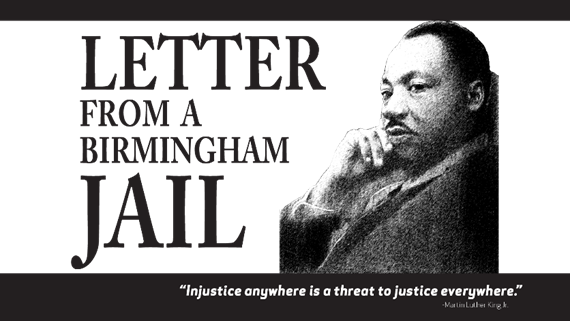
for participation in a panel discussion of The Letter From a Birmingham Jail
Diversity
Roundtable Summit
April 29, 2023
Lafayette, Indiana
Barbara Ransby wrote in a recent Nation article about the election of Brandon Johnson to serve as the new mayor of Chicago. Johnson, is an African American, a teacher, and a longtime Chicago Teachers Union activist She reported that “Johnson described his victory as the coming together of the civil rights and labor movements, much as Martin Luther King always envisioned.”
Reflecting on the corpus of Dr. King’s writings,
speeches and activism suggests a continuity of his worldview and politics over
a decade before the dramatic Letter From a Birmingham Jail was written, the
seeds of which were planted when Dr. King was a graduate student. Given this
approach, it can be argued, that the Letter From a Birmingham Jail represents a
piece in the puzzle of King’s work, not the initiation or conclusion of it.
Race and History, Economics, Politics,
Culture, and Interpersonal Relations
To clarify we can identify racism as a
multidimensional process, with causes that can be understood historically,
economically, politically, culturally, and in social psychological terms. Using
what may be called a “levels of analysis” approach we can identify the multiple
causes and impacts of racism in the United States.
If we begin with the historical and political economy
“level”, we see that racism emerges with the introduction of the globalization
of capitalism in the fifteenth century. The countries of Northwest Europe,
Portugal, Spain, Great Britain, France, Belgium began to traverse the seas,
establishing colonies where they could by military conquest. The purpose of
such expansion was the acquisition of land, people, and resources. In North and
South America, indigenous people were killed and land and resources were
appropriated for processing and transport back to the home country and then the
world.
Along with technological advances, shipping and guns,
and the occupation of land and resources, the colonial powers needed
inexpensive labor to grow the crops and extract the gold, silver, and rubber. Thus,
with the globalization of capitalism came conquest and the enslavement of
peoples, mostly from Africa. In this sense,
modern racism begins with colonialism and slavery. Without slaves
kidnapped from their homes and brought to the Western Hemisphere, there would
have not been the appropriation and growth of cotton, sugar, coffee, and the
extraction of other commodities such as silver and gold. Without land,
resources, and slave labor there may not have been the industrial revolution.
Along with global economic realities, the slave system
was institutionalized in new constitutions and the creation of military and
police forces to control the slave populations. Scholar of white supremacy
Theodore Allen noted that when indentured servants, Black and whites, rose up
in opposition to the exploitation by large plantation owners in the seventeenth
century, these owners “invented” the white race and the Black race. Race was
a social/political creation designed to
divide the exploited workers who produced the agricultural commodities and
natural resources central to the economic system. Race forever more was used to
split the exploited so that they would not join together to overthrow an
oppressive system. Again, political institutions were established to ensure the
divisions between Blacks and whites. Slaves were defined as three-fifths of a
person in the United States constitution, for example. Furthermore, African
Americans could not vote, Slave rebellions were crushed, and after the US civil
war the system of Jim Crow was established.
In addition, economic and political order was
rationalized over and over again by culture. What was written in history books
about economic and political institutions, about history, and cultural
stereotypes in literature, the stage, radio, television and in virtually every
transmission of ideas served to justify the economic and political systems
based on race. Racist narratives found their way into science, religion, and
educational curricula. And finally, the institutionalization of racism
historically, economically, politically, and culturally was reproduced every
day in interpersonal contacts. Here is where the word “discrimination” fits.
It is important to add that while each of these levels
of racism reinforce each other to create a powerful system of white supremacy,
they all are affected, shaped, and challenged by resistance. All of these forces,
economic, political, cultural, and interpersonal are not omniscient. And Dr King
articulated and organized against these forces his entire life. And his Letter
from a Birmingham Jail argues particularly for an ethical and political
resistance against racism at all levels.
The Letter therefore is located in a community
struggle, a political culture of racism, a regional institution of segregation,
and the need for resistance. Also it was implicitly about the history of
slavery, systems of oppression based on “haves” and “have nots” and the common
struggles of people of color all over the world.
The Importance of Class Struggle for Dr.
King’s Project of Resistance
Dr. King’s thinking about the need for an alliance
between the civil rights and labor movements was expressed many times. As far
back as 1957 at a convention of the United Packinghouse Workers of America
(UPWA) he asserted that “organized labor can be one of the most powerful
instruments in putting an end to discrimination and segregation.” During an
organizing effort of the Hospital Workers Local 1199 in the fall of 1964, King
was a featured speaker at a fundraising rally, He said of the 1199 struggle;
“Your great organizing crusade to win
union and human rights for New Jersey hospital workers is part and parcel of
the struggle we are conducting in the Deep South. I want to congratulate your
union for charting a road for all labor to follow-dedication to the cause of the
underpaid and exploited workers in our nation.”
Upon his return from Norway in 1964 after receiving
the Nobel Peace Prize, King returned to the picket line, this time in support
of Black women workers of the Chemical Workers union at the Scripto Pen Plant
in Atlanta. He said there: “Along with the struggle to desegregate, we must
engage in the struggle for better jobs. The same system that exploits the Negro
exploits the poor white…”
Dr. King recognized in the Letter that the Birmingham
struggle paralleled the struggles of Black and Brown people going on all around
the world to liberate themselves from the historical patterns of
colonialization then just ending. Oppressed people cannot remain oppressed
forever, he wrote. “The yearning for freedom eventually manifests itself,
and that is what has happened to the American Negro….Consciously or
unconsciously, he has been caught up by the Zeitgeist, and with his black
brothers of Africa and his brown and yellow brothers of Asia, South /America
and the Caribbean, the United States Negro is moving with a sense of great
urgency toward the promised land of racial justice.”
And finally the Dr. King of Birmingham connected the
race and class issues at home with US imperial war in Vietnam in his famous
Riverside Church speech of 1967: “Somehow this madness must cease. We must
stop now. I speak for those whose land is being laid waste, whose homes are
being destroyed, whose culture is being subverted. I speak for the poor of
America who are paying the double price of smashed hopes at home and death and
corruption in Vietnam. I speak as a citizen of the world, for the world as it
stands aghast at the path we have taken,” He spoke defiantly of the need for a
“radical revolution of values,” an
unremitting commitment to “go out into a sometimes hostile world, declaring
eternal opposition to poverty, racism, and militarism.”
The Relevance of Dr, Martin Luther King
for Today
This Diversity Round Table Summit demonstrated the
continued relevance of Dr. Martin Luther King’s work, protests, writings,
speeches, for today. The material above reminds us that Dr. King was fully
aware of the history, economics, politics, culture, and interpersonal relations
of racism in his day. He was also cognizant of the connections of domestic political life and international
relations. The struggles for social and economic justice, for King, were truly
global.
Therefore we can conclude these brief remarks with the
following conclusions about the relevance of Dr. King, and his writings, such
as The Letter From a Birmingham Jail.
This relevance for today includes the facts that:
--he articulated what is
today a global struggle against violence and war
--he articulated what we
see today as the enormity of economic inequalities within countries as well as
between them
--he emphasized that combatting
racism, white supremacy, and neo-colonialism require alliances between the poor,
the oppressed including women, and workers
--he correctly argued that a just society, local and global, a beloved community is one in which people's needs are met, cooperation supersedes competition, and every member of these communities is an active and equal participant in their development.
Today visionaries in the King tradition include Vijay Prashad, Medea Benjamin and members of Code Pink. And particularly Reverent William Barber and the New Poor People’s Campaign, and the thousands of young people, workers, who are struggling to acquire the right to form unions, and Black Lives Matter activists, are pursuing the King legacy.
Suggested reading:
Michael K. Honey, To the Promised Land: Martin Luther King and the Fight for
Economic Justice,W.W. Norton, 2018.