Thursday, March 7, 2024

WORKING CLASS SOCIALIST, GRASSROOTS LABOR ORGANIZER, FEMINIST,FILM STAR: Thoughts on the Life of Vicky Starr

Originally posted on Sunday, January 10, 2010

Harry Targ


https://youtu.be/74gvcvXlgnM?si=aoS6iNk6i46oGvth


I read recently that Vicky Starr died on Thanksgiving Day, November 26, 2009. She was 93 years old. Thinking about Vicky Starr (or for fans of the film Union Maids Stella Nowicki) reminded me about how her life, which many of us learned of through the film, was so inspirational.

As a teenager, Vicky Starr left the family farm in Michigan and arrived on the Southside of Chicago in 1933. She stayed in the home of Herb and Jane March, Communist activists who had come to Chicago to organize the packing house workers in the huge Stockyards. Under March’s tutelage she sought employment in the Yards and almost immediately began to network with workers to build a union of workers in the days leading up to the formation of the Congress of Industrial Organizations (CIO).

The processing of meat from the 1880s until the late 1950s was centered in Chicago. The Stockyards, housing the Big Four packers (Armour, Cudahy, Swift, and Wilson), employed thousands of workers. Because the work was so dangerous and unpleasant, it was largely carried out by the most marginalized sectors of the working class.

In the era of Upton Sinclair’s, The Jungle, workers were primarily immigrants from Eastern and Southern Europe. After World War 1 and the “the Great Migration,” African Americans secured the lowest paid and most dangerous jobs in the Yards. Historic union organizing drives in 1904, and 1921 faltered because of racism and ethnic conflict among workers. Communist and socialist organizers in the Yards, such as March, realized that combating racism was central to organizing industrial unionism in the meat packing industry.

And it was rank-and-file activists like Vicky Starr who tirelessly met with workers, helped write leaflets and newsletters, interacted with the radical students from the University of Chicago who had offered their assistance to union organizing drives, and communicated with sympathetic members of the influential Catholic Church in the city.

As a member of the Young Communist League, Starr and her comrades would read classic Marxist and Leninist texts. Since Starr would be identified with organizing campaigns by her bosses, she often lost her job in the yards. When that occurred she would apply for work at another packing house company using a different name.

She told Alice and Staughton Lynd (Rank and File, 1973) many years later: “When I look back now, I really think we had a lot of guts. But I didn’t even stop to think about it at the time. It was something that had to be done. We had a goal. That’s what we felt had to be done and we did it.”

In 1937, workers established the Packinghouse Workers Organizing Committee (PWOC). Despite resistance by the major meat packers, state violence, red-baiting against union organizers by the state and the American Federation of Labor’s Amalgamated Meat Cutters (AMC), the United Packinghouse Workers of America (UPWA-CIO) was constituted in 1943. Until its merger with other unions, it remained a militant trade union that fought racism and red-baiting and publicly opposed United States foreign policies such as participation in the Korean War. And during its formative years in the mid-1940s Vicky Starr served for a time as Education Director for District 1 of UPWA.

Central to Starr’s contribution to the working class from the time she was a member of the Young Communist League, to the budding labor movement, the formation of the UPWA, and later as an organizer of clerical workers at the University of Chicago was her constant struggle against racism and sexism. After the formation of UPWA Starr said “We tried to make sure that there were both Negroes and whites as officers, stewards…in all the locals.” She fought residential segregation and participated in building the Back of the Yards Council on Chicago’s south side and worked to end the exclusion of African Americans from professional sports. And in the end she recalled that the most militant trade unionists on the shop floor, the beef kill, were African Americans.

As an organizer in the 30s and a UPWA staffer in the 40s she combated sexism as well. “Women had an awfully tough time in the union because the men brought their prejudices there.” Women often had the most demeaning jobs in the Yards, wage rates discriminated against them, their special needs, such as child care received no attention, and they often were fearful of demanding their rights on the shop floor and in the union.

As a socialist, Starr reflected on those halcyon days of UPWA-CIO organizing. She said that there was a sense that workers were ready to come together. There was a growing feeling of working class solidarity. Union organizers would show up at the Stockyards with literature and speeches. And at the grassroots she and others were on the shop floor spreading the word informally about the union.

And socialism needed to be addressed in terms of the concrete benefits of people’s lives. “You had to talk about it in terms of what it would mean for that person. We learned that you can’t manipulate people but that you really had to be concerned with the interests and needs of the people. However, you also had to have a platform--a projection of where you were going.”

Starr left the Yards in 1945, was forced underground for a time in the McCarthy period, raised four children and returned to work as a secretary at the prestigious University of Chicago. She still had “a platform” at the university, organizing all non-professional staff. Despite predictable resistance from the bastion of liberalism in higher education she applied the grassroots organizing skills she learned as a teenager in the stockyards to achieve victory for clerical workers. Teamsters Local 743 was recognized in 1978. Vicky Starr became the first shop steward of the new local.

But Starr’s contribution to the American working class, Black and White, male and female did not remain unnoticed beyond the shop/office. Alice and Staughton Lynd captured her remembrances of CIO organizing in the 1973 book Rank and File and the clerical workers struggle in the 2000 book New Rank and File. And especially, “Stella Nowicki” was one of three stars (the others were Sylvia Woods and Kate Hyndman) in the wonderful documentary (Union Maids, 1977) about women organizing in the CIO in the 1930s.

This last project made Vicky Starr a major celebrity. It brought to the attention of new generations of activists the fighting spirit of the 1930s, the central role Communists played in the battles, and the absolute centrality to organizing the working class of fighting racism and sexism.

Still relevant today, Union Maids (and the Lynds collections of interviews), can help inspire, educate, and inform activists about tactics, strategy, and basic principles of organizing.

Vicky Starr concluded her 1973 interview saying: “It was a privilege and a wonderful experience to participate in the excitement of those times.”

It is important to remember Vicky Starr for what she did for the working class, particularly industrial and clerical workers. And reflections on her life and work can still inform activists as they struggle for economic justice today.


Tuesday, March 5, 2024

A SUMMARY OF REMARKS SUPPORTING A GAZA CEASE FIRE RESOLUTION: THE WEST LAFAYETTE CITY COUNCIL

(March 4, 2024)

Harry Targ

I am ashamed to live in a community where the city council is unable to endorse a simple resolution calling for an end to the bombing, starving, and killing of civilians (perhaps half children) in Gaza.  Their inaction reflects a kind of "moral numbness" that is inexplicable. (April 24, 2024). 


       Purdue Exponent Photo

Peace activists, and many Americans generally, are frustrated viewing the daily images of bombing, bodies, destruction of buildings, starvation, and fear engendered by the genocidal war of the Israeli government on the Palestinian people. We feel the anguish of Aaron Bushnell, who immolated himself in front of the Israeli embassy on February 25, 2024. Those of us who lived through the Vietnam era remember Norman Morrison, a Hoosier, who self-immolated himself in front of the Pentagon in 1965. Before that, Buddhist Monks had also made the ultimate sacrifice in the streets of what was then called Saigon in the former South Vietnam.

We know that the United States has great influence over Israel. It has provided $4 billion a year in military aid to Israel since 1979. Currently the Biden Administration has introduced to Congress a proposal for military supplemental support, totaling an additional $14 billion to Israel (78 percent of which Israel would be obliged to be used in purchases from US arms manufacturers).

Military contracts with arms manufacturers often involve universities. Purdue University is a case in point. For example, on October 6, 2020 Purdue Today reproduced an article from a Department of Homeland Security Journal, Homeland Security Today, announcing a Purdue/Homeland Security research project involving research on drones for use in Abu Dhabi, the UAE capitol. (The article has been since been removed from Purdue Today).

The article reported that “a group of Purdue University researchers have been tasked to make sure drones and their systems could operate securely, safely and efficiently in the United Arab Emirates capital, Abu Dhabi.” It named Purdue professors in Aeronautical and Astronautics, Computer Science, and Purdue’s “cybersecurity research and education center” as project participants. (“Purdue University and Abu Dhabi Work Together on Cybersecure Drone Swarms”

 https://heartlandradical.blogspot.com/2023/12/from-middle-east-to-purdue-university.html

To avoid the sense of desperation felt by Aaron Bushnell, Norman Morrison and others we need to find ways to give voice to our frustration with the ongoing war on the Gazan people. And it is to our political institutions that our energies must turn: both to influence public policy and to be able to express our sense of outrage.

As a political body closest to us, we look to the City Council, and other local governmental institutions, to reflect our concerns, even though they have little direct contact with foreign policy decisions.

Along with satisfying our need to speak out we cannot know what impact our voices can have. Referring to the Vietnam analogy, hundreds of thousands of voices articulated in different ways did impact on United States foreign policy in the 1960s and 1970s. And it was through articulation of opposition to that war that we discovered that our friends and neighbors shared the same views.

In addition, as has been reported many city councils have already expressed their outrage at the war against the war in Gaza and have called for a cease fire:

“Reuters compiled data from 70 cities that have passed Israel-Gaza resolutions or proclamations since Oct. 7, when Hamas militants killed some 1,200 people in Israel and took 253 hostages, according to Israeli tallies. They range from major cities like San Francisco to smaller cities such as Carrboro, North Carolina, and Biden's hometown of Wilmington, Delaware.”

https://www.reuters.com/world/us/us-city-councils-increasingly-call-israel-gaza-ceasefire-analysis-shows-2024-01-31/

In my view the West Lafayette City Council needs to endorse a resolution that includes an immediate permanent cease fire in Gaza, international efforts to provide social and economic justice for Palestinians in Gaza and the West Bank, and frees all hostages held by combatants in the current war.


Wednesday, February 28, 2024

THREATS TO ACADEMIC FREEDOM ARE ESCALATING: Indiana, Florida and Everywhere

Harry Targ

("SB 202, which was introduced by Sen. Spencer Deery (R-Lafayette), would reform the tenure process in Indiana to ensure public universities adopt a philosophy of promoting free speech and "intellectual diversity," which was defined as  "multiple, divergent and varied scholarly perspectives on an extensive range of public policy issues."  The Indiana House of Representative voted 67 to 30 in favor of the bill yesterday. Journal and Courier, February 27, 2024.)

(“Meanwhile, Kenneth Griffin, a megadonor who gave Harvard so much money that it named its largest graduate school after him last year, said at a conference Tuesday that elite universities now produce “whiny snowflakes” instead of “leaders and problem solvers” because of their excessive focus on “microaggressions [and] a DEI agenda.” The Boston Globe, January 31, 2024).


**************************************************************


David Horowitz launched an assault on higher education in 2005, not too dissimilar to the McCarthyite attacks on higher education in the 1950s. He and a variety of organizations such as the National Association of Scholars (NAS) sought to purge higher education of critical thought.

Another round of more sophisticated and highly resourced attacks on higher education was expanded in the twenty-first century by the Koch Foundation State Policy Networks (SPN). In this case, state organizations were created, rightwing politicians were supported for key administrative posts in universities, particularly university presidencies, and Boards of Trustees representing huge corporations and banks acted more assertively to destroy the rich diversity of educational experiences that had been inspired by the 1960s.

With the rise of the far-rightwing forces around former President Trump, combining corporate elites, religious fundamentalists, extreme free market advocates, and military contractors, the attacks today on education, K through university, have become fierce.

Now conservative politicians have launched attacks on education in state houses and the halls of Congress. Critical Race Theory, rather than being a short-hand description for a body of scholarship, has been redefined as ideology. Politicians running for office talk about the Civil War without mentioning slavery as a root cause. Charges of antisemitism are being used to challenge expressions of intellectual and political points of view on campuses. Presidents at our most prestigious universities, women and persons of color, are attacked for defending academic freedom. Other presidents remain silent as academic freedom is attacked. And the Indiana legislature just passed SB 202 which inserts politicians and appointed Board of Trustees in the processes of evaluating what faculty teach. Rather than protecting intellectual diversity SB 202 and other such legislation will stifle the intellectual diversity which has characterized higher education at its best.

The whole edifice of what John Stuart Mill described a long time ago as “the marketplace of ideas” is under assault. To borrow from a book title about the 1950s by Marty Jezer, we are returning to a new “Dark Ages.”

It is time for those who support a higher education that is rich with discussion and controversy to stand up in defense of freedom of speech, education, and an educational system that is not influenced by powerful economic and political interests.


Thursday, February 22, 2024

UNDERSTANDING THE CONTEMPORARY WORLD ORDER AND WHY WE MUST WORK TO CHANGE IT

 Harry Targ


https://www.lulu.com/shop/harry-targ/challenging-late-capitalism-neoliberal-globalization-militarism/ebook/product-1z8p584g.html?page=1&pageSize=4

Friends,

In my opinion VJ Prashad just posted an important statement below (the link is in two formats). Not only does he address the wasteful military system but he links it to the IMF and global debt, and the growing gap between the Global North and South. He also addresses the role that “intellectuals” can play in alerting the world to the realities of the connections between war, mis- and under-education, starvation, and global inequality and the international institutions that have been established to address these issues. Prashad’s portrait also implies why those who rise up against the imperial and war system may do so in ways we find uncomfortable.

While we mobilize to influence policy on these issues we should bring this richer understanding of “why” to activists and politicians.

https://thetricontinental.org/newsletterissue/education-peoples-science-movement/?output=pdf

https://thetricontinental.org/newsletterissue/education-peoples-science-movement/


Monday, February 19, 2024

UNIVERSITIES SHOULD BE A PLACE FOR DISCUSSION AND DEBATE: OPPOSE POLITICAL MEDDLING

Harry Targ

(The attacks on students who protest or even articulate competing political points of view have escalated. These attacks, direct or subtle, are targeting both students and faculty. They challenge the traditional role of the university as a place for discussion, debate, reflection, and for all involved, intellectual growth. The Trump Administration and all his followers in state and local governments, such as in Indiana, are pursuing the destruction of our distinguished systems of higher education. The essay below was posted one year ago.

 https://www.indystar.com/story/news/politics/2025/03/14/braun-orders-review-antisemitism-policies-indiana-universities-trump-investigation/82402850007/)


Educational Institutions and Ideological Hegemony


One major element of the maintenance of any political or economic order is the education of the young in such a way as to give legitimacy to it. In the 1960s political scientists began to study what they called “political socialization”: how and what young people learn about the norms, values, and procedures that govern the maintenance of society. Some studies found that children begin to accept the virtues of political institutions, the presidency, the courts, political parties, at very young ages. What they learn about politics in the home is reinforced and developed in school systems. Selective presentations of history and the arts is provided by formal content and repeated rituals, such as the pledge to the flag, competitive sports, routinized social life such as dances. In addition, as theorists such as Jim Berlin argued, the educational system not only produces and reproduces citizenship, but it also reproduces workers, for example giving young people appropriate skills in language and mathematics. Educational theorists have pointed out that the character of education develops and changes as the economy changes, in the US case from small-scale, to industrial, to monopoly capitalism.

In addition to adding “socialization” to the language of analysis, political scientists began to write about “political culture,” or the values and beliefs that dominate the thinking of most members of a society. These include ideas about the basic units of society, individuals or communities for example, the relative importance in the society of cooperation or conflict, the role of “human nature” and whether war and violence are “inevitable.”  Perhaps most basic in the United States is the relative acceptance of private property over public goods as a prime value.

In higher education, curricula usually reinforced and solidified the dominant ideas of the political culture. Often social science and humanities disciplines repeated standard paradigms about history, what was great art and philosophy, and what values should be beyond reproach. From the 1940s to the 1960s, the dominant political culture was tinged with virulent anticommunism and political and economic elites, powerful corporations, and state institutions oversaw what was defined as legitimate educational content.

Meanwhile business schools and science and engineering programs trained young people in the skills necessary to enhance the political economy. The humanities and social sciences grounded student learning in the acceptable political culture while the fields, what we call STEM (science, technology, engineering, and mathematics) trained these same students in the tools of system maintenance. The former president of the University of California, Clark Kerr, coined the term “multiversity” to describe the functions of such institutions in the late twentieth century and he made it clear that the multiversity was supposed to serve the national security interests of the United States.

However, during the 1960s young people became increasingly engaged in struggles against racism and on campus challenged the escalation of the war in Vietnam. Many students began to raise questions about what they were studying and the content of the curriculum. While some educational institutions became more repressive, as with the shootings of students at Jackson State and Kent State Universities, increased discourse on college campuses, sometimes initiated by faculty, was critical of the dominant political culture and its normal functioning, that is training workers for the economic machine. The university, to use a workplace metaphor, became “contested terrain.”

Renewed Assaults on Higher Education

Some faculty and students began to criticize the capitalist system, the war machine, the privatization of the commons, and histories that seemed to endorse patriarchy and racism. Discussion, debate, and critical thinking flowered in higher education, But from the vantage point of those who ruled, ideological hegemony had to be reimposed in the educational system. As conservative talk show host Rush Limbaugh once proclaimed in the 1990s, “we,’ that is conservatives, control all major institutions except for the university.

By the new century politicians, university administrators, and economic elites sought to reimpose the traditional political culture by reifying the idea of the market, private over public goods, and in the world at large, the United States and manifest destiny.

History and the Arts were being defunded while college administrators proclaimed that the study of science, technology, engineering, and mathematics (STEM) were the primary tasks of educational systems. Major funds for STEM education and research came from huge corporations, particularly digital, drug, and agricultural corporations, and the military. And in the spirit of Limbaugh, the Koch Foundation, the Association of Trustees and Administrators (ACTA), the State Policy Network, and the Associated Legislative Executive Council (ALEC) worked with state legislatures to reestablish curricula that Kerr in the past approvingly celebrated in the multiversity. In sum. the university was redesigned to instill the ideology of the dominant political culture and to create a twenty-first century work force to serve the needs of monopoly/finance/global capitalism.
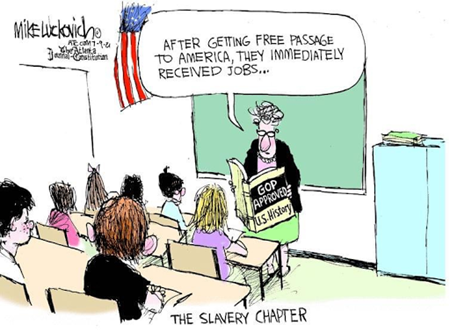

More recently, with the rise of the far-rightwing forces around former President Trump, combining corporate elites, religious fundamentalists, extreme free market advocates, and military contractors, the attacks on education have become fierce.

Now politicians close to such powerful groups launch attacks on education in state houses and the halls of Congress. Critical Race Theory, rather than being a short-hand description for a body of legal scholarship, has been redefined as ideology. Politicians running for office talk about the Civil War without mentioning slavery as a root cause. Charges of antisemitism are being used to challenge expressions of intellectual and political points of view on campuses. Presidents at our most prestigious universities, women and persons of color, have been attacked for defending academic freedom. The whole edifice of what John Stuart Mill described a long time ago as “the marketplace of ideas” has now come under assault.

Purdue University

A prominent Big Ten university, Purdue, has led the process of transforming itself into a model neoliberal university, in keeping with the Koch Brothers/ ALEC model of education. The transformation of Purdue University has involved significant changes including privatization of public control of the institution; moving into the increasingly competitive online education market; shifting programs away from an educational mix of science, technology, the social sciences, and humanities to more STEM and less liberal arts; currying the favor of huge corporations and enlarged Department of Defense contracts; establishing programs whereby wealthy alumni fund students’ education with contractual guarantees by which students pay back the alums; and the establishment at the university of a “country club” ambience to attract students.

The Beginnings of Civic Literacy at Purdue University: Round One in the Fight to Control Curricula

No one can dispute the value of education about the nation, the world, and the issues that have and will affect peoples’ lives in the short-and long-term future. Schools and universities, of course, have historically been primary venues for disseminating such information. However, most often politicians have preferred narratives about themselves and others that they wish to inculcate in the young. But a more desirable form of information and analysis is one that is diverse, sensitive to one’s own past and present, and shows respect for narratives and experiences of other peoples and nations. This kind of “civics” education is complicated and not achieved by learning isolated facts.

President Mitch Daniels, Purdue University, in the spring, 2019, proposed that the university require that each graduating senior at the university demonstrate a knowledge of what he called “civics.” The members of the Board of Trustees  endorsed the idea and implicitly castigated faculty for not moving expeditiously to establish a civics certification process for graduating seniors. But faculty questioned the need for such a certification, what civics education is, and how to provide for it. Specifically, they asked whether claims about civics ignorance at Purdue and elsewhere were true. They also asked whether taking a short-answer test really demonstrated knowledge of the United States government, its constitution, and the political process. Some faculty argued that such a need could only be satisfied by at least one course, perhaps in Political Science or History, that would provide a richer knowledge, raise competing understandings of the development of the United States government, and would allow for serious discussions of the strengths and weaknesses of the American political experience. A ten or twenty item short answer test, they argued, would not reflect the more subtle and sophisticated needs of civics education.

Some faculty were puzzled by why, in the context of the existence of a set of university core requirements already in existence, this idea of a civics certification emerged. One possible source of the idea of some kind of civics education was seen in a January 2016 report published by the American Council of Trustees and Alumni (ACTA), an organization founded by the State Policy Network, which is tied to the American Legislative Exchange Council (ALEC) and the Charles and David Koch Foundation. The report called “A Crisis in Civic Education,” described a survey it sponsored in 2015 that demonstrated that college graduates and the public in general lacked knowledge of “our free institutions of government.” It listed examples of some basic facts about government and history that respondents failed to answer correctly. These included a lack of understanding of how the constitution could be amended, which institution had the power to declare war, and who was “the father of the constitution.”

Perhaps ACTA’s underlying concern was suggested by a quote in the preface of the document attributed to Louise Mirrer, President of the New York Historical Society, who received an ACTA award in 2014 “for Outstanding Contributions to Liberal Arts Education.” She said that in the contemporary world of conflicts between religious, ethnic and racial groups, Americans need to be reminded of US history “…especially as that history conveys our nation’s stunning successful recipe, based on the documents of our founding, for an inclusive and tolerant society.” (Apparently, she forgot the limitations on the rights of Blacks, women and those without property to vote in “the documents of our founding.”)   In addition, the report took aim at community service programs, which it asserted “…give students little insight into how our system of government works and what roles they must fill as citizens of a democratic republic.”

It is clear, therefore, that what the ACTA report (and one could reasonably assume what motivated the recommendation of former President Daniels, himself an award recipient from ACTA), and the Purdue Board of Trustees regards as civics education was a narrative that celebrates the American experience. These sources presumed that specific facts about the Constitution and the Founding Fathers and basic truisms about the United States as a “melting pot” constituted civics education. Although civics education is surely a desirable goal of education at every level, K through college, it requires moving beyond memorizing basic facts to more subtle examinations about the American experience, including exposing students to debates about how and why that experience has unfolded in the way that it has.

Key Provisions of the 2024 Indiana Senate Bill SB 202: Continuing Efforts to Control University Curricula

It is interesting to note that Indiana State Senator Spencer Deery who introduced Senate Bill 202 in January 2024 defended the bill by suggesting that distrust in higher education has increased. While this claim is of dubious merit and has come from politically conservative places such as ALEC and so-called “think tanks,” many citizens on and off campus are skeptical of ill-placed and self-interested investments in the privatization of higher education, collaborating with real estate and military contractors, and working to expunge from curricula any courses that promote critical thinking.

To minimize debates, discussion, and critical thinking about the great issues of our time in public universities SB 202 was introduced. It includes a number of provisions that are designed to eliminate discussions of controversial subjects on college campuses by threatening the job security, or tenure, of faculty. The provisions of SB 202 include the following:

“1.Establish a process where university trustees evaluate faculty up for tenure – a status that gives professors indefinite job security in most cases – or promotion with “criteria related to free inquiry, free expression and intellectual diversity.”

2.Require trustees to review a faculty member’s tenure status every five years.

3.Require state universities to establish procedures that allow students and employees to submit complaints that a faculty member isn’t meeting certain criteria related to free inquiry, free expression and intellectual diversity.

4. Require trustees to adopt a “policy of neutrality” that limits universities from taking official positions on “political, moral or ideological issues.”

5.Allow the Indiana House Speaker and Indiana Senate president to appoint a trustee to a university’s board.

6.Make universities account for spending on diversity, equity and inclusion efforts on campus and add to those programs to include “intellectual diversity.”

Dave Bangert, Deery defends tenure reform bill as blowback grows at Purdue, IU (basedinlafayette.com)

https://www.basedinlafayette.com/p/deery-defends-tenure-reform-bill

Conclusion


Just as academic critics of child labor, anti-union policies, World War I, and financial speculation a hundred years ago faced censure and unemployment, universities are being pressured to circumscribe accepted debates. While the higher-education system has extended academic freedom and provided job security for some through tenure, attacks on these provisions are spreading as the twenty-first century reconstruction of American higher education proceeds.  From Florida to Indiana (the current SB 202 bill in the Indiana legislature would circumscribe tenure and what is taught in the classroom), politicians and many university administrators are committed to destroying the academic freedom, and the free exchange of ideas, that has made universities in recent times a haven for the pursuit of knowledge useful for the advancement of society.



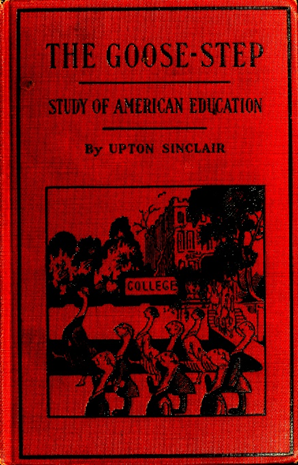
https://www.lulu.com/shop/harry-targ-and-daniel-morris/from-upton-sinclairs-goose-step-to-the-neoliberal-university/paperback/product-vzdwyk.html?page=1&pageSize=4


Friday, February 16, 2024

WHO RULES THE UNIVERSITY?

  Harry Targ

Purdue University announced on Tuesday that Lilly Endowment is giving it grants totaling $100 million for two separate university initiatives. The commitment represents the largest private gift in Purdue’s history.

The grant includes $50 million to support the Mitchell E. Daniels, Jr. School of Business and $50 million for Purdue Computes, an initiative that focuses on computing, artificial intelligence and semiconductors.

https://www.forbes.com/sites/michaeltnietzel/2024/01/10/lilly-endowment-grants-100-million-to-purdue-university-its-largest-gift-ever/?sh=3dd917cb3566


The modern university system in the US developed at the turn of the twentieth century, as capitalism bounced back after a string of deep recessions.

Mergers created an economic system in which a few hundred corporations and banks dominated the entire economy. Interlocking directorates birthed a system of financial speculation and concentrated wealth. The government enacted pro-corporate and pro-banking regulations, allocated tax and other benefits to the wealthy and powerful, and used repression — as when President Grover Cleveland deployed the army to break the 1894 Pullman strike — on capitalists’ behalf.

During this period, higher education, which had been dominated by theological pursuits, refashioned itself to serve the modern economy. Corporations needed workers with scientific and technical knowledge, so educational institutions were established that could produce credentialed graduates.

                                                                Project Gutenberg

Theoretical work and classroom education inculcated in the young a reverence for capitalism’s blessings and the government’s conduct. Young people learned about the benefits of free-market economies, the United States’ long tradition of democratic institutions, and the glories of Manifest Destiny, which justified the American conquest of not only North America, but the Philippine Islands, Cuba, and Central and South America.

As Clyde Barrow documents in Universities and the Capitalist Statemembers of university boards of trustees came largely from corporations, banks, and law firms that served big business. In the Midwest and South, trustees who represented regional manufacturing and finance capital ran the universities. Their outlook paralleled the administrators at the Northeast’s major universities. Few representatives of non-elite groups, like labor unions, were ever selected to serve on these boards.

Trustees established an administrative class that both oversaw the university’s day-to-day operations and managed the faculty, who produced the school’s key commodities: education and research. They adopted managerial procedures to control mental labor in the classroom and the laboratory and institutionalized metrics that measured enrollment, publications, and university rankings to evaluate productivity.

Federal and state governments, as well as nonprofit organizations, stepped in to fund a national university system designed to serve the interests of twentieth-century capitalism. Major foundations generated studies, conducted surveys, and made recommendations that influenced both public and private universities’ policies.

Crises, from the depressions of the late nineteenth century to World War I, sparked critical analyses from some professors. Frequently, faculty faced discipline or even termination for challenging the economic system or the state. The university’s educational mission was to serve elites and the state, not provide a venue for debating important social issues.

Fast forward to today. The capitalist class has further consolidated its power in higher education since the Great Recession of 2008, the Occupy Movement of 2011, the protests around police violence in 2014, and in response to the police murdering of George Floyd in 2020. Today campuses are alive with debate about Israel’s war on Gaza and political influentials are seeking to squelch that debate.

Boards of trustees and their advisers in think tanks and political organizations have used economic and political shocks to demand greater control over and efficiency in the production and teaching of knowledge. Economically programs that are not justified as good “investments” have become vulnerable to termination. Humanities programs now have to prove their utility to the STEM disciplines (science, technology, engineering, and mathematics) to survive. And, with the war in the Middle East, politicians, trustees, and administrators are once again interfering in the educational processes of the university. (The similarities with the McCarthyite period of the 1940s and 1950s are chilling).

Finally, just as academic critics of child labor, anti-union policies, World War I, and financial speculation a hundred years ago faced censure and unemployment, universities are being pressured to circumscribe accepted debates. While the higher-education system has extended academic freedom and provided job security for some through tenure, attacks on these provisions are spreading as the twenty-first century reconstruction of American higher education proceeds.  From Florida to Indiana (the current SB 202 bill in the Indiana legislature would circumscribe tenure and what is taught in the classroom), politicians are committed to destroying the academic freedom, and the free exchange of ideas, that has made universities a haven for the pursuit of knowledge useful for the advancement of humanity.


https://www.lulu.com/shop/harry-targ-and-daniel-morris/from-upton-sinclairs-goose-step-to-the-neoliberal-university/paperback/product-vzdwyk.html?page=1&pageSize=4

 

The Bookshelf

CHALLENGING LATE CAPITALISM by Harry R. Targ

Challenging Late Capitalism