https://covertactionmagazine.com/2022/04/28/peace-movement-needs-to-demand-dismantling-of-nato/

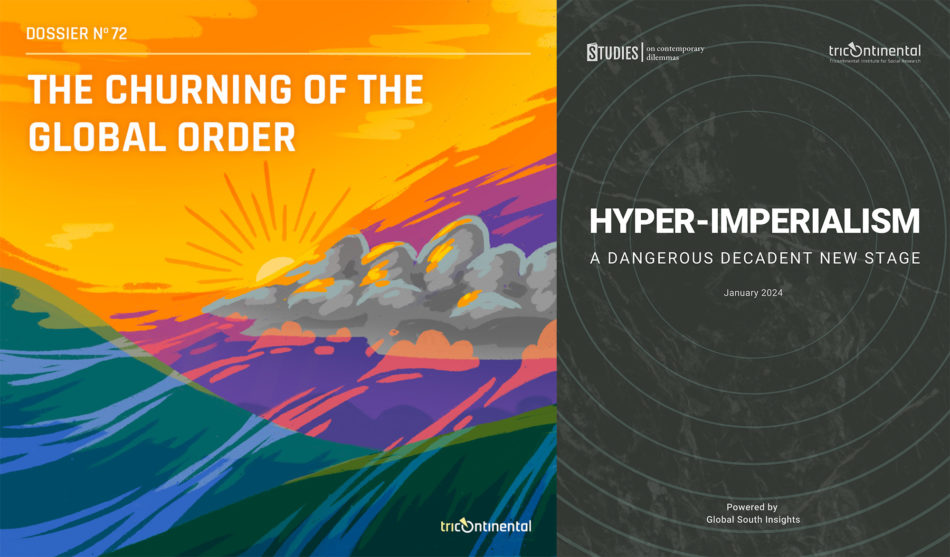
Peace Activists, rightwing and centrist politicians, scholars, the military and other imperial spokespersons from Europe and North America are warning about new great powers, threats of new wars, and the need to expand military capabilities. This new "cognitive war," as a recent NATO document referred to it, is an ideological campaign designed to gain support for a New Cold War against China, Russia, and the ferment in the Global South. As the power point below suggests, the world is changing, the Global South, particularly mass movements, are rising, and it is in the interest of humanity to recognize these changes. However, the representatives of the old Global North, referred to in the article from "The Hill," supports growing resistance, much of it military. In the end the future could bring a more equitable world order if peace activists and the world's citizenry speak up and give support to the Global South or there could be World War 3.
The Old Model of Imperial Dominance of International Relations
Power point on the NEW REALITIES IN INTERNATIONAL RELATIONS
A Renewed Discussion of a New International Economic Order
https://heartlandradical.blogspot.com/2022/12/the-new-international-economic-order_27.html


Some Remembrances of Dr. King Who Was Killed 56 Years Ago
Harry Targ
Dr. Martin Luther King, in his famous speech at Riverside Church
in New York City, April 4, 1967, spoke of the devastating consequences of
the Vietnam War on the Vietnamese people and the poor and oppressed at home. To
him, the carnage of war not only destroyed the targets of war (their
economies, their land, their cultures) but the costs also misallocated the
resources of the nation-states which initiated wars.
Every health and welfare provision of the government, local,
state, and federal, was limited by resources allocated for the war system.
Health care, education, transportation, jobs, wages, campaigns to address
enduring problems of racism, sexism, homophobia, environmental
revitalization, and non-war related scientific and technological research
were reduced almost in direct proportion to rising military expenditures.
Over half the US federal budget goes to military spending past
and current. And the irony is that the money that is extracted from the vast
majority of the population of the United States goes to military budgets that
enhance the profits of the less than one percent of the population who profit
from the war system as it exists
“I speak for the poor of America who are paying the double price
of smashed hopes at home, and death and corruption in Vietnam.”
See a description of the 2024 military budget- https://www.peaceaction.org/what-we-do/campaigns/pentagon-spending/
Since 1967 when he made that speech, Dr. King would surely have
added a long list of other wars to the Vietnam case: wars in Central America
and South America, the Middle East, Asia, and Africa. and the more than 1,000
bases and outposts where US troops or hired contractors are fighting wars on
behalf of capitalist expansion. Meanwhile the gaps between rich and poor people
on a worldwide basis have increased dramatically with some twenty percent of
the world’s population living below World Bank defined poverty lines.

Harry Targ

Recently, with the rise of the far-rightwing forces
around former President Trump, combining corporate elites, religious
fundamentalists, extreme free market advocates, and military contractors, the
attacks on education have become fierce.
Now politicians close to such powerful groups launch
attacks on education in state houses and the halls of Congress. Critical Race
Theory, rather than being a short-hand description for a body of legal
scholarship, has been redefined as ideology. Politicians running for office
talk about the Civil War without mentioning slavery as a root cause. Charges of
antisemitism are being used to challenge expressions of intellectual and
political points of view on campuses. Presidents at our most prestigious universities,
women and persons of color, have been attacked for defending academic freedom.
Further, Professor William Robinson recently reported that the government of Israel
has organized campaigns to interfere with discussion and debate in US
universities about Israel’s war on Gaza. ”Israel Has Formed a Task Force to
Carry Out Covert Campaigns at US Universities.”
The whole edifice of what used to be regarded as
central to education- discussion, debate, reflection, and criticism of every
subject- has now come under assault.
A prominent Big Ten university, Purdue, has led the
process of transforming itself into a model neoliberal university, in keeping
with the Koch Brothers/ ALEC model of education. The transformation of Purdue
University has involved significant changes including privatization of public
control of the institution; moving into the increasingly competitive online
education market; shifting programs away from an educational mix of science,
technology, the social sciences, and humanities to more STEM and less liberal
arts; currying the favor of huge corporations and enlarged Department of
Defense contracts; establishing programs whereby wealthy alumni fund students’
education with contractual guarantees by which students pay back the alums; and
the establishment at the university of a “country club” ambience to attract
students.
The Beginnings of Civic Literacy at Purdue
University: Round One in the Fight to Control Curricula
No one can dispute the value of education about the
nation, the world, and the issues that have and will affect peoples’ lives in
the short-and long-term future. Schools and universities, of course, have
historically been primary venues for disseminating such information. However,
most often politicians have preferred narratives about themselves and others
that they wish to inculcate in the young. But a more desirable form of
information and analysis is one that is diverse, sensitive to one’s own past
and present, and shows respect for narratives and experiences of other peoples
and nations. This kind of “civics” education is complicated and not achieved by
learning isolated facts.
President Mitch Daniels, Purdue University, in the
spring, 2019, proposed that the university require that each graduating senior
at the university demonstrate a knowledge of what he called “civics.” The
members of the Board of Trustees endorsed the idea and implicitly
castigated faculty for not moving expeditiously to establish a civics
certification process for graduating seniors. But faculty questioned the need
for such a certification, what civics education is, and how to provide for it. Specifically,
they asked whether claims about civics ignorance at Purdue and elsewhere were
true. They also asked whether taking a short-answer test really demonstrated
knowledge of the United States government, its constitution, and the political
process. Some faculty argued that such a need could only be satisfied by at
least one course, perhaps in Political Science or History, that would provide a
richer knowledge, raise competing understandings of the development of the
United States government, and would allow for serious discussions of the
strengths and weaknesses of the American political experience. A ten or twenty
item short answer test, they argued, would not reflect the more subtle and
sophisticated needs of civics education.
Some faculty were puzzled by why, in the context of
the existence of a set of university core requirements already in existence,
this idea of a civics certification emerged. One possible source of the idea of
some kind of civics education was seen in a January 2016 report published by
the American Council of Trustees and Alumni (ACTA), an organization founded by
the State Policy Network, which is tied to the American Legislative Exchange
Council (ALEC) and the Charles and David Koch Foundation. The report called “A
Crisis in Civic Education,” described a survey it sponsored in 2015 that
demonstrated that college graduates and the public in general lacked knowledge
of “our free institutions of government.” It listed examples of some basic
facts about government and history that respondents failed to answer correctly.
These included a lack of understanding of how the constitution could be
amended, which institution had the power to declare war, and who was “the
father of the constitution.”
Perhaps ACTA’s underlying concern was suggested by a
quote in the preface of the document attributed to Louise Mirrer, President of
the New York Historical Society, who received an ACTA award in 2014 “for
Outstanding Contributions to Liberal Arts Education.” She said that in the
contemporary world of conflicts between religious, ethnic and racial groups,
Americans need to be reminded of US history “…especially as that
history conveys our nation’s stunning successful recipe, based on the
documents of our founding, for an inclusive and tolerant society.” (Apparently,
she forgot the limitations on the rights of Blacks, women and those without
property to vote in “the documents of our founding.”) In
addition, the report took aim at community service programs, which it asserted
“…give students little insight into how our system of government works and what
roles they must fill as citizens of a democratic republic.”
It is clear, therefore, that what the ACTA report (and
one could reasonably assume what motivated the recommendation of former
President Daniels, himself an award recipient from ACTA), and the Purdue Board
of Trustees regards as civics education was a narrative that celebrates the
American experience. These sources presumed that specific facts about the
Constitution and the Founding Fathers and basic truisms about the United States
as a “melting pot” constituted civics education. Although civics education is
surely a desirable goal of education at every level, K through college, it
requires moving beyond memorizing basic facts to more subtle examinations about
the American experience, including exposing students to debates about how and
why that experience has unfolded in the way that it has.
Now the State of Indiana Has Passed Senate Bill SB 202: Continuing Efforts to
Control University Curricula
It is interesting to note that Indiana State Senator
Spencer Deery who introduced Senate Bill 202 in January 2024 which is now law
defended the bill by suggesting that distrust in higher education has
increased. While this claim is of dubious merit and has come from politically
conservative places such as ALEC and so-called “think tanks,” many citizens on
and off campus are skeptical of ill-placed and self-interested investments in
the privatization of higher education, collaborating with real estate and military
contractors, and working to expunge from curricula any courses that promote
critical thinking.
To minimize debates, discussion, and critical thinking
about the great issues of our time in public universities SB 202 was
introduced. It includes a number of provisions that are designed to eliminate
discussions of controversial subjects on college campuses by threatening the
job security, or tenure, of faculty. The provisions of SB 202, signed and
approved by Governor Eric Holcomb include the following:
1.Establish a process where university trustees
evaluate faculty up for tenure
2.Require trustees to review a faculty member’s tenure
status every five years.
3.Require state universities to establish procedures
that allow students and employees to submit complaints that a faculty member
isn’t meeting certain criteria related to free inquiry, free expression and
intellectual diversity.
4. Require trustees to adopt a “policy of neutrality”
that limits universities from taking official positions on “political, moral or
ideological issues.”
5.Allow the Indiana House Speaker and Indiana Senate
president to appoint a trustee to a university’s board.
6.Make universities account for spending on diversity,
equity and inclusion efforts on campus and add to those programs to include
“intellectual diversity.
Dave Bangert, Deery
defends tenure reform bill as blowback grows at Purdue, IU
(basedinlafayette.com)
https://www.basedinlafayette.com/p/deery-defends-tenure-reform-bill
Conclusion
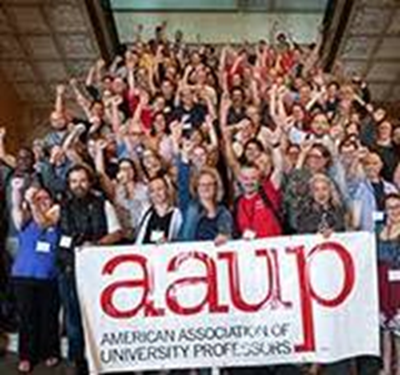
Just as academic critics of child labor, anti-union
policies, World War I, and financial speculation a hundred years ago faced
censure and unemployment, universities are being pressured to circumscribe
accepted debates. While the higher-education system has extended academic
freedom and provided job security for some through tenure, attacks on these
provisions are spreading as the twenty-first century reconstruction of American
higher education proceeds. From
Florida to Indiana SB 202 bill, (now law) circumscribes tenure and what is
taught in the classroom. Politicians and many university administrators, and
perhaps foreign governments, are
committed to destroying the academic freedom, and the free exchange of ideas,
that has made universities in recent times a haven for the pursuit of knowledge
useful for the advancement of society.

Harry Targ (a revised version of an original post on Tuesday, March 23, 2010)

https://www.zinnedproject.org/materials/anne-braden-southern-patriot
A film by
Anne Lewis “Anne Braden: Southern Patriot”
Biographies can tell us about ourselves, where we came
from, and where we might go. I recently read a narrative of the life of an extraordinary activist and her time. I think her history is relevant for us today.
Subversive Southerner: Anne Braden and the Struggle for Racial Justice
in the Cold War South, by Catherine Fosl, tells the story of a
militant Southern woman who rejected the political culture of her day to fight
for the liberation of African Americans, always insisting that Southern whites
had to play a significant role in that struggle.
Anne Braden was born in 1924 in Louisville, Kentucky to a traditional
Southern family. Schooled in the values of Southern womanhood, she increasingly
saw the white supremacist south as an evil that not only repressed African
Americans but served as an impediment to the achievement of human liberation of
people everywhere. She pursued a career as political organizer and journalist,
publishing the invaluable periodical, The Southern Patriot. She, with her
husband Carl Braden, spent years organizing against racial segregation. Her
struggle repeatedly encountered racists who opportunistically used
anti-communism to protect their white privilege.
The biography of Braden suggests several historical lessons for us today.
First, Braden was raised in a political culture that was hostile to social
justice, although in a supportive, though sometimes stern family. In the society at large Braden experienced racism and was expected to accept and endorse it.
Second, through a multiplicity of associations and experiences she came to realize that racism was not only an impediment to her own development as a full human being but was also an impediment to the development of all humanity. Consequently, at relatively young ages, Braden came to the view that she must devote her life to the struggle against racism.
Third, Braden realized in her struggles that capitalism as an economic system
stood in the way of human liberation. She understood that the capitalist mode
of production was built on the backs of workers. Racism was used by capitalists
to divide workers who together could organize to create a more humane society.
Fourth, Braden accepted as a basic premise of her political work the
proposition that human solidarity was a necessary if not sufficient condition
for the creation of a humane society. Anne Braden, saw human beings as shaped
by their environments. Her own upbringing in a segregated society shaped her
consciousness, but circumstances made her realize that people can liberate
themselves by organizing resistance to that society. Racism had its roots in
economic and political structures, and people were “urged on by forces of
history they often do not understand.” But they can come to recognize and
oppose those institutions that oppress others and by extension, themselves.
Fifth, Braden committed her life to organizing against capitalism, imperialism,
colonialism, and racism. This meant crossing racial lines, participating in
union struggles, linking struggles for civil rights with struggles for civil
liberties, and unabashedly working with the Left to bring about social change.
Finally, Anne Braden became one of the most despised political activists in
Cold War America. Anne and Carl Braden purchased a home in Louisville in the
1950s and sold it to an African American family. The property was in an
all-white neighborhood. This generated a massive campaign to keep the family
from occupying their house. The campaign was leveled at the Bradens for their
work against segregation as much as against the African American family. After
an extended public trial characterized by charges of Communist subversion Carl
Braden was sentenced to prison for “sedition” based on an arcane Kentucky law.
Subsequent to the trial and incarceration, virulent anti-communism dogged most
organizing campaigns embraced by the Bradens.
The Southern Conference Educational Fund (SCEF), which the Bradens led, was
always viewed with suspicion. Anti-communism even crept into the politics of
the civil rights movement as it blossomed in the late 1950s. Despite the
virulence of it, which usually was linked with racism, Anne Braden became an
inspirational force among the young SNCC organizers in the South in the early
1960s, along with Ella Baker. Anne Braden took particular responsibility for
building white activism around civil rights.
In the end, anti-communist campaigns, such as those against the Bradens, were
used as tools by racist forces to demean, delegitimize, and split the working
class and youth and to defeat progressive forces. Anti-communism and the
defense of white supremacy became inseparable.
How do we assess the role of Anne Braden
in historical perspective, particularly during Women’s History Month? She
participated as a leader, as intellectual and moral inspiration at a time when
the working class was on the move in the 1930s and 1940s, and civil rights
activism spread in the 1950s. Braden committed her life to the struggle against
racism and she saw Black/white unity as basic to victory.
She participated in struggles with allies from the organized Left, particularly
with members of the Communist Party USA.
Finally, and most critically, Braden participated in and advanced a politics of
the Popular Front. Popular Front politics began with a commitment to class
struggle. It was based on the presumption that racism was the central barrier
to social change. And Popular Front politics prioritized commitments to
broad-based networking among people and groups who engaged in a whole array of
peace and justice issues.
Are there lessons from these lives for us today? I believe so. Braden taught us
that the pursuit of social change was a lifetime activity. And ehe demonstrated
to us that our political work must engage the broadest range of issues and the
greatest numbers of people in our struggles for a humane future. The Braden
biography tells an insightful and inspiring story that everyone interested in
social change should read.
Harry Targ

Beginning in 1969 President Richard Nixon, guided by his National Security Advisor, Henry Kissinger, fashioned a new policy toward China; what became known as “playing the China card.” It was motivated by a desire to push back and ultimately create regime change in the Soviet Union. Cognizant of growing hostilities between the two large communist states, Nixon and Kissinger developed this plan to play one off against the other. Central to this policy was launching a diplomatic process that led to the1979 US formal diplomatic recognition of China. During the 1970s, the United States and China supported the same political allies in various parts of the world, Southern Africa and Southeast Asia for example. The split in the socialist world between the Soviet Union and China significantly contributed to the collapse of the Soviet Union and the weakening of socialism, for a time, on the world stage. Thus, from a US imperial point of view “playing the China card” worked.
In a speech on Thursday July 23 Secretary of State Mike Pompeo declared that the Nixon opening to China was a mistake. “We must admit a hard truth that should guide us in the years and decades to come: that if we want to have a free 21st century, and not the Chinese century of which Xi Jinping dreams, the old paradigm of blind engagement with China simply won’t get it done. We must not continue it and we must not return to it.” (Edward Wong, Steven Lee Myers, “Officials Push U.S.-China Relations Toward Point of No Return,” The New York Times, July 25, 2020). If it is true that the Nixon/Kissinger foreign policy toward China did in fact facilitate the weakening of socialism as a world force, why is the Secretary of State now calling “playing the China card” a mistake?
The answer to this question, or more broadly why is United States foreign policy returning to a policy hostile to China, perhaps creating a “New Cold War,” has several parts. First, as Alfred McCoy has described (In the Shadows of the American Century: The Rise and Decline of US Global Power, Haymarket Books, 2017), the United States, relatively speaking, is a declining power. As to economic growth, scientific and technological developments, productivity, and trade, the US, compared to China particularly, is experiencing stagnation or decline. China has engaged in massive global projects in transportation, trade, and scientific advances and by 2030 based on many measures will advance beyond the US.
According to McCoy, the United States has embarked on a path to overcome its declining relative economic hegemony by increasingly investing in military advances: a space force, a new generation of nuclear weapons, cyber security, biometrics, and maintaining or enhancing a global military presence particularly in the Pacific (what Obama spokespersons called “the Asian pivot”). In other words, rather than accommodating to a new multipolar world in the 21st century, the United States is seeking to reestablish its global hegemony through military means.
Second, the United States is desperately seeking to overcome the end of its monopoly on technological advances. In computerization, transportation, pharmaceuticals, it is challenging Chinese innovations, claiming that China’s advances are derived not from its domestic creativity but from “pirating” from United States companies. For example, the prestigious and influential Council on Foreign Relations issued a report last year entitled “Innovation and National Security: Keeping Our Edge.” The report warned that “…the United States risks falling behind its competitors, principally China.” China is investing significantly in new technologies, CFR claims, which they predict will make China the biggest inventor by 2030. Also, to achieve this goal they are “exploiting” the openness of the US by violating intellectual property rights and spying. Therefore, the CFR concluded, since technological innovation is linked to economic and military advantage and since US leadership in technology and science is at risk, the nation must recommit to rebuilding its scientific prowess.
Third, while the United States is engaged in efforts at regime change around the world and is using brutal economic sanctions to starve people into submission (such as in Venezuela, Cuba, Iran and 36 other countries victimized by economic sanctions), China is increasing its economic ties to these countries through investments, trade, and assistance. And China opposes these US policies in international organizations. In broad terms Chinese policy stands with the majority of countries in the Global South while the United States seeks to control developments there.
Fourth, although Trump foreign policy is designed to recreate a Cold War, with China as the target, a policy also embraced by most Democrats, there is at the same time counter-pressure from sectors of the capitalist class who have ties to the Chinese economy: investment, global supply chains, and financial speculation. Moreover, sectors of Chinese capital own or have substantial control over many US corporations and banks. In addition, the Chinese government controls over $1 trillion of US debt. For these sectors of US capital, economic ties with China remain economically critical. In addition some writers, such as Jerry Harris, point to the emergence of a “transnational capitalist class” whose interests are not tied to any nation-state (Global Capitalism and the Crisis of Democracy, Clarity Press, 2016).
Consequently, while the trajectory of US policy is toward a return to cold war, there is some push back by economic and political elites as well. As the New York Times article above put it, “In the United States, tycoons and business executives, who exercise enormous sway among politicians of both parties, will continue to push for a more moderate approach, as members of Mr. Trump’s cabinet who represent Wall Street interests have done.”
Fifth, American domestic politics provide the immediate cause of the transformation of US/China policy. Candidate Donald Trump’s popularity is declining dramatically because of the spread of the covid pandemic, its impacts on the US economy, and the rise of racial tensions in the country. A classic antidote for politicians experiencing declining popularity is to construct an external enemy, “an other,” which can redirect the attention of the public from their personal troubles. President Trump has sought to deflect the cause of the spreading pandemic onto the Chinese. It is this external enemy that is the source of our domestic problems. In this context the President is talking tough with the “enemy” of the United States, and, as Secretary of State Pompeo suggests, it is about time that the US government gives up illusions about working with China. Only a Trump administration, he suggested, would be capable of doing this (forget President Obama’s “Asian pivot”).
Finally, the ideological package of racism, white supremacy, and American Exceptionalism so prevalent in United States history has resurfaced in dramatic ways as the Trump administration and its allies have opposed nationwide protests against police violence and structural racism. White supremacy at home is inextricably connected with American Exceptionalism abroad. For example President Theodore Roosevelt in 1910 claimed that the white race has been critical to civilization. Years later Madeleine Albright, the Secretary of State in the Clinton Administration (and more recently President Barack Obama) spoke about the United States as the “indispensable nation,”a model of economics and politics for the world. Pompeo continues this tradition claiming that the United States stands for a “free 21st century.” This sense of omniscience has been basic to the ideological justification of United States imperial rule.
Each of these elements, from the changing shape of economic and military capabilities, to political exigencies, to the pathologies of culture, require a peace and justice movement that stands for peaceful coexistence, demilitarization, building a world of economic justice and the rights of people to determine their own destiny, and inalterable opposition to racism, white supremacy, and exceptionalisms of all kinds.
Panel: China-US relations at turning point? http://chinaplus.cri.cn/podcast/detail/1/232452
Harry Targ
(Originally posted Sunday, April 17, 2011)

We arrived
in time to be ushered into a meeting of a rural Vietnamese women’s club, just
outside of Hue. Discussion among the 75 single women was animated,
self-assured, and clearly engaged. Members listened to each other, respected
what each had to say, and evidenced not one iota of shyness even though their
discussion of women’s health, environmental, and other immediate issues was
being observed by eight American guests and a Vietnam Women’s Union official
from Hanoi.
We had already been to a briefing at the Center for Women and Development’s new
building, and the Women’s Museum in Hanoi. We had visited Peace House, a
shelter for Vietnamese women victimized by sexual trafficking, part of the CWD
project to provide shelter, training, and advocacy for women victimized by
domestic violence or sexual trafficking. All of these venues-- the CWD, the
Women’s Museum, the rural single women’s club, the Peace House shelter
project-- were part of the national activities of the Vietnam Women’s Union.
The VWU was clearly well- organized at the center, clear of purpose and
commitment, and connected to regional and local bodies of women throughout the
country.
Our introduction to the VWU was part of a 14-day educational tour of Vietnam in
March, 2011 organized by the Committees of Correspondence for Democracy and
Socialism (CCDS) and hosted by the Vietnam Women’s Union. In addition to our
request to receive information about the VWU, we expressed interest in
briefings on the Vietnamese policy known as Doi Moi, or the social market
economy, and the lingering long-term impacts on the Vietnamese people of the
10-year use of Agent Orange during the American war. These issues and more were
covered on our travels, briefings, museum visits, and conversations with
Vietnamese people. The focus of this essay is the VWU.
The Vietnam Women’s Union, one of six major mass organizations in the country,
was founded in 1930 just before the Indochinese Communist Party. In socialist
theory and practice, mass organizations are designed to mobilize major
populations who require and are committed to social change in their societies.
While their ideas and programs parallel those of local Communist parties, they
are committed to meeting the needs of workers, women, youth, farmers, war
veterans, and others whether they are members of political parties or not. Also
effective mass organizations require both leadership and authentic and active
participation from the grassroots.
As far as we could tell, the VWU is a model mass organization. It has levels of
activity and participation at the national and provincial levels as well as in
districts and small village communes. There are an estimated 13 million VWU
members. As indicated in a VWU pamphlet: “Since its foundation, VWU has
transformed itself fully into a women’s social-political and developmental
organization, which is mandated to protect women’s legitimate rights and strive
for gender equality.”
Levels of organization of the Vietnamese Women’s Union consist of a National
Congress, a Central Executive Committee, a Presidium and provincial, district,
and communal organizations. The VWU has 16 departments including communication
and education, family and social affairs, international relations, ethnic and
religious affairs, law and policy, and departments overseeing museums, a
newspaper, and publishing. Our tour was organized by one of the departments,
Peace Tours.
The VWU emphasizes organizational tasks ranging from supporting and building
women’s skills and autonomy at the local level to greater political influence
at the national level. The commitment to goals which were identified as
critical for the recent period, 2007-2012, were reflected in what we saw. These
included raising women’s consciousness, knowledge, and capacity, promoting
gender equality at all levels of society, promoting economic development,
building the VWU as a national organization, and building networks of
relationships with progressive organizations around the world.
VWU short-term goals, identified in their literature seemed plausible based on
our brief observation. These included targeting 70% of poor women for support
“… to reduce poverty and eliminate hunger,” and “supporting more than 90% of
female-headed poor households, with the goal of 40 to 50% escaping from poverty.”
One of the VWU departments, the Center for Women and Development, concentrates
particularly on giving support to victims and overcoming violence and sexual
trafficking of women. Peace House, with aid from overseas NGOs, was opened in
March, 2007, to construct a model shelter for abused Vietnamese women. A CWD
report indicated that “The Peace House has supported women and children who
suffered from domestic violence from all over the country. The numbers of women
and children receiving the services of the Peace House are increasing and after
leaving the Peace House they are new persons, more independent and able to
protect themselves and their children.”
Reflecting on guided tours such as the CCDS visit to Vietnam can have profound
long-term impacts on participants, even though it is recognized that such tours
are designed to show host successes while minimizing problems or organizational
deficits. However, among the indisputable strengths of the VWU are the
following:
1.VWU is truly a mass organization in the best sense of that term. It carries
out policies representing the interests of a large percentage of women in
Vietnamese society at all levels--from the rural commune to the nation.
2.A fundamental component of all VWU work is the belief that there is dignity
in each member. Each Vietnamese woman has the right to fulfill her life to the
full limit of societal resources and to be an active agent in that fulfillment.
3.Government, party, and mass organization, all have as their uppermost
obligation serving the people. This means that these entities continue to
struggle to overcome class exploitation, gender oppression, and racial and
ethnic discrimination.
Several of the tour participants only partially in jest wondered if
progressives in the United States could hire Vietnam Women’s Union organizers
to help us reorder institutions and policies in the United States.

Vietnam
Women's Union website: http://hoilhpn.org.vn


