Saturday, May 7, 2022

NATO'S HIDDEN HISTORY: A RADIO BROADCAST AT WORT-FM, MADISON, WISCONSIN


NATO’s Hidden History

MAY 5, 2022 BY A PUBLIC AFFAIR

For today’s show, Thursday host Allen Ruff turns his attention to the history of NATO with political scientist Harry Targ.

https://www.wortfm.org/harry-targ-nato-history/

They discuss the war in Ukraine, imperialism, the “global NATO,” and Harry’s recent article in CovertAction Magazine, “Peace Movement Needs to Demand Dismantling of NATO.”

Harry Targ is a peace activist and emeritus professor of political science at Purdue University, where he taught foreign policy, US–Latin American relations, international political economy, and topics on labor studies. He blogs at Diary of a Heartland Radical.


Did you enjoy this story? Your funding makes great, local journalism like this possible. Donate here

Friday, May 6, 2022

WAR AND PEACE | Reflections on the War in Ukraine

Harry Targ | The Rag Blog | March 10, 2022 (and still relevant)


Many of us in the peace movement have had useful conversations (and debates) stimulated by the war on Ukraine. We are discussing the causes of the invasion of Ukraine by Russia, both immediate and historical, and how the peace movement should respond to this important crisis. I commend the Oliver Stone documentary to all as one detailed and informed narrative of a very complicated Ukrainian history. 

An important element of Stone’s narrative is the role of Ukrainian neo-fascists who were prominently active in the 2014 coup against the elected Ukraine government. These descendants of World War II neo-Nazis, Stone claims, now serve in the Ukraine army. 

Also, most accounts of the Ukraine crisis today ignore the extraordinary expansion of NATO in the 1990s and the 2014 coup against the elected government of Ukraine carried out with the covert support of the United States. Including this in the accounts today adds important context, not for determining good guys and bad guys, but for figuring out what should be done and where peace forces should stand. And to be clear reflection on this context does not deny the immoral and inhumane Russian invasion of Ukraine. 

My takeaways so far are the following: 

1.Russia has fallen into a trap that will significantly and negatively impact on its economy. It also reduces Russian influence around the world and undermines Russia’s renewed economic ties with countries in the Western Hemisphere. 

2.The invasion gives fuel to the emerging anti-China Cold War rhetoric for politicians of both parties and the corporate media who suggest that Taiwan will be next, presumably after a Chinese invasion.

3.The Ukraine war is an enormous plus for military/industrial complexes in the US and in Russia as well. 

4.The Ukraine story transforms the global narrative from the critical discussion of exploitation by the Global North of the Global South to the Biden narrative of “authoritarians” vs. “democracies.” For example, see the powerful presentation by V J Prashad of the essential nature of the North/South struggle. 

5.The impacts of the debate on progressive forces in the US and elsewhere are potentially devastating. In the US, our discourse is shifting from a progressive agenda including President Biden’s Build Back Better program for example to stories about the relationships between Putin and former President Trump and so-called “national security.” Biden’s State of the Union address reflects his “shift to the center.” Now we have a cause all Americans can get behind: opposing the Russians. (I am reminded how the Soviet menace in the 1940s was used to defang CIO militancy, the drive for free health care, Henry Wallace’s call for US/Soviet dialogue and, of course, civil rights for all). 

I think the Russian invasion and the incomplete and war-oriented narrative of the Ukraine crisis dominating the news from such sources as the Washington Post, The New York Times, National Public Radio, and CNN/MSNBC constitute a real setback for us. Media news is a commodity. War and portraits of American exceptionalism are profitable commodities for the increasingly concentrated corporate media. 

For these reasons and more, I endorse the Code Pink demands that Russia withdraw its troops from Ukraine and the United States, and its allies pull back NATO forces from their presence in Eastern Europe. In addition, diplomatic efforts should ensue to replace NATO with an organization that can provide security for Europe and the Global South. The Code Pink frame gives appropriate recognition to both the immorality of the Russian action and the context, including NATO expansion and the events in Ukraine since 2014.

Finally, I want to reintroduce the concept of “historical memory.” These memories are important for people and they are legitimate ways to think about what needs to change. The historical memory for many Russians probably includes the 27 millions of their ancestors killed during World War II largely from invading German armies crossing through Ukraine. (Ukrainians on all sides have historical memories as well). I assume that if I were a Russian such a memory would affect how I think about the world. I know from experience how deeply the Holocaust still affects Jewish people even today. 

So peace activists will continue to debate root causes of this senseless war and what to do about it. But for now as Cold Pink and others demand: Stop the War, Withdraw Russian Troops From Ukraine, Reverse the Extension of NATO.

Tuesday, May 3, 2022

THERE IS NO DEMOCRACY WHEN WOMEN CANNOT CONTROL THEIR BODIES

 Sorry for reposting but the rumors of the overthrow of Roe v. Wade makes me outraged. The US claims to be a model for democracy worldwide but is about to deny it to women at home. HT

24 FEBRUARY 2011

Harry Targ : Fundamentalism and the Attack on Planned Parenthood

Image from Feministe.

In the fundamentalist tradition:
The attack on Planned Parenthood


By Harry Targ / The Rag Blog / February 24, 2011
Often politicians using religious dogma as their rhetorical tool, support public policies that punish poor women, women of color, and progressive women in general.
Vivay Prashad, in his fascinating book, The Darker Nations, traced the rise and subsequent demise of the Third World Project from the 1950s to the 1980s. The Third World Project, mainly the mobilization of poor and marginalized peoples around the world, envisioned the construction of progressive governments that would provide for basic social and economic needs and institutionalize democratic participation in political life.

This project was derailed for several reasons. One of the most significant was the willful construction by threatened elites of fundamentalist religious institutions.

In the Middle East, the tottering dictatorships plowed financial resources into the creation of fundamentalist Islamic organizations. “Political Islam” was introduced into global political culture to divert and divide social movements for fundamental change.

Political Islam called for a return to the past and a rejection of modern secular ideas about social and political institutions. Religious dogma worked to replace visions of egalitarian societies. Ironically, in order to maintain stability, United States foreign policy supported insurgent Islamic fundamentalist movements in various places such as Afghanistan.

In Latin America, religious fundamentalism took a variety of forms. The leadership of the Catholic Church launched a frontal assault on newly created radical regimes, such as in Nicaragua, that based their political principles on a theology of “liberation.” Also, evangelical Christian organizations, with funding from worldwide economic elites, infiltrated Latin American countries experiencing revolutionary ferment, urging the poor to reject earthly solutions to their problems.

In North America, the religious right mobilized financial resources to appeal to an electorate frustrated by challenges to U.S. hegemony overseas and economic stagnation at home. In each political venue, whether dominated by Islam, Christianity, or Judaism in the case of Israel, religion was used to divide and conquer.

The sector of the population most impacted by fundamentalisms of every kind is women. Women are forced out of the political process as patriarchies reinstitute top-down control of their political, economic, and cultural lives and their bodies. Women’s institutions, particularly ones that encourage progressive public policies, are marginalized.

Often politicians using religious dogma as their rhetorical tool, support public policies that punish poor women, women of color, and progressive women in general. In sum, the resurgence of religious fundamentalism has been used to divide majorities of people along various lines that defuse their solidarity and the targets of such assaults are most often women.

A current example of this strategy of attacking women by raising the specter of religious orthodoxy occurred Friday, February 18, when the House of Representatives approved an amendment to budgetary legislation that would end all funding of Planned Parenthood, a national organization that provides vital reproductive health services to low-income women.

Congressman Mike Pence (R-IN), who introduced the proposal, declared that American taxpayers should not have to pay for abortions. He failed to mention that they don’t because the government currently forbids the use of federal dollars for most abortions. Consequently, that could not have been the motivation for this legislation.

Rather, most of the 240 House members who voted to cut all allocations to Planned Parenthood wished to raise the religious issue to justify their general goal of ending public health care and guarantees for basic public health services for all. Pence failed to make note of the fact that Planned Parenthood gives contraceptive assistance to poor women, does HIV tests, screens women for cancer, and provides reproductive health care for women.

Planned Parenthood, like ACORN the community organization that was victimized last year, is under assault to achieve political goals. The attacks serve to divide the electorate in order to destroy another organization that serves the needs of the working class, in this case working class women.

Data from the Guttmacher Institute points out that in recent years almost half of women who need reproductive health care are not able to afford it. Four in 10 women of reproductive age have no health insurance.

The health care reform legislation of 2010 opens the door for expanded insurance coverage for reproductive health and family planning. Among those without health care as of 2009 were 14 million women of reproductive age. According to the new health care law, if not defied by state governments, Medicaid programs will expand family planning services to lower income families in years ahead.

As the Pence amendment suggests, existing health services for women and prospective new ones are under threat from health care opponents. They want to destroy major providers of health care for women such as Planned Parenthood. And, in the end, they want to destroy any form of public health for people.

How to do it? Transform the discourse from providing health care for the people, a broadly accepted idea, to religious dogma, in this case anti-abortion dogma.

It is time for progressives to respond. Attacks on Planned Parenthood are attacks on the working class, especially people of color, and women, and the very idea that governments are created to serve the needs of the people.

[Harry Targ is a professor of political science at Purdue University who lives in West Lafayette, Indiana. He blogs at Diary of a Heartland Radical.]

The Rag Blog

Saturday, April 30, 2022

MAY DAY BRINGS THOUGHTS OF SOCIALIST ALTERNATIVES

Harry Targ

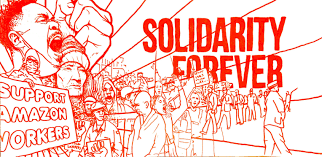
(This essay was written a decade ago. However, the need for solidarity among a newly rising global working class is needed now more than ever to combat war, white supremacy, neo-fascism, and climate disaster. The spirit of May Day survives everywhere as people seek to work with others to secure empowerment. Give support and thanks to workers who are rising everywhere and who are saying “no” to exploitation and imperialism.

The link below is to a trailer about a documentary on the Industrial Workers of the World (IWW) who saw the need for global solidarity over one hundred years ago.  HT).


Sketching Today’s Global Political Economy

During the latest phase of monopoly and finance capital (1945- to the present) enormous changes occurred in the global political economy. First, the United States emerged as a superpower and in an effort to crush the threat of socialism around the world committed itself to constructing a “permanent war economy.” This permanent war economy would create the military capacity to destroy alternatives to global capitalism, stimulate and maintain a high growth manufacturing economy, justify an anti-communist crusade to crush the left in the United States, and co-opt and/or repress working class demands for change. In addition, the permanent war economy would occasion the perpetuation of racism and patriarchy in public and private life.


As the years passed corporate rates of profit began to decline as a result of rising competition among capitalist states, over-production and under-consumption, an increasing fiscal crisis of the capitalist state, and rising prices of core natural resources (particularly oil). With a growing crisis, global corporate and finance capital shifted from investments in production of goods and services to financial speculation. Thus capitalist investment steadily shifted to financialization, or the investment in paper-stocks, bonds, private equity and hedge funds and other forms of speculative investment. Financial speculation was encouraged by state tax policies, “free trade” agreements, an expanded international system of indebtedness, and increased reliance on consumer debt.

Multinational corporations which continued to produce goods and services sought to overcome declining profit rates. This, they concluded, could only be achieved by reducing the costs of labor. To overcome the demand for higher real wages, health and other benefits, and worker rights, manufacturing facilities were moved from core capitalist states to poor countries where lower wages were paid. Thus, in wealthier countries millions of relatively high paying jobs were lost while production of goods increasingly moved to sweatshops in poor countries. Wealthy capitalist states experienced deindustrialization.

Finally, assisted by technological advances, from computers to new forms of shipping, financial speculation and deindustrialization fueled the full flowering of globalization, or the radically increased patterns of cross border interactions-economic, political, and cultural. Globalization began to transform the world into one integrated global political economy.

In short, we may speak of a four-fold set of parallel political and economic developments that have occurred since the end of World War II, in which the United States has played a leading role: creating a permanent war economy, financialization, deindustrialization, and globalization.


Should We Be Thinking About Socialism Today?

A rich and vital set of images of a socialist future comes down to us from the utopians, anarchists, and Marxists, the martyrs of the first May Day, and the variety of experiments with socialism attempted in Asia, Eastern Europe, Western Europe, Africa, and the Caribbean. Extracting from the multiple reasons why individuals and movements chose socialism one reason stands out; that is, that capitalism historically is and has been a cruel and inhumane system, a system borne and fueled by slavery, genocide, super exploitation of workers, tactics of division based on race and gender, and an almost total disregard for the natural environment that sustains life. Building a permanent war economy, financialization, deindustrialization, and globalization are merely extensions of the cruel and heartless pursuit of profit which has been the fundamental driving force of the capitalist mode of production.

Drawing on the history and the images of a better future coupled with the brutality of the capitalist era, we might conceive of a 21st century socialist future that has four main dimensions.

First, we need to build institutions that are created and staffed by the working classes and serve the interests of the working classes. While scholars and activists may disagree about what “class” means in today’s complicated world, it is clear that the vast majority of humankind do not own or control the means of production, nor do they usually have an instrumental place in political institutions. Therefore, socialism involves, in the Marxist sense, the creation of a workers’ state and since most of us are workers (more than 90 percent of the US population for example), a state must be established that represents and serves the interests of the many, not the few.

Second, our vision of socialism is a society in which the working classes fully participate in the institutions that shape their lives and in the creation of the policies that these institutions develop to serve the needs of all the people.

Third, socialism also implies the creation of public policies that sustain life. Socialism in this sense is about good jobs, incomes that provide for human needs, access to health care for all, adequate housing and transportation, a livable environment, and an end to discrimination and war.

Fourth, socialism is also about the creation of institutions and policies that maximize human potential. A socialist society provides the intellectual tools to stimulate creativity, celebrate diversity, and facilitate writing poetry, singing and dancing, basking in nature’s glow, and living, working, and loving with others in humanly sustainable communities.

Today we remain terribly far from any of these dimensions of socialism. But paradoxically, humankind at this point in time has the technological tools to build a mass movement to create a socialist future. We can communicate instantaneously with peoples all over the world. We can access information about the world that challenges the narrow ruling class media frames about the human condition. We have in the face of brutal war, environmental devastation, enduring racism, super exploitation of workers everywhere mass movements of workers, women, people of color, indigenous people, and youth who are demanding changes. Increasingly public discourse is based upon the realization that our future will bring either extinction or survival. Socialism, although it is not labeled as such, represents human survival.

Where do we who believe that socialism offers the best hope for survival stand at this critical juncture? We are weak. Many of us are older. Some of us have remained mired in old formulas about change. Nevertheless we can make a contribution to building a socialist future. In fact we have a critical role to play.

We must articulate systematic understandings of the global political economy and where it came from: permanent war, financialization, deindustrialization, and globalization. We need to articulate what impacts these processes have had on class, race, gender, and the environment. In other words, we need to convince activists that almost all things wrong with the world are connected and are intimately tied to the development of capitalism as the dominant mode of production.

We need to take our place in political struggles that demand an expanded role for workers in political institutions. We need to insist that the working classes participate in all political decisions.

We need to work on campaigns that could sustain life: jobs, living wages, single payer health care, climate change etc. Our contribution can include making connections between the variety of single issues, insisting that participants in mass movements take cognizance of and work on the other single issues that constitute the mosaic of problems that require transformation. We must remember that in the end the basic policies that sustain life require building socialism. Most struggles, such as those to achieve living wages or a single payer health care system for example, plant the seeds for building a broader socialist society. We can incorporate our socialist vision in our debates about single issues: if we demand a living wage, why not talk about equality for example?

We need to rearticulate our belief that human beings have a vast potential for good, for creativity, and given a just society, we all could move away from classism, racism, and sexism. We could pursue our talents and interests in the context of a sharing and cooperative society.

By working for institutional incorporation (empowerment) and life-sustaining and enhancing policies we will be planting the seeds for a socialist society.

“In our hands is placed a power greater than their hoarded gold,
Greater than the might of armies, magnified a thousand-fold.
We can bring to birth a new world from the ashes of the old.
For the union makes us strong”


From “Solidarity Forever,” Ralph Chaplin lyrics, 1915.

https://youtu.be/pCnEAH5wCzo


A trailer from Amy Goodman’s Democracy Now on the Industrial Workers of the World (IWW)

Wednesday, April 27, 2022

ENDURING FINDINGS IN POLITICAL SCIENCE RESEARCH: RELEVANCE TO ELECTIONS IN 2022 AND 2024

 Harry Targ


I was a political science teacher for over fifty years. As a person of the left, I confess, I regarded much of the “professional” literature in the field as either irrelevant to the day-to-day lives of most people, wrong in methods and substance, or manifestations of prevailing ideologies. I have begun to feel that my initial conclusions about the discipline were short-sighted.

Consequently, I have begun, with the help of friends, to review some of the literature on elections and voting behavior and various public opinion surveys. I have been drawn to reflect on several findings from the literature and polling data that may bear on electoral activism today. For example:

Generalizations About Party, Issues and Voting Behavior:

--The best predictor of voting behavior is the voter’s self-identified party preference (and most people “learn” their party preferences early in life).

--People who identify themselves as “independents” are less likely to vote.

--Issues usually do not matter for voters, However, in unusual times (such as the high inflation and unemployment in 1980 or enduring wars in 1968 or 2008) issues could have some impact on voting behavior.

--When issues matter economic ones are a primary motivator of voters.

--“The Politics of Resentment” (a title to a book by Katherine J. Cramer on Wisconsin voters), particularly over the last decade, has impacted on changing voter preferences and/or non-voting.

Domestic Concerns of Voters in 2022:

--Inflation is the biggest concern today.

--Less than half of voters polled think that the unemployment rate is lower than it was in 2021.

--Less than half of voters know that wages are rising faster today that ten years ago.

--In other words, when potential voters raise concerns about economic issues they often are ill-informed about key economic performance indicators.

Many potential voters are not familiar with prevailing policies and those being discussed such as:

--The 1.2 trillion bipartisan infrastructure package including building roads and bridges, investing in rail and high speed internet and other public transportation.

--The $1.9 trillion COVID relief program

-- The Biden Proposal to Build Back Better; a large expenditure on social and economic needs such as child care, education, health care, labor, and the environment.

Party identification has not changed much since the 1990s and earlier


On non-voters

--As the percentage of nonvoters narrowed to the smallest proportion in 120 years, the 80 million Americans who didn’t vote in 2020 had deep-seated reasons for not casting ballots.

--The survey of 1,103 nonvoters and 740 voters conducted by Ipsos from Nov. 4 to Nov. 13 found that those who didn’t vote in the 2020 election are set in their belief that voting just doesn’t matter. Four out of five people polled in November, 2020  said they made the choice not to vote for that reason. 


On Domestic Programs and Military Spending:

--While the Build Back Better program is stalled in Congress, bipartisan support has emerged to authorize $3.4 billion in military aid to Ukraine since the February 24 Russian invasion of Ukraine.

--Since August, U.S. military aid to help Ukraine repel Russia has surpassed $3 billion under Biden. The aid has provided more than 1,400 Stinger anti-aircraft systems and some 5,500 Javelin missiles. Biden provided another $800M Wednesday to widen Ukraine's military capabilities for a drawn-out war (an April 15, 2022 USA Today story).


Conclusions that may be relevant to electoral activists today

1.The percentage of voters who are less committed to a party or can be moved are small.

2.A large pool (80 million) of those who need to be “reached” are non-voters.

3.For those who need to be reached: non-voters, ‘independents”, less committed Republicans should be approached. For many of these issues will matter.

4.When issues matter, they are usually economic.

5.Progressive Democrats should run on economic issues, publicize those aspects of Biden’s program that have been adopted, and identify who opposed the Build Back Better program.

6.Such an outreach might include opposing the transfer of scarce financial resources to the military and the Ukraine war.

7.In sum, candidates and organizers should campaign around economic issues. Racism and/or militarism may be barriers to the mobilization of voters to make progressive choices. In response economic issues should be stressed in conjunction with strong anti-racist and anti-militarist stances. And prospective voters should be reminded of how divisive these issues are in covering up grotesque economic injustices.


Saturday, April 23, 2022

THE CUBA/UNITED STATES STORY: 1959-1962

 Harry Targ

The Biden administration, however, is ignoring the most important lesson of the missile crisis: all lines of communication—political, military and diplomatic—must be kept open at all times, particularly in the nuclear age. The missile crisis ended without a formal agreement, but less than a year later the two sides signed a formal agreement to ensure safe and quick communications between Washington and Moscow. (Melvin Goodman, "Lessons From the Cuban Missile Crisis" Counterpunch, October 7, 2022.)


THE BAY OF PIGS TO THE MISSILE CRISIS: Part 1

The 60 year anniversary of the Cuban Missile Crisis is approaching. In an introduction to the presentation of new documents on the crisis the National Security Archives warned  that “the combination of nuclear weapons and human fallibility will eventually result in nuclear destruction if these weapons are not abolished” (www.gwu.edu/~nsarchiv/). The historical record shows that the decisions leading to the crisis which almost brought nuclear war have been repeated over and over again since the early 1960s. Many fear that the brutal Russian war on Ukraine and the US/NATO response could escalate to the point of nuclear war.

Particularly, the Kennedy Administration pursued numerous policies to forestall revolutionary ferment in the Western Hemisphere. These included covert military action, economic assistance, and nuclear confrontation with the Soviet Union. The following blog essays address these policies. They are adapted from my book on United States foreign policy during the Cold War (Strategy of an Empire in Decline: Cold War II. 1986 available as a pdf at https://heartlandradical.blogspot.com/2022/03/strategy-of-empire-in-decline.html

The United States Invades Cuba

Before Fidel Castro’s 26th of July Movement seized power in Cuba in January, 1959, the United States had long controlled the island nation ninety miles from its shores. The country was ruled by dictator, Fulgencio Batista, a close ally of the United States, who, through repression and corruption, generated large-scale opposition in the countryside and the cities. In 1958 the State Department urged Batista to turn control over to a caretaker government, to forestall the victory of Fidel Castro, Che Guevara, and Camillo Cienfuegos, and their growing guerrilla armies, who were on the verge of overthrowing the dictator. Batista rejected the pressure to flee. His U.S. backed armies and police were defeated. The revolutionaries were victorious.

Before the revolution, United States investors controlled 80 percent of Cuba’s utilities, 90 percent of its mines, 90 percent of its cattle ranches, its three oil refineries, half its railroads, and 40 percent of its sugar. In a land rich with human and natural resources and a modern infrastructure and a tourist sector second to none in the Hemisphere, 600,000 Cubans were unemployed, more than half the population lived in slums, and one-half the population had no access to electricity. Forty percent of the Cuban population was illiterate, most Cubans spent much of their income on rent, and among wealthy Cubans, 1.5 percent of landowners owned 46 percent of the land.
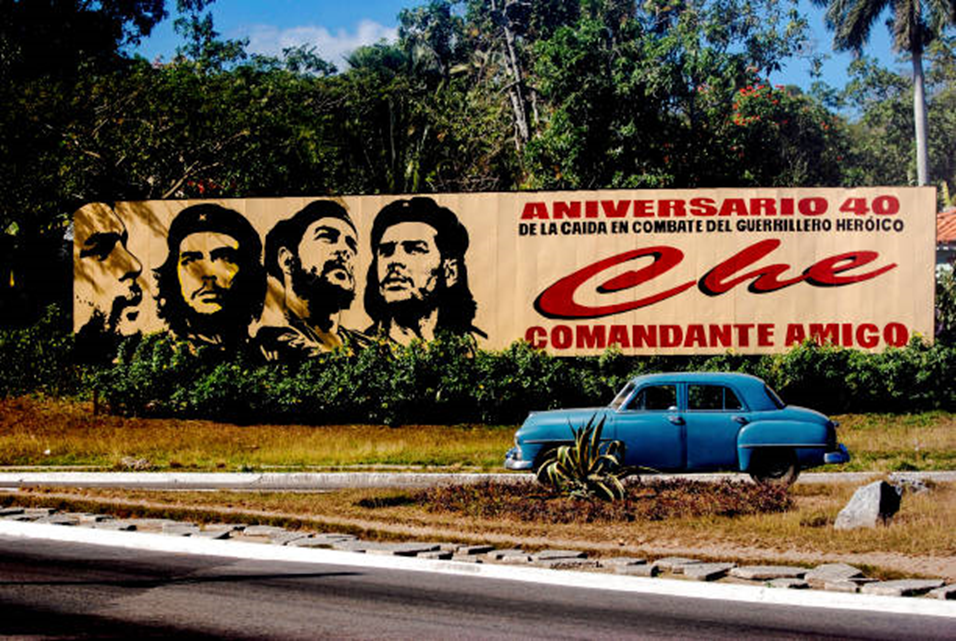


When the Castro-led revolutionaries assumed office, they began to develop a series of policies to alleviate the worst features of Cuban poverty. The revolutionary government invested in housing, schools, and public works. Salaries were raised, electrical rates were cut, rents were reduced by half. On a visit to the United States in April, 1959, Castro, who had proposed a large-scale assistance program for the Western Hemisphere to the Eisenhower Administration, was ignored by the President.

Returning from a hostile visit to Washington, Castro announced a redistributive program of agrarian reform that generated opposition from conservative Cuban and American landowners. These policies involved transfers of land to the Cuban people from the huge estates owned by the wealthy. The Eisenhower administration responded by reducing the quantity of United States purchases of Cuban sugar. Cuba then nationalized the industry.

In February, 1960 Cuba signed trade agreements with the Soviet Union. The Soviets agreed to exchange their oil for sugar no longer purchased by the U.S.  When the U.S. owned oil refineries refused to refine the Soviet oil, the Cuban government nationalized them.

In July, 1960, the U.S. cut all sugar purchases. Over the next several months the Cuban government nationalized U.S. owned corporations and banks on the island. Therefore, between the spring of 1960 and January 1961 U.S. and Cuban economic ties came to a halt and the island nation had established formal diplomatic relations with the Soviet Union. Shortly before Eisenhower left office, the break was made symbolically complete with the U.S. termination of formal diplomatic relations with Cuba.

As U.S./Cuban economic and diplomatic tensions were escalating, President Eisenhower made a decision that in the future would lead the world to the brink of nuclear war. In March, 1960, he ordered the Central Intelligence Agency to create a Cuban exile force that would invade the island and depose Fidel Castro. Even the State Department knew at that time that Castro was enormously popular.

In April, 1961, the newly elected President Kennedy was presented with an invasion plan by the CIA. The agency claimed that the right-wing Cubans would be greeted as heroes when they landed at the Bay of Pigs. After the Castro regime was overthrown, all private assets would be returned, and a Batista-like government would be reestablished.

The Bay of Pigs invasion, April 17-19, 1961, was launched by fifteen hundred Cuban exiles. It was an immediate failure: 500 invaders were killed and the rest captured. No uprising against the revolutionary government occurred. Kennedy was criticized in the United States for not providing sufficient air support to protect the invading army. The critics ignored the fact that the revolutionary government had the support of workers and peasants who would fight to defend it.


After the invasion attempt failed, President Kennedy warned of the danger of the “menace of external Communist intervention and domination in Cuba.” He saw a need to respond to Communism, whether in Cuba or South Vietnam. In the face of perceived Communist danger to the Western Hemisphere he reserved the right to intervene as needed. The lesson he drew from the Bay of Pigs was the need for escalated adventurism, not caution.


THE CUBA STORY: THE BAY OF PIGS TO THE MISSILE CRISIS: Part 2

Harry Targ

“I have called on all the people of the hemisphere to join in a new Alliance for Progress - Alianza para Progreso - a vast cooperative effort, unparalleled in magnitude and nobility of purpose, to satisfy the basic needs of the American people for homes, work and land, health and schools - techo, trabajo y tierra, salud y escuela….

To achieve this goal political freedom must accompany material progress. Our Alliance for Progress is an alliance of free governments-and it must work to eliminate tyranny from a hemisphere in which it has no rightful place. Therefore let us express our special friendship to the people of Cuba and the Dominican Republic-and the hope they will soon rejoin the society of free men, uniting with us in our common effort” (Address by President Kennedy at a White House reception for Latin American diplomats and members of Congress, March 13, 1961).

“Those who make peaceful revolution impossible will make violent revolution inevitable” (Address by President Kennedy to diplomats one year after his Alliance for Progress speech. March 13, 1962).

The Alliance for Progress as a “Non-Communist” Path to Development


The Kennedy Administration initiated a policy of foreign assistance in Latin America to complement the United States’ historic use of military force in the region. The President’s economic program was announced in the aftermath of long-standing complaints from Latin American dictators and some elected leaders that the United States had supported European recovery, the celebrated Marshall Plan of the 1940s, but ignored the Western Hemisphere. Most importantly, the Kennedy Administration and anti-Communist friends in the Hemisphere became increasingly concerned about the enthusiasm the Cuban revolution was generating in the region.

In the midst of what was presented to the public as the “threat of Communism” in Latin America, Kennedy presented his “Alliance for Progress” aid package to diplomats and Congressmen on March 3, 1961 (about one month before JFK authorized the Bay of Pigs invasion).

The Alliance, the President promised, would provide public and private assistance equivalent to $20 billion to Latin American countries over a ten-year period. The plan projected annual growth rates in Latin America of 2.5 percent and would lead to the alleviation of malnutrition, poor housing and health, single-crop economies, and iniquitous landholding patterns (all campaigns underway in revolutionary Cuba).

Loans were contingent upon the recipient governments, and their political and economic elites, carrying out basic land reform, establishing progressive taxation, creating social welfare programs, and expanding citizenship and opportunities for political participation.

However, the effect of the Alliance, even before Kennedy’s death, was negative. Problems of poverty, declining growth rates, inflation, lower prices for export commodities, and the maintenance of autocratic and corrupt governments persisted. The reality of the Alliance and most other aid programs was that they were predicated on stabilizing those corrupt ruling classes that had been the source of underdevelopment in the first place.

The connections between the Alliance program and the interests of United States capital were clear. For example, a section of the Foreign Assistance Act of 1962 authorized the president to cut off aid to any nation which nationalized or placed “excessive” taxes on U.S. corporations or which terminated contacts with U.S. firms. The act also emphasized monetary stability and the kinds of austerity programs common to U.S. and International Monetary Fund aid, requiring nations receiving aid to reduce public services and to maintain low wage rates to entice foreign investment. Further, Alliance funds were often to be used to serve the interests of foreign capital; for example building roads, harbors, and transportation facilities to speed up the movement of locally produced but foreign-owned goods to international markets.

Finally, the symbolism of the Alliance proclamation by President Kennedy was designed to promote the idea that U.S. resources, in collaboration with reformism in Latin America, would create societies that met the needs of the people and encouraged their political participation. The Alliance was presented as a response to Fidel Castro, a “non-Communist manifesto” for development.

The record of poverty and military rule throughout the Hemisphere suggested that there was no correspondence between symbol and reality. Kennedy, in a moment of unusual frankness, was reported to have said that the United States preferred liberal regimes in Latin America, but if they could not be maintained, it would much prefer a right-wing dictatorship to a leftist regime. After Kennedy’s death, Thomas Mann, Assistant Secretary of State for Inter-American Affairs, in the Johnson Administration, told reporters that U.S. policy in the Western Hemisphere was not about economic development or democratization but fighting Communism and protecting U.S. economic interests.
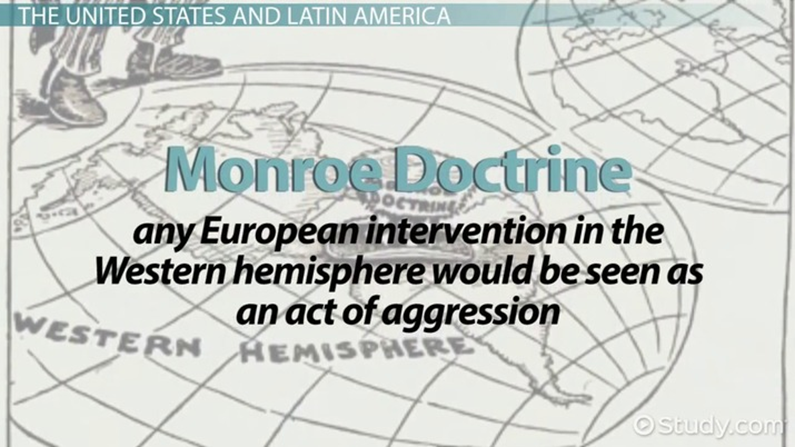


In reality, the frankness about the motivations behind U.S. policy expressed by Kennedy after the Alliance speech and Thomas Mann after Kennedy’s death clearly showed that the bottom line in terms of U.S. policy remained support for international capital. The Castros of this world, the Kennedy Administration believed (as has every administration since), had to be crushed at all costs. What remained significant over the next sixty years was that the Cuban revolution could not be defeated.

As the next essay in this series suggests, the Kennedy Administration, having failed to overthrow Cuban socialism at the Bay of Pigs, nor diminish its luster in the region through the economic bribery of the Alliance for Progress program, was willing to go to the brink of nuclear war, the Cuban Missile crisis, to combat socialism in the Western Hemisphere.


THE CUBA STORY: THE BAY OF PIGS TO THE MISSILE CRISIS: Part 3

"In the missile crisis the Kennedys played their dangerous game skillfully….But all their skill would have been to no avail if in the end Khrushchev had preferred his prestige, as they preferred theirs, to the danger of a world war. In this respect we are all indebted to Khrushchev." (I.F. Stone, “What If Khrushchev Hadn’t Backed Down?” in In a Time of Torment, Vintage, 1967).

The Kennedy Administration Goes to the Brink of Nuclear War

The period between the failed Bay of Pigs invasion, the announcement of the Alliance of Progress economic assistance program, and the Cuban Missile Crisis was one of escalating hostilities. Fidel Castro declared Cuba a Socialist state. The United States pressured members of the Organization of American States (OAS) to expel Cuba. The CIA began campaigns to assassinate the Cuban leader and President Kennedy initiated the complete economic blockade that exists until today. (During the Trump Administration over 240 new sanctions were imposed on Cuba to starve the population into submission. Despite campaign promises the current Biden Administration has not lifted these sanctions, even though the former Obama Administration in which Biden served had made substantial efforts to open economic and political relations).  In addition, Castro warned that the U.S. was continuing to plan for another invasion. The Soviet Union began providing more economic and military support to the Cubans, including anti-aircraft missiles and jet aircraft.

In October, 1962, U.S. spy planes sighted the construction of Soviet surface-to-air missile installations and the presence of Soviet medium-range bombers on Cuban soil. These sightings were made after Republican leaders had begun to attack Kennedy for allowing a Soviet military presence on the island. Kennedy had warned the Soviets in September not to install “offensive” military capabilities in Cuba. Photos indicated that the Soviets had also begun to build ground-to-ground missile installations on the island, which Kennedy defined as “offensive” and a threat to national security.

After securing the photographs Kennedy assembled a special team of advisors, known as EXCOM, to discuss various responses the United States might make. He excluded any strategy that prioritized taking the issue to the United Nations for resolution.

After much deliberation EXCOM focused on two policy responses: a strategic air strike against Soviet targets in Cuba or a blockade of incoming Soviet ships coupled with threats of further action if the Soviet missiles were not withdrawn. Both options had a high probability of escalating to nuclear war if the Soviet Union refused to back down.


High drama, much of it televised, followed the initiation of a naval blockade of Soviet ships heading across the Atlantic to Cuba. Fortunately, the leader of the Soviet Union, Nikita Khrushchev, sent notes to the President that led to a tacit agreement between the two leaders whereby Soviet missiles would be withdrawn from Cuba and the United States would promise not to invade Cuba to overthrow the Castro government. In addition, the President indicated that obsolete U.S. missiles in Turkey would be disassembled over time.

Most scholars argue that the missile crisis constituted Kennedy’s finest hour as statesman and diplomat. They agree with the administration view that the missiles constituted a threat to U.S. security, despite Secretary of Defense Robert McNamara’s claim in EXCOM meetings that the missiles did not change the strategic balance between the United States and the Soviet Union. Most of these scholars have agreed that the symbolic value of the installation of Soviet missiles could have had grave consequences for U.S. “credibility.”

Given the importance of the missiles, leading social scientists have written that the Kennedy team carefully considered a multitude of policy responses. EXCOM did not ignore competing analyses, as had been done in the decisional process prior to the Bay of Pigs. The blockade policy that was adopted, experts believe, constituted a rational application of force that it was hoped would lead to de-escalation of tensions. All observers agreed that the United States and the Soviet Union had gone to the brink of nuclear war. Even the President estimated that there was a fifty percent probability of full-scale nuclear war.

In the end the Soviets withdrew their missiles. Analysts said the Soviet Union suffered a propaganda defeat for putting the missiles on Cuban soil in the first place and then withdrawing them after U.S. threats. Khrushchev was criticized by the Chinese government and within a year he was ousted from leadership in the Soviet Union.

In the light of this U.S. “victory,” Kennedy has been defined as courageous and rational. The real meaning of the Cuban Missile Crisis, however, is different, even sixty years after the event. The crisis actually suggests that the United States quest to maintain and enhance its empire would lead it to go to any extreme, even nuclear war, to defend the interests of capitalism. To avoid serious losses, whether symbolic or material, for capitalism, any policy was justified.

Further, in terms of U.S. politics, Kennedy was calculating the effects of the missiles on the chances for his party to retain control of Congress in 1962. A second “defeat” over Cuba (the Bay of Pigs was the first) would have heightened the opposition’s criticisms of his foreign policy.

Finally, in personal terms, Kennedy was driven by the need to establish a public image as courageous and powerful in confronting the Soviets. Khrushchev had spoken harshly to him at a summit meeting in Vienna in 1961 and Castro had been victorious at the Bay of Pigs. The President’s own “credibility” had been damaged and a show of force in October, 1962, was necessary for his career.

Because of imperialism, politics, and personal political fortunes, the world almost went to nuclear war sixty years ago. As I.F. Stone suggested shortly after the crisis, nuclear war was avoided because the Soviet Union chose to withdraw from the tense conflict rather than to engage in it further.

National Security Archives files referred to earlier suggest, “the historical record shows that the decisions leading to the crisis which almost brought nuclear war have been repeated over and over again since the early 1960s” ( www.gwu.edu/~nsarchiv/). The danger of the unabashed and irresponsible use of force and the legitimation of the idea that diplomacy can be conducted using nuclear weapons and other devastating weapons systems still represents a threat to human survival.

These comments were adapted from Harry Targ, Strategy of an Empire in Decline: Cold War II, 1986. It is the third essay in a series on “The Cuba Story” available at www.heartlandradical.blogspot.com. Recent escalation of tensions and war in Eastern Europe reminded the author of sixty years ago when the world almost went to nuclear war.


The Bookshelf

CHALLENGING LATE CAPITALISM by Harry R. Targ

Challenging Late Capitalism