Monday, May 16, 2022

Diplomacy not War: Relevant to Stopping the Ukraine War?

WHERE SHOULD THE PEACE MOVEMENT STAND? IMPERIALISM, WAR, AND/OR DIPLOMACY


Originally posted August 2, 2015

Harry Targ

“Not every conflict was averted, but the world avoided nuclear catastrophe, and we created the time and the space to win the Cold War without firing a shot at the Soviets…. Now, when I ran for president eight years ago as a candidate who had opposed the decision to go to war in Iraq, I said that America didn’t just have to end that war. We had to end the mindset that got us there in the first place. It was a mindset characterized by a preference for military action over diplomacy, a mindset that put a premium on unilateral U.S. action over the painstaking work of building international consensus, a mindset that exaggerated threats beyond what the intelligence supported.” (Barack Obama, “Full text: Obama gives a speech about the Iran nuclear deal,” The Washington Post, August 5, 2015).

The peace movement has often been faced with a dilemma. Should it channel its energies in opposition to imperialism, including economic expansion and covert operations, or should it mobilize against war, or both. The problem was reflected in President Obama’s August 5, 2015 speech defending the anti-nuclear proliferation agreement with Iran.  On the one hand he defended diplomacy as the first tool of a nation’s foreign policy and on the other hand his defense included the argument that through diplomacy the United States “won” the Cold War, and thereby defeated a bloc of states that opposed capitalist expansion. The implication of his argument was that pursuing imperialism remained basic to United States foreign policy but achieving it through peace was better than through war.

The speech was presented at American University 52 years after President Kennedy called for peaceful competition with the former Soviet Union. In June, 1963, nine months after the Cuban Missile Crisis, which nearly led to nuclear war, and weeks after Soviet leader Nikita Khrushchev’s call for “peaceful coexistence,” President Kennedy responded by urging the use of diplomacy rather than war in the ongoing conflict with the Soviet Union. 

A small but growing number of scholars and activists at that time had begun to articulate the view that the threat of nuclear war, growing U.S. involvement in Southeast Asia, and repeated covert interventions in Guatemala, Iran, Cuba, and the Congo, had to do with U.S. imperialism. The dilemma for the peace movement in 1963 then as it is in 2015 is how to respond to United States imperialism at the same time as supporting the use of diplomacy to forestall wars.

In the context of political discourse in 2015, dominated by “neoconservative” and “humanitarian interventionist” factions of the foreign policy elite, the danger of war always exists. Therefore, any foreign policy initiative that reduces the possibility of war and arguments about its necessity must be supported. The agreement with Iran supported by virtually every country except Israel constitutes an effort to satisfy the interests of Iran and the international community and without the shedding of blood and creating the danger of escalation to global war. 

Neoconservatives, celebrants of war, have had a long and growing presence in the machinery of United States foreign policy. James Forrestal, the first Secretary of Defense in the Truman Administration, was a leading advocate for developing a militaristic response to the Soviet Union in the years after World War II. As historian Andrew Bacevich pointed out, Forrestal was one of the Truman administrators who sought to create a “permanent war economy.” He was, in Bacevich’s terms, a founding member of the post-World War II “semi-warriors.”

Subsequent to the initiation of the imperial response to the “Soviet threat”--the Marshall Plan, NATO, wars in Korea and Vietnam, the arms race--other semi-warriors continued the crusade. These included the Dulles brothers (John and Alan), Air Force General Curtis LeMay, and prominent Kennedy advisors including McGeorge Bundy and Walter Rostow, architect of the “noncommunist path to development,” in Vietnam.

Key semi-warriors of our own day, Donald Rumsfeld, Dick Cheney, Elliott Abrams, Robert Kagan, and others who formed the Project for a New American Century (PNAC) in the 1990s, gained their first experience in the administrations of Richard Nixon and Ronald Reagan. The PNAC view of how the United States should participate in world affairs is to use military superiority to achieve foreign policy goals. The key failure of Clinton foreign policy, they claimed, was his refusal to use force to transform the world. For starters, he should have overthrown Saddam Hussein in Iraq.

The neoconservative policy recommendations prevailed during the eight years of the George Walker Bush administration. International organizations were belittled, allies were ignored, arms control agreements with Russia were rescinded and discourse on the future prioritized planning for the next war. And concretely the United States launched long, bloody, immoral wars in Iraq and Afghanistan.

Humanitarian interventionists, more liberals than conservatives, argued that the United States should use force, but more selectively, to achieve various goals. These goals included interventions that allegedly defended the quest for human rights. Advocates of humanitarian interventionism argued that the United States must use all means available, military and diplomatic, to maximize interests and values. And force need not be the first or only instrument of policy. 

But in the end the humanitarian interventionists encouraged bombing Serbia, intervening in a civil war in Libya, funding rebels perpetuating war in Syria, expanding military training and a U.S. presence in Africa, and funding opposition elements against the government in Venezuela. In addition, with advice from humanitarian interventionists, the United States increased the use of drones to target enemies of U.S. interests in East Asia, the Persian Gulf, and the Middle East.

Neoconservatives and humanitarian interventionists (and in earlier times anti-communists) have led the charge for war-making in the United States since World War II. Between the end of the war and the 1990s, 10 million people died in wars in which the United States had a presence. Hundreds of thousands of young men and women serving in the armed forces of the United States have died or been permanently scarred by U.S. wars. And the physical landscape of Southeast Asia, the Persian Gulf, Central America, and the Middle East has been devastated by war. And in the United States, foreign policy elites, politicians, and think tank experts still advocate violence to address international problems. 

Therefore, in the context of a huge arms industry and global economic and political interests, any presidential initiative that uses diplomacy rather than force, declares its opposition to unilateral action, and challenges the war mindset deserves the support of the peace movement. Given the long and painful United States war system, the battle to secure the agreement between the P5 plus 1 nuclear agreement with Iran is worthy of support.

The Russian invasion of Ukraine is deplorable and the issues between all contending parties are more intractable today than the negotiations with Iran referred to above. However, Russia’s engaging in violence and destruction, and the United States and NATO supplying arms to Ukraine, can only lead to more death, hunger, and the danger of escalation to nuclear war.


Saturday, May 14, 2022

ON GRADUATED RECIPROCATION IN TENSION REDUCTION (GRIT)

Harry Targ

Secretary of State Anthony Blinken endorses negotiations between contending nations in Africa, the Democratic Republic of Congo and Rwanda August 9, 2022

And the Ukraine?

“The United States is doing everything it can to support the very important African-led mediation efforts, in particular the processes that are being led by Kenya and Angola, to bring peace, security and stability to the eastern Congo. We are not only following this very closely and carefully, we’re engaged in it,” he said. (Jean-Yves Kamale “Blinken calls for end to Congo violence, backs negotiations” Associated Press, August 9, 2022.)


"Defense Secretary Lloyd Austin spoke with Russian defense minister Sergey Shoygu on Friday, marking the first time the two have spoken since before Moscow’s invasion of Ukraine began."  (The Hill, May 13,2022).

As a Marxist teaching Peace Studies I always made light of sections of my course and text that dealt with bargaining and negotiation.

However, reflecting on the war in Ukraine and the seething tensions and competing arguments (even among us on the left) I was drawn to this bargaining and negotiation literature I long since forgot. Why? Because I do believe the first priority of the peace movement should be to organize around stopping the killing. We can put off for now debates over the role of NATO, great power chauvinism, self-determination of Ukrainians including those in the Donbas region, and the role or not of neo-Nazi's. In my opinion the first priority is how to get the killing to stop, hopefully coupled with a withdrawal of Russian troops from Ukraine.

So I recalled the writings and research of a social psychologist, Charles Osgood, who developed his strategy of Graduated Reciprocation in Tension Reduction or GRIT. He claimed it worked during the Cuban Missile Crisis and others have claimed that it has worked in other conflict situations such as US/Iranian negotiations. https://savinghumans.wordpress.com/2014/05/21/building-a-spiral-of-trust-through-grit/

GRIT’s basic point is to get one side, in this case US/NATO/Ukraine, to make some serious but not risky unilateral moves inviting the other side to reciprocate. (And that is where peace movement activism and demands come in.) And such de-escalatory moves should be continued but not to endanger the security of the initiating party. (And the conversation between Secretary of Defense Lloyd Austin and Russian Defense Ministery Sergey Shoygu may be a start).

Hopefully, Osgood would have suggested, the Russians would eventually stop the killing, perhaps order troops in place, and/or pull back some troops.  One critical goal would be to get a number of nations to send representatives to negotiate a ceasefire and further tension-reduction. In this case the Minsk Accords might be a starting place.

GRIT may not work, but in my opinion it is worth a try. And if one looks at the GRIT strategy for tension-reduction US policy is now doing just the opposite; that is the US is escalating by word and deed more threats, more demands, more arms, and more calls for expanding the scope of the conflict.

So, while social psychology is not political economy or realpolitik, it might help end the killing. And we all agree that is the first priority for the Ukrainians and is vital for reducing, rather than increasing, the threat of global nuclear war.

http://psychology.iresearchnet.com/social-psychology/antisocial-behavior/grit-tension-reduction-strategy/


Saturday, May 7, 2022

NATO'S HIDDEN HISTORY: A RADIO BROADCAST AT WORT-FM, MADISON, WISCONSIN


NATO’s Hidden History

MAY 5, 2022 BY A PUBLIC AFFAIR

For today’s show, Thursday host Allen Ruff turns his attention to the history of NATO with political scientist Harry Targ.

https://www.wortfm.org/harry-targ-nato-history/

They discuss the war in Ukraine, imperialism, the “global NATO,” and Harry’s recent article in CovertAction Magazine, “Peace Movement Needs to Demand Dismantling of NATO.”

Harry Targ is a peace activist and emeritus professor of political science at Purdue University, where he taught foreign policy, US–Latin American relations, international political economy, and topics on labor studies. He blogs at Diary of a Heartland Radical.


Did you enjoy this story? Your funding makes great, local journalism like this possible. Donate here

Friday, May 6, 2022

WAR AND PEACE | Reflections on the War in Ukraine

Harry Targ | The Rag Blog | March 10, 2022 (and still relevant)


Many of us in the peace movement have had useful conversations (and debates) stimulated by the war on Ukraine. We are discussing the causes of the invasion of Ukraine by Russia, both immediate and historical, and how the peace movement should respond to this important crisis. I commend the Oliver Stone documentary to all as one detailed and informed narrative of a very complicated Ukrainian history. 

An important element of Stone’s narrative is the role of Ukrainian neo-fascists who were prominently active in the 2014 coup against the elected Ukraine government. These descendants of World War II neo-Nazis, Stone claims, now serve in the Ukraine army. 

Also, most accounts of the Ukraine crisis today ignore the extraordinary expansion of NATO in the 1990s and the 2014 coup against the elected government of Ukraine carried out with the covert support of the United States. Including this in the accounts today adds important context, not for determining good guys and bad guys, but for figuring out what should be done and where peace forces should stand. And to be clear reflection on this context does not deny the immoral and inhumane Russian invasion of Ukraine. 

My takeaways so far are the following: 

1.Russia has fallen into a trap that will significantly and negatively impact on its economy. It also reduces Russian influence around the world and undermines Russia’s renewed economic ties with countries in the Western Hemisphere. 

2.The invasion gives fuel to the emerging anti-China Cold War rhetoric for politicians of both parties and the corporate media who suggest that Taiwan will be next, presumably after a Chinese invasion.

3.The Ukraine war is an enormous plus for military/industrial complexes in the US and in Russia as well. 

4.The Ukraine story transforms the global narrative from the critical discussion of exploitation by the Global North of the Global South to the Biden narrative of “authoritarians” vs. “democracies.” For example, see the powerful presentation by V J Prashad of the essential nature of the North/South struggle. 

5.The impacts of the debate on progressive forces in the US and elsewhere are potentially devastating. In the US, our discourse is shifting from a progressive agenda including President Biden’s Build Back Better program for example to stories about the relationships between Putin and former President Trump and so-called “national security.” Biden’s State of the Union address reflects his “shift to the center.” Now we have a cause all Americans can get behind: opposing the Russians. (I am reminded how the Soviet menace in the 1940s was used to defang CIO militancy, the drive for free health care, Henry Wallace’s call for US/Soviet dialogue and, of course, civil rights for all). 

I think the Russian invasion and the incomplete and war-oriented narrative of the Ukraine crisis dominating the news from such sources as the Washington Post, The New York Times, National Public Radio, and CNN/MSNBC constitute a real setback for us. Media news is a commodity. War and portraits of American exceptionalism are profitable commodities for the increasingly concentrated corporate media. 

For these reasons and more, I endorse the Code Pink demands that Russia withdraw its troops from Ukraine and the United States, and its allies pull back NATO forces from their presence in Eastern Europe. In addition, diplomatic efforts should ensue to replace NATO with an organization that can provide security for Europe and the Global South. The Code Pink frame gives appropriate recognition to both the immorality of the Russian action and the context, including NATO expansion and the events in Ukraine since 2014.

Finally, I want to reintroduce the concept of “historical memory.” These memories are important for people and they are legitimate ways to think about what needs to change. The historical memory for many Russians probably includes the 27 millions of their ancestors killed during World War II largely from invading German armies crossing through Ukraine. (Ukrainians on all sides have historical memories as well). I assume that if I were a Russian such a memory would affect how I think about the world. I know from experience how deeply the Holocaust still affects Jewish people even today. 

So peace activists will continue to debate root causes of this senseless war and what to do about it. But for now as Cold Pink and others demand: Stop the War, Withdraw Russian Troops From Ukraine, Reverse the Extension of NATO.

Tuesday, May 3, 2022

THERE IS NO DEMOCRACY WHEN WOMEN CANNOT CONTROL THEIR BODIES

 Sorry for reposting but the rumors of the overthrow of Roe v. Wade makes me outraged. The US claims to be a model for democracy worldwide but is about to deny it to women at home. HT

24 FEBRUARY 2011

Harry Targ : Fundamentalism and the Attack on Planned Parenthood

Image from Feministe.

In the fundamentalist tradition:
The attack on Planned Parenthood


By Harry Targ / The Rag Blog / February 24, 2011
Often politicians using religious dogma as their rhetorical tool, support public policies that punish poor women, women of color, and progressive women in general.
Vivay Prashad, in his fascinating book, The Darker Nations, traced the rise and subsequent demise of the Third World Project from the 1950s to the 1980s. The Third World Project, mainly the mobilization of poor and marginalized peoples around the world, envisioned the construction of progressive governments that would provide for basic social and economic needs and institutionalize democratic participation in political life.

This project was derailed for several reasons. One of the most significant was the willful construction by threatened elites of fundamentalist religious institutions.

In the Middle East, the tottering dictatorships plowed financial resources into the creation of fundamentalist Islamic organizations. “Political Islam” was introduced into global political culture to divert and divide social movements for fundamental change.

Political Islam called for a return to the past and a rejection of modern secular ideas about social and political institutions. Religious dogma worked to replace visions of egalitarian societies. Ironically, in order to maintain stability, United States foreign policy supported insurgent Islamic fundamentalist movements in various places such as Afghanistan.

In Latin America, religious fundamentalism took a variety of forms. The leadership of the Catholic Church launched a frontal assault on newly created radical regimes, such as in Nicaragua, that based their political principles on a theology of “liberation.” Also, evangelical Christian organizations, with funding from worldwide economic elites, infiltrated Latin American countries experiencing revolutionary ferment, urging the poor to reject earthly solutions to their problems.

In North America, the religious right mobilized financial resources to appeal to an electorate frustrated by challenges to U.S. hegemony overseas and economic stagnation at home. In each political venue, whether dominated by Islam, Christianity, or Judaism in the case of Israel, religion was used to divide and conquer.

The sector of the population most impacted by fundamentalisms of every kind is women. Women are forced out of the political process as patriarchies reinstitute top-down control of their political, economic, and cultural lives and their bodies. Women’s institutions, particularly ones that encourage progressive public policies, are marginalized.

Often politicians using religious dogma as their rhetorical tool, support public policies that punish poor women, women of color, and progressive women in general. In sum, the resurgence of religious fundamentalism has been used to divide majorities of people along various lines that defuse their solidarity and the targets of such assaults are most often women.

A current example of this strategy of attacking women by raising the specter of religious orthodoxy occurred Friday, February 18, when the House of Representatives approved an amendment to budgetary legislation that would end all funding of Planned Parenthood, a national organization that provides vital reproductive health services to low-income women.

Congressman Mike Pence (R-IN), who introduced the proposal, declared that American taxpayers should not have to pay for abortions. He failed to mention that they don’t because the government currently forbids the use of federal dollars for most abortions. Consequently, that could not have been the motivation for this legislation.

Rather, most of the 240 House members who voted to cut all allocations to Planned Parenthood wished to raise the religious issue to justify their general goal of ending public health care and guarantees for basic public health services for all. Pence failed to make note of the fact that Planned Parenthood gives contraceptive assistance to poor women, does HIV tests, screens women for cancer, and provides reproductive health care for women.

Planned Parenthood, like ACORN the community organization that was victimized last year, is under assault to achieve political goals. The attacks serve to divide the electorate in order to destroy another organization that serves the needs of the working class, in this case working class women.

Data from the Guttmacher Institute points out that in recent years almost half of women who need reproductive health care are not able to afford it. Four in 10 women of reproductive age have no health insurance.

The health care reform legislation of 2010 opens the door for expanded insurance coverage for reproductive health and family planning. Among those without health care as of 2009 were 14 million women of reproductive age. According to the new health care law, if not defied by state governments, Medicaid programs will expand family planning services to lower income families in years ahead.

As the Pence amendment suggests, existing health services for women and prospective new ones are under threat from health care opponents. They want to destroy major providers of health care for women such as Planned Parenthood. And, in the end, they want to destroy any form of public health for people.

How to do it? Transform the discourse from providing health care for the people, a broadly accepted idea, to religious dogma, in this case anti-abortion dogma.

It is time for progressives to respond. Attacks on Planned Parenthood are attacks on the working class, especially people of color, and women, and the very idea that governments are created to serve the needs of the people.

[Harry Targ is a professor of political science at Purdue University who lives in West Lafayette, Indiana. He blogs at Diary of a Heartland Radical.]

The Rag Blog

Saturday, April 30, 2022

MAY DAY BRINGS THOUGHTS OF SOCIALIST ALTERNATIVES

Harry Targ

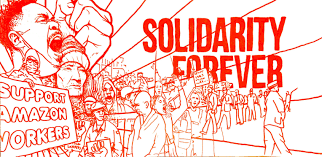
(This essay was written a decade ago. However, the need for solidarity among a newly rising global working class is needed now more than ever to combat war, white supremacy, neo-fascism, and climate disaster. The spirit of May Day survives everywhere as people seek to work with others to secure empowerment. Give support and thanks to workers who are rising everywhere and who are saying “no” to exploitation and imperialism.

The link below is to a trailer about a documentary on the Industrial Workers of the World (IWW) who saw the need for global solidarity over one hundred years ago.  HT).


Sketching Today’s Global Political Economy

During the latest phase of monopoly and finance capital (1945- to the present) enormous changes occurred in the global political economy. First, the United States emerged as a superpower and in an effort to crush the threat of socialism around the world committed itself to constructing a “permanent war economy.” This permanent war economy would create the military capacity to destroy alternatives to global capitalism, stimulate and maintain a high growth manufacturing economy, justify an anti-communist crusade to crush the left in the United States, and co-opt and/or repress working class demands for change. In addition, the permanent war economy would occasion the perpetuation of racism and patriarchy in public and private life.


As the years passed corporate rates of profit began to decline as a result of rising competition among capitalist states, over-production and under-consumption, an increasing fiscal crisis of the capitalist state, and rising prices of core natural resources (particularly oil). With a growing crisis, global corporate and finance capital shifted from investments in production of goods and services to financial speculation. Thus capitalist investment steadily shifted to financialization, or the investment in paper-stocks, bonds, private equity and hedge funds and other forms of speculative investment. Financial speculation was encouraged by state tax policies, “free trade” agreements, an expanded international system of indebtedness, and increased reliance on consumer debt.

Multinational corporations which continued to produce goods and services sought to overcome declining profit rates. This, they concluded, could only be achieved by reducing the costs of labor. To overcome the demand for higher real wages, health and other benefits, and worker rights, manufacturing facilities were moved from core capitalist states to poor countries where lower wages were paid. Thus, in wealthier countries millions of relatively high paying jobs were lost while production of goods increasingly moved to sweatshops in poor countries. Wealthy capitalist states experienced deindustrialization.

Finally, assisted by technological advances, from computers to new forms of shipping, financial speculation and deindustrialization fueled the full flowering of globalization, or the radically increased patterns of cross border interactions-economic, political, and cultural. Globalization began to transform the world into one integrated global political economy.

In short, we may speak of a four-fold set of parallel political and economic developments that have occurred since the end of World War II, in which the United States has played a leading role: creating a permanent war economy, financialization, deindustrialization, and globalization.


Should We Be Thinking About Socialism Today?

A rich and vital set of images of a socialist future comes down to us from the utopians, anarchists, and Marxists, the martyrs of the first May Day, and the variety of experiments with socialism attempted in Asia, Eastern Europe, Western Europe, Africa, and the Caribbean. Extracting from the multiple reasons why individuals and movements chose socialism one reason stands out; that is, that capitalism historically is and has been a cruel and inhumane system, a system borne and fueled by slavery, genocide, super exploitation of workers, tactics of division based on race and gender, and an almost total disregard for the natural environment that sustains life. Building a permanent war economy, financialization, deindustrialization, and globalization are merely extensions of the cruel and heartless pursuit of profit which has been the fundamental driving force of the capitalist mode of production.

Drawing on the history and the images of a better future coupled with the brutality of the capitalist era, we might conceive of a 21st century socialist future that has four main dimensions.

First, we need to build institutions that are created and staffed by the working classes and serve the interests of the working classes. While scholars and activists may disagree about what “class” means in today’s complicated world, it is clear that the vast majority of humankind do not own or control the means of production, nor do they usually have an instrumental place in political institutions. Therefore, socialism involves, in the Marxist sense, the creation of a workers’ state and since most of us are workers (more than 90 percent of the US population for example), a state must be established that represents and serves the interests of the many, not the few.

Second, our vision of socialism is a society in which the working classes fully participate in the institutions that shape their lives and in the creation of the policies that these institutions develop to serve the needs of all the people.

Third, socialism also implies the creation of public policies that sustain life. Socialism in this sense is about good jobs, incomes that provide for human needs, access to health care for all, adequate housing and transportation, a livable environment, and an end to discrimination and war.

Fourth, socialism is also about the creation of institutions and policies that maximize human potential. A socialist society provides the intellectual tools to stimulate creativity, celebrate diversity, and facilitate writing poetry, singing and dancing, basking in nature’s glow, and living, working, and loving with others in humanly sustainable communities.

Today we remain terribly far from any of these dimensions of socialism. But paradoxically, humankind at this point in time has the technological tools to build a mass movement to create a socialist future. We can communicate instantaneously with peoples all over the world. We can access information about the world that challenges the narrow ruling class media frames about the human condition. We have in the face of brutal war, environmental devastation, enduring racism, super exploitation of workers everywhere mass movements of workers, women, people of color, indigenous people, and youth who are demanding changes. Increasingly public discourse is based upon the realization that our future will bring either extinction or survival. Socialism, although it is not labeled as such, represents human survival.

Where do we who believe that socialism offers the best hope for survival stand at this critical juncture? We are weak. Many of us are older. Some of us have remained mired in old formulas about change. Nevertheless we can make a contribution to building a socialist future. In fact we have a critical role to play.

We must articulate systematic understandings of the global political economy and where it came from: permanent war, financialization, deindustrialization, and globalization. We need to articulate what impacts these processes have had on class, race, gender, and the environment. In other words, we need to convince activists that almost all things wrong with the world are connected and are intimately tied to the development of capitalism as the dominant mode of production.

We need to take our place in political struggles that demand an expanded role for workers in political institutions. We need to insist that the working classes participate in all political decisions.

We need to work on campaigns that could sustain life: jobs, living wages, single payer health care, climate change etc. Our contribution can include making connections between the variety of single issues, insisting that participants in mass movements take cognizance of and work on the other single issues that constitute the mosaic of problems that require transformation. We must remember that in the end the basic policies that sustain life require building socialism. Most struggles, such as those to achieve living wages or a single payer health care system for example, plant the seeds for building a broader socialist society. We can incorporate our socialist vision in our debates about single issues: if we demand a living wage, why not talk about equality for example?

We need to rearticulate our belief that human beings have a vast potential for good, for creativity, and given a just society, we all could move away from classism, racism, and sexism. We could pursue our talents and interests in the context of a sharing and cooperative society.

By working for institutional incorporation (empowerment) and life-sustaining and enhancing policies we will be planting the seeds for a socialist society.

“In our hands is placed a power greater than their hoarded gold,
Greater than the might of armies, magnified a thousand-fold.
We can bring to birth a new world from the ashes of the old.
For the union makes us strong”


From “Solidarity Forever,” Ralph Chaplin lyrics, 1915.

https://youtu.be/pCnEAH5wCzo


A trailer from Amy Goodman’s Democracy Now on the Industrial Workers of the World (IWW)

The Bookshelf

CHALLENGING LATE CAPITALISM by Harry R. Targ

Challenging Late Capitalism