Thursday, July 14, 2022

WOODY GUTHRIE (Born July 14, 1912)

Harry Targ


I was thinking about an old Robin Hood song written by Woody Guthrie in the 1930s about an Oklahoma legend, Pretty Boy Floyd. According to Woody’s rendition, Pretty Boy Floyd got into a fight with a deputy sheriff and killed him. Floyd was forced to flee and allegedly took up a life of crime. At least authorities and journalists blamed Floyd for every robbery or killing that occurred in the state of Oklahoma. “Every crime in Oklahoma was added to his name.”

But in true Robin Hood fashion Pretty Boy Floyd stole from the rich and gave to the poor. Floyd, the outlaw, paid the mortgage for a starving farmer. Another time when Floyd begged for and received a meal in a rural household, he placed a thousand-dollar bill under his napkin when he finished dinner. One Christmas Day Floyd left a carload of groceries for starving families on relief in Oklahoma City.

And in these days of low wages, mortgage foreclosures, criminal wealth, and staggering poverty, through the voice of Pretty Boy Floyd, Woody Guthrie tells the wrenching story of capitalism that today is not too much different from during his time.

“Yes, as through this world I’ve wandered
I’ve seen lots of funny men;
Some will rob you with a six-gun,
And some with a fountain pen.

And as through your life you travel,
Yes, as through your life you roam,
You won’t never see an outlaw
Drive a family from their home.”

HAPPY BIRTHDAY WOODY


Wednesday, July 13, 2022

EMPIRE DECLINES: PROBABILITY OF WAR INCREASES: A Book Review

a repost 

SATURDAY, APRIL 7, 2018

Harry Targ

Alfred McCoy, In the Shadows of the American Century: The Rise and Decline of US Global Power, Haymarket Books, 2017.


Rachel Bronson, Ph.D., President and CEO of the Bulletin of the Atomic Scientists wrote that “in 2017 we saw reckless language in the nuclear realm heat up already dangerous situations and re-learned that minimizing evidence-based assessments regarding climate and other global challenges does not lead to better public policies.”

In fact, the distinguished team of researchers affiliated with the Bulletin who regularly assess the danger of nuclear war declared that the probability of nuclear war has increased over the last year. Using their “doomsday clock” as a metaphor the dial was moved to two minutes to midnight; midnight signifying the onset of nuclear war. This warning moves the clock one minute closer to possible nuclear apocalypse than the prior several years. The scientists believe that the danger of nuclear destruction and devastating climate disaster is greater now than at any time since the early 1980s.

The context for this grim prediction is well-reflected in a new book by University of Wisconsin historian Alfred McCoy, In the Shadows of the American Century.  The author reviews the rise of the American empire since the 1890s. He describes the twentieth century emergence of the US as the hegemonic power in the international system based upon economic superiority and overwhelming military power. He suggests, however, that this economic and military dominance is being challenged today. US relative economic power is declining. Participation in global wars has become a military quagmire. And global resistance to imperialism is spreading.

Perhaps the most critical challenge to the American empire, he suggests, is the rise of China, particularly as an economic successor to US control of the global political economy. He reviews data concerning Chinese domestic development indicating that the country has emerged as the second largest world economy. In addition, the Chinese have developed trade with every continent, invested broadly everywhere, and established an Asian financial and trading system that challenges the historic US presence in the region. Finally, China has expanded transportation, trade, investment, and corporate ties with Europe.  In sum, the author makes a compelling case for the economic rise of China and the relative decline of the United States in the global economy. In economic terms the global system is changing from unipolarity to multipolarity.

In reference to the United States, McCoy draws a portrait of an empire in decline, particularly in terms of relative economic competitiveness. In response to this decline McCoy provides detailed information to suggest that the United States has embarked on a program to expand militarily programs around the globe and in outer space. This latest phase of militarism includes preparing for cyber space war, occupying space (in parallel ways in which the United States occupied land in the twentieth century), developing biometrics to identify potential enemies, and increasing drone warfare capabilities. These projects involve the creation of a whole panoply of weapons that exceed the imagination of science fiction. In sum, therefore, the new militarism is designed to forestall and overcome declining empire.

This book is a must read for the peace movement because it indicates the dangerous world in which we live and the increased probability of global destruction. It suggests the need for a two-pronged response to the United States empire in decline. First, peace activists must continue to oppose militarism in all its forms--spending, fighting, and non-transparent interventions across the globe.

Second, peace activists need to develop a public discourse that celebrates the emergence of a multi-polar world, a world in which more countries can participate in global policy-making. The alternative to an energized peace movement could be, as the atomic scientists warn, a nuclear apocalypse.


Thursday, July 7, 2022

CUBA SOLIDARITY ACTIVISTS CONTINUE TO DEMAND AN END TO THE ECONOMIC BLOCKADE

 Harry Targ


 From an Internal Memorandum Circulated in the Eisenhower Administration Recommending Policies to Undermine the Popularity of the Cuban Revolution:

… every possible means should be undertaken promptly to weaken the economic life of Cuba. If such a policy is adopted, it should be the result of a positive decision which would call forth a line of action which, while as adroit and inconspicuous as possible, makes the greatest inroads in denying money and supplies to Cuba, to decrease monetary and real wages, to bring about hunger, desperation and overthrow of government. https://history.state.gov/historicaldocuments/frus1958-60v06/d499

Sixty-two years after this memorandum was distributed in the Eisenhower Administration the policy now referred to as a “hybrid war” strategy against Cuba continues. The concept of hybrid wars suggests that while traditional warfare between nations has declined, warfare within countries has increased. Internal wars, the hybrid wars theorists suggest, are encouraged and supported by covert interventions, employing private armies, spies, and other operatives financed by outside nations like the United States. Also, the hybrid wars concept refers to the use of economic warfare, embargoes, and blockades, to bring down adversarial states and movements. The economic blockades of Cuba, Venezuela, and Iran are examples as are the US economic sanctions in place against over 30 additional countries. In short, the hybrid war concept suggests the carrying out of wars by other, less visible, means.

Despite the unending United States policy that is committed to undermining and overthrowing Cuba’s socialist revolution (and defeating a Hemisphere-wide growing resistance to United States domination), Cuban solidarity activists continue to organize in opposition to United States foreign policy. One enduring movement, Pastors for Peace (organized by the Interreligious Foundation for Community Organization or IFCO), founded in 1967, has orchestrated campaigns of economic and political solidarity with peoples in the Global South. IFCO, led by people of color, connects religious and secular organizations that seek radical change in United States foreign policy.

Preeminent in IFCOs work has been the organization of caravans to bring material aid to Cuba from US communities and at the same time educating activists about the long, painful economic blockade enshrined in US policy since the Eisenhower Administration. “These caravans have delivered countless tons of humanitarian aid to the Cuban people” and have facilitated Cuba tours, construction brigades, speaking tours, and recruiting US citizens to study medicine at the Cuban international medical school, The Latin American School of Medicine (ELAM).

IFCO during the month of July 2022 is engaged in a month-long Pastors for Peace Friendshipment Caravan to Cuba to raise humanitarian assistance and to increase awareness and activism about the US economic blockade which they argue is more painful and comprehensive now than at any time in its 62-year existence. The caravan has organized tours in the south, the midwest, the east coast and Florida during July 2022. https://ifconews.org

Forty people attended the Pastors for Peace Caravan in Milwaukee, July 6. Cheryl LaBash from the National Network on Cuba spoke about the blockade, its worsening impacts on the Cuban people, Cuba’s continued resistance including providing medical personnel to peoples in danger all around the world, and the comparative indicators of physical health among lower income US citizens with the entire Cuban population. LaBash underscored the fact that all Cubans have free health care and education and modest but livable jobs and income. Her reference to the 1960 memorandum above points out why the Cuban revolution is still popular and survives. And for that reason, United States foreign policy has been to starve the Cuban people into submission.

The Milwaukee Caravan was sponsored by a variety of organizations, the Wisconsin Coalition to Normalize Relations with Cuba, Veterans for Peace, Zao MKE Church, Milwaukee DSA, Peace Action of Wisconsin, the Party for Socialism and Liberation, and IFCO. Also, these groups are committed to sponsoring monthly car caravans to educate the citizens of their city about the inhumane United States policy toward Cuba and to demand that the Biden Administration and United States Congress end the economic blockade. This local campaign is part of a growing national movement to end the blockade.

For information about the Wisconsin Coalition to Normalize Relations with Cuba see: https://wicuba.org/


Friday, July 1, 2022

The NATO Summit Closes With New Commitments to Increase the Militarization of Europe (and the World)

Harry Targ

Monday of the week of the long-advertised summit of the North Atlantic Treaty Organization, the organization’s Secretary-General Jens Stoltenberg announced that it would increase “high-readiness military forces from 40,000 to over 300,000.” https://truthout.org/articles/nato-will-increase-ranks-of-high-readiness-forces-by-650-percent/

Subsequently, leaders of NATO countries met in Madrid from June 29-30 and made key decisions to advance the organization and militarism in Europe and around the world. According to a NATO document the 30-nation military alliance identified “Russia as the most significant and direct threat to Allied security” and referred to “China for the first time,”and included “other challenges like terrorism, cyber and hybrid.” Perhaps most troubling from a peace point of view was the document’s announcement that deterrence and defense would be enhanced by “more troops and more pre-positioned equipment an weapon stockpiles in the east of the Alliance, enhancing NATO’s eight multinational battlegroups…”

NATO plans included recommitments of each member country to provide 2 percent of their GDP to the organization’s budget and invitations to new members, Sweden and Finland. NATO documents refer to the Russian threat and “China’s growing influence and assertiveness.” For the first time other attendees included representatives from Australia, New Zealand, Japan, and the Republic of Korea presumably in regard to the China “threat.” In addition, the NATO press release referred to a recommitment “to the fight against terrorism and addressed NATO’s response to threats and challenges from the Middle East, North Africa, and the Sahel.” And finally, the NATO partners made long term financial commitments to addressing the climate crisis.

https://www.nato.int/cps/en/natohq/news_196144.htm

At the closing press conference, the NATO Secretary General indicated that “we face the most serious security situation in decades.” Peace forces can agree with this conclusion but for different reasons. For example, the NATO summit made decisions to:

-Increase the militarization of Central Europe

-Once again increase the membership of the organization

-Define Russia as the number one enemy of international security

-Allude to China as an additional threat to world security

-Globalize the conflict in Europe

-Once again fuel the arms race

-Make permanent the war in Ukraine

-And despite promises to the contrary, to sweep the mortal threat of climate disaster under the rug.

(Just as an aside, NATO in the spring, 1955 decided to admit the then Federal Republic of Germany into membership. One week later the former Soviet Union created the Warsaw Pact, a ‘security” organization that mirrored NATO. Six years later, the United States and the Soviet Union almost went to nuclear war over the then divided Germany. In other words, NATO’s expansion over 60 years ago escalated tensions and the danger of nuclear war between the two great powers).


On NATO’s “strategic concept” see:

https://www.nato.int/nato_static_fl2014/assets/pdf/2022/6/pdf/290622-strategic-concept.pdf


 *******************************************************************

Peace Movement Needs to Demand Dismantling of NATO

https://covertactionmagazine.com/2022/04/28/peace-movement-needs-to-demand-dismantling-of-nato/


Monday, June 27, 2022

Progressive social movements and the reactionary forces that oppose them: Still Around


By Harry Targ / The Rag Blog / February 29, 2012

“Of course, Big Labor's coercion of employees into paying union dues to subsidize its political agenda isn't new, since this practice is as old as the 1935 National Labor Relations Act (NLRA). But with AFL-CIO president John Sweeney beating his chest about the Federation's political spending, the coercion of workers to fund the AFL-CIO's political operations became news.” -- National Right to Work Legal Defense Foundation, Inc, September 9, 1997

“A source with direct knowledge of decision-making at Komen's headquarters in Dallas said the grant-making criteria were adopted with the deliberate intention of targeting Planned Parenthood. The criteria's impact on Planned Parenthood and its status as the focus of government investigations were highlighted in a memo distributed to Komen affiliates in December.” -- Associated Press, February 7, 2012

"WHEREAS, the Association of Community Organizations for Reform Now (ACORN) was founded in 1970 with the mission of increasing voter participation, delivering services to inner-city neighborhoods, community organizing, and carrying out issue campaigns; (followed by a list of financial and other transgressions)

THEREFORE BE IT FURTHER RESOLVED, that ALEC calls on all states to immediately end support for ACORN and groups linked to ACORN." -- From the website of the American Legislative Executive Council (ALEC)

Academics define social movements in different ways and believe they arise for a variety of reasons. They can come from groups that already exist, a growing availability of resources, the rise of crises of one sort or another, and/or from specific issues.

Such movements may take a long time to gestate and grow, or emerge in moments of spontaneity, sometimes rising from inspirational examples. Often they have their roots in the need to react to powerful and negative initiatives by opposing political or economic groups.

The forces of reaction may have as their project immediate efforts to destroy existing rights or prerogatives embedded in public policies. In addition they may see in the policies and groups they oppose the seeds of new ideas that could lead to fundamental social changes that must be challenged.

While reactionary forces may arise to oppose specific changes in policy, their most important legacy is the long-term efforts they employ to crush organizations of people that could see the need for fundamental social change. Therefore, as in the cases of labor, women’s rights, and people’s movements, reactionary forces are fundamentally committed to long-term organizing, rolling back the very forces that have provided some services to those not part of the ruling class.

We can see examples of the rise of social movements out of reactionary programs in the recent battles over “Right-to-Work for less” legislation in the state of Indiana and the spreading campaigns to bring similar legislation to states throughout the industrial heartland. Right-to-Work campaigns have followed on efforts to diminish worker power to destroy rights of public employees to organize and to make difficult worker organizing in any venue.

The data comparing the conditions of workers in Right-to-Work states with others clearly shows that the former experience lower wages, health benefits, ashop-floor safety, and their families fewer rights to health care and retirement security.

More generally, in a thorough recent report on the role of unions in American life, the authors of a Center for American Progress Action Fund study (David Madland and Nick Bunker) point out that virtually every positive social change in the United States has received strong support from organized labor. Historically, during periods of high union density (high percentages of workers in unions), all American workers have benefited in terms of wages, benefits, and workplace rights.

In addition, organized labor has been among the strongest institutional supporters of the Democratic Party, and on occasion, some trade unionists have supported progressive third party campaigns (from the Henry Wallace campaign for president in 1948 to Green Party campaigns by candidate Ralph Nader).

Further, the existence of a vibrant labor movement is vital for workers everywhere. Those who oppose organized labor, such as the National Right to Work Legal Defense Foundation quoted above, do so for reasons of short term gain. Right-to-Work laws may weaken unions, lead to declining wages, and create larger profits.

But more important, destroying the labor movement and the very idea that workers have rights and those rights have the potential of being realized in strong organizations of their making seems vital to economic and political elites who are always striving to create a society dominated even more by industrial and finance capital.

Trade unions, while driven by the defense of basic interests today, imply the possibility of creating a society that privileges worker rights and democracy. From the standpoint of big capital, this remains the ultimate danger that must be stamped out.

Just as trade unions embody the possibility of real democracy for workers, women’s rights to make choices about their own bodies constitute the same kind of immediate and long-term reality. The signature target of the reactionary right is Planned Parenthood of America. Planned Parenthood provides a broad array of reproductive health services for women, particularly poor women. Only a small percentage of their resources are allocated for abortions.

In addition the mission of Planned Parenthood is to create the conditions in which each individual can manage his/her own fertility, what they refer to as “reproductive self-determination.” To achieve this goal Planned Parenthood works to provide reproductive and comprehensive health care, including advocating public policies to achieve the mission.

Reactionary forces, from the American Legislative Executive Council (ALEC) to various national anti-abortion groups, and most recently Susan Komen for the Cure (ostensibly apolitical) have mobilized not only to shrink Planned Parenthood services to women but to eliminate the organization itself.

For some, abortion is anathema for theological reasons. But for most, Planned Parenthood represents institutionally the basic rights of women to control their own bodies and by implication the provision of accessible and comprehensive health care.

The rising of the poor, women and men, black and white, employed and unemployed, the young and old, constitutes another fundamental challenge to the economic and political power of reactionary forces in America.

Organizations such as the Association of Community Organizations for Reform Now (ACORN), until it was destroyed by an orchestrated campaign of lies in 2010, received public funding to support programs for low and moderate income families. It promoted voter registration in communities, and advocated for health care reform, public housing, and living wage legislation.

From the vantage point of economic and political elites, power and privilege could be challenged in cities and towns across America if community organizations such as ACORN developed programs of action and service.

These three organizations together represent labor, women, and grassroots poor people’s campaigns. They are the embodiment of popular forces which seek to end exploitation, sexism, and racism. Implicitly they stand for the construction of a different kind of society in which these pathologies do not exist.

That is why all three -- organized labor, Planned Parenthood, and ACORN -- have been and continue to be under assault. And that is why progressive campaigns need to be organized around the fundamental connections between class, gender, and race and to defend labor, women’s, and community organizations.


Friday, June 24, 2022

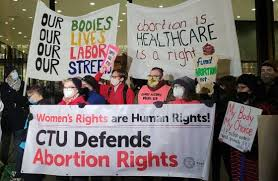
THE WAR ON WOMEN CONTINUES

Now it is Roe v. Wade

THE ATTACK ON PLANNED PARENTHOOD PART OF A LONG REACTIONARY TRADITION

(From Sunday, February 20, 2011)

Harry Targ


Vivay Prashad, in his fascinating book, The Darker Nations, traced the rise and subsequent demise of the Third World Project from the 1950s to the 1980s. The Third World Project, mainly the mobilization of poor and marginalized peoples around the world, envisioned the construction of progressive governments that would provide for basic social and economic needs and institutionalize democratic participation in political life.

This project was derailed for several reasons. One of the most significant was the willful construction by threatened elites of fundamentalist religious institutions.

In the Middle East, the tottering dictatorships plowed financial resources into the creation of fundamentalist Islamic organizations. “Political Islam” was introduced into global political culture to divert and divide social movements for fundamental change. Political Islam called for a return to the past and a rejection of modern secular ideas about social and political institutions. Religious dogma worked to replace visions of egalitarian societies. Ironically, in order to maintain stability, United States foreign policy supported insurgent Islamic fundamentalist movements in various places such as Afghanistan.

In Latin America, religious fundamentalism took a variety of forms. The leadership of the Catholic Church launched a frontal assault on newly created radical regimes, such as in Nicaragua, that based their political principles on a theology of “liberation.” Also, Evangelical Christian organizations, with funding from worldwide economic elites, infiltrated Latin American countries experiencing revolutionary ferment, urging the poor to reject earthly solutions to their problems.

In North America, the religious right mobilized financial resources to appeal to an electorate frustrated by challenges to U.S. hegemony overseas and economic stagnation at home. In each political venue, whether dominated by Islam, Christianity, or Judaism in the case of Israel, religion was used to divide and conquer.

The sector of the population most impacted by fundamentalisms of every kind is women. Women are forced out of the political process as patriarchies reinstitute top-down control of their political, economic, and cultural lives and their bodies. Women’s institutions, particularly ones that encourage progressive public policies, are marginalized. Often politicians using religious dogma as their rhetorical tool, support public policies that punish poor women, women of color, and progressive women in general. In sum, the resurgence of religious fundamentalism has been used to divide majorities of people along various lines that defuse their solidarity and the targets of such assaults are most often women.

A current example of this strategy of attacking women by raising the specter of religious orthodoxy occurred Friday February18 when the House of Representatives approved an amendment to budgetary legislation which would end all funding of Planned Parenthood, a national organization that provides vital reproductive health services to low-income women. Congressman Mike Pence (IN), who introduced the proposal, declared that American taxpayers should not have to pay for abortions. He failed to mention that they don’t because the government currently forbids the use of federal dollars for most abortions. Consequently, that could not have been the motivation for this legislation.

Rather, most of the 240 House members who voted to cut all allocations to Planned Parenthood wished to raise the religious issue to justify their general goal of ending public health care and guarantees for basic public health services for all. Pence failed to make note of the fact that Planned Parenthood gives contraceptive assistance to poor women, does HIV tests, screens women for cancer, and provides reproductive health care for women. Planned Parenthood, like ACORN the community organization that was victimized last year, is under assault to achieve political goals. The attacks serve to divide the electorate to destroy another organization that serves the needs of the working class, in this case working class women.

Data from the Guttmacher Institute point out that in recent years almost half of women who need reproductive health care are not able to afford it. Four in ten women of reproductive age had no health insurance.

The health care reform legislation of 2010 opens the door for expanded insurance coverage for reproductive health and family planning. Among those without health care as of 2009 were 14 million women of reproductive age. According to the new health care law, if not defied by state governments, Medicaid programs will expand family planning services to lower income families in years ahead.

As the Pence amendment suggests, existing health services for women and prospective new ones are under threat by health care opponents. They want to destroy major providers of health care for women such as Planned Parenthood. And, in the end, they want to destroy any form of public health for people.

How to do it? Transform the discourse from providing health care for the people, a broadly accepted idea, to religious dogma, in this case anti-abortion dogma.

It is time for progressives to respond. Attacks on Planned Parenthood (and the end of the right to choose) are attacks on the working class, especially people of color, and women, and the very idea that governments are created to serve the needs of the people.


The Bookshelf

CHALLENGING LATE CAPITALISM by Harry R. Targ

Challenging Late Capitalism