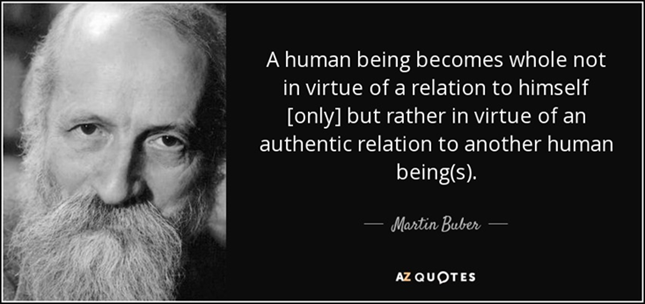
In 1974, I wrote in summation about these theorists and many others that the architectural forms and social structures of the Goodmans can profitably be blended with the spiritualism and socialism of Buber to construct a synthesis of all that the utopians and anarchists set out to achieve. The Goodmans show how community can be created in the industrial age and Buber illustrates how the best features of the entire community tradition fit together.
Friday, February 10, 2023
Building a New Society
In 1974, I wrote in summation about these theorists and many others that the architectural forms and social structures of the Goodmans can profitably be blended with the spiritualism and socialism of Buber to construct a synthesis of all that the utopians and anarchists set out to achieve. The Goodmans show how community can be created in the industrial age and Buber illustrates how the best features of the entire community tradition fit together.
Saturday, February 4, 2023
BREAKING NEWS
BALLOONGATE: US MILITARY DEFENDS THE CONTINENTAL UNITED STATES FROM BIRTHDAY BALLOON
A thirteen-year-old boy in Bejing was celebrating his birthday Wednesday when a helium balloon
filled with candy flew out the window of his house and took off over the skies
of China. Because of high winds the balloon sailed across the Chinese mainland,
traversed across the Pacific, and was spotted by the crack US radar system over
the state of Montana.
Debate in the Biden Administration ensured about how to
respond to this birthday balloon’s clear penetration of US air space. Hawks in
the administration argued that the balloon had to be immediately destroyed before
American children heard about the sweets in the balloon. More patient advisors
from the State Department took the view that maybe the US should keep the lid
on informing the media about the birthday balloon until it sailed across the
Atlantic. Then the world’s greatest air force could shoot down the balloon and
confiscate the evidence of the Chinese birthday party without Americans seeing
what was in the balloon.
Finally, the balloon was shot down off the coast of North
Carolina. Retrieved from the shootdown was much of the contents of the balloon:
candy corn, milk duds, M and Ms, Baby Ruth candy bars, and popcorn and 42 packages
of cherry Life Savers.
Biden spokespersons accused the Chinese of trying to
embarrass the United States in the eyes of the world by showing off their
typical birthday presents. The Chinese claimed, on the other hand, that if the
window in the apartment where the party was held had been closed, the birthday
balloon would never have flown into the sky and drifted toward the Western
Hemisphere.
House Speaker Kevin McCarthy charged that the Biden
Administration knew of the birthday balloons, charging that Biden’s son, Hunter
Biden, was a CEO in a balloon manufacturing company. Others pointed out that
Secretary of State Anthony Blinken did not write down his scheduled Chinese
visit and just plain forgot about it.
Meanwhile two Senators, one from Indiana and another from
Arkansas have called for an additional $100 billion increase in the 2023
military budget, called the Balloon Production and Distribution Act. The CEO of
the Happy Balloon Company of Battle Ground, Indiana said that the BPD Act is
vital to US national security. If US “kids”, he said, learn about Chinese
birthday parties they will mobilize against their own government.
Rachel Maddow of MSNBC was quoted as saying on a “breaking
news” special that this balloon attack is the biggest story since Pearl Harbor.
When asked about whether this crisis could lead to nuclear
war between the US and China: Biden said: “Maybe Not.”
Friday, February 3, 2023
Essays in the Transformation of Higher Education: Dan Morris and Harry Targ
From Upton Sinclair's 'Goose Step' to the
Neoliberal University (lulu.com)
Table
of Contents
Introduction
Chapter One: Macro and Micro Analyses of Higher Education
Chapter Two:
Discourses On Ideology
Chapter
Three: Branding
Chapter
Four: What Do Universities Do?
Chapter
Five: Universities and War:
Conclusion
Appendix
Introduction
In the following pages, you are going to
find a lot of specific information about what is happening at one major
public research university, but we believe what is happening at Purdue is
analogous to a canary in a coal mine. We believe that Purdue under
Mitch Daniels, a former George Walker Bush administrator and Governor of
Indiana, is becoming a high profile and influential spokesperson for the
transformation of public higher education in the 21st century
in directions that we find dangerous and that go against how we value higher
education. We realize that, while we address extensively
institutional changes and policies at Purdue, Indiana’s Land Grant University,
our interest is in using this case study to illustrate larger patterns and
issues that should be of concern to readers who care about the future of higher
education in a broader sense.
Harry Targ's pieces do tend towards a
wider-angle perspective than do those by Dan Morris, although both of us rely
on our "boots on the ground" level understanding of Purdue to
counteract and contest official media versions of what is happening at
Purdue. We write at a moment when there is something of a "media
desert" in terms of local news coverage of higher education in small
markets such as Lafayette, Indiana. We have both tried to work to rectify
the "media desert" landscape in our community by contributing to the Lafayette
Independent, an electronic
newsletter. We appreciate efforts by
local journalists such as Dave Bangert and the student staff of the Purdue
Exponent to offer coverage of the university in ways that are more
substantial, and, often, more critical, than what one finds in the area's only
mainstream newspaper, the Journal and Courier, and main local TV
news source, and the Purdue NPR radio station, whose ownership in the last year
has been mysteriously transferred to an Indianapolis corporation. Paradoxically
the richest data for many of the essays below come from the official daily
public relations newsletter from Purdue called
Purdue Today. This public relations source celebrates
Purdue’s latest connections with multinational corporations, the military, and
state politics, and provides links to editorials published by Purdue’s
President and other officials in the national press. Ironically, oftentimes
what Purdue celebrates becomes the data for our more analytical and discursive
writings.
Like alternative media sources, we see
this book as another intervention in offering an alternative view of what is
happening at our campus, but we also write with the hope that readers can apply
the readings we bring to Purdue to begin conversations about the
promise and problems of contemporary higher education on campuses. The authors
wish to praise and encourage further research and activism around the
transformations of higher education in general. We identify with what some
scholars have referred to as Critical University Studies (CUS). The essays
below, we believe, are part of this emerging tradition of critical and
self-reflective scholarship.
The authors also wish to identify at least
three major elements of the transformation of higher education. First,
Purdue, like many other universities, is once again pursuing research contracts
with huge corporations, and perhaps most importantly, the Department of
Defense. As essays below suggest, Purdue research is increasingly justified as
serving the interests of United States “national security.” Often this is
conceptualized as helping the United States respond to “the Chinese threat,”
rarely identifying what exactly is the threat, or considering the possibility
that contributing to a new arms race with a perceived adversary may increase,
rather than reduce, the possibility for conflict between nations.
Second, the work below and other writings in CUS, highlight the
purposive transformation of the content of higher education. Universities are
moving resources away from the liberal arts, creating new programs in
“artificial intelligence” and “data science,” and in response to political
pressures are diminishing programs that emphasize interdisciplinarity,
intersectionality, and the structural problems of race, class, gender, and
sexual preference in history and contemporary society. Essays below on “civics
literacy” suggest that leading administrators at Purdue, while refusing to
defend its universally praised Writing Lab after it was ridiculed on Fox News
for its recommendation that student writers select gender-neutral terms such as
postal worker when writing about occupations, seek to avoid the controversaries
around Critical Race Theory by requiring all students to study in some fashion
“civics literacy.” President Daniels has made it clear that the study of civics
literacy will illustrate the “vitality” of US political institutions (as
opposed to over-emphasizing the slaughter of the original inhabitants of the
North American continent or the history of slavery and white supremacy).
Third, the essays below do not dwell enough on the transformation of
the university as a workplace. While there have been attacks for years on the
tenure system, a system of job security which was initially designed to protect
faculty from external political pressures, recent additions to the transformations
of the university as a work site should be noted.
Adjunctification is a term that refers to
the qualitative increase in the hiring of various forms of part time
instructors: full-time instructors for a
set time period, instructors to teach less
than a full complement of courses, and instructors with various arrangements
that limit their work life, their ability to do research and prepare for their
class time, and their time to serve the many needs of students. The fundamental trend in higher education is to “cheapen”
and make insecure instructors, ultimately to destroy the job security that
comes with academic tenure. In many cases this impacts negatively on the
quality of the educational experience. (In colleges and universities in general
about 70 percent of classes now are taught by instructors who are not
tenure-line faculty).
And finally, every effort is made by universities to limit and derail the workplace concerns of non-teaching staff, particularly opposing their right to form unions.
One positive development from all of
this-destroying the tenure system and job security, adjunctification, increased
exploitation of graduate students, and finally restricting the rights and the
wages and benefits of staff has been the rise of labor militancy. The American
Association of University Professors (AAUP), the American Federation of
Teachers (AFT), and various unions such as the United Auto Workers (UAW) and
the United Electrical Workers (UE) with a history of militancy have been
organizing graduate students and staff.
Finally, the authors acknowledge that in
the months after we completed our manuscript, Purdue administrators and
trustees have announced a series of initiatives without an appropriate level of
input from university stakeholders and the wider Lafayette area community:
1. Purdue is building a housing complex
near the Discovery Park part of campus to attract higher income earning
technologists to relocate in West Lafayette. To encourage new high-income
residents, the West Lafayette city government has authorized $5,000 cash
incentives for any purchasers of these new housing units adjacent to Purdue.
Such offers are not available to lower income earners or students.
2. To deal with record enrollments, Purdue
has purchased a privately constructed apartment complex across from campus at a
price well more than the cost of its construction.
3. Purdue officials have expanded
partnerships with Saab, Rolls Royce, the Raytheon Corporation, one of the
world’s five largest military contractors, and undertaken a controversial
business mission with the Indiana governor to Taiwan to pursue research and
production of semi-conductors, in part to respond to what Purdue officials have
described as a ”Chinese threat” to national security in the United States.
4.The College of Liberal Arts has
announced it will be partnering with the College of Science to develop a new
interdisciplinary degree program in
artificial intelligence. CLA calls its “new field” of interest,
“sociogenomics.”
5. Purdue received an award recognizing
its “excellence in counterintelligence,” one of only four such award recipients
in 2022. Purdue joins those few universities which protect “sensitive national
information from foreign adversaries.” The award announced in Purdue Today,
August 24, 2022, noted that the university continues to work with the Defense
Counterintelligence and Security Agency (DCSA) and the FBI.
In short, the transformation of Indiana’s Land Grant
university continues at a rapid pace. And while the essays below concentrate on
the developments and forces leading to these changes, the broader point of this
collection of essays is to suggest that higher education in the twenty-first
century is changing in a rapid and largely deleterious way. The appended essay
by Carl Davidson reflects a similar critique of the university during the
height of the Cold War. What we are witnessing today is a revitalization of
that trend.
For those who value the university as a site for
informing students about the world and debating the value of changes occurring
in it, the developments highlighted in these essays are a warning. And for
faculty and students alike the antidote to the militarization of the
university, the transformation of the curricula, and the disempowering of those
who work in universities is organizing against those elements of change that
are antithetical to the educational process.
*******************************************************************************************
And More:
“The Krach Institute for Tech Diplomacy at Purdue has created a category
of its own. As part of the nation’s leading national security university, it is
rapidly becoming the world’s premier institution focused on Tech Statecraft, a new model of diplomacy bridging the gap
between technology experts, government officials and policymakers, and business
leaders to ensure tomorrow’s tech secures our freedoms,” said (Daniel)
Kurtenbach. ‘I’m excited to contribute to the Krach Institute’s
already-impressive momentum by enhancing and building its innovative
partnerships and relationships to achieve our shared vision of a future that
prizes individual freedom through trusted technology.’ ”
Homepage
- Tech Statecraft (techdiplomacy.org)
Monday, January 30, 2023
Wednesday, January 25, 2023
FOREIGN POLICY: THE ELEPHANT IN THE ROOM (A timely update from a 2017 post which appeared in The Rag Blog)
Harry Targ
An
Empire in Relative Decline
United
States global hegemony continues to be challenged. As the beneficiary of
war-driven industrial growth and the development of a military-industrial
complex unparalleled in world history, the United States was in a position in
1945 to construct a post-war international political and economic order based
on huge banks and corporations. The United States created the international
financial and trading system, imposed the dollar as the global currency, built
military alliances to challenge the Socialist Bloc, and used its massive
military might and capacity for economic penetration to infiltrate, subvert,
and dominate most of the economic and political regimes across the globe.
The United
States always faced resistance and was by virtue of its economic system and
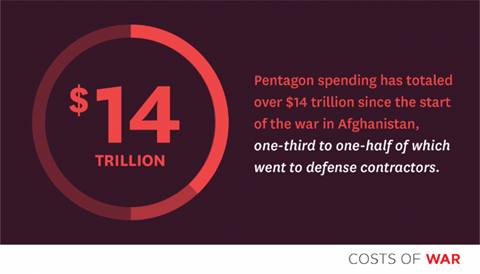
ideology drawn into perpetual wars, leading to trillions of dollars in military
spending, the loss of hundreds of thousands of American lives, and the deaths
of literally millions of people, mostly people of color, to maintain its
empire.
As was the
case of prior empires, the United States empire is weakening. There is now the
possibility of a multipolar world emerging with challenges to traditional
hegemony coming from China, India, Russia, and the larger less developed
countries such as Brazil, Argentina, South Africa, South Korea, and Thailand.
By the 1970s, even traditional allies in Europe and Japan had become economic
competitors of the United States.
The United
States throughout this period of change has remained the overwhelming military
power, however, spending more on defense than the next seven countries
combined. It remains the world’s economic giant even though growth in domestic
product between 1980 and 2000 has been a third of its GDP growth from 1960 to
1980. Confronted with economic stagnation and declining profit rates the United
States economy began in the 1970s to transition from a vibrant industrial base
to financial speculation and the globalization of production.
The latest
phase of capitalism, the era of neoliberal globalization, required massive
shifts of surplus value from workers to bankers and the top 200 hundred corporations
which by the 1980s controlled about one-third of all production. The
instruments of consciousness, a handful of media conglomerates, have
consolidated their control of most of what people read, see, hear, and learn
about the world.
A policy centerpiece
of the new era, roughly spanning the rise to power of Ronald Reagan to today,
including the eight years of the Obama Administration, has been a massive shift
of wealth from the many to the few. A series of graphs published by the
Economic Policy Institute in December, 2016 showed that productivity, profits,
and economic concentration had risen while real wages have declined, inequality
increased, gaps between the earnings of people of color and women and white men
grew, and persistent poverty remained for twenty percent of the US population
(https://www.epi.org/publication/inequality-2021-ssa-data/ for 2021 data on economic
inequality). The austerity policies, the centerpiece of neoliberalism, spread
all across the globe. That is what globalization has been about.
Contrary to
the shifts toward a transnational capitalist system and the concentration of
wealth and power on a global level, the decline of U.S power, relative to other
nation-states in the twenty-first century, has increased. China’s
economy and scientific/technological base have expanded dramatically. The wars
in Afghanistan, Iraq, and the spreading violence throughout the Middle East
have overwhelmed US efforts to control events. Russia, Iran, China, and even
weaker nations in the United Nations Security Council have begun to challenge
US power and authority. Mass movements increasingly mobilize against regimes
supported by the United States virtually everywhere (including mass
mobilizations within the U.S. as well).
However,
most U.S. politicians still articulate the mantra of “the United States as the indispensable
nation.” The articulation of American Exceptionalism represents an effort to
maintain a global hegemony that no longer exists and a
rationale to justify the massive military-industrial complex which fuels much
of the United States economy.
(For more data on military bases see https://www.davidvine.net/bases.html)
Imperial
Decline and Domestic Politics
The
narrative above is of necessity brief and oversimplified but provides a
backdrop for reflecting on the substantial shifts in American politics. The
argument here is that foreign policy and international political economy are
“the elephants in the room” as we reflect on the outcomes of recent elections.
It does not replace other explanations or “causes” of election results but
supplements them.
First, the
pursuit of austerity policies, particularly in other countries (the cornerstone
of neoliberal globalization) has been a central feature of international
economics since the late 1970s. From the establishment of the debt system in
the Global South, to “shock therapy” in countries as varied as Bolivia and the
former Socialist Bloc, to European bank demands on Greece, Spain, Portugal, and
Ireland, to Reaganomics and the promotion of Clinton’s “market democracies,”
and the Obama era Trans-Pacific Partnership, the wealth of the world has been
shifting from the poor and working classes to the rich.
Second, to
promote neoliberal globalization, the United States has constructed by far the
world’s largest war machine. With growing opposition to U.S. militarism around
the world, policy has shifted in recent years from “boots on the ground,”
(although there still are many), to special ops, private contractors, drones,
cyberwar, spying, and “quiet coups,” such as in Brazil and Venezuela, to
achieve neoliberal advances.
One group of foreign policy insiders, the humanitarian interventionists, has lobbied for varied forms of intervention to promote “human rights, democratization, and markets.” 2016 candidate Hillary Clinton and a host of “deep state” insiders advocated for support of the military coup in Honduras, a NATO coalition effort to topple the regime in Libya, the expansion of troops in Afghanistan, even stronger support of Israel, funding and training anti-government rebels in Syria and the overthrow of the elected government of Ukraine. Secretary of State, Hillary Clinton was a major advocate for humanitarian interventionist policies in the Obama administration.
Humanitarian
interventionists have joined forces with “neoconservatives” in the new century
to advocate policies that, they believe, would reverse the declining relative
power of the United States. This coalition of foreign policy influentials has
promoted a New Cold War against China and Russia and an Asian pivot to
challenge an emerging multipolar world. The growing turmoil in the Middle East
and the new rising powers in Eurasia also provide rationale for qualitative
increases in military spending, enormous increases in research and development
of new military technologies, and the reintroduction of ideologies that were
current during the last century about mortal enemies and the inevitability of
war.
In sum, the
“elephant in the room” for the peace movement pertaining to US politics must include building opposition to an activist United States economic/political/military
role in the world and the long history of United States imperialism.
Finally, it must be articulated that to
the extent that economics affects domestic politics the neoliberal global
agenda that has been enshrined in United States international economic policy
since the 1970s, coupled with humanitarian interventionism, has had much to do
with rising austerity, growing disparities of wealth and power, wage and income
stagnation, and declining social safety nets at home. As millions of Americans
struggle to survive poverty, inadequate access to healthcare, homelessness, a
variety of environmental disasters it is time to reinsert visions of a
non-interventionist, anti-militaristic foreign policy into our progressive
political agenda.
How Should the Peace Movement Respond to
the Elephant in the Room?
Somehow this madness must cease. We must
stop now. I speak for those whose land is being laid waste, whose homes are
being destroyed, whose culture is being subverted. I speak for the poor of
America who are paying the double price of smashed hopes at home and death and
corruption in Vietnam. I speak as a citizen of the world, for the world as it
stands aghast at the path we have taken.
-- Dr. Martin Luther King, Jr., April 4, 1967
This year, the Science and Security Board
of the Bulletin of the Atomic Scientists moves the hands of the Doomsday Clock
forward, largely (though not exclusively) because of the mounting dangers of
the war in Ukraine. The Clock now stands at 90 seconds to midnight—the closest
to global catastrophe it has ever been.
--2023 Doomsday Clock Announcement,
January 24, 2023
The Peace Movement has been engaged in a variety of separate but interconnected tasks. It may be useful to identify them, see how they are interrelated, and think about ways in which it and other social justice campaigns can more effectively work together in the coming period.
Peace Movement tasks should include the following:
1.Oppose war. In 2022 the war in Ukraine has captured the attention of activists everywhere. Attention also has been paid on other wars, such as in Yemen and Palestine. Peace researchers have often referred to the historic need to end “direct violence”; that is killing. That task remains preeminent.
2.Reconceptualize “war” as a problem not only
of killing and dying in war but also as a problem of hunger, inequality,
environmental spoilation, and powerlessness in a world of power, control, and
oppression. Peace researchers have called this “structural violence.”
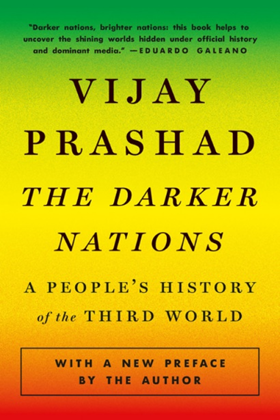
Theorists/activists like Vijay Prashad have argued that the problem of “war,”
both direct and structural is more about the divide in resources and power
between the countries of the Global North (the traditional imperial powers in
Europe and North America) and the vast majority of humankind living in Asia,
Africa, the Middle East and Latin America. For Prashad, the war problem is
about hundreds of years of exploitation, occupation, military assault, sanctions, and the
threat and destruction of the resources and environment of the Global South.
From this point of view, the peace movement task is to engage in solidarity with those
struggling for their liberation from domination and control.
3.Oppose militarism.
Historically peace movements have identified an inextricable connection between
growing militarism and war and further a connection between military spending
and concentrated wealth in selected military corporations. From this point of
view as the old slogan suggests: “war is a racket.” And that "racket” can be
seen as directly reallocating societal resources from fulfilling human needs to
the construction of more and more weapons. Some theorists referred to the
history of United States foreign policy, at least since World War II, as one of
creating a “permanent war economy.”
4.Oppose the use of war to achieve pernicious goals domestically. This perspective sees war preparation as tied to efforts to create solidarity at home, to the detriment of domestic social groups seeking significant social change. For example, as World War II ended, the labor movement sought significant policy changes to improve the rights and conditions of American workers. During the late 1940s, workers were demanding more rights to form unions, national health care, pension systems, and in some unions and communities an end to racism. The emergence of “the Soviet threat” served to stimulate nationalism, a rekindling of the vision of American exceptionalism, and increased repression against those pursuing worker rights and racial justice. In short, the war system, has served to reallocate societal resources and create a virulent nationalism which supports the interests of the wealthy and powerful. The war system, in this sense, is a status quo system. And to justify the war system an increasingly concentrated media institutionalizes narratives justifying war and imperialism.
5.Educate, agitate, and organize around these
four major tasks. The questions that peace movements need to address include:
a.How to theorize about the interconnections between
these four points? How do we develop a compelling narrative that targeted
audiences find compelling for them? Young people, people of color, men,
women, gays and lesbians?
b.How to network with other peace and social justice
organizations?
c.And for now what kind of programs-education, street
heat, networking, organizing- should the peace movement engage in to address the
four key elements raised above.
The Bookshelf
-
Harry Targ Confusion in the Moment The combination of social media, media “breaking news” stories, the politics of the spectacle, th...
-
background on united state/iranian R elations Saturday, March 24, 2012 MEASURING TARGETS OF US IMPERIALISM: HISTORY, ECONOMICS, GEOPO...
-
Harry Targ (Governor Pritzker announced on October 4, 2025 that the Trump administration is mobilizing the Illinois National Guard! https:...