Monday, February 19, 2024

UNIVERSITIES SHOULD BE A PLACE FOR DISCUSSION AND DEBATE: OPPOSE POLITICAL MEDDLING

Harry Targ

(The attacks on students who protest or even articulate competing political points of view have escalated. These attacks, direct or subtle, are targeting both students and faculty. They challenge the traditional role of the university as a place for discussion, debate, reflection, and for all involved, intellectual growth. The Trump Administration and all his followers in state and local governments, such as in Indiana, are pursuing the destruction of our distinguished systems of higher education. The essay below was posted one year ago.

 https://www.indystar.com/story/news/politics/2025/03/14/braun-orders-review-antisemitism-policies-indiana-universities-trump-investigation/82402850007/)


Educational Institutions and Ideological Hegemony


One major element of the maintenance of any political or economic order is the education of the young in such a way as to give legitimacy to it. In the 1960s political scientists began to study what they called “political socialization”: how and what young people learn about the norms, values, and procedures that govern the maintenance of society. Some studies found that children begin to accept the virtues of political institutions, the presidency, the courts, political parties, at very young ages. What they learn about politics in the home is reinforced and developed in school systems. Selective presentations of history and the arts is provided by formal content and repeated rituals, such as the pledge to the flag, competitive sports, routinized social life such as dances. In addition, as theorists such as Jim Berlin argued, the educational system not only produces and reproduces citizenship, but it also reproduces workers, for example giving young people appropriate skills in language and mathematics. Educational theorists have pointed out that the character of education develops and changes as the economy changes, in the US case from small-scale, to industrial, to monopoly capitalism.

In addition to adding “socialization” to the language of analysis, political scientists began to write about “political culture,” or the values and beliefs that dominate the thinking of most members of a society. These include ideas about the basic units of society, individuals or communities for example, the relative importance in the society of cooperation or conflict, the role of “human nature” and whether war and violence are “inevitable.”  Perhaps most basic in the United States is the relative acceptance of private property over public goods as a prime value.

In higher education, curricula usually reinforced and solidified the dominant ideas of the political culture. Often social science and humanities disciplines repeated standard paradigms about history, what was great art and philosophy, and what values should be beyond reproach. From the 1940s to the 1960s, the dominant political culture was tinged with virulent anticommunism and political and economic elites, powerful corporations, and state institutions oversaw what was defined as legitimate educational content.

Meanwhile business schools and science and engineering programs trained young people in the skills necessary to enhance the political economy. The humanities and social sciences grounded student learning in the acceptable political culture while the fields, what we call STEM (science, technology, engineering, and mathematics) trained these same students in the tools of system maintenance. The former president of the University of California, Clark Kerr, coined the term “multiversity” to describe the functions of such institutions in the late twentieth century and he made it clear that the multiversity was supposed to serve the national security interests of the United States.

However, during the 1960s young people became increasingly engaged in struggles against racism and on campus challenged the escalation of the war in Vietnam. Many students began to raise questions about what they were studying and the content of the curriculum. While some educational institutions became more repressive, as with the shootings of students at Jackson State and Kent State Universities, increased discourse on college campuses, sometimes initiated by faculty, was critical of the dominant political culture and its normal functioning, that is training workers for the economic machine. The university, to use a workplace metaphor, became “contested terrain.”

Renewed Assaults on Higher Education

Some faculty and students began to criticize the capitalist system, the war machine, the privatization of the commons, and histories that seemed to endorse patriarchy and racism. Discussion, debate, and critical thinking flowered in higher education, But from the vantage point of those who ruled, ideological hegemony had to be reimposed in the educational system. As conservative talk show host Rush Limbaugh once proclaimed in the 1990s, “we,’ that is conservatives, control all major institutions except for the university.

By the new century politicians, university administrators, and economic elites sought to reimpose the traditional political culture by reifying the idea of the market, private over public goods, and in the world at large, the United States and manifest destiny.

History and the Arts were being defunded while college administrators proclaimed that the study of science, technology, engineering, and mathematics (STEM) were the primary tasks of educational systems. Major funds for STEM education and research came from huge corporations, particularly digital, drug, and agricultural corporations, and the military. And in the spirit of Limbaugh, the Koch Foundation, the Association of Trustees and Administrators (ACTA), the State Policy Network, and the Associated Legislative Executive Council (ALEC) worked with state legislatures to reestablish curricula that Kerr in the past approvingly celebrated in the multiversity. In sum. the university was redesigned to instill the ideology of the dominant political culture and to create a twenty-first century work force to serve the needs of monopoly/finance/global capitalism.
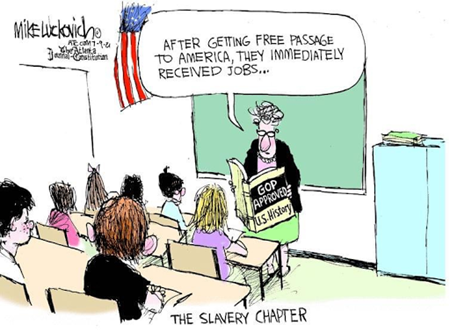

More recently, with the rise of the far-rightwing forces around former President Trump, combining corporate elites, religious fundamentalists, extreme free market advocates, and military contractors, the attacks on education have become fierce.

Now politicians close to such powerful groups launch attacks on education in state houses and the halls of Congress. Critical Race Theory, rather than being a short-hand description for a body of legal scholarship, has been redefined as ideology. Politicians running for office talk about the Civil War without mentioning slavery as a root cause. Charges of antisemitism are being used to challenge expressions of intellectual and political points of view on campuses. Presidents at our most prestigious universities, women and persons of color, have been attacked for defending academic freedom. The whole edifice of what John Stuart Mill described a long time ago as “the marketplace of ideas” has now come under assault.

Purdue University

A prominent Big Ten university, Purdue, has led the process of transforming itself into a model neoliberal university, in keeping with the Koch Brothers/ ALEC model of education. The transformation of Purdue University has involved significant changes including privatization of public control of the institution; moving into the increasingly competitive online education market; shifting programs away from an educational mix of science, technology, the social sciences, and humanities to more STEM and less liberal arts; currying the favor of huge corporations and enlarged Department of Defense contracts; establishing programs whereby wealthy alumni fund students’ education with contractual guarantees by which students pay back the alums; and the establishment at the university of a “country club” ambience to attract students.

The Beginnings of Civic Literacy at Purdue University: Round One in the Fight to Control Curricula

No one can dispute the value of education about the nation, the world, and the issues that have and will affect peoples’ lives in the short-and long-term future. Schools and universities, of course, have historically been primary venues for disseminating such information. However, most often politicians have preferred narratives about themselves and others that they wish to inculcate in the young. But a more desirable form of information and analysis is one that is diverse, sensitive to one’s own past and present, and shows respect for narratives and experiences of other peoples and nations. This kind of “civics” education is complicated and not achieved by learning isolated facts.

President Mitch Daniels, Purdue University, in the spring, 2019, proposed that the university require that each graduating senior at the university demonstrate a knowledge of what he called “civics.” The members of the Board of Trustees  endorsed the idea and implicitly castigated faculty for not moving expeditiously to establish a civics certification process for graduating seniors. But faculty questioned the need for such a certification, what civics education is, and how to provide for it. Specifically, they asked whether claims about civics ignorance at Purdue and elsewhere were true. They also asked whether taking a short-answer test really demonstrated knowledge of the United States government, its constitution, and the political process. Some faculty argued that such a need could only be satisfied by at least one course, perhaps in Political Science or History, that would provide a richer knowledge, raise competing understandings of the development of the United States government, and would allow for serious discussions of the strengths and weaknesses of the American political experience. A ten or twenty item short answer test, they argued, would not reflect the more subtle and sophisticated needs of civics education.

Some faculty were puzzled by why, in the context of the existence of a set of university core requirements already in existence, this idea of a civics certification emerged. One possible source of the idea of some kind of civics education was seen in a January 2016 report published by the American Council of Trustees and Alumni (ACTA), an organization founded by the State Policy Network, which is tied to the American Legislative Exchange Council (ALEC) and the Charles and David Koch Foundation. The report called “A Crisis in Civic Education,” described a survey it sponsored in 2015 that demonstrated that college graduates and the public in general lacked knowledge of “our free institutions of government.” It listed examples of some basic facts about government and history that respondents failed to answer correctly. These included a lack of understanding of how the constitution could be amended, which institution had the power to declare war, and who was “the father of the constitution.”

Perhaps ACTA’s underlying concern was suggested by a quote in the preface of the document attributed to Louise Mirrer, President of the New York Historical Society, who received an ACTA award in 2014 “for Outstanding Contributions to Liberal Arts Education.” She said that in the contemporary world of conflicts between religious, ethnic and racial groups, Americans need to be reminded of US history “…especially as that history conveys our nation’s stunning successful recipe, based on the documents of our founding, for an inclusive and tolerant society.” (Apparently, she forgot the limitations on the rights of Blacks, women and those without property to vote in “the documents of our founding.”)   In addition, the report took aim at community service programs, which it asserted “…give students little insight into how our system of government works and what roles they must fill as citizens of a democratic republic.”

It is clear, therefore, that what the ACTA report (and one could reasonably assume what motivated the recommendation of former President Daniels, himself an award recipient from ACTA), and the Purdue Board of Trustees regards as civics education was a narrative that celebrates the American experience. These sources presumed that specific facts about the Constitution and the Founding Fathers and basic truisms about the United States as a “melting pot” constituted civics education. Although civics education is surely a desirable goal of education at every level, K through college, it requires moving beyond memorizing basic facts to more subtle examinations about the American experience, including exposing students to debates about how and why that experience has unfolded in the way that it has.

Key Provisions of the 2024 Indiana Senate Bill SB 202: Continuing Efforts to Control University Curricula

It is interesting to note that Indiana State Senator Spencer Deery who introduced Senate Bill 202 in January 2024 defended the bill by suggesting that distrust in higher education has increased. While this claim is of dubious merit and has come from politically conservative places such as ALEC and so-called “think tanks,” many citizens on and off campus are skeptical of ill-placed and self-interested investments in the privatization of higher education, collaborating with real estate and military contractors, and working to expunge from curricula any courses that promote critical thinking.

To minimize debates, discussion, and critical thinking about the great issues of our time in public universities SB 202 was introduced. It includes a number of provisions that are designed to eliminate discussions of controversial subjects on college campuses by threatening the job security, or tenure, of faculty. The provisions of SB 202 include the following:

“1.Establish a process where university trustees evaluate faculty up for tenure – a status that gives professors indefinite job security in most cases – or promotion with “criteria related to free inquiry, free expression and intellectual diversity.”

2.Require trustees to review a faculty member’s tenure status every five years.

3.Require state universities to establish procedures that allow students and employees to submit complaints that a faculty member isn’t meeting certain criteria related to free inquiry, free expression and intellectual diversity.

4. Require trustees to adopt a “policy of neutrality” that limits universities from taking official positions on “political, moral or ideological issues.”

5.Allow the Indiana House Speaker and Indiana Senate president to appoint a trustee to a university’s board.

6.Make universities account for spending on diversity, equity and inclusion efforts on campus and add to those programs to include “intellectual diversity.”

Dave Bangert, Deery defends tenure reform bill as blowback grows at Purdue, IU (basedinlafayette.com)

https://www.basedinlafayette.com/p/deery-defends-tenure-reform-bill

Conclusion


Just as academic critics of child labor, anti-union policies, World War I, and financial speculation a hundred years ago faced censure and unemployment, universities are being pressured to circumscribe accepted debates. While the higher-education system has extended academic freedom and provided job security for some through tenure, attacks on these provisions are spreading as the twenty-first century reconstruction of American higher education proceeds.  From Florida to Indiana (the current SB 202 bill in the Indiana legislature would circumscribe tenure and what is taught in the classroom), politicians and many university administrators are committed to destroying the academic freedom, and the free exchange of ideas, that has made universities in recent times a haven for the pursuit of knowledge useful for the advancement of society.



https://www.lulu.com/shop/harry-targ-and-daniel-morris/from-upton-sinclairs-goose-step-to-the-neoliberal-university/paperback/product-vzdwyk.html?page=1&pageSize=4


Friday, February 16, 2024

WHO RULES THE UNIVERSITY?

  Harry Targ

Purdue University announced on Tuesday that Lilly Endowment is giving it grants totaling $100 million for two separate university initiatives. The commitment represents the largest private gift in Purdue’s history.

The grant includes $50 million to support the Mitchell E. Daniels, Jr. School of Business and $50 million for Purdue Computes, an initiative that focuses on computing, artificial intelligence and semiconductors.

https://www.forbes.com/sites/michaeltnietzel/2024/01/10/lilly-endowment-grants-100-million-to-purdue-university-its-largest-gift-ever/?sh=3dd917cb3566


The modern university system in the US developed at the turn of the twentieth century, as capitalism bounced back after a string of deep recessions.

Mergers created an economic system in which a few hundred corporations and banks dominated the entire economy. Interlocking directorates birthed a system of financial speculation and concentrated wealth. The government enacted pro-corporate and pro-banking regulations, allocated tax and other benefits to the wealthy and powerful, and used repression — as when President Grover Cleveland deployed the army to break the 1894 Pullman strike — on capitalists’ behalf.

During this period, higher education, which had been dominated by theological pursuits, refashioned itself to serve the modern economy. Corporations needed workers with scientific and technical knowledge, so educational institutions were established that could produce credentialed graduates.

                                                                Project Gutenberg

Theoretical work and classroom education inculcated in the young a reverence for capitalism’s blessings and the government’s conduct. Young people learned about the benefits of free-market economies, the United States’ long tradition of democratic institutions, and the glories of Manifest Destiny, which justified the American conquest of not only North America, but the Philippine Islands, Cuba, and Central and South America.

As Clyde Barrow documents in Universities and the Capitalist Statemembers of university boards of trustees came largely from corporations, banks, and law firms that served big business. In the Midwest and South, trustees who represented regional manufacturing and finance capital ran the universities. Their outlook paralleled the administrators at the Northeast’s major universities. Few representatives of non-elite groups, like labor unions, were ever selected to serve on these boards.

Trustees established an administrative class that both oversaw the university’s day-to-day operations and managed the faculty, who produced the school’s key commodities: education and research. They adopted managerial procedures to control mental labor in the classroom and the laboratory and institutionalized metrics that measured enrollment, publications, and university rankings to evaluate productivity.

Federal and state governments, as well as nonprofit organizations, stepped in to fund a national university system designed to serve the interests of twentieth-century capitalism. Major foundations generated studies, conducted surveys, and made recommendations that influenced both public and private universities’ policies.

Crises, from the depressions of the late nineteenth century to World War I, sparked critical analyses from some professors. Frequently, faculty faced discipline or even termination for challenging the economic system or the state. The university’s educational mission was to serve elites and the state, not provide a venue for debating important social issues.

Fast forward to today. The capitalist class has further consolidated its power in higher education since the Great Recession of 2008, the Occupy Movement of 2011, the protests around police violence in 2014, and in response to the police murdering of George Floyd in 2020. Today campuses are alive with debate about Israel’s war on Gaza and political influentials are seeking to squelch that debate.

Boards of trustees and their advisers in think tanks and political organizations have used economic and political shocks to demand greater control over and efficiency in the production and teaching of knowledge. Economically programs that are not justified as good “investments” have become vulnerable to termination. Humanities programs now have to prove their utility to the STEM disciplines (science, technology, engineering, and mathematics) to survive. And, with the war in the Middle East, politicians, trustees, and administrators are once again interfering in the educational processes of the university. (The similarities with the McCarthyite period of the 1940s and 1950s are chilling).

Finally, just as academic critics of child labor, anti-union policies, World War I, and financial speculation a hundred years ago faced censure and unemployment, universities are being pressured to circumscribe accepted debates. While the higher-education system has extended academic freedom and provided job security for some through tenure, attacks on these provisions are spreading as the twenty-first century reconstruction of American higher education proceeds.  From Florida to Indiana (the current SB 202 bill in the Indiana legislature would circumscribe tenure and what is taught in the classroom), politicians are committed to destroying the academic freedom, and the free exchange of ideas, that has made universities a haven for the pursuit of knowledge useful for the advancement of humanity.


https://www.lulu.com/shop/harry-targ-and-daniel-morris/from-upton-sinclairs-goose-step-to-the-neoliberal-university/paperback/product-vzdwyk.html?page=1&pageSize=4


Thursday, February 15, 2024

TRUST IN HIGHER EDUCATION: THE PURDUE EXAMPLE

 Harry Targ

 It is interesting to note that Indiana State Senator Spencer Deery who introduced Senate Bill 202 defends the bill by suggesting that distrust in higher education has increased. While this claim is of dubious merit and has come from politically conservative places such as ALEC and  so-called “think tanks,” many citizens on and off campus are skeptical of ill-placed and self-interested investments in the privatization of higher education, collaborating with real estate and military contractors, and working to expunge from curricula any courses that promote critical thinking.

https://jacobin.com/2017/06/purdue-university-kaplan-privatization-austerity

No better reason for skepticism about Purdue University can be found than in the recent Forbes magazine article, see below, indicating that Purdue Global, a relatively new venture, is indebted by about $128 million.  

The Forbes article and a summary of SB202 by Dave Bangert are added below for more in depth reading.

*******************************************************************************

Forbes

Purdue Global Owes $128 Million To Its For-Profit Partner. It May Not Be Able To Pay.

Derek Newton

https://www.forbes.com/sites/dereknewton/2023/12/17/purdue-global-owes-128-million-to-its-for-profit-partner-it-may-not-be-able-to-pay/?sh=42a234d79986

Nearly seven years ago, one of the oddest and most confusing education rearrangements became arranged – the sale of for-profit, mostly online, Kaplan University to the public, land-grant Purdue University. The resulting institution is Purdue Global, the online sister of the Indiana flagship.

There have been other similar deals in which a for-profit, online college was sold to or consumed by a public school. For example, the University of Arizona, bought for-profit Ashford University. And the University of Idaho is finalizing a deal to buy the for-profit University of Phoenix.

Usually in these deals, as was the case with Purdue and Kaplan, the school is sold for a token amount – Purdue paid $1 – but the selling, for-profit company is then hired on a long-term contract to provide support, infrastructure, and marketing services to the school. Those deals usually include a revenue-share provision in which the seller and new manager takes a share of the tuition revenue. In the Kaplan sale, Kaplan’s contract provides them with 12.5% of the school’s proceeds, plus fixed payments for services. In practice, the deals are very similar to the arrangements of online program management (OPM) companies which have fallen under recent heavy scrutiny and market pressures.

Generally, the Purdue Global management agreement has avoided that spotlight. But according to recent financial reports and filings from Purdue University and from Graham Holdings Company (GHC), the parent company of Kaplan Higher Education, the market pressures that are roiling OPM businesses may be squeezing both Purdue Global and Kaplan.

According to Graham Holdings Company’s recent SEC filing, Purdue Global owes it a ton of money. “As of September 30, 2023, Kaplan had a total outstanding accounts receivable balance of $127.8 million from Purdue Global related to amounts due for reimbursements for services, fees earned and a deferred fee,” GHC told the SEC.

It’s a bill that, according to the rules that established Purdue Global, neither Purdue University nor the taxpayers of Indiana can pay. They are not allowed to cover Purdue Global’s debts and losses.

But the real problem is that it’s a bill that Purdue Global probably can’t pay either. According to the most recent annual report from Purdue University, Purdue Global simply does not have the money.

Purdue Global, the report says, had a “net operating revenue” loss of $95 million, it has about $142 million in current liabilities, and, according to the report from Purdue, “Cash and Cash Equivalents at Purdue Global consist of funds held in checking, savings, and money market accounts. Balances, excluding money market funds, at June 30, 2023 and 2022 were approximately $2,600,000 and $300,000, respectively.”

For comparison, the same report says of Purdue University, “the bank balance of the University’s deposits (demand deposit accounts) as of June 30, 2023 and 2022, was approximately $103,888,000 and $87,338,000, respectively.”

A spokesperson for Kaplan noted that the “net operating revenue” loss of $95 million reported by Purdue does not include non-operating revenue, which he said was about $88 million. Though this would still create a situation in which, according to Kaplan’s spokesperson, “the loss was $7.5 million.”

The same Purdue report shows that Purdue Global has a net negative financial position of $38.8 million, despite reporting cuts in spending and despite a reported 5% increase in enrollments at Purdue Global, according to the GHC document.

The position of Purdue Global and the size of the debt may make it unrecoverable, a reality GHC told its shareholders. “The Company will continue to assess the collectability of the fee with Purdue Global on a quarterly basis to make a determination as to whether to record all or part of the fee in the future,” GHC wrote.

Back in 2017, when the deal was announced, many celebratory forecasts and predictions were made. None of them involved Purdue Global losing money and defaulting on its debt. For former Purdue President Mitch Daniels, who invested his and Purdue’s reputation on the success of this venture, the upside-down finances and unpaid debt aren’t flattering.

“Purdue Global continues to struggle financially, unable to pay its bills to Kaplan,” said Dahn Shaulis, Editor of the Higher Education Inquirer and early skeptic of the Purdue Global arrangement. “It hasn't been the money maker that Mitch Daniels thought,” he said.

Asked to confirm or comment on the debt to Kaplan, a spokesperson for the Purdue first directed the question back to Kaplan and GHC but later said, “In the normal course of our business, we owe money to lots of vendors, including Kaplan.”

Jerry Dervin, Chief Financial Officer of Kaplan North America, disputed the characterizations of the financial position of Purdue Global. Dervin wrote, in part, “the Purdue Global-Kaplan relationship calls for PG to reimburse Kaplan for its expenses incurred on behalf of PG. Sometimes the outstanding payable is at a seasonal high (as it was at September 30, the highest period of the year), and sometimes it’s at a seasonal low. But throughout the relationship the reimbursement of expenses by PG to Kaplan and all its other providers has always been made, in full, as a matter of course out of the cash flow of the institution.”

“Purdue Global has cut costs by closing campuses, campuses that provided value to consumers. The problem now is how can they cut costs even more?” Shaulis asked.

But if the school has a $128 million bill that it cannot pay even after cutting cost and growing enrollment, it’s not a sure thing that cutting its way out of debt will work. Or whether that’s even the best plan. Educationally, cheaper is not better.

Dervin also wrote, “from the onset of its formation, Purdue and Kaplan have been aligned in investing in Purdue Global’s mission to serve adult learners, veterans, first generation students, all from different backgrounds. PG has increased its investment in academic, student support and awareness with a goal of building a long-enduring institution that delivers quality outcomes for students and stakeholders.”

However Purdue Global and Kaplan square their debts and receivables, the issues may run deeper. It may be that recycling, repainting, and rebranding a subprime for-profit college may simply be a financial anchor instead of the lifeline some believed it to be.

The University of Arizona, for example, is mired in a public financial crisis where the University of Arizona Global Campus, the product of Arizona’s purchase of for-profit Ashford University, recently reported an $18.5 million operating deficit – a bill the university itself will have to pay. And while it’s not clear at all what caused Arizona to fall short in its budget projections by some $250 million, more than a few suspect that outsized investments in Arizona Global Campus/Ashford have been major contributors to the debacle.

Even if that turns out not to be true, it is true that both Arizona Global Campus and Purdue Global are losing money.

“The issues with Purdue Global, along with the Arizona Global mess, should serve as a cautionary tale for Idaho, with its pending acquisition of University of Phoenix,” Shaulis said.

Critics can and will say whatever they please about the University of Idaho merger with the University of Phoenix. But if it does not turn out as promised, no will be able to say it was a surprise.

Updated, Dec. 20: This article has been updated with comments by the chief financial officer of Kaplan, Jerry Dervin, who sent an email after the article was initially published. His comments have been added.

Updated, Dec 21, 22: A full description of the account balances at Purdue University and Purdue Global, as well as a more context regarding its operational losses, as provided in the University’s annual report, were added for further clarity.

***********************************************************************************

Based in Lafayette, Indiana

Deery defends tenure reform bill as blowback grows at Purdue, IU

DAVE BANGERT

FEB 14, 2024

After Indiana University President Pamela Whitten cast doubt on a sweeping bill aimed at countering negative connotations about higher education, particularly among conservatives, state Sen. Spencer Deery took a swing back this week, defending a measure he authored.

Whitten, in a statement released last week, said Senate Bill 202 – one that reforms the faculty tenure rules on state campuses and gives General Assembly leaders more control over the makeup of university boards of trustees – “risks unintended consequences that threaten not just the stature of Indiana University, but the economic and cultural vitality of the state.”

Deery, a West Lafayette Republican who was part of Mitch Daniels’ staff at Purdue, said Whitten is bowing to faculty and proving a point behind the bill.

“In a single statement,” Deery said, “President Whitten has highlighted for all Hoosiers the failure of leadership that has led to the decline in trust and support for American universities.”

Meanwhile, the University Senate at Purdue is scheduled Monday to discuss a resolution that stands against Senate Bill 202 as a measure that would turn tenure into “a political weapon to leverage” and a snitching culture built on “an atmosphere of suspicion and mistrust on university campuses.”

The bill, which cleared the Indiana Senate last week on a 39-9 vote, will get a hearing in the House Education committee at 10:30 a.m. Wednesday (Feb. 14). (To watch the livestream of the hearing, here’s a link.) Efforts to rally faculty members from Purdue and other universities to testify were going on early this week.

“It’s breathtaking in its overreach,” Alice Pawley, a professor in Purdue’s School of Engineering Education, said of Deery’s bill. “It’s troubling that something like this is coming from someone with so much experience on our campus. … This is a disaster waiting to happen for Purdue and disaster for our state’s universities.”

Here’s where things stood on SB 202, heading into that hearing.

What’s driving/what’s in the bill

Deery said the bill was prompted by what he called “the hyper-politicalization and monolithic thinking of American higher education institutions.” He’s pointed to a series of national commentators – including Daniels, who hasn’t been shy about his problems with the tenure system – national polling and recent state-compelled surveys of students on Indiana’s campuses.

A 2022 Gallup survey, commissioned to satisfy a General Assembly measure, found that of the students who responded, 46% of students who identified as politically conservative considered they could openly express their opinions in classrooms and on campus, compared to 79% of those who said they were liberal. That same poll, when asking Purdue students about classes related to “political, historical or cultural topics,” found that 7% of liberal students said their professors discourage them from sharing political or social views, while the number was 21% for students who considered themselves conservative.

Deery contends those views are keeping some students and their families from considering college.

Among its provisions, Senate Bill 202 would:

Establish a process where university trustees evaluate faculty up for tenure – a status that gives professors indefinite job security in most cases – or promotion with “criteria related to free inquiry, free expression and intellectual diversity.” During Senate debate, critics derided the measure as an effort to kill tenure and make it easier to fire faculty members. Deery contends the measure would codify tenure and protect faculty “against retaliation for the content of their research, for criticism of university leadership or for sharing political views outside the classroom.”

Requires trustees to review a faculty member’s tenure status every five years. Deery said some U.S. universities already do five-year reviews. He said SB 202 gives trustees “a little bit of a prod and cover … to make sure it’s still working.” Deery said one intent is to flag faculty members pushing political view in the classroom that are unrelated to the professor’s expertise. Deery said he sees those reviews going through a similar process, sending 20% of the tenured faculty a year through a post-tenure review that eventually lands with the trustees to ratify. Purdue lists 1,973 tenured and tenure track faculty on the West Lafayette campus.

Requires state universities to establish procedures that allow students and employees to submit complaints that a faculty member isn’t meeting certain criteria related to free inquiry, free expression and intellectual diversity.

Requires trustees to adopt a “policy of neutrality” that limits universities from making official positions on “political, moral or ideological issues.”

Allows the Indiana House Speaker and Indiana Senate president to appoint a trustee to a university’s board. Those would replace selections made by alumni boards and ratified by the governor. Deery said there was a move in the General Assembly looking to do something similar, only adding two trustees to university boards. He said this was a compromise when drafting the bill. “I heard from colleagues who said, ‘You know, we spend a lot of money on higher education. We want to have a legislative voice in who we appoint in doing so,’” Deery said.

Make universities account for spending on diversity, equity and inclusion efforts on campus and add to those programs to include “intellectual diversity.”

“This isn’t revolutionary,” Deery said. “This is an opportunity to say that you may not like the institution of higher education as a whole, but in Indiana we do things differently.”

Is it perception or reality, what he reports from the surveys and polls? In other words, is he fixing a real problem or changing structures as a means of applying salve to people’s feelings, no matter how they come by them?

“Ultimately, both matter if it's keeping somebody from enrolling in higher ed, whether it's perception or reality,” Deery said. “I don’t believe that you can fully dismiss them as just being perception. I do think that there are some who feel like it's maybe worse than it is or fear that it's worse than it is. But most of the people that are telling me that it's not an issue are not people who have ever been a conservative on a college campus. And you don't need to go very far to talk to conservatives on college campuses to understand that this is more than just perception.”

Pushback among Purdue faculty

On Monday afternoon, the University Senate will consider a resolution that rejects Senate Bill 202. The proposed measure calls the bill vague, unnecessarily threatens current tenure process, adds new layers of bureaucracy on campus and “while claiming to stand for intellectual diversity … would constitute a significant reduction in academic freedom.” The proposal calls on Purdue administrators to condemn Senate Bill 202 and the General Assembly to back away.

“The bill says it’s for academic freedom, but it’s the opposite,” Pawley, a University Senate member, said. “It says institutions need to create a new process for students to be able to report faculty or employees for violations of protections of freedom of speech, freedom of expression or intellectual diversity. That's the thought police. It’s Orwellian.”

Pawley said the bill stands on vague concepts of intellectual diversity that would be judged by trustees who would be increasingly politicized, given the new appointments by the General Assembly.

“I'm sure he thinks that he's targeting the humanities professors who talk, say, about critical race theory and Marxism, but he's also targeting business faculty who are teaching about capitalism, who all of a sudden will have to start talking about socialism,” Pawley said. “It's not specified, so it will cut both ways.”

Stephanie Masta is an associate professor in Purdue’s College of Education and was on the committee that drafted the proposed University Senate statement.

Masta said the Indiana Campus Free Speech Report 2023, the survey Deery used to justify the bill, had 18,559 students respond statewide. That survey went to more than 300,000 full-time undergraduate students at all Indiana public institutions, including part-time students at Vincennes University and Ivy Tech Community College, according to the report. That’s roughly a 6% return rate.

“Bills like these are a coordinated, national effort to eliminate diversity, equity and inclusion efforts in colleges and universities,” Masta said. “SB202 is vague and open to a great deal of interpretation, making it easy for politicians to weaponize against faculty and staff. Their goal is often to create a ‘chilling effect" where faculty, staff and students will start to self-censor rather than risk their actions being misinterpreted by a review committee.”

What the universities say

Purdue President Mung Chiang and other administrators haven’t publicly taken a position on SB 202. “As this bill goes through the legislative process, we are working to fully understand its details,” Tim Doty, a university spokesman, said.

Whitten released a statement last week, aimed at what she called “unintended consequences” embedded in the bill’s language:

“While we are still analyzing the broad potential impacts of SB 202, we are deeply concerned about language regarding faculty tenure that would put academic freedom at risk, weaken the intellectual rigor essential to preparing students with critical thinking skills, and damage our ability to compete for the world-class faculty who are at the core of what makes IU an extraordinary research institution.

“We all share the common goal to maximize the university's capacity to make scientific breakthroughs, attract talented students and faculty, drive economic development and create better outcomes for all Hoosiers. As crafted, my concern is that SB 202 risks unintended consequences that threaten not just the stature of Indiana University, but the economic and cultural vitality of the state.”

Deery said this week that he’d been working on the bill and sharing drafts with higher education leaders across the state for months.

“This bill is not a surprise to any institution,” Deery said. “It’s telling that the first time the school’s leaders elected to characterize the bill in that way was through the media and in response to pressure from a faculty advocacy group that wants the school to continue to operate in a way that leads to its decline. … IU’s leadership also knows that post-tenure reviews are common in higher education and that without them, some tenured faculty stop meeting basic performance expectations and waste tuition dollars.”


Saturday, February 10, 2024

The Ivory Tower’s Capitalist Roots

 Harry Targ

Purdue University announced on Tuesday that Lilly Endowment is giving it grants totaling $100 million for two separate university initiatives. The commitment represents the largest private gift in Purdue’s history.

The grant includes $50 million to support the Mitchell E. Daniels, Jr. School of Business and $50 million for Purdue Computes, an initiative that focuses on computing, artificial intelligence and semiconductors.

https://www.forbes.com/sites/michaeltnietzel/2024/01/10/lilly-endowment-grants-100-million-to-purdue-university-its-largest-gift-ever/?sh=3dd917cb3566

The modern university system in the US developed at the turn of the twentieth century, as capitalism bounced back after a string of deep recessions.

Mergers created an economic system in which a few hundred corporations and banks dominated the entire economy. Interlocking directorates birthed a system of financial speculation and concentrated wealth. The government enacted pro-corporate and pro-banking regulations, allocated tax and other benefits to the wealthy and powerful, and used repression — as when President Grover Cleveland deployed the army to break the 1894 Pullman strike — on capitalists’ behalf.

During this period, higher education, which had been dominated by theological pursuits, refashioned itself to serve the modern economy. Corporations needed workers with scientific and technical knowledge, so educational institutions were established that could produce credentialed graduates.

                                                                Project Gutenberg

Theoretical work and classroom education inculcated in the young a reverence for capitalism’s blessings and the government’s conduct. Young people learned about the benefits of free-market economies, the United States’ long tradition of democratic institutions, and the glories of Manifest Destiny, which justified the American conquest of not only North America, but the Philippine Islands, Cuba, and Central and South America.

As Clyde Barrow documents in Universities and the Capitalist State, members of university boards of trustees came largely from corporations, banks, and law firms that served big business. In the Midwest and South, trustees who represented regional manufacturing and finance capital ran the universities. Their outlook paralleled the administrators at the Northeast’s major universities. Few representatives of non-elite groups, like labor unions, were ever selected to serve on these boards.

Trustees established an administrative class that both oversaw the university’s day-to-day operations and managed the faculty, who produced the school’s key commodities: education and research. They adopted managerial procedures to control mental labor in the classroom and the laboratory and institutionalized metrics that measured enrollment, publications, and university rankings to evaluate productivity.

Federal and state governments, as well as nonprofit organizations, stepped in to fund a national university system designed to serve the interests of twentieth-century capitalism. Major foundations generated studies, conducted surveys, and made recommendations that influenced both public and private universities’ policies.

Crises, from the depressions of the late nineteenth century to World War I, sparked critical analyses from some professors. Frequently, faculty faced discipline or even termination for challenging the economic system or the state. The university’s educational mission was to serve elites and the state, not provide a venue for debating important social issues.

Fast forward to today. The capitalist class has further consolidated its power in higher education since the Great Recession of 2008, the Occupy Movement of 2011, the protests around police violence in 2014, and in response to the police murdering of George Floyd in 2020. Today campuses are alive with debate about Israel’s war on Gaza and political influentials are seeking to squelch that debate.

Boards of trustees and their advisers in think tanks and political organizations have used economic and political shocks to demand greater control over and efficiency in the production and teaching of knowledge. Economically programs that are not justified as good “investments” have become vulnerable to termination. Humanities programs now have to prove their utility to the STEM disciplines (science, technology, engineering, and mathematics) to survive. And, with the war in the Middle East, politicians, trustees, and administrators are once again interfering in the educational processes of the university. (The similarities with the McCarthyite period of the 1940s and 1950s are chilling).

Finally, just as academic critics of child labor, anti-union policies, World War I, and financial speculation a hundred years ago faced censure and unemployment, universities are being pressured to circumscribe accepted debates. While the higher-education system has extended academic freedom and provided job security for some through tenure, attacks on these provisions are spreading as the twenty-first century reconstruction of American higher education proceeds.  From Florida to Indiana (the current SB 202 bill in the Indiana legislature would circumscribe tenure and what is taught in the classroom), politicians are committed to destroying the academic freedom, and the free exchange of ideas, that has made universities a haven for the pursuit of knowledge useful for the advancement of humanity.


https://www.lulu.com/shop/harry-targ-and-daniel-morris/from-upton-sinclairs-goose-step-to-the-neoliberal-university/paperback/product-vzdwyk.html?page=1&pageSize=4


The Bookshelf

CHALLENGING LATE CAPITALISM by Harry R. Targ

Challenging Late Capitalism