Monday, September 29, 2025

Looking Back to The Great Society

 Looking back to the 1960s (even to the 1930s) it is remarkable to realize that state policies of dramatic consequences for working people in the United States were established. (It is sad that many of these benefits were lost as the US engaged in imperial wars and massive increases in military spending). Reflecting on the list of the Great Society programs in the light of the MAGA agenda today-with weak opposition from Democrats-we see how much was achieved and how much is being lost today. It is one of the cruelest features of history that the wellbeing of vast majorities of Americans (and people all over the world) is being destroyed by the reactionary politics of our own day.


Saturday, July 15, 2023

Remembering the Great Society and Jesse Jackson: A Repost


28 SEPTEMBER 2011

Harry Targ : 

President Lyndon B. Johnson meets with Martin Luther King, Jr. in the White House Cabinet Room. Photo from Wikimedia Commons.

Remembering the Great Society:
Addressing poverty and hunger in America

By Harry Targ / The Rag Blog / September 28, 2011

On Monday, September 26, the Reverend Jesse Jackson visited Ohio University, located at the northern edge of Appalachia. President Lyndon Johnson had introduced his vision of a “Great Society” in 1964 at this site and Jackson was returning 47 years later to call for the establishment of a White House commission to address poverty and hunger in America.

Jackson pointed out that Athens County, Ohio, where he spoke, represented “ground zero” as to poverty in America today. Thirty-two percent of county residents live in poverty.

The fact that increased poverty is a national problem was underscored in a September 13 press release from the United States Census Bureau. The Census Bureau reported that 46.2 million people lived below the poverty line in 2010, the highest number in 52 years. In 2010, 15.1 percent of Americans lived in poverty, the highest percent since 1993. The poverty line for a family of four was $22,314.

The New York Times
 (September 14, 2011) quoted Professor Lawrence Katz, economist, who said that “this is truly a lost decade. We think of America as a place where every generation is doing better, but we’re looking at a period when the median family is in worse shape than it was in the late 1990s.”

In a press release, the Census Bureau identified some additional data which reflects the economic status of large numbers of Americans:
  • The number of Americans below the poverty line in 2010 increased by 900,000 over 2009.
  • Proportions of Black and Hispanic citizens living in poverty increased from 2009 to 2010. Black poverty rose to 27 percent from 25 percent; Hispanic poverty 26 percent from 25 percent.
  • 48 million Americans, 18 to 64 years of age, did not work at all in 2010, up from 45 million in 2009.
  • Median income declines were greatest among the young, ages 15 to 24, who experienced a 9 percent decline between 2009 and 2010.
  • Childhood poverty rates rose from 20.7 percent in 2009 to 22 percent in 2010.
Timothy Smeeding, Director, Institute for Research and Poverty at the University of Wisconsin, was quoted in the New York Times article: “We’re risking a new underclass. Young, less-educated adults, mainly men, can’t support their children and form stable families because they are jobless.”

Arloc Sherman, from the Center on Budget and Policy Priorities, reminded readers that the level of poverty was higher and median income was lower in 2007 than 2001.

In this economic context, it was surprising that the calls by Reverend Jackson for a new Great Society largely were ignored by the liberal blogosphere as well as most of the mainstream media.

One impressive exception was an interview on Up with Chris Hayes, MSNBC, on Sunday, September 25. On this program, Jackson pointed out that if it had not been for President Johnson’s disastrous Vietnam War policy he would have been recognized as one of the transformational presidents in American history.

The Leadership Conference on Civil and Human Rights has pointed out in an interesting essay entitled “Race, Class and Economic Justice” that the Johnson programs, the “Great Society,” and its “War on Poverty,” were grounded in the civil rights struggle for jobs and justice. When LBJ’s program got mired in the escalating war in Vietnam, Dr. Martin Luther King launched the “Poor People’s Campaign.”

Both the Great Society and the Poor People’s Campaign need to be revisited as young people, workers, men and women of all races and classes, mobilize along Wall Street and in virtually every city and town in America to demand economic and social justice. And as the Reverend Jackson reminded students and citizens of Athens County on September 13, LBJ’s program was a comprehensive one linking government and community groups. Among its major achievements the following need to be celebrated:
  • The Food Stamp Act (1964) provided low income families with access to adequate food.
  • The Economic Opportunity Act (1964) created the Job Corps, VISTA, and other community-based programs.
  • The Tax Reduction Act (1964) cut income tax rates for low-income families.
  • The Civil Rights Act (1964) outlawed discrimination in housing, employment, and public accommodations.
  • The Wilderness Preservation Act (1964) protected over 9 million acres of national forests from developers.
  • The Elementary and Secondary School Act (1965) provided federal aid to schools with low-income students, including the establishment of the Head Start program.
  • Amendments to the Social Security Act (1965) established Medicare for retirees and Medicaid for low-income health care recipients.
  • The Voting Rights Act (1965) ended racial discrimination in voting.
  • The Water Quality Act (1965) required states to clean up polluted rivers and lakes.
  • The Omnibus Housing Act (1965) provided for low income housing.
  • The Higher Education Act (1965) created scholarships for college students.
  • The School Lunch and Child Nutrition Act (1968) was expanded to provide food to low-income children in schools and day care facilities.
Between 1964 and 1968 the United States Congress passed 226 of 252 bills into law. Federal funds transferred to the poor increased from $9.9 billion in 1960 to $30 billion in 1968. One million workers received job training from these programs and 2 million children experienced pre-school Head Start programs by 1968.

Progressives should revisit this history and tell the story of the successes and failures of the 1960s vision and programs and work for the fulfillment of the dream articulated by Dr. King and LBJ. Both visions presupposed the connection between government, communities, and activists.

And, it should be made clear that the Great Society floundered, not because of errors in the vision or programs, or because of “government bureaucrats,” or because the “free market” could serve human needs better, but because of a disastrous imperial war that sapped the support for vibrant and needed domestic programs.

Slogans about Money for Jobs and Justice, Not for War, constitute the lessons for today. The Reverend Jesse Jackson should be supported in his efforts to revive the vision of the Great Society.

https://www.thenation.com/article/politics/jesse-jackson-is-keeping-hope-alive/


Saturday, September 27, 2025

HOW THE WORLD IS FRAMED: SPOKESPERSONS FROM THE HEGEMONIC POWER AND THE GLOBAL SOUTH

 Harry Targ

(The essay below was originally written in 2022 just after President Gustavo Petro spoke at the United Nations for the first time In 2023 he spoke again. He later was interviewed by Amy Goodman and elaborated on the perspective of the Global South about peace, justice, and the threat to human survival. https://youtu.be/6-6Ni7jbi3U?si=CdPsWUWWOTFFUsDw

After his recent speeches in September, 2025 at the United Nations and his appearance at a rally for Palestine, the United States revoked his visa. https://www.bbc.com/news/articles/cz9jv8kne7no


The peace and justice movements in the US (and elsewhere) must connect our struggles against fascism at home with imperialism worldwide and link our visions with those in the Global South who have engaged in struggles against imperialism for years and years (close the bases, stop the bombings, end the genocide against Gaza, end the Cuban blockade, stop the aggression against Venezuela, end deportations etc. etc.). And we must show how these campaigns are inextricably connected to huge military budgets, inadequate healthcare and education, climate disasters, racism, and patriarchy. This is tough stuff but necessary.


Insights from Social Science


A long time ago the eminent political scientist Murray Edelman wrote a book entitled The Symbolic Uses of Politics. In it he postulated that most people experience the political world not through concrete reality but through emotional symbols. For example, the classic way in which people relate to their political institutions is through the flag of their nation. Americans viewing the flag see images of men in combat fighting for freedom or men and women standing in line waiting to vote for their preferred political candidates. A colorful cloth with stars and stripes gets transformed in our consciousness into a rich, glamorized history even when the emotive images are in direct contradiction with people’s lives.

In addition, Edelman suggests the ways in which the emotional symbols get embedded and reinforced in the consciousness of peoples by borrowing from anthropological writings on myth and ritual. Myths are networks of emotional symbols that collectively tell a story that explains “reality.” Rituals reinforce in behavior the mythology of public life. We need only reflect on the pledge to the flag that opens elementary and secondary school class sessions in rich and poor communities alike or regular meetings of AFL-CIO labor councils.

Edelman pointed out that emotional symbols (he called them “condensational”) provide the primary way people connect with the world beyond immediate experience. The extraordinary complexity of the modern world is reduced to a series of powerful symbols such as the threats of “international communism” or “terrorism.”

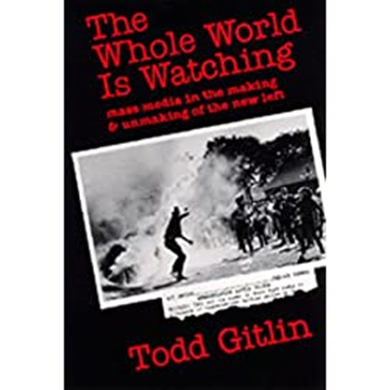
Media analyst Todd Gitlin, wrote about “media frames;” that is the ways in which media construct the symbols and myths that shape information about the world. Print media shapes what we read, who are regarded as authoritative spokespersons, and what visual images shape our thinking about countries, issues such as war and peace, trade, investment, and the global climate. Television emphasizes visual images rather than words. Whatever the media form, points of view are embedded in the words and images communicated.


Writers such as Noam Chomsky, Michael Parenti, and Robert McChesney accept implicitly Edelman’s counsel that people experience the world indirectly and usually in emotional form. They also assume, as does Gitlin, that what we read, see, and hear about the world is framed for us. They go further to suggest that what Marx called the “false conceptions about ourselves” in symbols, myths, rituals, and frames are usually the product of ruling class interests.

How the Washington Post Sees the World


Charles Lane, “Migration’s ‘Root Cause” is Latin American Socialist Dictatorship, Washington Post, September 21, 2022 wrote  about the migration this year of 200,000 Cubans from the island. He also pointed out that such migrations over the years have involved thousands of fleeing Venezuelans: “The exodus is thus a tremendous compliment to the United States and other democratic capitalist countries. We should appreciate it.”

For Lane, the “root cause” of such migrations, of course, is communist dictatorship, a pattern of people fleeing their home countries because of dictatorship and failed economies.  Lane may have been aware of the declassified State Department document, The Decline and Fall of Castro,” quoted in a speech by Senator Patrick Leahy, February 7, 2022 that US policy’s “purpose was “denying money and supplies to Cuba, to decrease monetary and real wages, to bring about hunger, desperation, and the overthrow of [the] government.”  Cuba became the model for applying economic sanctions against governments who the US tried to bring down.

Today US sanctions have been levied against 39 countries. And in most cases, while citizens of these countries suffer, most remained committed to their governments and/or reject United States intervention. And Cuba, despite Lane’s dismissal of Cuba as a dictatorship, has remained a beacon of hope, a model of economic and political development for the global south. Health care is free, Education is free. Cubans in their communities discuss and debate issues and vote on key constitutional changes. Most recently this is illustrated by the national vote on a proposed new Family Code to give legitimacy and rights to all kinds of families and children. And paradoxically virtually every country in the world (except for the US and Israel) condemns the US economic blockade.

And in another editorial statement on the Chinese “challenge” to the United States the author writes: “In just over 40 years, the People’s Republic of China has arisen from the political chaos and poverty of the Mao Zedong era to become a powerhouse on the world stage. Its unmistakable clout is intensifying its rivalry with the United States over which country will dominate the global order and, crucially, which system will stand as the world’s political and economic model: the authoritarianism and state capitalism of China, or the liberal democracy and market-oriented economy of the United States.”  Thus, the media frame is global competition between authoritarianism and “state capitalism” versus markets and democracy (Dexter Roberts, “At Stake in the U.S.-China rivalry: The Shape of the Global Political Order,” Washington Post, September, 22, 2022).

And the Washington Post and other corporate media usually reflect a common agenda. For example, from a Washington Post editorial, May 21, 2016:

“HARDLY A day goes by without evidence that the liberal international order of the past seven decades is being erodedChina and Russia are attempting to fashion a world in their own illiberal image…This poses an enormous trial for the next U.S. president. We say trial because no matter who takes the Oval Office, it will demand courage and difficult decisions to save the liberal international order. As a new report from the Center for a New American Security points out, this order is worth saving…”

But How Others See the United States: The Powerful Voice of the New President of Colombia Gustavo Petro


Recently elected president of Colombia Gustavo Petro made a powerful presentation at the opening of the United Nations General Assembly on the plunder of the Global South by the Global North, a portrait markedly different from the view of the “liberal international order” repeated over and over again by the corporate media and foreign policy spokespersons of the United States.  Petro’s major points concluded the following:


THE WORLD IS DIVERSE IN ITS LANDS, LIVING THINGS, AND PEOPLE

“I come from one of the three most beautiful countries on Earth.

There is an explosion of life there. Thousands of multicolored species in the seas, in the skies, in the lands…I come from the land of yellow butterflies and magic. There in the mountains and valleys of all greens, not only do the abundant waters flow down, but also the torrents of blood. I come from a land of bloody beauty.”

BUT THE WORLD ALSO IS A VIOLENT PLACE

“The jungle that tries to save us, is at the same time, destroyed. To destroy the coca plant, they spray poisons, glyphosate in mass that runs through the waters, they arrest its growers and imprison them. For destroying or possessing the coca leaf, one million Latin Americans are killed and two million Afro-Americans are imprisoned in North America. Destroy the plant that kills, they shout from the North, but the plant is but one more of the millions that perish when they unleash the fire on the jungle. Destroying the jungle, the Amazon, has become the slogan followed by States and businessmen. The cry of scientists baptizing the rainforest as one of the great climatic pillars is unimportant.”


AND THE CAUSE OF THE VIOLENCE? THE GREED OF THE GLOBAL NORTH

“For the world’s power relations, the jungle and its inhabitants are to blame for the plague that plagues them. The power relations are plagued by the addiction to money, to perpetuate themselves, to oil, to cocaine and to the hardest drugs to be able to anesthetize themselves more. Nothing is more hypocritical than the discourse to save the rainforest. The jungle is burning, gentlemen, while you make war and play with it. The rainforest, the climatic pillar of the world, disappears with all its life.”


AND THE VICTIMS? LAND AND PEOPLE

“Coca and the peasants who grow it, because they have nothing else to grow, are demonized. You are only interested in my country to spray poisons on our jungles, to take our men to jail and put our women in exclusion. You are not interested in the education of the child, but in killing its jungle and extracting coal and oil from its entrails. The sponge that absorbs the poison is useless, they prefer to throw more poisons into the atmosphere.”


AND THE PURSUIT OF POWER IS TO MAKE UP FOR THE EMPTINESS OF CONSUMER SOCIETY

“These are the things of world power, things of injustice, things of irrationality, because world power has become irrational. They see in the exuberance of the jungle, in its vitality, the lustful, the sinful; the guilty origin of the sadness of their societies, imbued with the unlimited compulsion to have and to consume. How to hide the loneliness of the heart, its dryness in the midst of societies without affection, competitive to the point of imprisoning the soul in solitude, if not by blaming the plant, the man who cultivates it, the libertarian secrets of the jungle.

According to the irrational power of the world, it is not the fault of the market that cuts back on existence, it is the fault of the jungle and those who inhabit it. The bank accounts have become unlimited, the money saved by the most powerful of the earth will not even be able to be spent in the time of the centuries.”

THE CULPRIT? MONEY AND UNBRIDLED CONSUMPTION

“The culprit is their society educated in endless consumption, in the stupid confusion between consumption and happiness that allows the pockets of power to fill with money. The culprit of drug addiction is not the jungle, it is the irrationality of your world power. Try to give some reason to your power. Turn on the lights of the century again. The war on drugs has lasted 40 years, if we do not correct the course and it continues for another 40 years, the United States will see 2,800,000 young people die of overdose from fentanyl, which is not produced in our Latin America. It will see millions of Afro-Americans imprisoned in its private jails.

The Afro-prisoner will become a business of prison companies, a million more Latin Americans will die murdered, our waters and our green fields will be filled with blood, the dream of democracy will die in my America as well as in Anglo-Saxon America.”.

THE EXCUSE FOR DESPOILING NATURE AND MAKING PERSONS EXPENDABLE

“They invaded in the name of oil and gas. They discovered in the 21st century the worst of their addictions: addiction to money and oil. Wars have served them as an excuse not to act against the climate crisis. Wars have shown them how dependent they are on what will kill the human species.

If you observe that the peoples are filling up with hunger and thirst and migrating by the millions towards the north, towards where the water is; then you enclose them, build walls, deploy machine guns, shoot at them. You expel them as if they were not human beings, you reproduce five times the mentality of those who politically created the gas chambers and the concentration camps, you reproduce on a planetary scale 1933.”


LATIN AMERICA (AND THE WORLD) MUST UNITE AGAINST THIS SYSTEM OF GLOBAL ECONOMIC AND MILITARY POWER

“If you do not have the capacity to finance the fund for the revitalization of the forests, if it weighs more to allocate money to weapons than to life, then reduce the foreign debt to free our own budgetary spaces and with them, carry out the task of saving humanity and life on the planet. We can do it if you don’t want to. Just exchange debt for life, for nature. I propose, and I call upon Latin America to do so, to dialogue in order to end the war. Do not pressure us to align ourselves in the fields of war.

It is time for PEACE.

Let the Slavic peoples talk to each other, let the peoples of the world talk to each other. War is only a trap that brings the end of time closer in the great orgy of irrationality.

What Does All This Mean for Peace and Justice Activists

There are lessons to be learned by analyzing significant narratives of the contemporary world order. First, narratives are inextricably connected to the position from which the narrative comes. Is the narrative one disseminated by spokespersons of the wealthiest country in the world or from a spokesperson from a poor and marginalized country, for example? Second, narratives often reflect the interests of the powerful, economically, politically, and militarily or the interests of most nations and peoples. Third, these narratives have consequences. They justify policies that may or may not be in the interests of humanity. They may justify violence, plunder of resources, the exploitation of workers or they may envision a future of greater equality and the satisfaction of human needs. Finally, as Edelman, Gitlin, Chomsky and Herman, and others suggest our understanding of the world is often controlled and manipulated by those in power. Today the dominant symbols, myths, and media frames from the Global North must be challenged. 


Wednesday, September 17, 2025

VIOLENCE IN AMERICAN SOCIETY: Its Many Forms

 Harry Targ

(parts of which were posted in The Rag Blog August 21, 2014)

"Rev William Barber, a left-leaning pastor and social activist, has condemned last week’s “brutal, ugly” murder of Charlie Kirk while calling for a broader denunciation of political violence on all sides...

Barber spoke out against the killing of Kirk – an ally of Donald Trump – during an online event commemorating the anniversary of one of the most notorious acts of political violence in US history, the bombing of a Black church by members of the Ku Klux Klan on 15 September 1963.

Three 14-year-old girls and another aged 11 were killed when an explosion caused by 19 sticks of dynamite attached to a timer ripped through the 16th Street Baptist Street church in Birmingham, Alabama, at a time when the city was a focal point of the Black civil rights movement." (Robert Tait, "Rev William Barber condemns Kirk’s killing and warns against using religion to ‘sanctify wrong,"The Guardian, September 15, 2025).

The forms of peace and violence


From police violence, to endless killing, to economic despair, to lack of political representation, to cultural rationales for state violence, the basic characteristics of American society are uncovered.


In addressing violence, researchers, educators, journalists, and religious leaders have usually concentrated on its most visible forms: murder and war. The central features of such violence include physical assault and killing. In our own day terrorism and shootings have joined war as the most popular common subject for study.

Over the years, peace educators have developed intellectual tools to uncover more diverse meanings of violence, their differences and their connections. Structural violence has been distinguished from direct violence. Researchers continue to analyze direct violence, physical assault and killing, but also study structural violence, the various forms of human suffering that take more time, impose pain and suffering on populations, and are perpetuated by leading institutions and relationships in society.

Structural violence includes economic inequality, low wages and poverty, inadequate access to health care and education, and the psychological damage that economic suffering causes. These injustices, the concept of structural violence suggests, are embedded in economic, social, and political institutions.

It is possible to disaggregate further the structural violence that is embedded in institutions. Institutional violence refers to unequal distribution of power and influence in major societal institutions: political, criminal justice, and educational, for example.

Finally, cultural violence refers to the images, symbols, and educational materials that value some population groups over others. Culture refers to the public consciousness of history, traditions, and popular narratives that describe people. Stereotypes are short-hand representations of a culture. And cultural violence includes its central role in popular culture: movies, television, and literature. Killing is legitimized as a core part of our entertainment.

In total, violence is direct, structural, institutional, and cultural. These kinds of violence may occur separately but in most cases are inextricably connected. It is this fourfold conception of violence that is relevant to the current crises  of police/national guard/ICE occupations, shootings, and the celebration and perpetuation of war.

So from police violence — killing, gassing, beating — to economic despair, to lack of political representation, to cultural rationales for state violence, the basic characteristics of American society are uncovered. And particularly the  victimization of people of color, as well as workers, and women, lead to the following conclusions:

▪ The root cause of exploitation, racism, and sexism is structural violence (capitalism).
▪ Physical violence is used to crush rebellion against class exploitation and racism.
▪ Unrepresentative political institutions are dominated by the wealthy and powerful.
▪ Dominant cultural stereotypes and specific narratives about society reinforce the economic system, the political system, and justify police and other gun violence.

In sum, in addressing violence, its multiple forms should be taken into consideration. To solve the problems of physical violence in US society, structural, institutional, and cultural violence must be addressed.

Wednesday, September 10, 2025

“There's something happening here. What it is ain't exactly clear;” New International Realities

 Harry Targ

Confusion in the Moment

The combination of social media,  media “breaking news” stories, the politics of the spectacle, the frenetic criminal conduct of the Trump administration, and the agonizing killing, starvation, deaths, pain and suffering happening all around us have been immobilizing. Consequently, it is even more difficult for those working for change to make sense out of the world we are inhabiting. This is particularly so in international relations where “something is happening” but we don’t hear about it or get just pieces of misinformation. If we sift through the fog and confusion, we might discern the emergence of New International Realities.

Recent Developments in International Relations

                                        People's World
On July 6-7, the BRICS nations met in summit in Rio de Janeiro, Brazil. BRICS is a Global South bloc launched in 2009 by Brazil, Russia, India, China, and South Africa, and now has many affiliating “partner” nations and 30 other nations requesting membership. BRICS has been meeting regularly to strengthen the voice politically and economically of the traditionally powerless nations of Asia, Africa and Latin America. Host President Lula spoke of the meeting’s purpose: “If international governance does not reflect the new multipolar reality of the 21st century, it is up to BRICS to help bring it up to date.”

According to Duncan McFarland,  (https://www.peoplesworld.org/article/heir-to-the-non-aligned-movement-brics-presents-alternative-to-u-s-hegemony/) the BRICS countries, members and associates, surpass the GDP of the G7 countries, the historic former colonial powers. Also BRICS members and associates are much larger in population than the G7.

BRICS countries are animated by the needs for economic development and a new international order based on the spirit of multilateralism and multipolarity. Concretely, they oppose tariff barriers, the currency and loan system created at Breton Woods in the 1940s, and Israel’s genocidal policies in Gaza.

Paralleling and expanding on the BRICS “movement,” the Shanghai Cooperation Organization met in Tianjin, China on September 1. They issued the Tianjin Declaration, which calls for “peaceful and equitable governance and increased South-South cooperation.” Formed in 1996 by China, Russia, Kazakhstan, Kyrgyzstan, and Tajikistan, it became the SCO in 2001. SCO now has ten members including India, Pakistan, Iran and Belarus (with 26 countries and representatives of ten global organizations  participating in the recent meeting).

                                                International Peace Institute

SCO heard comments from Chinese President Xi. He proposed a Global Governance Initiative (GGI) emphasizing sovereign equality, a commitment to international law, multilateralism, a “people-centered” approach to global policy, and concrete actions to achieve these goals. He committed funds to a soon-to-be created SCO Development Bank. In addition, the Tianjin Declaration endorsed programs to combat drug trafficking, terrorism, and also pledged cooperation on the use of artificial intelligence and protection of the environment. (https://peoplesdispatch.org/2025/09/02/xi-jinping-proposes-a-new-global-governance-framework-based-on-sovereignty-and-multilateralism-at-sco-summit/)

Finally, while the United Nations General Assembly opened its meeting in New York (the 80th year of its founding) there had been calls to move the session to Geneva, Switzerland to protest the US refusal to allow leaders of the Palestinian Authority to enter the country. The General Assembly over the years has passed resolutions criticizing Israeli policies and sanctions against Cuba. And at both the BRICS and SCO meetings it has been suggested that existing international institutions, such as the United Nations, be transformed to reflect global economic interests and the interests of the vast majority of humankind. The United Nations Security Council, with five “permanent members” each with veto power, reflects not the new international realities but the international system established during the era of big power dominance.

The United States Responds to the New International Realities

Although the responses of the Trump administration (and its predecessors) have reflected resistance to the challenge to US global hegemony, it is clear that US policy has been impacted. For over a decade United States policy has involved a “pivot to Asia,” that is challenging China’s rising power militarily and economically. Alfred McCoy has warned that while China’s economy is reaching the levels of the United States, the US response has been more investment in its military. Also, the Trump administration has sought to use tariff policies to stifle China’s increasing global economic presence and exports to the US.

However, recent developments suggest that US policy may be shifting back to the eras of the Monroe Doctrine and Roosevelt Corollary. Recognizing that the distribution of power on the world stage is changing (BRICS and SCO for example), the Trump administration may be returning to a fortress America approach (that is the Western Hemisphere), a kind of Monroe Doctrine 2.

                                        Code Pink
Indications of this would include solidifying and increasing economic sanctions against Cuba and Venezuela, seeking to undermine the Lula government of Brazil, and also trying to intimidate the independence of the Mexican government of Claudia Sheinbaum. Most recently the Trump Administration has renewed a “war on drugs.” As to the latter, the US military destroyed a Venezuelan boat on September 2 in the Caribbean murdering eleven unidentified inhabitants and alleging with no proof that they were members of a Venezuelan drug cartel. And the Secretary of Defense visited Puerto Rico on September 8 to investigate sites for new military installations to make war on hemisphere “drug cartels.”

Vijay Prashad,  has pointed out that there is no evidence of any connection between drug cartels and the government of Venezuela. But Prashad  warns that claiming a connection of drugs with Venezuela should remind us of the “weapons of mass destruction” that were claimed to have existed in Iraq to justify that brutal war in 2003.

https://venezuelanalysis.com/opinion/the-united-states-uses-a-fabricated-drug-charge-for-a-potential-strike-on-venezuela/

Also in addition a Reuters article on the US. Secretary of State's visits to Mexico and Ecuador suggests: "Rubio, the first Latino U.S. secretary of state, traveled to countries in Central America and the Caribbean during his first overseas trip after taking office as the administration sought to shift back focus to Latin America."

https://www.reuters.com/world/americas/mexico-emphasizes-sovereignty-good-ties-during-rubio-visit-2025-09-03/

While there is reason to believe that the United States recognizes the shift in global power from the North to the South and is acting accordingly by retargeting the Western Hemisphere, it is important to note that the “new” policy still involves US continuing support for its key allies and their wars, such as Ukraine and Israel. In addition, the US remains the number one world arms merchant, even if its specific focus might be shifting to the Western Hemisphere.

The Meanings of the New International Realities for Peace and Justice Movements

First, we activists need to have a clear, rigorous understanding of the world in which we act. Recognition of The New International Realities is increasingly important as we think about our political work (A multiplicity of scholars and activists have begun to address the NIR and many of us have been inspired by Howard Zinn’s injunction that history involves not just a retelling of the behavior of elites but also the reaction of those who had and are now resisting. The dominant paradigms of the past, among international relations scholars, have concentrated on “the big powers,” ignoring the acts of those who resist and most importantly the masses of workers and peasants who say “no” to repression and exploitation).

Second, recognition of the NIR obliges activists in the core countries to act in solidarity with movements and nations in the Global South. Examples of this include solidarity movements with Palestine and Cuba and campaigns led by the Global South such as BDS.

Third, activists need to continue their work opposing US imperialism and militarism. It is clear that the military/industrial/university complex is squeezing more and more of societal resources in the direction of profits from wars and interventions.

Fourth, peace and justice movements in core countries like the United States must continue to link pain and injustice at home with pain and injustice in other countries. In other words, the NIR, we should claim,will benefit us in the United States as well as peoples in the Global South.

Fifth, there do exist international institutions such as the UN system, that provide activists everywhere with the skeletal form of a New World Order. Activists need to inform themselves about the myriad of UN agencies that do work for people and some, such as the Security Council, which reinforce the old order of militarism and exploitation.

Finally, peace and justice movements must further articulate a consciousness that national borders are artificial, that “enemies” are the creation of ruling elites, and all the world’s citizens would be the beneficiaries of a New World Order.


(This essay was inspired by discussions with friends and comrades in the Committees of Correspondence for Democracy and Socialism (CCDS) sub-committee on The New International Realities)

Sunday, September 7, 2025

PROGRESSIVE MOVEMENTS IN THE UNITED STATES: Reflections on History as a Guide to the Future

 "I'VE BEEN ON THE LEFT FOR 60 YEARS. I know the full range of socialist and communist groups. Since the demise of the Weather Underground 40 years ago, I don't know a single group that's into violence or terrorism of any sort, even against Charlie Kirk and others like him," Carl Davidson, from Facebook)     

                                            
Harry Targ

from Chapter 5, Challenging Late Capitalism, Neoliberal Globalization and Militarism: Building a Progressive Majority, Lulu.com, 2006

What are Progressive Movements?

Marx believed that all history was the history of class struggle. Class struggle was basic to history because all societies were class societies. Those classes that owned or controlled production, such as the factories or fields, gained disproportionately while those who worked as slaves, servants, or wage workers gained less.

Therefore, basic to the production and reproduction of life in class societies is inequality in wealth, power, and control which generates conflicts of interest. As history unfolds, these conflicts of interest spill over into mobilizations to demand change. The demands may be modest or fundamental. Sometimes mobilizations to create change, such as for a fair wage, escalate to demands for qualitative change, such as to destroy the economic and/or political system of inequality. Revolutionary movements are motivated by the belief that the basic institutions of society cause exploitation and oppression and therefore must be replaced by new institutions. Reformist movements wish to change some institutions and/or policies to alleviate human problems.

The Marxian assumption is that inequality in wealth, and therefore power,  is basic to capitalist societies. As a consequence the economic organization of society fundamentally shapes all its institutions and relationships, including politics and culture. However, some inequalities, while parallel to and significant for the system of wealth and power, are derived from institutions, interests, and ideologies integral to but not necessarily derived from the economic system. Racism and sexism are vital to capitalist exploitation but have their roots in institutions and cultures preceding it. Racism is a system of control based on social constructions of race; that is institutional definitions of  superior and inferior “races.” Patriarchy is a system of power and control tied to gender. In addition to the economic structures of society, systems of racial oppression, and patriarchy, institutionalized forms of domination and subordination  have existed based on religious beliefs or other characteristics of difference.  In other words, the basic inequalities in wealth and power generated by class have been reinforced and replicated throughout societies in different economic, social, political, and cultural realms. 

Given systems of inequality in wealth and power and the negative consequences of these inequalities, demands for change of varying kinds are essential features of societies. As suggested above, individuals and groups organize from time to time to create change: workers, people of color, women, or peoples of faith, for example. Progressive movements are coalitions of groups who come together to bring about changes in policies and/or institutions to improve the lives of people and to reduce inequalities in wealth, power, and/or status.  They may come together to address issues of class, race, gender,  religious toleration, or specific problems such as abuse of the environment. More radical coalitions have a vision of changing several realms of economic, political, social, and cultural reality at once. Progressive movements are coalitions of groups who agree to work together because of some common purpose even if they do not share a particular understanding of history, economic and political structures, or a particular view of human possibilities. They realize that with numbers there is power and that a mass movement is needed to bring about some of the changes they desire.

Kinds of Social Movements                                      

Political activism varies from country to country based on history and context. Some countries experience more mass mobilizations, street protests, frequent ouster of leaders, and violence than others. Also some countries have longer histories of leftwing political parties and Socialist movements than others. Despite the significant variation in political histories, it is important to remember that social movements are basic to history and historical change.

Social movements differ as to vision and purpose and strategy and tactics. Movements have been created to solve specific problems in institutions or policies. These are single issue movements. Groups organize living wage campaigns, work to end particular wars, demand environmental protections, seek to protect women’s right to choose and work on a whole host of other important issues.  In societies like the United States there are literally thousands of groups seeking changes that would improve humankind in some way and single-issue groups constitute the vast majority of this organized political activity.

Other movements are multi-issue, that is, they believe that issues of class, race, gender, the environment, and peace are interconnected and require a common approach to problem solving. Political parties committed to significant change, such as the Greens, serve this kind of purpose. Most mainstream parties, while they address a multiplicity of issues, do not have a vision or commitment to significant change.

Many movements are reformist,  that is they promote modest but significant changes. Usually they work toward some policy change or institutional adjustment in the polity.  Others organize with the goal of radically transforming economic and political institutions. Their vision is considerably more comprehensive drawing upon a systemic analysis of the underlying flaws in the economic and political order. Of course, Socialist movements foresee the overthrow of the capitalist system and its replacement by a humane Socialist society. These movements are revolutionary. 

Life is considerably more complicated than simple categorization schemes and social movements often consist of persons seeking change on individual issues as well as broader structural change. Also activists in particular social movements may be motivated by a desire to reform while others may share more revolutionary visions of change. But, it is still useful to look at the two categories raised: single vs. multi-issue movements and reformist vs. revolutionary to help to distinguish kinds of movements in U.S. history and their strengths and weaknesses.

Single-Issue Reform Movements

Throughout U.S. history, groups have formed to address specific changes in institutions and policies. Some, such as the environmental movement, have mobilized around single issues that have had long-term political and economic consequences for the nation. Most such groups have addressed individual policies of more limited impact such as supporting a clean water act or an endangered species act. Single-issue reform movements are often seen as part of the “pluralist” character of American politics, the standard social science rendition of how the political process works. Every citizen can participate in the policy process by joining a group. These groups organize around specific issues. For mainstream political scientists, single-issue reform groups are the heart and soul of US democracy.

                                            People's World

Single-Issue Revolutionary Movements

Less common in U.S. history are single-issue movements that have a revolutionary agenda. Sometimes people mobilize around single issues without realizing the long-term consequences for economics and politics of their actions. Perhaps the Abolition Movement of the 19th century and the Gay Rights Movement of the 1970s are examples. What begins as specific demands for institutional or policy change leads to a growing mobilization that transforms society in significant ways.

Multi-Issue Reform Movements

These movements, less frequent, but very significant for U.S. history, involve a coming together around a variety of issues with a shared vision and purpose. For these reform movements, such as the Populists of the late 19th century, which sometimes include the mainstream political parties, institutional and policy changes are promoted with an eye towards rectifying social problems without radically changing the distributions of wealth and power. As the momentum for change escalates, significant economic and political changes might occur. Even though they are not revolutionary, the totality of the reforms add up to substantial economic and political changes. The New Deal reforms of the 1930s, discussed below, are an example.

Multi-Issue Revolutionary Movements

 While having less of a presence in the United States than Europe, a Socialist left animated by a vision of radical transformation of the economy and the polity are relevant here. These movements have an analysis of the fundamental connection between capitalism and class, race, and gender that leads them to advocate a fundamental transformation of society. That is, the systems of capitalism, white supremacy, and patriarchy must be overturned and replaced with a new society based on humane visions of Socialism. . At various times Socialist and Communist parties have had significant impact on U.S. politics. Paradoxically, their impacts have been to stimulate the creation of successful single- and multi-issue reform programs that have led to modest but valuable changes in institutions and policies. 

Generalizations About Single and Multiple Issue Reform and Revolutionary Movements

First, the practices of all social movements are shaped by their interaction with the forces that resist them. Oftentimes groups mobilize around an issue, encounter resistance, reexamine the systemic source of the resistance, then articulate demands for more fundamental change, and develop new strategies and tactics to achieve the new goals. 

Second, resistance often leads to the development of a new understanding of the problem at hand.  Single-issue campaigns, about environmental policy for example, might lead activists to the conclusion that opponents of reform represent corporate capitalists who oppose any restraint on their pursuit of profit. 

Third, U.S. history is replete with examples of individuals and groups becoming “radicalized” by resistance to modest demands on single issues. As activists meet resistance, they begin to see that other groups with other agendas have experienced the same problems. Usually, confrontation with state power leads reform minded activists to develop a consciousness of “layers of causation” in reference to resistance to change. What begins as a campaign against recalcitrant politicians sometimes leads to a more systemic analysis of the economic underpinnings of support for the status quo.

Fourth, the character of the state reaction in the context in which the activism occurs  significantly affects the kind of activism that is advanced. Under certain circumstances, single-issue reform constitutes the most that can realistically be expected. At other times, a multiplicity of issues can be addressed in a comprehensive way and on rare occasions, analyses, vision, and tactics can take on a more revolutionary character.

 Finally, “left” political activism should be based upon the historical possibilities that exist at any given time in history. Left participation in political activities of all sorts is important. The “left” contribution to building any progressive political movement should be to suggest an outlook based on a systematic theoretical understanding of society; for example, that human problems have a root cause or root causes; the variety of human problems are connected; and in the long run the solution to human problems require radical or revolutionary solutions.

                                            Portside

Cultural Fronts, the 1930s, and Progressive Movements

Michael Denning (1996) has made an important theoretical contribution to the study of social movements in the United States. He introduced the notion of a “cultural front” to discussions about the 1930s and 1940s. He argued that in those epochs, when masses of people were organized around and sympathetic to fundamental social change, networks of influences relating class struggle to politics and to culture seemed to be prevalent.

 The primary political forces in the 1930s, the labor and Communist movements, indirectly influenced popular discourse and culture and how the vast majority of people viewed their times. Hundreds of thousands of workers were marching, striking, and sitting in factories to demand the right to form unions and thousands of them were affiliated and motivated by the Communist movements of the day. In daily newspapers, the saga of the CIO unfolded regularly. In many towns and cities workers not directly involved in organizing struggles were sympathetic to those workers who were. The newly emerging industrial unions, under the banner of the CIO, published newspapers, broadcast radio programs nationwide, and, in the case of Chicago, owned a radio station.   

Communists, who had played a leading role in the early days of the CIO, had for years been involved in campaigns to demand relief for workers hit hard by the Depression, such as forming Unemployment Councils to demand welfare payments for the unemployed, supporting hunger marches, and agitating for an alternative to the kind of capitalism that brought the Great Depression. The Communists also played a leading role in challenging racism in the South: organizing against the charges of rape leveled against the young men of Scottsboro, demanding federal legislation against lynching, and organizing boycotts of businesses in cities like New York and Chicago which refused to hire African American workers.

Communists, Socialists, and peace activists organized opposition to European war in the 1930s. After the Soviet Union was attacked by Nazi Germany, the Communist Party joined with many Americans to support the war against fascism in Europe and later in Asia. Also Communists played a leading role in organizing the Abraham Lincoln Brigade,  young American volunteers to fight against General Franco’s fascist forces that attacked the beleaguered democratic regime in Spain. 

 In short, in the 1930s, class struggle was manifested in the nationwide drive to organize industrial workers in trade unions supported and encouraged by a Communist movement that had worked for years to organize industrial workers, a sector of the work force that had traditionally been excluded from unions. Also the Communist left put the struggle against racism on the agenda. As masses  mobilized, the unemployed, factory workers, and farmers, class struggle became a visible feature of public life. And, workers, Communists and Socialists, and pacifists, worked to oppose war and fascism in Europe. Most of these currents were visible to  Americans through the mass media. Denning suggests that the union organizing was the driving force behind the visible presence of a progressive movement in the United States. 

 Arts and culture were inspired by the mass movements during the decade. Through the working class balladry of Woody Guthrie, the anti-colonial and anti-racist artistic politics of Paul Robeson, the proletarian novels of Jack Conroy and James T. Farrell, the artistic imagery of war and fascism in Picasso’s Guernica, the worlds of work, politics, and struggle became the subjects of culture. Performers, as varied as Billie Holliday, Duke Ellington, Charlie Chaplin, and Marian Anderson, made artistic statements reflecting the progressive spirit, even though they were not affiliated with the CIO or the Communist Party. This is the point for Denning. The “cultural front” constituted a moment in history where organized movements, shaped by class struggle and Left parties, helped create a left/center political coalition and inspired the creation of a broader progressive politics and culture.

The immediate political byproduct of the cultural front was the New Deal. Legislation was passed to give workers the right to form unions, to establish a minimum wage, to require some standards of health and safety at the work place, and to provide social security for specific categories of retirees. Unemployed people were put to work to build bridges, highways, and sidewalks and to clean public parks. Others were paid to write and perform plays, to prepare histories of states, to photograph rural and urban life, and to document in writing the pain and suffering of workers experienced during the Depression. While it is clear in retrospect that many African Americans did not receive adequate benefits from the New Deal, the seeds of the idea of “positive government” were planted. The epoch-shaping era of the 1930s began with groups promoting single issue reforms and evolved into campaigns for multiple issue reforms. In the background, but not insignificant to the epoch, were those Left organizations who worked for a revolutionary transformation of American, while working with mass organizations to achieve multi-issue reforms.  The Left/center coalition that developed over the decade constituted a progressive movement that significantly changed the economic, political, and cultural life of the country.

The Cultural Front, the 1960s, and Progressive Movements

The cultural front of the 1930s, including the changes in public policy brought by the epochal struggles of that time, still existed in weakened form in the 1960s. But it was a shell of its former self for a variety of reasons. Labor militancy was defused by CIO collaboration with capital during  World War II. Labor/management agreements after the war defused radical labor demands for control of the workplace in exchange for  wage increases and benefits. Anti-communism, the tool of repression, spread through the labor movement,  schools and universities, government, and movies, radio, and television.

 In sum, the shared values, beliefs, and politics of the 1930s became defined as subversive and un-American. And specifically, the Communist Party was hounded into isolation, as were any political and cultural performers and activists who had been sympathetic with it in years past. The network of connections between class struggle, politics, and culture were steadily dismantled and replaced by a “repressive cultural front” that defined progressive politics as an enemy force. 

Manifestations of the cultural front of the 1930s, however, lingered on in the politics of the 1950s. Radical trade unionists continued the struggle for the right to organize and some, albeit a small fraction, of the labor movement continued to incorporate an anti-racist agenda in their work. In the South and across the nation, Tobacco Workers, Longshoremen, Packinghouse Workers, Mine, Mill, and Smelters continued the old CIO/Communist campaign; “Black, White, Unite, and Fight.” However, the mainstream of the labor movement, which became the AFL-CIO after a 1955 merger, significantly reduced its commitment to racial justice in the labor movement and the society at large.

In contrast,  militant workers, committed religious leaders, and members of traditional civil rights organizations such as the National Association for the Advancement of Colored People (NAACP), and most importantly rank and file African Americans launched a new civil rights movement that would shape the politics of the 1960s and 1970s. A new “cultural front” was initiated inadvertently by the Montgomery Bus Boycott of 1955. The working women and men who marched for miles to work instead of sitting in the back of city buses set off a nationwide explosion of forces: people of color, and youth, anti-war, students’ rights, women’s, and environmental activists.

As in the 1930s, the explosion of the spirit of activism spread throughout the culture. The politics of protest became a daily feature of electronic and print news, the subject of debate in cafes, barber shops, and legislative bodies. Folk and rock music became infused with messages of racial and social justice and peace. Movies and television, so constrained by the lingering anti-Communism of the 1950s, reluctantly and cautiously followed the music industry.    

Finally, a politics of single issues shifted to a multi-issue consciousness and some activists shifted from reformism to revolution in their thinking about social change. By the late 1960s, discourse involved whether change could be brought about “inside the system” or required going “outside the system.” Words like, the “establishment,” usually ill-defined, implied an analysis of society that entailed economic and political institutions. 

Importantly, the “old left,” those activists who experienced the cultural front of the 1930s and concretely who had been schooled in Marxist theory and Communist or Socialist politics, were seen by younger activists as  less relevant to the activism of the 60s than the 1930s. The very label of the new movement, a label coined by maverick sociologist C. Wright Mills, reflected the disjuncture between the prior movements and the emerging one. It was Mills who called for the creation of a “new left.” For him, this “new left” would rise up out of the passions of youth for social justice, particularly youth in the universities. This conception of the new movement implied that the working class was not central to change. Rather, they were defenders of the status quo.

Despite the fatal flaw in the idea of  a “new left,” that is its anti-worker character, the civil rights struggle and the inspiration it provided for students and anti-war activists created a political and cultural atmosphere in the 1960s that resembled that of the 1930s. Dr. King, Malcolm X, the Student Non-Violent Coordinating Committee (SNCC), and the Black Panther Party inspired a struggle first for basic social and economic justice and later for revolutionary change to create a system ending exploitation, racism, and war.  

The civil rights and Black Power movements and the 1960s cultural front had significant policy consequences. The Voting Rights Act of 1965 and affirmative action programs could not have been embraced by the Johnson Administration and the Congress if mass movements had not demanded social and economic change. The panoply of programs known as the Great Society, including day care, pre-school education, legal aid, and the modest Medicare and Medicaid programs, were reformist byproducts of the ferment. Ironically, several governmental programs were having measurable impacts but lost resources and support because of the escalating quagmire in Vietnam.

The Poor People’s Campaign of 1968 symbolized the hope and the defeat of the 1960s cultural front. Dr. Martin Luther King had come to the view by the late 1960s that poverty, exploitation, racism, and militarism were interconnected. His conclusions about the interconnectedness of these issues and the need to fundamentally transform society to overcome them required the mobilization of poor people, Black and white, and progressives to demand fundamental change. His PPC was to culminate in a massive mobilization of progressive forces in Washington D. C. in May, 1968. 

The development of his consciousness was reflected in his 1967 speech at Riverside Church in New York, in which he linked the war in Vietnam to racism and poverty at home. In addition, his support for striking garbage workers in Memphis, Tennessee reflected his efforts to link the issues of class and race. After Memphis, he was to lead the nationwide PPC walk to Washington to construct Resurrection City. He was never to make the trip and the Resurrection City that was constructed on the mall in Washington was torn down in short order after it was erected. His assassination may have been connected in some way to the threat that Black/white unity around class and race issues represented to the dominant order.

The mass movements continued but the concrete (and theoretical) anchor that the PPC would have provided was destroyed. Various left formations emerged, the Students for a Democratic Society (SDS) splintered, and state repression escalated. The Black Panther Party, which was providing hot breakfasts and free health care to people in poorer communities became the target of counterintelligence programs (COINTEL). Panthers were killed, arrested, jailed on trumped up charges, and their influence in the Black communities declined.    Students were killed by National Guard or police authorities at Jackson State and Kent State universities. Meanwhile, products of popular culture shifted from social justice themes to interpersonal liberation. Rebellion was channeled more and more into consumerism. The United States presence in Vietnam came to an end in 1975 and so did the 60s cultural front.

Progressive Politics After the Cultural Fronts

The “sixties” connoted something special as did the “thirties” before it. As has been suggested here, mobilizations around class and race stimulated the reassertion of people’s campaigns of all sorts. Politics in turn impacted on culture and culture on politics. In terms of a mass psychology a sense of hope flowered and grew. In the 1940s and 1950s and again in the 1970s and beyond, the cultural fronts disintegrated and despair, isolation, and individualism replaced community, solidarity, and activism. 

Several forces facilitated the demise of “the 60s.” First, state repression escalated. Assassinations, police violence, arrests, and incarceration of many Black and white activists reduced the ranks of the leadership of existing organizations. Second, the global economy experienced stagnation and crisis spurred by two oil shocks. In the United States unemployment and inflation together rose precipitously. Capital flight escalated such that literally millions of high paying industrial jobs were lost as thousands of plants closed. The percentage of the work force in unions began its significant decline. In the terms of the day the “economy of abundance” was replaced by an “economy of scarcity.” When Ronald Reagan came in office an active campaign to destroy the labor movement was put in place, as symbolized by the successful effort to destroy the Professional Air Traffic Controllers Organization (PATCO).

Third, a long simmering right wing backlash to the 30s and the 60s gained significant force aided by an attractive leader, Ronald Reagan. During his first term, Reagan launched a program that is still active and successful in 2005 to destroy the vestiges of positive government. Also he used the war against Communism, the “evil empire,” to rekindle national chauvinism and massive increases in military spending. New campaigns were started to repress Central American activists and groups defending civil rights. His followers created campaigns against a women’s right to choose an abortion, against gun control, for school prayer, and for the teaching of creationism to mobilize conservatives and some religious fundamentalists. The use of  so-called “social issues” was designed to build a mass base of support for an economic and political ruling class that was committed to shifting the distribution of wealth and income even more to themselves by destroying positive government programs.    

The quantum shift to the right nationally could not have occurred without apocryphal changes in progressive politics. Single issue politics continued, in some cases with admirable successes. Women’s and gay rights movements flourished. Anti-nuclear and Central American solidarity movements successfully mobilized millions of people in opposition to Reagan’s foreign policy. But the “old left” was in disarray; that is those multi-issue groups committed to a Socialist political vision. As the former Soviet Union and the Eastern European Socialist states experienced crises of political legitimacy and economic stagnation, the image of revolutionary Socialism became more tarnished. Most Socialist states disintegrated between 1989 and 1991, leaving only a handful committed in name, if not in principle, to Socialism. New post-Marxist theoretical currents among the academic left “deconstructed” the historical “narratives” such that the history of any revolutionary ideal became suspect. Class and class struggle as empirically grounded theoretical concepts were dismissed.  Class was replaced by identities-racial, gender, sexual preference, and ethnic-as the focus of political attention. The Marxian idea of linking exploitation, oppression, domination and subordination to the economic character of the society was rejected as an intellectual tool.  

The end result of the transformation and deconstruction of progressive movements was  a politics of atomization: issues, identities, discourses, discrete contexts replaced a theoretical and practical understanding of history and attempts to understand the continuities between the past and the present were rejected. The dismissal of the Socialist project in general became fashionable on the intellectual left. At the level of electoral politics, the leadership of the Democratic Party shifted from being a party of opposition to being a party of centrist collaboration. The argument of those who rose to influence in the 1980s and 1990s, in the camp of President Clinton, was that electoral victory required embracing a variant of the Reagan revolution in politics to appeal to the “center.”

 The end result of these two developments was that the intellectual left rejected the historical and conceptual tools that would give vision and purpose to the possibility of constructing a “new new left.” In the electoral arena, the Democratic Party, the sometimes agent of reform, embraced a new role, rejecting contestation and adopting collaboration as a political strategy. Meanwhile wealth shifted more to the top 1 percent of the population, real incomes declined for most workers, and the economic, political, and cultural manifestations of racism and sexism resembled  the period before the Great Society of the 1960s. 

Political Crisis in the 21st Century

George Bush won two disputed elections in 2000 and 2004. He is a creature of the neo-conservative, religious fundamentalist, rightwing faction of the capitalist class. During his reign wealth has continued to shift to the rich, workers and the poor have become as vulnerable at any time since the Great Depression, and the United States is attempting to reconstruct a worldwide capitalist empire that has been the dream of imperialists since the 1890s. This has meant unending wars in Afghanistan and Iraq, and threats of war against Syria, Iran and North Korea. Despite extraordinary demonstrations against war and racism and the rise of grassroots organizing, the movements are disjointed, single-issue, bereaved of systemic analysis and vision. Of particular relevance is the weakness, to the point of near extinction, of the labor movement   The old anti-racist movement, whose heart was in civil rights and Black Power, does not evidence the solidarity of the past, nor the solidarity with other sectors of the progressive movement.

 Clearly there is a need for a new mass movement which is multi-issue and reform/revolutionary. This new mass movement needs a class base. It must prioritize an anti-racist, anti-sexist agenda. It must be anti-imperialist. And the new progressive majority needs to ground itself in the public discourse and the culture of the majority of the people. The new progressive majority cannot replicate the prior periods of the cultural front but activists can learn from the strengths and weaknesses of the prior periods.

The times are right for a new progressive beginning. The vast majority of humankind lives in horrific material conditions. Massive mobilizations are spreading around the world concerning issues critical to people’s lives. Numbers of passionately committed left intellectuals and cultural artists are growing. And, there is a history, even in the U.S., of  Socialist vision and practice. 


                                            National Archives

Bibliography

Denning, Michael. The Cultural Front, Verso, 1996


The Bookshelf

CHALLENGING LATE CAPITALISM by Harry R. Targ

Challenging Late Capitalism