Wednesday, June 1, 2022

The United States Escalates War in the Heartland of Europe By Sending Advanced Rockets: Makes Diplomacy More Difficult

Harry Targ


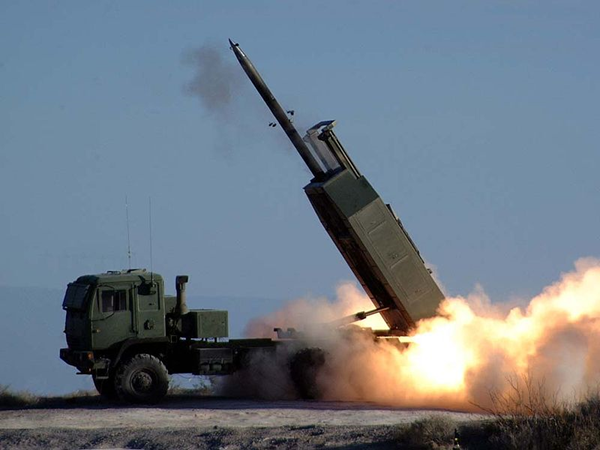
President Biden on Tuesday confirmed that his administration is sending medium-range advanced rocket systems to Ukraine, responding to a top request from Ukrainian officials who say the weapons are necessary to curb the advance of Russian forces in the east. (Rachel Pannett, John Hudson, “Biden confirms U.S. is sending advanced rocket systems to Ukraine”. Washington Post, June 1, 2022)


 “America’s goal is straightforward: We want to see a democratic, independent, sovereign and prosperous Ukraine with the means to deter and defend itself against further aggression.” President Joe Biden.

https://www.nytimes.com/2022/05/31/opinion/biden-ukraine-strategy.html


“Adversaries around the globe are becoming more sophisticated. To protect soldiers, citizens and infrastructure, our customers require the most advanced tactical missile capabilities. The Lockheed Martin High Mobility Artillery Rocket System is a strategic capability, improving homeland and important asset defense while reducing overall mission costs”(HIMARS: Protecting our soldiers with combat proven reliability)

\https://www.lockheedmartin.com/en-us/products/high-mobility-artillery-rocket-system.html#:~:text=High%20Mobility%20Artillery%20Rocket%20System,Lockheed%20Martin

Opposing Imperialism and War at the Same Time

The peace movement has often been faced with a dilemma. Should it channel its energies in opposition to imperialism, including economic expansion and covert operations, or should it mobilize against war, or both. The problem was reflected in President Obama’s August 5, 2015 speech defending the anti-nuclear proliferation agreement with Iran.  On the one hand he defended diplomacy as the first tool of a nation’s foreign policy and on the other hand his defense included the argument that through diplomacy the United States “won” the Cold War, and thereby defeated a bloc of states that opposed capitalist expansion. The implication of his argument was that pursuing imperialism remained basic to United States foreign policy but achieving it through peace was better than through war.

The speech was presented at American University 52 years after President Kennedy called for peaceful competition with the former Soviet Union. In June, 1963, nine months after the Cuban Missile Crisis, which nearly led to nuclear war, and weeks after Soviet leader Nikita Khrushchev’s call for “peaceful coexistence,” President Kennedy responded by urging the use of diplomacy rather than war in the ongoing conflict with the Soviet Union. 

A small but growing number of scholars and activists in the early 1960s had begun to articulate the view that the threat of nuclear war, growing U.S. involvement in Southeast Asia, and repeated covert interventions in Guatemala, Iran, Cuba, and the Congo, had to do with U.S. imperialism. The dilemma for the peace movement in 1963 then as it is in 2022 is how to respond to United States imperialism at the same time as supporting the use of diplomacy to forestall wars.

The Two Strands of Imperial Thought: Neoconservatism and Humanitarian Interventionism Lead to the Same Policies

Despite differences in political discourse since the collapse of the Soviet Union in 1991, “neoconservative” and “humanitarian interventionist” factions of the foreign policy elite, have continued to advocate policies that have retained war as a central tool of US global goals. (This tool, of course, is a centerpiece of pressure from the arms industry). Therefore, any foreign policy initiative that reduces the possibility of war and arguments about its necessity should be supported by the peace movement. In 2015, the agreement with Iran endorsed by most countries except Israel constituted an effort to satisfy the interests of Iran and the international community without the shedding of blood and creating the danger of escalation to global war. 

Neoconservatives, celebrants of war, have had a long and growing presence in the machinery of United States foreign policy. James Forrestal, the first Secretary of Defense in the Truman Administration, was a leading advocate for developing a militaristic response to the Soviet Union in the years after World War II. As historian Andrew Bacevich pointed out, Forrestal was one of the Truman administrators who sought to create a “permanent war economy.” He was, in Bacevich’s terms, a founding member of the post-World War II “semi-warriors”.

Subsequent to the initiation of the imperial response to the “Soviet threat” --the Marshall Plan, NATO, wars in Korea and Vietnam, the arms race--other semi-warriors continued the crusade. These included the Dulles brothers (John and Alan), Air Force General Curtis LeMay, and prominent Kennedy advisors including McGeorge Bundy and Walter Rostow, architect of the “noncommunist path to development,” in Vietnam.

Later, key semi-warriors such as Donald Rumsfeld, Dick Cheney, Elliott Abrams, Robert Kagan, and others formed the Project for a New American Century (PNAC) in the 1990s. They had gained their first experience in the administrations of Richard Nixon and Ronald Reagan. The PNAC view of how the United States should participate in world affairs is to use military superiority to achieve foreign policy goals. The key failure of Clinton foreign policy, they claimed, was his refusal to use force to transform the world. For starters, he should have overthrown Saddam Hussein in Iraq.

The neoconservative policy recommendations prevailed during the eight years of the George Walker Bush administration. International organizations were belittled, allies were ignored, arms control agreements with Russia were rescinded and discourse on the future prioritized planning for the next war. And concretely the United States launched long, bloody, immoral wars in Iraq and Afghanistan.

Humanitarian interventionists, more liberals than conservatives, argued that the United States should use force, but more selectively than proposed by the neoconservatives, to achieve varied goals. Their goals included interventions that allegedly defended the quest for human rights. Although, advocates of humanitarian interventionism argued that the United States must use all means available, military and diplomatic, to maximize interests and values, force need not be the first or only instrument of policy. 

But in the end the humanitarian interventionists encouraged bombing Serbia, intervening in a civil war in Libya, funding rebels perpetuating war in Syria, expanding military training and a U.S. presence in Africa, and funding opposition elements against the government in Venezuela. In addition, with advice from humanitarian interventionists, the United States increased the use of drones to target enemies of U.S. interests in East Asia, the Persian Gulf, and the Middle East.

In the United States both neoconservatives and humanitarian interventionists have led the charge for war-making since World War II. Between the end of that war and the 1990s, 10 million people died in wars in which the United States had a presence. Hundreds of thousands of young men and women serving in the armed forces of the United States have died or been permanently scarred by U.S. wars. And the physical landscapes of Southeast Asia, the Persian Gulf, Central America, and the Middle East have been devastated by war. And in the United States, foreign policy elites, politicians, and think tank experts still advocate violence to address international problems. 

And the War in Ukraine Today


 Charles Osgood, a social psychologist, developed his strategy of Graduated Reciprocation in Tension Reduction or GRIT in the 1960s. He claimed it worked during the Cuban Missile Crisis and others have claimed that it has worked in other conflict situations such as US/Iranian negotiations. https://savinghumans.wordpress.com/2014/05/21/building-a-spiral-of-trust-through-grit/

GRIT’s basic point is to get one side, in this case US/NATO/Ukraine, to make some serious but not risky unilateral moves inviting the other side to reciprocate. (And that is where peace movement activism and pressure might come in.) And such de-escalatory moves should be continued but not to endanger the security of the initiating party. (And the recent conversation between Secretary of Defense Lloyd Austin and Russian Defense Minister Sergey Shoygu was one example which has apparently not been continued).

The GRIT strategy would suggest that the Russians might eventually stop the killing, perhaps order troops in place, and/or pull back some troops.  One critical goal would be to get a number of nations to send representatives to negotiate a ceasefire and further tension-reduction. In this case the Minsk Accords might be a starting place.

GRIT may not work but is worth a try. And if one looks at the GRIT strategy for tension-reduction US policy is now doing just the opposite; that is the US is escalating by word and deed including more threats, more demands, more arms, and more calls for expanding the scope of the conflict.

And it is in this context that the announcement by President Biden that the United States is sending medium-range advanced rocket systems to Ukraine is a move in the wrong direction. If it is true, as Biden’s New York Times editorial claims, that he wants negotiation to end the war in Ukraine he is carrying out policies that are the direct opposite to a de-escalatory strategy suggested by Osgood and others. And President Biden has put the humanitarian interventionist gloss on the escalatory policy by declaring that the US goal is to support a  “democratic, independent, sovereign and prosperous Ukraine.”

So, while social psychology is not political economy or realpolitik, it might help end the killing. And for the peace movement stopping the killing and reducing the threat of global nuclear war means prioritizing “talks not war,”

http://psychology.iresearchnet.com/social-psychology/antisocial-behavior/grit-tension-reduction-strategy/

In sum, the Russian invasion of Ukraine is deplorable and the issues between all contending parties are more intractable today than the negotiations with Iran referred to above. And yesterday’s announcement of the reported US transfer of the new round of weapons to Ukraine has deepened the conflict beyond the Russian invasion of February 25. Russia’s engaging in violence and destruction, and the United States and NATO supplying arms to Ukraine, can only lead to more death, hunger, and the danger of escalation to nuclear war.

Therefore, in the context of a huge arms industry and global economic and political interests, any presidential initiative that uses diplomacy rather than force, declares its opposition to unilateral action, and challenges the war mindset deserves the support of the peace movement. And any military escalation should be opposed.


 https://tribune-diplomatique-internationale.com/mouvement_pour_la_paixdissolution_de_lotan/


 https://covertactionmagazine.com/2022/04/28/peace-movement-needs-to-demand-dismantling-of-nato/#comments


Saturday, May 28, 2022

 SOME OLD MEMORIAL DAY STUFF

 Salamis, Not Bombs

Send a salami to the troops.


Memorial Day:
'Salamis, not bombs'

By Harry Targ / The Rag Blog / May 29, 2011

Since I live in North Central Indiana I use every opportunity I can to import bagels from Chicago. In the past I have publicly defined socialism as including “bagels for all” (particularly garlic or onion ones). Also I have written about the political economy of the bagel , arguing on good authority that during periods of intense class struggle workers have used day old bagels as weapons against the ruling class.

On a recent visit to a Chicago area bagel bakery, I came across a big sign in front that puzzled me. The sign said:

Naborhood* Bagel and Delicatessen
Join Naborhood and
the USO Sending
A Salami to the Troops

(*Fictitious name.)

My first reaction was to laugh. This sign sounded pretty funny. But on reflection I began to ask myself what it meant. I began to think of different responses to the question and, after I sent out a picture of the sign, some of my friends offered their views on the subject as well.

One interpretation, the patriotic one, suggests that the delicatessen wishes to mobilize all its customers to support our troops in Afghanistan. From a delicatessen point of view, sending salamis is a way that it could support the troops. Salamis could reflect support for the troops alone or for the troops and the U.S. military presence in Afghanistan.

Another, perhaps more neutral, interpretation is about selling salamis, using the patriotism in the old neighborhood to make a few extra bucks. Since the salamis they sell are really good, it could entice troops and Afghan peoples to want more salamis. Before you know it, they could be hooked on them. Who knows: bagels could be next. But this view, I think, is unfairly harsh in its evaluation of the motivations of the delicatessen; too economistic.

Finally, it can be argued, and frankly this was my first thought, that the delicatessen saw the U.S. war in Afghanistan as a mistake that had to be ended as soon as possible. The salami, from this perspective, was a metaphor for a “dud,” a smelly, greasy, and heavy food that can lead to ulcers or heartburn. The 10-year war in Afghanistan therefore was a colossal heartburn in the body politic. (One of my friends wrote that Bush and Obama already had sent Afghanistan the salami.)

This intellectual puzzle, I realized, reflects the various ways in which the sign could be interpreted. Perhaps the delicatessen owners wanted to create a mental construct that could be appreciated by every side of the issue.

That is classic American politics. I bet the Democrats and Republicans who are debating resolutions on the war in Afghanistan in Congress right now would love to come up with a metaphor like this. Maybe Congress should pass an appropriations bill, HR 111: The U.S./Afghanistan Military Nourishment and Rehabilitation Act, or the Send Salamis to Afghanistan Act.

This Memorial Day, as we reflect on the pain and suffering that our wars have caused, perhaps we would all agree that sending salamis overseas is preferable to sending drones and bombs.


WORKERS' MEMORIAL DAY, 2014: WHAT WORKERS NEED

Harry Targ, Sunday, April 27, 2014

Progressive America Rising via Diary of a Heartland Radical


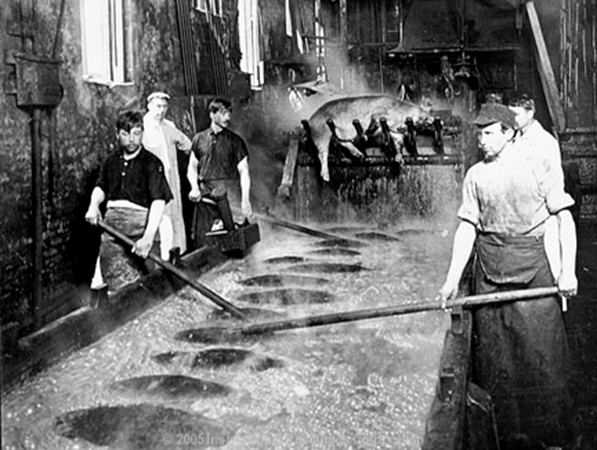
The stench is vomit-making as never before. The fat and plucks, the bladders and kidneys and bungs and guts, gone soft and spongy in the heat, perversely resist being trimmed, separated, deslimed; demand closer concentration than ever, more speed. A helpless, hysterical laughter starts up. Indeed, they are in hell; indeed they are the damned. Steamed, boiled, broiled, fried, cooked. Geared, meshed.

In the hog room,108 degrees. Kerchiefs, bound around their foreheads to keep the sweat from running down into eyes and blinding, become saturated; each works in a rain of stinging sweat. Almost the steam from the vats seems cloud-cool, pure, by contrast. Marsalek falls. A heart attack. (Is carried away, docked, charged for the company ambulance.) Other hearts pound near to bursting. Relentless, the conveyor paces on.

Slow it, we got to slow it. (Tillie Olsen, Yonnondio: From the Thirties, 1974)

American workplaces from the dawn of the industrial revolution to the recent past were living hells for workers.

Novelist and essayist Tillie Olsen described working conditions in meat-packing plants in the 1930s. Others have written about auto assembly lines, mines, textile assembly plants, and food-processing plants. Analysts such as Harry Braverman, in Labor and Monopoly Capital (1974), pointed out that employers have usually sought to control the minds and motions of workers. Profit-making has been seen as tied to controlling every movement of workers, the speed-up of production, and cutting costs for health and safety. After years of labor mobilization, the Occupational Safety and Health Act passed in 1970 to begin to address the problem of how dangerous it was to go to work each day.

Every April 28, workers across North America assemble to remember those workers who died or were injured on the job. Workers’ Memorial Day, initiated in the United States by the AFL-CIO in April, 1989, celebrates the inauguration of the Occupational Safety and Health Administration (1970). Workers’ Memorial Day is about remembrances, reviews of progress toward safety and health, and re-commitment to making the workplace safer.

In April, 2013 the AFL-CIO issued its annual data-based report, “Death on the Job: the Toll of Neglect,” to review the current state of worker health and safety, given the administration of OSHA rules initiated over forty years ago. “Since that time, workplace safety and health conditions have improved. But too many workers remain at serious risk of injury, illness or death as workplace tragedies continue to remind us.” These tragedies have occurred in mines, oil refineries, fertilizer plants, meat-packing plants, manufacturing facilities, and on construction sites.

The AFL-CIO report indicated that 4,693 workers were killed on the job in 2011 (13 workers per day). Over 3.8 million work-related injuries were reported with unofficial estimates of such injuries doubling or tripling that total. Particular sub-groups, such as Latino workers and those born outside the United States, experienced excessively high injury rates, presumably because of their fears of raising safety concerns within the workplace.

The report indicated that workplace inspections had decreased over the years because of budget constraints limiting the hiring of inspectors. Given the numbers, federal OSHA employees could be expected to investigate a workplace once every 131 years and state OSHA inspections can be expected every 76 years. Penalties for workplace violations also are inadequate to deter violations.

The Report indicated that budget allocations for OSHA must be dramatically increased, more laws must be passed to regulate the complex reality of workplace dangers, and worker rights to protest dangerous conditions at the workplace must be strengthened.

This year, Workers’ Memorial Day events will highlight demands to address contemporary issues of concern such as

-defending the OSHA process from political campaigns to reduce workplace regulations.

-requiring employers to establish work-site safety and health programs with worker participation to address enduring hazards.

-adding safeguards against respiratory diseases from silica, combustible dust, and Black Lung.

-protecting workers who seek to challenge workplace safety hazards, particularly for immigrant workers.

-passing more legislation such as the Protecting America’s Workers Act to expand protection for workers not yet covered by OSHA rules.

-increasing worker voices on the job including creating an environment that would allow workers to freely choose to form unions.

Earl Cox, Community Services Liaison, Northwest Central Labor Council, Indiana AFL-CIO, concluded as he announced the 2014 event that legislators must be made aware of workplace health and safety “…so when a vote comes up to slash funding for OSHA, they vote to protect workers and not corporate interests.” The AFL-CIO believes that “safety laws and regulations don’t kill jobs—but unsafe jobs kill workers.”

(For those living in Tippecanoe County, Indiana Workers’ Memorial Day events will occur April 28, Inside the Depot, Riehle Plaza, Lafayette at 5:15 p.m.)


REMEMBER THOSE WHO PROTESTED WAR ALSO!

Harry Targ, Monday 30, 2011

"In a society where it is normal for human beings to drop bombs on human targets, where it is normal to spend 50 percent of the individual's tax dollar on war, where it is normal...to have twelve times overkill capacity, Norman Morrison was not normal. He said, 'Let it stop.' "(a gravesite speech by John Roemer at the funeral of Norman Morrison quoted in Hendrickson, Paul. The Living and the Dead. New York: Alfred Knopf, 1996).

On November 2, 1965, Norman Morrison brought his daughter with him to the Pentagon. Outside the office of Secretary of Defense Robert McNamara, Morrison set himself on fire to protest the escalating war in Vietnam. His daughter, Emily, somehow was passed to others and survived the flames. Morrison, however, died as he had lived, protesting the bombing of villages in South Vietnam, killing innocent men, women, and children.

I was part of an educational tour to Vietnam last March. We were taken to a powerful museum, known as the War Remnants Museum in Ho Chi Minh City. On the second floor an exhibit featured images of international solidarity with the Vietnamese people during the American war. Included there was a framed copy of an American newspaper account of Morrison’s self-immolation. Earlier, in Hue, we had seen an exhibit of the automobile used by a Buddhist Monk, Thích Quảng Đức, who killed himself in protest of the brutality of the Diem regime in South Vietnam. Presumably this act inspired Morrison’s tragic protest.

I had forgotten Morrison’s dramatic act, and the acts of several others who bravely sacrificed their bodies and lives to oppose the murderous war in Vietnam. Today, Memorial Day, 2011 I thought about Morrison, the exhibit at the Vietnamese Museum, and parallel acts of self-sacrifice.

First, on reflection, I am in awe of the courage and self-sacrifice of the acts of these brave and principled people. Yet, I wish they had not made the ultimate sacrifices they did and had put their courage and willingness to sacrifice to the long-term struggles of the peace movement to end war.

However, I believe we must “take back” Memorial Day from those who celebrate war, see sacrifice only from those who kill and die, and ignore the bravery of the men and women everywhere who fight to end war. We mourn those who were sent off to fight in ignoble wars in the name of the United States. Also we must declare Memorial Day as a day to remember all the Norman Morrison’s who have said “no” to war and empire.


Tuesday, May 24, 2022

CONNECTING FOREIGN POLICY TO DOMESTIC NEEDS

Harry Targ


As the tragedy of the Russian invasion and the devastation of Ukraine unfold, the war machines (policymakers, arms manufacturers, educators, media propagandists) of various countries-Russian, NATO alliance partners, and the US-ramp up their calls for more war. These advocates for more violence, more nuclear threats, and more great power chauvinisms increasingly take center stage. Rumors of “back channel” negotiations are demeaned. Feelers for negotiation articulated by key leaders are ignored.  And hints of negotiations and compromises and concessions are ridiculed. Finally, any suggestions that China, an “authoritarian state” could play a role in deescalating the crisis are condemned.

And, in the midst of the escalating tensions and finally the Russian invasion of Ukraine, the significant Biden program of substantial social, economic, and environmental changes has been allowed to flounder and die. Now Congress and the Administration eagerly legislate more money for the military and more money for our beleaguered Ukrainian ally (the latest over $40 billion) and increasingly remind the population that China, the real enemy, is lurking in the global background. Biden’s efforts this week to resuscitate an Asian trade bloc and warnings about the US commitment to defend Taiwan are the most recent examples. Health care, debt relief for students, shifts to a Green Jobs Agenda, tax reform, raising the minimum wage all need to be put off for another day.

Last year the New Poor Peoples Campaign showed in an informative flyer how money projected for the military could be used for human needs. 

https://ips-dc.org/wp-content/uploads/2021/12/PPC-BBB-fact-sheet.pdf

And elsewhere the NPPC pointed out that:

“Since Vietnam, the United States has waged an ongoing war against diffuse enemies, siphoning massive resources away from social needs. Out of every dollar in federal discretionary spending, 53 cents [go] towards the military, with just 15 cents on anti-poverty programs.”


Many of us remember the dramatic policies proposed, some implemented, of the Great Society. And twenty-five years earlier, during World War and before “the Great Society,” Henry Wallace, spoke of the the prospect of creating the “Century of the Common Man,” the absence of war, social and economic justice, and freedom. President Roosevelt called for a “New Economic Bill of Rights,” in 1944 embodying economic security and justice for all, and even Harry Truman advocated for a national health care system.

And what happened every time, the 1940s, the 1960s, the 1990s, and now-threats of war, demands for preparations for war, escalating military expenditures. The tragedy of how war and the mythology of its inevitability is vividly reflected in the defeat of the Great Society programs.

In sum, since the establishment of the permanent war economy in the 1940s millions of proclaimed “enemies” have been killed and seriously injured, mostly in the Global South. Permanent physical and psychological damage has been done to U.S soldiers, predominantly poor and minorities as they too are victims of war.

In addition, military spending has distorted national priorities and invested U.S. financial resources in expenditures that do not create as many jobs as investments in construction, education, or healthcare. And, as Andrew Bacevich, Seymour Melman and others have called it, “the permanent war economy” has created a culture that celebrates violence, objectifies killing, dehumanizes enemies, and exalts super-patriotism through television, music, video games, and educational institutions.

There is no doubt that there is an inextricable connection between war-making abroad and human suffering at home. Now is the time for peace and justice movements to act on these connections.


Monday, May 16, 2022

Diplomacy not War: Relevant to Stopping the Ukraine War?

WHERE SHOULD THE PEACE MOVEMENT STAND? IMPERIALISM, WAR, AND/OR DIPLOMACY


Originally posted August 2, 2015

Harry Targ

“Not every conflict was averted, but the world avoided nuclear catastrophe, and we created the time and the space to win the Cold War without firing a shot at the Soviets…. Now, when I ran for president eight years ago as a candidate who had opposed the decision to go to war in Iraq, I said that America didn’t just have to end that war. We had to end the mindset that got us there in the first place. It was a mindset characterized by a preference for military action over diplomacy, a mindset that put a premium on unilateral U.S. action over the painstaking work of building international consensus, a mindset that exaggerated threats beyond what the intelligence supported.” (Barack Obama, “Full text: Obama gives a speech about the Iran nuclear deal,” The Washington Post, August 5, 2015).

The peace movement has often been faced with a dilemma. Should it channel its energies in opposition to imperialism, including economic expansion and covert operations, or should it mobilize against war, or both. The problem was reflected in President Obama’s August 5, 2015 speech defending the anti-nuclear proliferation agreement with Iran.  On the one hand he defended diplomacy as the first tool of a nation’s foreign policy and on the other hand his defense included the argument that through diplomacy the United States “won” the Cold War, and thereby defeated a bloc of states that opposed capitalist expansion. The implication of his argument was that pursuing imperialism remained basic to United States foreign policy but achieving it through peace was better than through war.

The speech was presented at American University 52 years after President Kennedy called for peaceful competition with the former Soviet Union. In June, 1963, nine months after the Cuban Missile Crisis, which nearly led to nuclear war, and weeks after Soviet leader Nikita Khrushchev’s call for “peaceful coexistence,” President Kennedy responded by urging the use of diplomacy rather than war in the ongoing conflict with the Soviet Union. 

A small but growing number of scholars and activists at that time had begun to articulate the view that the threat of nuclear war, growing U.S. involvement in Southeast Asia, and repeated covert interventions in Guatemala, Iran, Cuba, and the Congo, had to do with U.S. imperialism. The dilemma for the peace movement in 1963 then as it is in 2015 is how to respond to United States imperialism at the same time as supporting the use of diplomacy to forestall wars.

In the context of political discourse in 2015, dominated by “neoconservative” and “humanitarian interventionist” factions of the foreign policy elite, the danger of war always exists. Therefore, any foreign policy initiative that reduces the possibility of war and arguments about its necessity must be supported. The agreement with Iran supported by virtually every country except Israel constitutes an effort to satisfy the interests of Iran and the international community and without the shedding of blood and creating the danger of escalation to global war. 

Neoconservatives, celebrants of war, have had a long and growing presence in the machinery of United States foreign policy. James Forrestal, the first Secretary of Defense in the Truman Administration, was a leading advocate for developing a militaristic response to the Soviet Union in the years after World War II. As historian Andrew Bacevich pointed out, Forrestal was one of the Truman administrators who sought to create a “permanent war economy.” He was, in Bacevich’s terms, a founding member of the post-World War II “semi-warriors.”

Subsequent to the initiation of the imperial response to the “Soviet threat”--the Marshall Plan, NATO, wars in Korea and Vietnam, the arms race--other semi-warriors continued the crusade. These included the Dulles brothers (John and Alan), Air Force General Curtis LeMay, and prominent Kennedy advisors including McGeorge Bundy and Walter Rostow, architect of the “noncommunist path to development,” in Vietnam.

Key semi-warriors of our own day, Donald Rumsfeld, Dick Cheney, Elliott Abrams, Robert Kagan, and others who formed the Project for a New American Century (PNAC) in the 1990s, gained their first experience in the administrations of Richard Nixon and Ronald Reagan. The PNAC view of how the United States should participate in world affairs is to use military superiority to achieve foreign policy goals. The key failure of Clinton foreign policy, they claimed, was his refusal to use force to transform the world. For starters, he should have overthrown Saddam Hussein in Iraq.

The neoconservative policy recommendations prevailed during the eight years of the George Walker Bush administration. International organizations were belittled, allies were ignored, arms control agreements with Russia were rescinded and discourse on the future prioritized planning for the next war. And concretely the United States launched long, bloody, immoral wars in Iraq and Afghanistan.

Humanitarian interventionists, more liberals than conservatives, argued that the United States should use force, but more selectively, to achieve various goals. These goals included interventions that allegedly defended the quest for human rights. Advocates of humanitarian interventionism argued that the United States must use all means available, military and diplomatic, to maximize interests and values. And force need not be the first or only instrument of policy. 

But in the end the humanitarian interventionists encouraged bombing Serbia, intervening in a civil war in Libya, funding rebels perpetuating war in Syria, expanding military training and a U.S. presence in Africa, and funding opposition elements against the government in Venezuela. In addition, with advice from humanitarian interventionists, the United States increased the use of drones to target enemies of U.S. interests in East Asia, the Persian Gulf, and the Middle East.

Neoconservatives and humanitarian interventionists (and in earlier times anti-communists) have led the charge for war-making in the United States since World War II. Between the end of the war and the 1990s, 10 million people died in wars in which the United States had a presence. Hundreds of thousands of young men and women serving in the armed forces of the United States have died or been permanently scarred by U.S. wars. And the physical landscape of Southeast Asia, the Persian Gulf, Central America, and the Middle East has been devastated by war. And in the United States, foreign policy elites, politicians, and think tank experts still advocate violence to address international problems. 

Therefore, in the context of a huge arms industry and global economic and political interests, any presidential initiative that uses diplomacy rather than force, declares its opposition to unilateral action, and challenges the war mindset deserves the support of the peace movement. Given the long and painful United States war system, the battle to secure the agreement between the P5 plus 1 nuclear agreement with Iran is worthy of support.

The Russian invasion of Ukraine is deplorable and the issues between all contending parties are more intractable today than the negotiations with Iran referred to above. However, Russia’s engaging in violence and destruction, and the United States and NATO supplying arms to Ukraine, can only lead to more death, hunger, and the danger of escalation to nuclear war.


Saturday, May 14, 2022

ON GRADUATED RECIPROCATION IN TENSION REDUCTION (GRIT)

Harry Targ

Secretary of State Anthony Blinken endorses negotiations between contending nations in Africa, the Democratic Republic of Congo and Rwanda August 9, 2022

And the Ukraine?

“The United States is doing everything it can to support the very important African-led mediation efforts, in particular the processes that are being led by Kenya and Angola, to bring peace, security and stability to the eastern Congo. We are not only following this very closely and carefully, we’re engaged in it,” he said. (Jean-Yves Kamale “Blinken calls for end to Congo violence, backs negotiations” Associated Press, August 9, 2022.)


"Defense Secretary Lloyd Austin spoke with Russian defense minister Sergey Shoygu on Friday, marking the first time the two have spoken since before Moscow’s invasion of Ukraine began."  (The Hill, May 13,2022).

As a Marxist teaching Peace Studies I always made light of sections of my course and text that dealt with bargaining and negotiation.

However, reflecting on the war in Ukraine and the seething tensions and competing arguments (even among us on the left) I was drawn to this bargaining and negotiation literature I long since forgot. Why? Because I do believe the first priority of the peace movement should be to organize around stopping the killing. We can put off for now debates over the role of NATO, great power chauvinism, self-determination of Ukrainians including those in the Donbas region, and the role or not of neo-Nazi's. In my opinion the first priority is how to get the killing to stop, hopefully coupled with a withdrawal of Russian troops from Ukraine.

So I recalled the writings and research of a social psychologist, Charles Osgood, who developed his strategy of Graduated Reciprocation in Tension Reduction or GRIT. He claimed it worked during the Cuban Missile Crisis and others have claimed that it has worked in other conflict situations such as US/Iranian negotiations. https://savinghumans.wordpress.com/2014/05/21/building-a-spiral-of-trust-through-grit/

GRIT’s basic point is to get one side, in this case US/NATO/Ukraine, to make some serious but not risky unilateral moves inviting the other side to reciprocate. (And that is where peace movement activism and demands come in.) And such de-escalatory moves should be continued but not to endanger the security of the initiating party. (And the conversation between Secretary of Defense Lloyd Austin and Russian Defense Ministery Sergey Shoygu may be a start).

Hopefully, Osgood would have suggested, the Russians would eventually stop the killing, perhaps order troops in place, and/or pull back some troops.  One critical goal would be to get a number of nations to send representatives to negotiate a ceasefire and further tension-reduction. In this case the Minsk Accords might be a starting place.

GRIT may not work, but in my opinion it is worth a try. And if one looks at the GRIT strategy for tension-reduction US policy is now doing just the opposite; that is the US is escalating by word and deed more threats, more demands, more arms, and more calls for expanding the scope of the conflict.

So, while social psychology is not political economy or realpolitik, it might help end the killing. And we all agree that is the first priority for the Ukrainians and is vital for reducing, rather than increasing, the threat of global nuclear war.

http://psychology.iresearchnet.com/social-psychology/antisocial-behavior/grit-tension-reduction-strategy/


Saturday, May 7, 2022

NATO'S HIDDEN HISTORY: A RADIO BROADCAST AT WORT-FM, MADISON, WISCONSIN


NATO’s Hidden History

MAY 5, 2022 BY A PUBLIC AFFAIR

For today’s show, Thursday host Allen Ruff turns his attention to the history of NATO with political scientist Harry Targ.

https://www.wortfm.org/harry-targ-nato-history/

They discuss the war in Ukraine, imperialism, the “global NATO,” and Harry’s recent article in CovertAction Magazine, “Peace Movement Needs to Demand Dismantling of NATO.”

Harry Targ is a peace activist and emeritus professor of political science at Purdue University, where he taught foreign policy, US–Latin American relations, international political economy, and topics on labor studies. He blogs at Diary of a Heartland Radical.


Did you enjoy this story? Your funding makes great, local journalism like this possible. Donate here

The Bookshelf

CHALLENGING LATE CAPITALISM by Harry R. Targ

Challenging Late Capitalism