Sunday, March 19, 2023

Remembering the early years of the Iraq War

 WHY THE WAR ON IRAQ AND WHAT SHOULD CITIZENS DO ABOUT IT?

Harry Targ, Iraq Public Forum-January 19, 2006. Purdue University
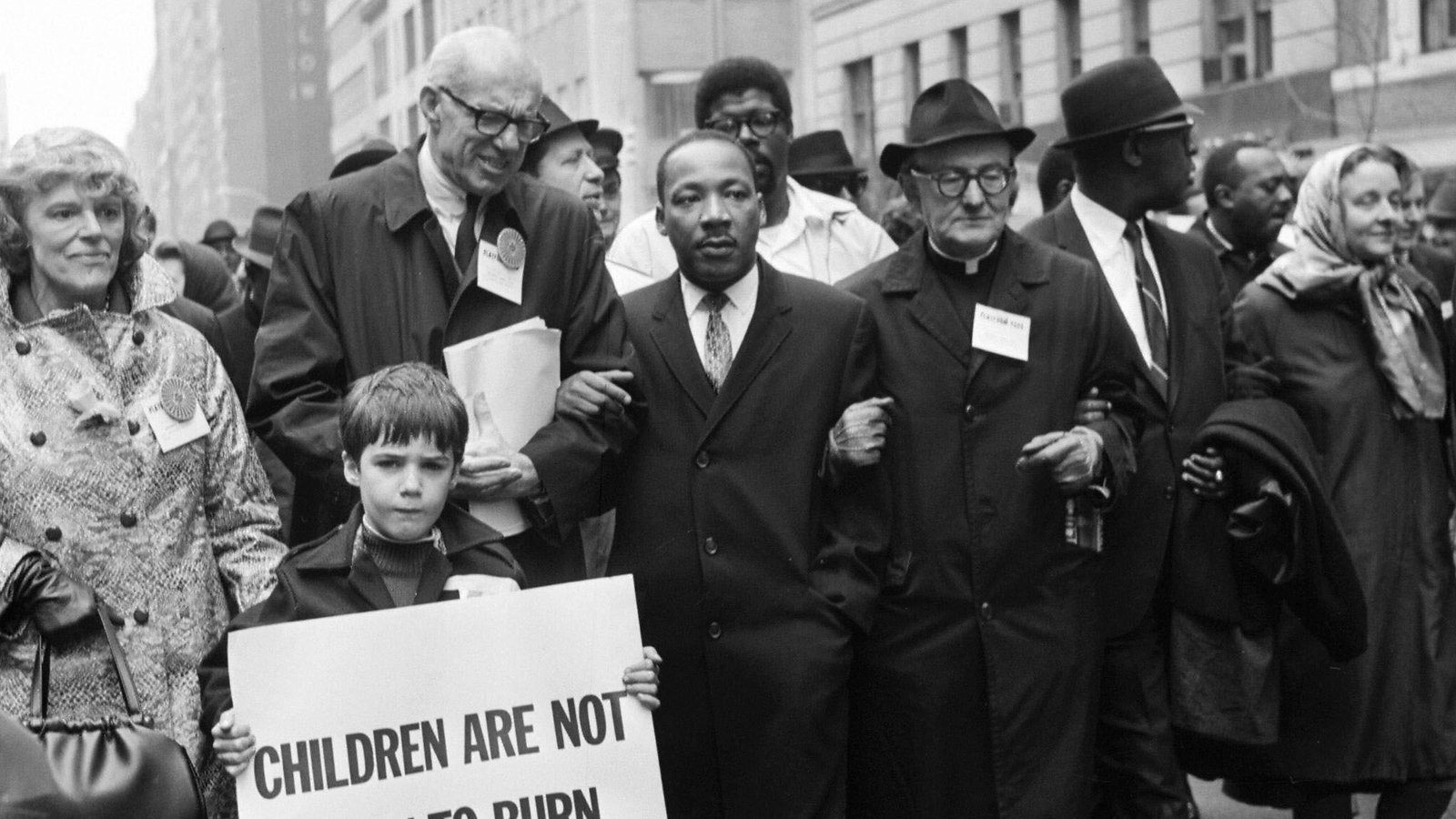


At a critical juncture in the escalation of the Vietnam War, Dr. Martin Luther King Jr. spoke at the Riverside Church on April 4, 1967 describing the fundamental connections between war overseas and poverty at home:

Somehow this madness must cease. We must stop now. I speak for those whose land is being laid waste, whose homes are being destroyed, whose culture is being subverted. I speak for the poor of America who are paying the double price of smashed hopes at home and death and corruption in Vietnam. I speak as a citizen of the world, for the world as it stands aghast at the path we have taken.”

I would like to speak tonight about what has motivated United States foreign policy in the 20th century, what Dr. King called “this madness,” and what motivates the policy today in Iraq, Afghanistan, and across the globe. . I would like to say some things about the impacts this policy has on Iraqis and other peoples who have been the target of our attention and also on the people of our own country. Finally, I would like to discuss short and long-term foreign policy alternatives, we, as citizens must embrace to challenge “this madness.”

First, according to historians such as William Appleman Williams, the United States has pursued dominant influence in the world ever since the 1890s. After conquering the North American continent and exterminating its inhabitants, American policy has been shaped by the pursuit of markets, invest opportunities, cheap labor, and vital natural resources, in short profit.

With the expansion of industrial capitalism, securing access to cheap oil became particularly important. From agreements with the ruling oligarchy in Saudi Arabia during World War 11, to the overthrow of Mohammed Mossadegh in Iran for nationalizing his countries oil, to the severing of relations with an radical Iraqi regime in 1958, to the wars against Iraq in 1991 and 2003, oil has figured prominently in U.S. policy. 

And as historian Loren Baritz has argued, U.S. policymakers have defined these economically driven global and interventionist policies in moral terms. President Truman spoke of the threat of totalitarian communism to the free world in his famous Truman Doctrine speech of March 12,1947. One week earlier, in a less familiar speech at Baylor University, he asserted that economics and foreign policy were inextricably connected and that the United States was committed to creating a global market economy in the post-war world..  Thirty-five years later President Reagan, borrowing from our Puritan ancestors, that the United States was a “city on a hill.” We were destined by God to transform the world. President Clinton also mixed economics and morality repeatedly reiterating his commitment to create “market democracies” around the world.  

The impacts of this century long search for what Williams called, “the Open Door,” the drive to economically penetrate the globe has meant pain, suffering, and waste for peoples everywhere including the United States. U.S. marines invaded Central American and the Caribbean some 25 times between 1900 and 1933. During the fifty years since World War 2 the U.S. has threatened to use force or send troops on at least 40 occasions, spent $3 trillion on the military, participated in wars between 1945 and 1995 in which 10 million people died, and lost at least 100,000 of its own soldiers killed in action with 10 times than that t number becoming casualties.

It was in this historical context, that President Bush responded to the terrorist attack on 9/11 by launching  a new global crusade, replacing communism with a “war on terrorism,” and justifying  “preemptory” attacks on any country or people we would define as a possible threat to U.S. national security. The Pentagon defined an “arc of instability” running from the northern parts of South America through North Africa, the Middle East, the Persian Gulf, and East Asia. They said the United States had to develop small, mobile military bases all across the globe (Chalmers Johnson estimated some 700 bases existed in 60 countries) with new technologies that would make the U.S. fighting force more capable of quickly intervening in self-defined trouble spots. Successful operations in Afghanistan and Iraq would solidify the presence, power, and control of strategic resources and institutionalize this strategy of “last remaining superpower.”

The policies during the Clinton Administration differed in tactics but not in substance. It  sought to increase the U.S. presence in the Gulf by starving the Iraqi regime of Saddam Hussein. Economic sanctions  led to a 60 percent decline in the GDP of the country and the economic embargo cost the lives of about one million Iraqis, mostly children under the age of five. However, supporters of the lobby group, Project for the New American Century (PNAC), including Dick Cheney, Paul Wolfowitz, Donald Rumsfeld, Scooter Libby, and other Bush policymakers, demanded that Clinton do more, make war on Iraq. As soon as 9/11 happened, these neo-conservatives launched a campaign to convince President Bush to make war on Iraq even though the latter had nothing to do with 9/11 and everyone, from the CIA, to the media, to UN inspectors, knew that Iraq, after a decade of US and British bombing, economic sanctions, and rigorous inspections had no weapons of mass destruction.


Secretary of State Colin Powell speaking 
before the United Nations claiming Iraq was developing weapons of mass destruction.

The war on Afghanistan began in October, 2001 and the war in Iraq in March 2003. The impacts (from 2001 to 2006 alone) are devastating:

-Experts estimate that the costs of the war in Iraq could exceed $700 billion; with operational costs per month topping $5.6 billion. 2006 DOD spending will approach $600 billion.

 -Maintaining current force levels in Iraq and Afghanistan would require doubling the federal budget deficit over the next decade.

-210,000 of the National Guard’s 330,000 soldiers have served in Iraq and Afghanistan, with mobilizations averaging 460 days.

 -Almost 30,000 Iraqi civilians have been killed in the war; about 100,000 wounded.

 -155 Iraqi security forces have died every month since January, 2005 and at least 50 suicide attacks have occurred per month.

 -Over 2,200 U.S. soldiers have died in Iraq and about 14,000 wounded.

-Four supplemental spending bills for Iraq totaling $204.4 billion could have purchased any of the following: 46 billion uninsured people receiving health care; the salaries of 3.5 million elementary school teachers; 27 million places for Head Start children 1.8 million housing units, 24,000 new elementary schools; 39 million university scholarships, or 3.2 million port container inspectors. And what could this money have done to rebuild the Gulf Coast.

And for all the human suffering brought on by this needless war, the Iraqi adventure is a quagmire: resistance to U.S. occupation has grown enormously; foreign terrorists apparently are operating in the country who were not their before March, 2003; and ethnic tensions and violence have increased. The efficacy of international organizations has been undermined by the U.S. rejection of diplomacy. And the United States is hated all around the world. And despite the glowing reports about elections and construction projects, peace will not have a ghost of a chance of arriving in Iraq until the United States ends its military occupation.

What can we do about this “madness?” Citizens must increase their opposition to this war. They must demand that the United States begin a phased withdrawal, over a short time, of all U.S. troops from Iraq. This process should be done in conjunction with negotiations with sectors of the discernable Iraqi resistance, active diplomatic intervention of the Arab League or the Organization of the Islamic Conference, and UN peacekeepers. US phased withdrawal should involve moving troops from the center of Iraq to border areas, downsizing the U.S. embassy, establishing an economic reconstruction fund, hiring Iraqi construction firms to complete the rebuilding of the country, dismantling U.S. military bases, and making it clearer that Iraqis will gain control of their oil. This “Policy of Phased Withdrawal” will not guarantee immediate peace and tranquility. Nor will it necessarily reduce all tensions between Kurds, Shias, and Sunnis. What it will do is extricate the United States, the number one motivation and target of violence in the country.

And in the long run, Americans must pressure their leaders to embrace foreign and domestic policies that promote peace and justice. At the time of his assassination Dr. King was organizing a Poor People’s Campaign, a mass movement to end war, racism, and economic misery. That project still needs to be completed.

**********************************************************************

And Twenty Years Since the Iraq War began: COSTS OF THE U.S.-LED WAR IN IRAQ, 2003-2023

“March 19-20, 2023 marks 20 years since United States forces invaded Iraq to oust dictator Saddam Hussein, under the false claim that his regime was manufacturing weapons of mass destruction. The ensuing war, in which U.S. ground presence peaked in 2007 with over 170,000 soldiers, caused massive death, destruction, and political instability in Iraq. Among the consequences was the increase of sectarian politics, widespread violence and the rise of the Islamic State militant group with its terror attacks throughout the Middle East. Though the U.S. government officially ended its Iraq war in 2011, the repercussions of the invasion and occupation as well as subsequent and ongoing military interventions have had an enormous human, social, economic, and environmental toll. An estimated 300,000 people have died from direct war violence in Iraq, while the reverberating effects of war continue to kill and sicken hundreds of thousands more.” https://watson.brown.edu/costsofwar/2022/IraqWarCosts


Thursday, March 16, 2023

Warmaking, Cognitive War, and Branding Reality


We live in a World of Cognitive Warfare

 A recent document prepared by the North Atlantic Treaty Organization (NATO)  suggested that “in cognitive warfare, the human mind becomes the battlefield. The aim is to change not only what people think, but how they think and act. Waged successfully, it shapes and influences individual and group beliefs and behaviors to favor an aggressor's tactical or strategic objectives.”

https://www.nato.int/docu/review/articles/2021/05/20/countering-cognitive-warfare-awareness-and-resilience/index.html)

This NATO document, of course, is addressing the world of international relations but the concept of “cognitive warfare” seems to parallel efforts “to change not only what people think, but how they think and act.” This project animates the efforts of media conglomerates-print, electronic, social media platforms. Changing how people think and act has its historic roots in campaigns to convince citizens to support wars, consume cigarettes, forget climate disasters, and to find flaws in populations because of class, race, gender, sexual preference, and/or religion. Creating images of enemies is central to launching wars. The processes of “branding” are similar in all realms of human experience.


Perhaps challenging the process of “branding” should be on the agenda for all those who seek a more humane society. Break up “branding machines.” Democratize the ability to describe and express experiences. And, in the educational sphere, teach students to analyze brands and to evaluate their relative accuracy.

Sunday, March 5, 2023

REMEMBERING BERENICE CARROLL: FEMINIST, PEACE ACTIVIST (December 14, 1932 – May 10, 2018)

Structural Violence, the Cult of Power, and Peace Studies:  Relevance for the 21st Century

Harry Targ


(A version of this article was originally presented at a Symposium in Honor of Berenice A. Carroll called “Pen and Protest: Intellect and Action”, November 17, 2007)

 “The ideas of the ruling class are in every epoch the ruling ideas, i.e. the class which is the ruling material force of society is at the same time its ruling intellectual force.” Marx’s prescient comment in the German Ideology was relevant in 1972 when Berenice Carroll published her provocative article called “Peace Research: The Cult of Power." Berenice’s analysis of the reification of power and what it means for scholarship and action remains particularly important for our own time.  

Dominant Paradigms and the Study of the Cold War

If we think back to the time when “The Cult of Power” was written dominant paradigms in international relations, political science, and history continued to reify power as the central concept driving political analysis. The world was understood as one dominated by two superpowers overseeing two competing power blocs. The bipolar world was a particular variant of the state system that was created in the seventeenth century. The ultimate units of analysis were separate and distinct nation-states. Since a few were more powerful than all others, which was always the case, international relations became the study of powerful states. The arms race of the post-World War II period concerned some analysts of international relations, so they fashioned peace research that was committed to conflict management or resolution among the big powers.

This scholarly lens on the world seemed increasingly divorced from political reality. The dreams of human liberation that came with the rapid decolonization of the African continent were being derailed as what Kwame Nkrumah called “neo-colonialism” replaced formal colonialism. Gaps between rich and poor peoples and nations began their steep climb. Covert operations, military coups, big power interventions in poor countries increased. Wars ensued against peoples in South and East Asia, the Middle East, Africa, and Latin America. And multinational corporations were spreading their operations all across the globe, initiating the first great wave of outsourcings of production and jobs. For many Americans and Asians, the most wrenching experience of all these manifestations of global disarray was the Vietnam War.

In this historical context, radical peace researchers began to argue that our understanding of these phenomena required a significant paradigm shift. If we wanted to understand the world in order to change it we needed to break out of the state centric, great powers, conflict management conception of international relations. We needed to develop theories and prescriptions that helped us understand the world we lived in so that we could work on the reduction of the enormous gaps between human potential and human actuality; and, therefore, human violence.

These peace researchers called structural violence, the difference between how humanity could live, secure in economic and social justice, versus how most people live. They asked questions about the structures and processes that prohibited the full realization of human possibility. Peace researchers also saw an inextricable connection between direct violence, or killing which was the more traditional subject of peace research, and structural violence, which involved the institutionalization of human misery.

Further, they hypothesized that there were connections between imperialism, dominance and dependence, the workings of capitalism, patriarchy, institutionalized racism, social and economic injustice and both direct and structural violence.

More specifically, radical peace researchers began to see that both direct and structural violence were the resultants of a global political/economic/ and cultural system in which Centers of Power within and between countries controlled and exploited Periphery countries and people. A system of imperialism existed whereby ruling classes in core countries collaborated with ruling classes in peripheral countries to exploit masses of people. This was a system that had its roots in the rise of capitalism out of feudalism. It was a system of imperial rule. It was a system of patriarchy. It was a system of institutionalized racism. And wars were the result of struggles for imperial control and domination. Radical peace researchers borrowed ideas from dependency theory and grafted them onto traditional theories of imperialism to offer an alternative paradigm to the state-centric, power driven model that dominated the academy and political punditry.

The Cult of Power

Berenice Carroll added to the emerging paradigm shift in her article “Peace Research: The Cult of Power,” by deconstructing the use of “power” as the concept central to the traditional paradigm. Also she alerted peace researchers to the implicit acceptance in their work of the cult of power. Perhaps most importantly, Carroll offered an alternative conception of power that would radically redirect study in a way to link the “pen to protest.” 

In her seminal article, Professor Carroll pointed out that virtually all theories of international relations began with a conception of power. And the power variable had seeped into the public consciousness of world affairs as well. In its contemporary usage “power” referred to control, dominance, and the ability to shape the consciousness and behavior of others; individuals, groups, and/or nations. 

The dean of international relations study in those days was Hans Morgenthau, who wrote the classic international relations text, Politics Among Nations, which went through eleven editions from its first imprint in 1949 until the 1970s. Morgenthau said that power was central to human affairs: ‘Power is the control of the minds and actions of others,” and “international politics like all politics involves the struggle for power.” 

Carroll pointed out that theorists sometimes defined power as the ability to dominate. Sometimes they defined power as the instrumentalities of control (such as military capabilities). Sometimes they defined power as a perceived status ordering of nations. But what was central here was control and domination. And as long as the ability to control and dominate were unequally distributed only those with the greatest power were worthy of attention.


Berenice reminded us that there used to be definitions of power in public discourse that emphasized liberation rather than control. These older definitions included words like strength, competence, rigor, energy, empowerment, the ability to actualize. To quote Berenice, “Thus it appears that the currently predominant understanding of power as control and dominance is a development of recent decades. The more traditional meaning centered on the idea of ability and strength.” 

She went on to warn radical peace researchers that while they clearly had a better grasp of reality, they too reified power in the modern usage. She suggested that peace researchers failed to “…challenge the prevailing conception of power as dominance; its preoccupation with institutions, groups or persons which are perceived as powerful, and to some extent also in a tendency for the researcher to identify with those institutions, groups, or persons which are seen as powerful;” that is the elites, the key decision makers, the nation-states and the superpowers. The danger, she implied, is that we, the most progressive of scholars and activists, may be inadvertently embracing the conceptual tools that reinforce the status quo rather than take sides for social change.

To illustrate her point in a way relevant to both peace and (I would add) feminist theory, Carroll offered a vivid quote from a distinguished scholar of that time Karl Deutsch who wrote:

 "Today, and for one or more decades to come, the nation-states are and will be the  world’s main centers of power. They will remain such centers as long as the  nation-state remains man’s foremost practical instrument for getting things done.”

What implications for peace and feminist theory did Professor Carroll suggest should be deduced from this “cult of power?” First, scholar/activists needed to reject the notion that power represents dominance. Second, scholar/activists needed to broaden their research lens from focusing on so-called powerful institutions, like the nation-state, or decision-making elites and begin to examine the entirety of the social/political/ and cultural terrain. Third, scholar/activists needed to utilize the older conception of power as actualization, competence, assertion of rights; in other words a vision of power that understands that historical change is a complicated affair involving masses of people not ordinarily studied or valued by contemporary scholarship. Fourth, scholar/activists needed to reject a frame on reality, accepted even by the more radical, that presents history as  the struggle between the powerful and victims and which portrays people as impotent to assert their rights and prerogatives. (Discourse in the academy is particularly good at framing political reality such that people are powerless, or ignorant, or lacking in resources to assert themselves, or are in the end the cause of their own victimhood. This projection is particularly strong among those who never set foot off the college campus as they pontificate about the behavior of the people).

Summing this up, Professor Carroll writes”

“…one of the most pernicious effects of the cultist conceptions of power is that it has built up a strong association between the lack of power in the sense of  dominance and powerlessness in the sense of helplessness…To break out of this mold what seems most urgently needed is to restore to public consciousness and  to the consciousness of scholars the idea of power as competence; to develop that  idea more fully by differentiating the kinds of energy, ability, and strength which it may imply and, in particular, to seek to study powers of the allegedly  powerless-the kinds of competence and potentialities for autonomous action which are available to those who do not have the power of dominance….”


Where are we today?

It seems to me that Professor Carroll’s argument is as critical to us as peace researchers, feminists, worker rights activists, anti-racist activists, and, indeed, all social justice activists today. While the academic world is perhaps more complicated today and there are manifestations of a theoretical diversity that may not have been as developed in 1972, I would argue that the main lines of “the cult of power” argument still hold. Power is reified in our academic disciplines. Top-down models of human experience still predominate in the social sciences and humanities. For most fields non-elites remain voiceless and invisible. At best they are presented as victims, not actors on the world stage. Academic paradigms, whether consciously conceived or not, therefore project a profound pessimism about social change and human possibility. And, for some scholars, the victims become the cause of their own victimhood. The most well meaning of us as scholars and concerned citizens present a view of the world that demeans and discourages the vast majority of humankind.

Where do we go from here?

1)We need in our scholarship to emphasize the centrality of workers, women, people of color, and all so-called marginalized people as shapers of history, or at least to recognize their role in creating history.

2)We need to engage in research projects that might help the voiceless gain a voice, the powerless to increasingly and more effectively shape their own destiny, and individuals, groups, and classes gain self-confidence and strength in their social projects.

3)We need to extend our scholarship to the study and celebration of those who have chosen the path to empowerment and the evaluation of their relative successes and failures. This would not be an exercise in romanticism but rather an exercise in developing a more sophisticated understanding of history and change.

4)We need to build our theories and our research skills through active engagement in the process of social change. Theoretical validation comes from engagement not withdrawal.

5)We need to relate models of empowerment to all sectors of society. We cannot embrace the issue of competence, strength, and self-actualization for one constituency and use traditional models of domination to try to understand other parallel constituencies. Here is where understanding the connections between class, race, and gender play a particularly important role.

Berenice Carroll ended her ground-breaking article by quoting Hannah Arendt:

“It is only after one eliminates this disastrous reduction of public affairs to the business of domination, that the original data in the realm of human affairs will appear or rather reappear in their authentic diversity.”


Tuesday, February 28, 2023

FACES OF THE ENEMY: To Pursue War Governments and Their Media Create Enemies

Harry Targ


 https://vimeo.com/ondemand/fote

We live in a World of Cognitive Warfare

 A recent document prepared by the North Atlantic Treaty Organization (NATO)  suggested that “in cognitive warfare, the human mind becomes the battlefield. The aim is to change not only what people think, but how they think and act. Waged successfully, it shapes and influences individual and group beliefs and behaviors to favor an aggressor's tactical or strategic objectives.”

https://www.nato.int/docu/review/articles/2021/05/20/countering-cognitive-warfare-awareness-and-resilience/index.html)

This NATO document, of course, is addressing the world of international relations but the concept of “cognitive warfare” seems to parallel efforts “to change not only what people think, but how they think and act.” This project animates the efforts of media conglomerates-print, electronic, social media platforms. Changing how people think and act has its historic roots in campaigns to convince citizens to support wars, consume cigarettes, forget climate disasters, and to find flaws in populations because of class, race, gender, sexual preference, and/or religion. Creating images of enemies is central to launching wars. The processes of “branding” are similar in all realms of human experience.

Perhaps challenging the process of “branding” should be on the agenda for all those who seek a more humane society. Break up “branding machines.” Democratize the ability to describe and express experiences. And, in the educational sphere, teach students to analyze brands and to evaluate their relative accuracy.

*******************************************************

In August 2, 1964, North Vietnamese armed motor boats attacked two U.S. naval vessels off the coast of North Vietnam. The administration of Lyndon Johnson defined the attacks as an unprovoked act of North Vietnamese aggression.


Two days later it was announced that another attack on U.S. ships in international waters had occurred and the U.S. responded with air attacks on North Vietnamese targets. President Johnson then took a resolution he had already prepared to the Congress of the United States. The so-called Gulf of Tonkin resolution declared that the Congress authorizes the president to do what he deemed necessary to defend U.S. national security in Southeast Asia. Only two Senators voted "no." Over the next three years the U.S. sent 500,000 troops to Vietnam to carry out a massive air and ground war in both the South and North of the country.

Within a year of the so-called Gulf of Tonkin incidents, evidence began to appear indicating that the August 2 attack was provoked. The two U.S. naval vessels were in North Vietnamese coastal waters orchestrating acts of sabotage in the Northern part of Vietnam. More serious, evidence pointed to the inescapable conclusion that the second attack on August 4 never occurred.

President Johnson's lies to the American people about the Gulf of Tonkin contributed to the devastating decisions to escalate a U.S. war in Vietnam that cost 57,000 U.S. troop deaths and upwards of three million Vietnamese deaths.

Forty years later, George W. Bush and his key aides put together a package of lies about Iraq- imports of uranium from Niger, purchases of aluminum rods which supposedly could be used for constructing nuclear weapons, development of biological and chemical weapons, and connections between Saddam Hussein and Osama Bin Laden.

As the Vietnamese and Iraqi cases show, foreign policies built on lies can lead to imperial wars, huge expenditures on the military, economic crises at home, and military casualties abroad.

Now is the time for the American people to insist that their leaders tell the truth about the U.S. role in the world. The same goes for peoples everywhere.

UNESCO on War

Since wars begin in the minds of men (and women), it is in the minds of men (and women) that the defenses of peace must be constructed'.” (The first sentence of the Preamble to UNESCO's Constitution is translated into nine languages and carved in stone on a monument erected at the UNESCO headquarters in Paris).

https://www.nonviolenceny.org/post/culture-of-peace-and-peacebuilding


Friday, February 17, 2023

Imperial Decline and the Threat of a New Cold War With China

 Revisiting a Book Review in the Context of Rising Tensions

Harry Targ

Alfred McCoy, In the Shadows of the American Century: The Rise and Decline of US Global Power, Haymarket Books, 2017.


Researchers affiliated with the Bulletin of the Atomic Scientists who regularly assess the danger of nuclear war declared that the probability of nuclear war has increased over the last year. Using their “doomsday clock” as a metaphor the dial was recently moved to 100 seconds to midnight; midnight signifying the onset of nuclear war. The scientists believe that the danger of nuclear destruction and devastating climate disaster is greater now than at any time since the early 1980s.

The context for this grim prediction is well-reflected in a 2017 book  by University of Wisconsin historian Alfred McCoy, In the Shadows of the American Century.  The author describes the twentieth century emergence of the US as the global hegemonic power based upon economic superiority and overwhelming military power. However, this economic and military dominance is being challenged today.

Perhaps the most critical challenge to the American empire, he suggests, is the rise of China, particularly as an economic successor to US control of the global political economy: Chinese domestic development, Chinese trade and investment with countries on every continent, and an Asian financial and trading system that challenges the historic US presence in the region. In economic terms the global system is changing from unipolarity to multipolarity.

In response to this decline McCoy suggests that the United States has embarked on a program to expand militarily programs around the globe and in outer space including preparing for cyber space war, occupying space, developing biometrics to identify potential enemies, increasing drone warfare capabilities, and the creation of a whole panoply of weapons that exceed the imagination of science fiction. In sum, therefore, the new militarism is designed to forestall and overcome declining empire.

This book is a must read for the peace movement because it indicates the dangerous world in which we live, the emergence of a New Cold War with China, and the increased probability of global destruction. It suggests that peace activists must continue to oppose militarism and develop a public discourse that celebrates the emergence of a multi-polar world, a world in which more countries can participate in global policy-making. The alternative could be, as the atomic scientists warn, a nuclear apocalypse.

As to an older narrative of challenges to United States hegemony during Cold War I see:


http://heartlandradical.blogspot.com/2018/05/strategy-of-empire-in-decline-cold-war.html

The Bookshelf

CHALLENGING LATE CAPITALISM by Harry R. Targ

Challenging Late Capitalism