Monday, September 18, 2023

THE NON-ALIGNED MOVEMENT MEETS IN HAVANA

Harry Targ


A  Reuters report on the weekend meeting of the G77 plus China in HAVANA:

https://www.reuters.com/world/un-secretary-general-calls-equality-global-south-cuba-g77-summit-2023-09-15/

Closing Statement Issued by the Group of 77

https://resumen-english.org/2023/09/declaration-of-the-summit-of-heads-of-state-and-or-government-of-the-g77-and-china/

A Radio Conversation about the Global South:

https://soundcloud.com/user-240416425/2023-01-07-1500-grass-is-greener-targ-on-the-nieo-and-the-global-south

****************************************************************************

THE REALITIES OF IMPERIALISM AND DEPENDENCY: STILL RELEVANT TODAY

Council on Foreign Relations, October 31, 2022

Leftist former President Luiz InĂ¡cio Lula da Silva, commonly known as Lula, won Brazil’s presidential runoff (Reuters) yesterday, defeating incumbent Jair Bolsonaro by less than two percentage points. Bolsonaro did not concede the election last night nor make any public statement. Heads of state from around the world congratulated Lula on his victory.
 

Imperialism

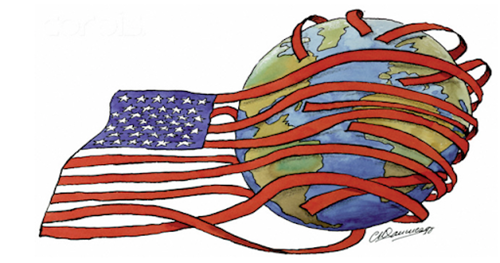
Students of imperialism appropriately refer to the polemical but theoretically relevant essay authored by Marx and Engels, The Communist Manifesto. In this essay, the authors argue that capitalism as a mode of production is driven to traverse the globe, for investment opportunities, for cheap labor, for natural resources, for land. One can argue that Marx and Engels were among the first to theorize about globalization.

Lenin advanced the theory of imperialism in his famous essay Imperialism, the Highest Stage of Capitalism. In addition to the inspiration from Marx and Engels, he drew from the sophisticated writings of Rudolf Hilferding and John Hobson. For him, writing in the midst of the bloodshed of World War I and revolutionary ferment in Russia, there was a need to understand the connections between the expansionist needs of capitalism, competition among capitalist states, and imperialist war. With that motivation, Lenin postulated five key features of what he called imperialism, the highest stage of capitalism. This new stage of capitalist development in the twentieth century included:

1) The concentration of production and capital developed to such a high stage that it created monopolies, which play a decisive role in economic life.

2) The merging of bank capital with industrial capital, and the creation, on the basis of this, "finance capital," or a "financial oligarchy."

3) The export of capital, which has become extremely important, as distinguished from the export of commodities.

4) The formation of international capitalist monopolies, which share the world among themselves.

5) The territorial division of the whole world among the greatest capitalist powers is completed.

Lenin’s descriptions of these five features of twentieth century imperialism were prescient as to their long-term vision. Imperialism was not just a way in which powerful states acted in the world but a global stage of capitalism. The political, military, and economic dimensions of the world were inextricably connected in a profoundly new way, different from prior periods of human history.

In this stage national economies and the global economy were dominated by monopolies. That is, small numbers of banks and corporations controlled the majority of the wealth and productive capacity of the world. (The Brandt Commission in the early 1980s estimated, for example, that 200 corporations and banks controlled twenty-five percent of the world’s wealth). Monopolization included a shrinking number of economic actors that controlled larger and larger shares of each economic sector (steel, auto, fossil fuels, for example) and fewer and fewer actors controlling more of the totality of all these sectors.

Lenin added that twentieth century finance capital assumed a primary role in the global economy compared to prior centuries when banks were merely the bookkeepers of the capitalist system. Corporate capital and financial capital had become indistinguishable. This, in our own day, became known as "financialization.”

The development of finance capital, Lenin argued, led to the export of capital, the promotion of investments, the enticement of a debt system, and the expanding control of all financial transactions by the few hundred global banks. Capitalism was no longer just about expropriating labor and natural resources, processing these into products for sale on a world market but it now was about financial speculation, the flow of currencies as much as the flow of products of labor. It was in this stage of capitalism that the financial system was used as a lever to transform all of the world’s economies, particularly by increasing profits through imposing policies of austerity. Austerity included cutting government programs, deregulating economies so banks and corporations could act more freely, and, further, instituting public policies to maximize the privatization of virtually every public institution. Also, and of particular relevance to the Brazilian case, was the opening up of natural resources and land to global corporations. These policies were referred to as “neoliberal.”

And lastly, Lenin observed, world politics was shaped by economic and political collusion of international monopolies to collaborate, routinize, and regulate economic competition. But, as he saw in 1916, that world of routinized global finance capital had broken down, states representing their own financial conglomerates engaged in massive violence, in World War, to maintain their share of territory and wealth. So that imperialism, the highest stage of capitalism, always had embedded within it, the seeds of ever-expanding war between states driven by their own monopolies.

Dependency


Theorists and revolutionaries from the Global South found Lenin’s theory of imperialism to be a compelling explanation of the historical development of capitalism as a world system and its connections to war, violence, colonialism, and neo-colonialism. However, they argued that Lenin’s narrative was incomplete in its description of imperialism’s impact on the countries and peoples of the Global South. Several revolutionary writers and activists from the Global South added a “bottom up” narrative about imperialism. Theorists such as Andre Gunter Frank, Samir Amin, Frantz Fanon, Walter Rodney, Fernando Cardoso, Theotonio Dos Santos, and Jose Carlos Mariategui added an understanding of “dependency” to the discussion of imperialism. And today the writings of V J Prashad and his colleagues at Tricontinental carry on the tradition.

Dependency theorists suggested that the imperialist stage of capitalism was not enforced in the Global South only at the point of a gun. Dependency required the institutionalization of class structures in the Global South. Ruling classes in the Global South, local owners of factories, fields, and natural resources, and their armies, collaborated with the ruling classes of the global centers of power in the Global North. In fact, the imperial system required collaboration between ruling classes in the global centers with ruling classes in the periphery of the international system. And ultimately, imperialism, the highest stage of capitalism, was a political and economic system in which the ruling classes in the centers of power worked in collaboration with the ruling classes in the Global South to exploit and repress the vast majority of human beings in the world.

Dependency theory, therefore, added insights to the Leninist analysis. First, the imperial system required collaboration from the rich and powerful classes in the centers of global power, the Global North, developing and recruiting the rich and powerful classes in the countries of the Global South. It also meant that there was a need to understand that the imperial system required smooth flows of profits from the Global South to the Global North. Therefore, there was a mutuality of interests among ruling classes everywhere. The addition of dependency theory also argued that people in the periphery, workers and peasants in poor countries, had objective interests not only opposed to the imperial countries from the north but to the interests of their own national ruling classes. And, if this imperial system exploited workers in the centers of power and also in the peripheral areas of the world, then there ultimately was a commonality of interests of the poor, oppressed, and exploited all across the face of the globe.

Relevance for the Twenty-First Century

Although the world of the twenty-first century is different from that of the twentieth century, commonalities exist. These include the expansion of finance capital, rising resistance to it everywhere, and conflicts in the Global North and the Global South between powerful ruling classes and masses of people seeking democracy and economic well-being. In the recent past, the resurgence of protest by workers, students, farmers and peasants, the popular classes, has been reflected in mass movements against neoliberal globalization and international financial institutions. These include Arab Spring, the Fight for Fifteen, and a number of campaigns that challenge racism, sexism, joblessness, the destruction of the environment, land grabs, and removal of indigenous peoples from their land. The electoral victory of Lula is the most recent example.

In Latin America, movements emerged that have been labeled “the Pink Tide” or the “Bolivarian Revolution.” These are movements driven by struggles between the Global North and the Global South and class struggles within countries of the Global South. Workers and peasants from the Global South have been motivated to create, albeit within powerful historical constraints, alternative economic and political institutions in their own countries. The awakening of the masses of people in the Global South constitute one of the two main threats to Imperialism, the Highest Stage of Capitalism. The first threat is the movements that are struggling to break the link between their own ruling classes and those of the North. That includes working with leaders who are standing up against the imperial system (leaders such as in Venezuela, Bolivia, and, of course Cuba). The other threat to Imperialism, the Highest Stage of Capitalism, is, as Lenin observed in 1916, war between imperial powers.

In sum, as activists mobilize to oppose US war against the peoples of Latin America, the Middle East, Africa, and Asia, it is critical to be aware of the imperial system of finance capital, class systems in the Global North and Global South, and to realize that solidarity involves understanding the common material interests of popular classes in both the Global North and South. In 2022, solidarity includes opposing United States militarism in Latin America, economic blockades against peoples seeking their own liberation, and covert operations to support current and former ruling classes in their countries that collaborate with imperialism.

Concretely, this means supporting the Bolivarian Revolution in Venezuela and throughout the Western Hemisphere, protests in Haiti, of course, the Cuban Revolution, and now the transition to democracy in Brazil.
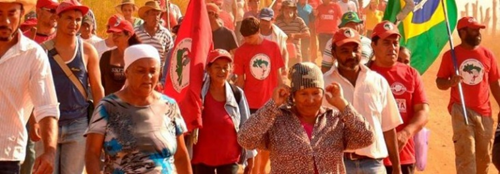


How the Global South Sees Itself

https://heartlandradical.blogspot.com/2022/10/how-world-is-framed-spokespersons-from.html


 ***************************************************************************************

THE UNITED STATES OVERTHROWS ALLENDE BUT THE GLOBAL SOUTH CONTINUES TO ORGANIZE

A Radio Conversation About the Overthrow of Allende and Its Long-Term Consequences

https://soundcloud.com/user-240416425/2023-09-12-2000-grass-is-greener-harry-targ-on-50-years-after-chile-coup?utm_source=clipboard&utm_campaign=wtshare&utm_medium=widget&utm_content=https%253A%252F%252Fsoundcloud.com%252Fuser-240416425%252F2023-09-12-2000-grass-is-greener-harry-targ-on-50-years-after-chile-coup


The Allende Years and the US Coup


                                    National Security Archive

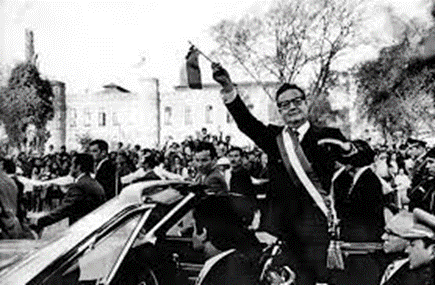
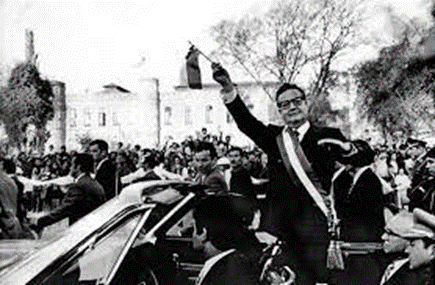
The election of Socialist Salvador Allende in Chile in 1970 became the target of sustained interest of the Nixon Administration. The United States had supported the Christian Democrats in Chile with official assistance and CIA financing since the 1950s. Eduardo Frei, Chile's president from 1964 to 1970, had been its favorite Chilean politician. Frei had been opposed in presidential elections by the Marxist Allende, who, leading a left coalition, finally won a plurality of votes in 1970, despite much CIA money funneled into the coffers of the Christian Democratic candidate. From the time of the election in October, 1970, until September, 1973, when a bloody military coup toppled Allende, the United States did everything it could to destabilize the elected government. From October to November, 1970, the United States pressured members of the Chilean parliament to vote against certification of the election victory, traditionally a routine exercise.

After Allende had been confirmed as president, energy and resources were used to damage the economy and make contact with right-wing members of the Chilean military to plan a coup. Allende carried out many policies designed to improve the material conditions of the lives of the workers and peasants in Chile. Land was redistributed, major industries were nationalized (copper had been partially nationalized under Frei), and  diplomatic relations were established with the Soviet Union, China, and Cuba. All these moves exacerbated tensions with the United States, since investments in copper, iron, nitrates, iodine, and salt were large.

The Nixon administration formed a secret committee, headed by Kissinger and enthusiastically endorsed by the International Telephone and Telegraph Company, a major economic power in Chile, whose purpose was the overthrow of Allende. The committee's preference was for an Allende defeat resulting from public rejection, but, if all else failed, a military coup was preferable to a continuation of his government. Among the policies utilized by Washington were an informal economic blockade of Chile, termination of aid and loans, IMF pressure on the government to carry out antiworker policies, fomenting dissent in the military, and funding opposition groups and newspapers, like the influential newspaper El Mercurio. 

Allende's economic policies were effective and generated much support from workers and peasants during 1970 and 1971; but, after the economic squeeze on the government increased, Allende had to grapple with inflation, balance-of-payments problems, and the inability to get spare parts and capital goods that had traditionally come from the United States. In trying to forestall military intervention in the political process, Allende allowed the "constitutionalist" officers to be replaced by avowed fascist generals. U.S. contacts with these generals provided the organizational basis for the impending coup. Excessive demands by more well paid workers and more secure peasants, coupled with a truckers' strike and demonstrations of middle-class housewives organized by the rightwing, added to the problems of the Allende government in 1972 and 1973. Despite the increasing economic and political problems being faced by Allende and the systematic efforts by the U.S. government to create discord within Chile, the Allende-led left coalition scored electoral victories in municipal elections throughout the country in March, 1973.

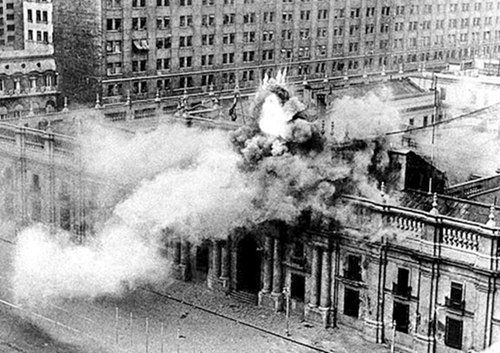
Since "making the economy scream" had not led to the rejection of Allende at the ballot box, the Kissinger committee and the right-wing generals decided to act. On September I l, 1973, the military carried out a coup that ousted the Allende government, and Allende himself was assassinated in the presidential palace. A junta headed by General Pinochet began a policy of extermination, torture, and imprisonment on a massive scale. A year after the coup, Amnesty International reported that some 6,000 to 10,000 prisoners had been taken. The new regime also banned all political parties, abolished trade unions, and continued its political repression both at home and abroad. In reference to the latter, Orlando Letelier, foreign minister in the Allende government, was blown up in a car in Washington, D.C., by Pinochet agents.
 

 Socialist Worker.org

The spirit of the brutal U.S. policy in Chile was expressed by Kissinger in 1970: "I don't see why we need to stand by and watch a country go communist due to the irresponsibility of its own people" (James A. Nathan and James K. Oliver, United States Foreign Policy and World Order, Little, Brown, 1981, p.496) and by President Ford in his first press conference, defending the coup as being in the "best interests of the people of Chile and certainly in the best interests of the United States" (Nathan and Oliver, p. 497). A somewhat more accurate assessment was made by historian Alexander De Conde, who wrote that the United States “had a hand in the destruction of a moderate left-wing government that allowed democratic freedoms to its people and to its replacement by a friendly right-wing government that crushed such freedoms with torture and other police-state repressions" (Alexander DeConde, A History of American Foreign Policy, Volume ll Charles Scribner, 1978, pp.388-389).

 The Third World Demands a New International Economic Order

 The brutal overthrow of the Allende government in Chile was reminiscent of traditional US. activities as world policeman. The impact of the coup on the Chilean people in terms of economic justice and political freedom was negative in the extreme. The bloody victory of counterrevolution in Chile, however, came at a period in world history when the rise of Third World resistance to U.S. imperialism would reduce the prospect of more Chiles in the future.

 By the 1970s, the worldwide resistance to U.S. and international capitalism was growing. The revolutionary manifestation of this resistance was occurring in Southeast Asia, southern Africa, the Horn of Africa, the Middle East, and Central America and the Caribbean. During the Nixon-Ford period, the United States and its imperialist allies lost control of the Indochinese states, Angola, Mozambique, and Guinea-Bissau. South Yemen, Nicaragua, Iran, and Grenada would follow later in the decade.


                                    The Progressive International

Along with the rise of revolutionary victories and movements throughout the Third World, a worldwide reformist movement began to take shape around demands for a New International Economic Order (NIEO). Its predecessor, the. nonaligned movement of the 1950s and 1960s, had been nurtured by leading anticolonial figures such as Nasser of Egypt, Nkrumah of Ghana, and Nehru of India. Their goal was to construct a bloc of Third World nations of all ideological hues which could achieve political power and economic advantage by avoiding alliances and political stances that might tie them to the United States or the Soviet Union. The nonaligned movement saw the interests of member nations tied to the resolution of "north-south" issues, which in their view were of greater importance than "east-west" issues.

After two decades of experience with political independence from formal colonialism, revolutionaries who believed that economic exploitation resulted from the structure of the international capitalist system were joined by Third World leaders who saw the need to reform international capitalism. Consequently, a movement emerged, largely within UN agencies, increasingly populated by Third World nations and addressing itself to Third World poverty and underdevelopment. This movement presupposed the possibility of reducing the suffering of Third World peoples without necessarily bringing an end to capitalism as the internationally dominant mode of production.

To counter the declining Third World percentage of world trade, fluctuations in prices of exported commodities, foreign corporate repatriation of profits earned in Third World countries, technological dependence, growing international debt, and deepening crises in the supply of food, Third World leaders were forced by material conditions and revolutionary ferment to call for reforms. The inspiration for a NIEO movement came also from the seeming success of OPEC countries in gaining control of oil pricing and production decisions from foreign corporations.

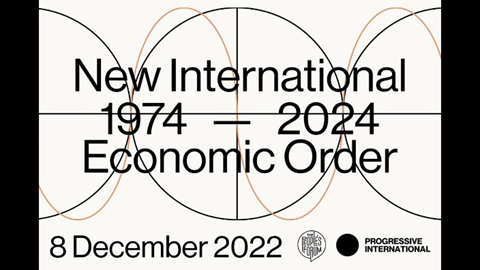
Two special sessions of the General Assembly of the UN in 1974 and 1975 on the NIEO "established the concept as a priority item of the international community" (Ervin Laszlo, Robert Baker Jr., Elliott Eisenberg, Raman Venkata, The Objectives of the New International Economic Order, New York, Pergamon, 1978, pp. xvi). The NEIO became a short-hand reference for a series of interrelated economic and political demands concerning issues that required fundamental policy changes, particularly from wealthy nations. The issue areas singled out for action included aid and assistance, international trade and finance, industrialization, technology transfer, and business practices.

Paradoxically, while the NIEO demands were reformist in character and, if acted on, could stave off revolutionary ferment (as did New Deal legislation in the United States in the 1930s), the general position of the Nixon, Ford, and Carter administrations on the NIEO were negative. European nations were more responsive to selected demands, like stabilizing Third World commodity prices and imports into Common Market countries, but the broad package of NIEO demands continued to generate resistance from the wealthy nations, which benefited from the current system. Nabudere correctly understands the interests of Third World leaders in the NIEO when he wrote that:

“The demands of the petty bourgeoisie of third world countries are not against exploitation of the producing classes in their countries, but of the domination of their class by monopoly. The demands therefore for reform—for more credit to enable the petty bourgeois more room also to exploit their own labor and extract a greater share of the surplus value. This is unachievable, for to do so is to negate monopoly—which is an impossible task outside the class struggle” (Wadada D. Nabudere, Essays on the Theory and Practice of Imperialism, London: Onyx Press, 1979, p.179).

Therefore, the NEIO, commodity cartels like OPEC, and other schemes for marginal redistribution of the profits derived from the international economy would not have gone beyond increasing the shares which Third World ruling classes received from the ongoing economic system. Minimal benefits to workers and peasants would accrue. Third World successes against monopoly capital, however, served to weaken the hold the latter has on the international system. 

Also, while channeling Third World militancy in a reformist direction, the NIEO and OPEC had the opposite effect of generating a new militancy among masses of Third World peoples where it did not exist before. Those workers, peasants, and intellectuals who gained consciousness of their plight in global structural terms through their leaders' UN activities came to realize that NIEO demands were not enough. They would come to realize what Nabudere argued, namely that:

“in order to succeed, the struggles cannot be relegated to demands for change at international bodies, mere verbal protests and parliamentary debates, etc. Therefore demands for a new economic order are made increasingly impossible unless framed in the general context of a new democratic revolution; the role of the working class and its allies is crucial to the achievement, in any meaningful way, of a new international economic order” (180).

Conclusion

In a period of less than twenty-five years, the United States had solidified a worldwide military alliance system, stimulated integrated economic institutions based on monopoly capitalism, started the most dangerous arms race in world history, and engaged in repeated acts of military, political, and economic intervention in nations throughout the world. Similarly, labor militancy was crushed at home. The U.S. public was mobilized by rhetoric about "fighting communism," "liberating" Eastern Europe, constructing a "new frontier," aiding in economic development, stopping "wars of national liberation," and 'building peace with honor. "

Paradoxically, in this same period many political forces were emerging to challenge the economic, military, and political hegemony of the United States. Intervention in Chile admittedly fit the pattern established in Iran and Guatemala in the 1950s and the Dominican Republic in the 1960s. Between Iran and Chile, however, the United States had lost a major war to the Vietnamese people and was unable to forestall Marxist victories in southern Africa. Even reform minded Third World ruling classes were making demands on the United States and its allies that impinged on the free workings of world capitalism.

                             The People’s Forum

Saturday, September 16, 2023

UNITED STATES FOREIGN POLICY DOES NOT RESPECT HUMAN LIFE: Remembering Libya (a repost from 2011)

Harry Targ

   
The United States still does not respect human life. Unfortunately, the Trump support for Israel's genocidal war on Palestinians and the invasion, killing, and kidnapping of Venezuelans is not new as the Libyan story suggests. And what should bring tears to our eyes and renewed anger is recognizing once again that "United States Foreign Policy Does Not Respect Human Life." (HT, January 6, 2026),


                                              Peace Action

"The Oriental doesn't put the same high price on life as does a Westerner...We value life and human dignity. They don't care about life and human dignity." General William Westmoreland interviewed in Hearts and Minds (1974), a documentary about the Vietnam War.

This past week American politics took a peculiar turn. A new narrative about the Obama administration began to be systematically presented to the liberal media audience. Reviewing his three-year-old administration, the new construction is that on the national security front Obama is markedly more tough and effective than Republicans claim.

The brutal murder of Muammar Qaddafi by rebellious opponents on global television, followed by celebratory remarks by the President, his Secretary of State and other members of the administration, capped three years of U.S. violence on people of the Global South. Many critics of Obama’s less than forceful advocacy of economic justice have shifted their focus to a frame of the President as resolute in protecting American national security in the face of a challenging world. They even have implied that Obama is more of a tough guy than his predecessor ever was.

What is the evidence for this? Frankly, President Obama has unleashed new variants of the U.S. killing machine. Violence against Asian, Middle Eastern and African people has been visibly celebrated in public view. The numbers of victims killed may not be greater than that of prior administrations, but the celebration of public murders seem to have increased.

Early in the Obama administration, the president made a decision to assassinate Somali pirates, pirates who had kidnapped westerners off the Horn of Africa. Last May, with the President’s diplomatic team staring at a television screen during a nail-biting meeting, Navy Seals invaded the compound housing Osama Bin Laden who was unceremoniously killed and dumped in the sea. The media highlighted Americans who celebrated this killing.

Four months after the successful murder of Bin Laden, Obama’s crack team assassinated Anwar al-Awlaki, American citizen and alleged leader of Islamic terrorists, who threatened the United States. Abdul Rahman al-Awlaki, his teen age son and others were summarily executed for crimes for which they had not been accused or tried.

In addition, President Obama agreed to work with allies, Great Britain and France, who held colonial empires in the Middle East and North Africa in the twentieth century. They mobilized a campaign in the United Nations to gain public legitimacy for military intervention in Libya to overthrow the long-time idiosyncratic leader, Qaddafi, whose tiny nation from time-to-time supported dissidents in the Arab and African worlds. The initial claim was that the force, a NATO operation, would be humanitarian, saving the lives of those who were rebelling against the Libyan dictatorship.

The rebels, contrary to the non-violent activists in Tunisia and Egypt where western support was minimal, were armed, probably by the West, and launched a civil war against the regime. Then NATO air power was used for seven months to pound Libya until the Qaddafi military collapsed. The “humanitarian” intervention took between 30,000 and 50,000 lives, dissidents as well as Qaddafi loyalists. Shortly after the war ended with the death and mutilation of the dictator’s body on a street in Sirte, President Obama declared victory for the Libyan people--although who the rebels were remains unclear--and pronounced what he referred to as a new measured and wise U.S. foreign policy.

The new foreign policy, what might be called the “Obama Doctrine,” has four parts. First, the United States, as the last remaining superpower, and as the defender of the global moral standard, could once again assume the right and responsibility to intervene militarily to preserve and enhance human rights around the world. As the President put it reflecting on the recent killings in a press conference after the death of Qaddafi was announced, U.S. actions have demonstrated “…the strength of American leadership across the world.”

Second, U.S. humanitarian interventions will be carried out in conjunction with military operations with our friends, presumably equally committed to high moral standards. In Obama’s words; “We’ve demonstrated what collective action can achieve in the 21st century.” NATO, an alliance established in 1949 to protect Western Europe and North America from security threats from “international communism,” now would police the world.

Third, new technologies make it possible for the United States to police the world without “boots on the ground.” Given the new technology, the free world can intervene virtually anywhere, anytime, through the use of incredibly sophisticated drone warfare. In the Libyan case, as the President said, “without putting a single service member on the ground, we achieved our objectives, and our NATO mission will soon come to an end.”

US/NATO warriors can target enemies without personal danger to themselves while working in antiseptic offices in the United States or Europe, or on small bases in the Indian Ocean, the Middle East, or Africa. Nick Turse, author of The Complex (2008) estimates that at least 60 drone bases are operational around the world ready to hit enemy targets virtually anywhere.

Fourth, the Obama Doctrine makes it clear that human life is not sacred and that due process, the hallmark of western legal traditions, is now superseded by the unilateral right of key decisionmakers to kill potential, as well as actual, enemies of the United States. To paraphrase the old definition of the state as that institution that holds the monopoly of the legitimate use of force, the state now holds the monopoly of legitimate use of murder.

In the end, the oft quoted remark by General William Westmoreland about the Vietnamese enemy in the 1960s may more accurately be restated: “The United States government does not put the same high price on human life as other countries.”

Fortunately for progressives, mass movements exist that show the world that many Americans do not stand with their government’s use of violence. Progressives oppose mass murder, targeted executions, the death penalty anywhere, and despicable drone warfare. Progressives also respect the right and responsibilities of others to choose their own political destinies.

Friday, September 8, 2023

The United States Overthrows Allende But The Global South Continues to Organize

Harry Targ

https://soundcloud.com/user-240416425/2023-09-12-2000-grass-is-greener-harry-targ-on-50-years-after-chile-coup?utm_source=clipboard&utm_campaign=wtshare&utm_medium=widget&utm_content=https%253A%252F%252Fsoundcloud.com%252Fuser-240416425%252F2023-09-12-2000-grass-is-greener-harry-targ-on-50-years-after-chile-coup


The Allende Years and the US Coup

                                National Security Archive


The election of Socialist Salvador Allende in Chile in 1970 became the target of sustained interest of the Nixon Administration. The United States had supported the Christian Democrats in Chile with official assistance and CIA financing since the 1950s. Eduardo Frei, Chile's president from 1964 to 1970, had been its favorite Chilean politician. Frei had been opposed in presidential elections by the Marxist Allende, who, leading a left coalition, finally won a plurality of votes in 1970, despite much CIA money funneled into the coffers of the Christian Democratic candidate. From the time of the election in October, 1970, until September, 1973, when a bloody military coup toppled Allende, the United States did everything it could to destabilize the elected government. From October to November, 1970, the United States pressured members of the Chilean parliament to vote against certification of the election victory, traditionally a routine exercise. After Allende had been confirmed as president, energy and resources were used to damage the economy and make contact with right-wing members of the Chilean military to plan a coup.


Allende carried out many policies designed to improve the material conditions of the lives of the workers and peasants in Chile. Land was redistributed, major industries were nationalized (copper had been partially nationalized under Frei), and  diplomatic relations were established with the Soviet Union, China, and Cuba. All these moves exacerbated tensions with the United States, since investments in copper, iron, nitrates, iodine, and salt were large.


The Nixon administration formed a secret committee, headed by Kissinger and enthusiastically endorsed by the International Telephone and Telegraph Company, a major economic power in Chile, whose purpose was the overthrow of Allende. The committee's preference was for an Allende defeat resulting from public rejection, but, if all else failed, a military coup was preferable to a continuation of his government. Among the policies utilized by Washington were an informal economic blockade of Chile, termination of aid and loans, IMF pressure on the government to carry out antiworker policies, fomenting dissent in the military, and funding opposition groups and newspapers, like the influential newspaper El Mercurio.
 

Allende's economic policies were effective and generated much support from workers and peasants during 1970 and 1971; but, after the economic squeeze on the government increased, Allende had to grapple with inflation, balance-of-payments problems, and the inability to get spare parts and capital goods that had traditionally come from the United States. In trying to forestall military intervention in the political process, Allende allowed the "constitutionalist" officers to be replaced by avowed fascist generals. U.S. contacts with these generals provided the organizational basis for the impending coup. Excessive demands by more well paid workers and more secure peasants, coupled with a truckers' strike and demonstrations of middle-class housewives organized by the rightwing, added to the problems of the Allende government in 1972 and 1973. Despite the increasing economic and political problems being faced by Allende and the systematic efforts by the U.S. government to create discord within Chile, the Allende-led left coalition scored electoral victories in municipal elections throughout the country in March, 1973.


Since "making the economy scream" had not led to the rejection of Allende at the ballot box, the Kissinger committee and the right-wing generals decided to act. On September I l, 1973, the military carried out a coup that ousted the Allende government, and Allende himself was assassinated in the presidential palace. A junta headed by General Pinochet began a policy of extermination, torture, and imprisonment on a massive scale. A year after the coup, Amnesty International reported that some 6,000 to 10,000 prisoners had been taken. The new regime also banned all political parties, abolished trade unions, and continued its political repression both at home and abroad. In reference to the latter, Orlando Letelier, foreign minister in the Allende government, was blown up in a car in Washington, D.C., by Pinochet agents.


                                Socialist Worker.org


The spirit of the brutal U.S. policy in Chile was expressed by Kissinger in 1970: "I don't see why we need to stand by and watch a country go communist due to the irresponsibility of its own people" (James A. Nathan and James K. Oliver, United States Foreign Policy and World Order, Little, Brown, 1981, p.496) and by President Ford in his first press conference, defending the coup as being in the "best interests of the people of Chile and certainly in the best interests of the United States" (Nathan and Oliver, p. 497). A somewhat more accurate assessment was made by historian Alexander De Conde, who wrote that the United States “had a hand in the destruction of a moderate left-wing government that allowed democratic freedoms to its people and to its replacement by a friendly right-wing government that crushed such freedoms with torture and other police-state repressions" (Alexander DeConde, A History of American Foreign Policy, Volume ll Charles Scribner, 1978, pp.388-389).


The Third World Demands a New International Economic Order


The brutal overthrow of the Allende government in Chile was reminiscent of traditional US. activities as world policeman. The impact of the coup on the Chilean people in terms of economic justice and political freedom was negative in the extreme. The bloody victory of counterrevolution in Chile, however, came at a period in world history when the rise of Third World resistance to U.S. imperialism would reduce the prospect of more Chiles in the future.


By the 1970s, the worldwide resistance to U.S. and international capitalism was growing. The revolutionary manifestation of this resistance was occurring in Southeast Asia, southern Africa, the Horn of Africa, the Middle East, and Central America and the Caribbean. During the Nixon-Ford period, the United States and its imperialist allies lost control of the Indochinese states, Angola, Mozambique, and Guinea-Bissau. South Yemen, Nicaragua, Iran, and Grenada would follow later in the decade.


                                The Progressive International


Along with the rise of revolutionary victories and movements throughout the Third World, a worldwide reformist movement began to take shape around demands for a New International Economic Order (NIEO). Its predecessor, the. nonaligned movement of the 1950s and 1960s, had been nurtured by leading anticolonial figures such as Nasser of Egypt, Nkrumah of Ghana, and Nehru of India. Their goal was to construct a bloc of Third World nations of all ideological hues which could achieve political power and economic advantage by avoiding alliances and political stances that might tie them to the United States or the Soviet Union. The nonaligned movement saw the interests of member nations tied to the resolution of "north-south" issues, which in their view were of greater importance than "east-west" issues.


After two decades of experience with political independence from formal colonialism, revolutionaries who believed that economic exploitation resulted from the structure of the international capitalist system were joined by Third World leaders who saw the need to reform international capitalism. Consequently, a movement emerged, largely within UN agencies, increasingly populated by Third World nations and addressing itself to Third World poverty and underdevelopment. This movement presupposed the possibility of reducing the suffering of Third World peoples without necessarily bringing an end to capitalism as the internationally dominant mode of production.


To counter the declining Third World percentage of world trade, fluctuations in prices of exported commodities, foreign corporate repatriation of profits earned in Third World countries, technological dependence, growing international debt, and deepening crises in the supply of food, Third World leaders were forced by material conditions and revolutionary ferment to call for reforms. The inspiration for a NIEO movement came also from the seeming success of OPEC countries in gaining control of oil pricing and production decisions from foreign corporations.


Two special sessions of the General Assembly of the UN in 1974 and 1975 on the NIEO "established the concept as a priority item of the international community" (Ervin Laszlo, Robert Baker Jr., Elliott Eisenberg, Raman Venkata, The Objectives of the New International Economic Order, New York, Pergamon, 1978, pp. xvi). The NEIO became a short-hand reference for a series of interrelated economic and political demands concerning issues that required fundamental policy changes, particularly from wealthy nations. The issue areas singled out for action included aid and assistance, international trade and finance, industrialization, technology transfer, and business practices.


Paradoxically, while the NIEO demands were reformist in character and, if acted on, could stave off revolutionary ferment (as did New Deal legislation in the United States in the 1930s), the general position of the Nixon, Ford, and Carter administrations on the NIEO were negative. European nations were more responsive to selected demands, like stabilizing Third World commodity prices and imports into Common Market countries, but the broad package of NIEO demands continued to generate resistance from the wealthy nations, which benefited from the current system. Nabudere correctly understands the interests of Third World leaders in the NIEO when he wrote that:

“The demands of the petty bourgeoisie of third world countries are not against exploitation of the producing classes in their countries, but of the domination of their class by monopoly. The demands therefore for reform—for more credit to enable the petty bourgeois more room also to exploit their own labor and extract a greater share of the surplus value. This is unachievable, for to do so is to negate monopoly—which is an impossible task outside the class struggle” (Wadada D. Nabudere, Essays on the Theory and Practice of Imperialism, London: Onyx Press, 1979, p.179).

Therefore, the NEIO, commodity cartels like OPEC, and other schemes for marginal redistribution of the profits derived from the international economy would not have gone beyond increasing the shares which Third World ruling classes received from the ongoing economic system. Minimal benefits to workers and peasants would accrue. Third World successes against monopoly capital, however, served to weaken the hold the latter has on the international system. 


Also, while channeling Third World militancy in a reformist direction, the NIEO and OPEC had the opposite effect of generating a new militancy among masses of Third World peoples where it did not exist before. Those workers, peasants, and intellectuals who gained consciousness of their plight in global structural terms through their leaders' UN activities came to realize that NIEO demands were not enough. They would come to realize what Nabudere argued, namely that:


“in order to succeed, the struggles cannot be relegated to demands for change at international bodies, mere verbal protests and parliamentary debates, etc. Therefore demands for a new economic order are made increasingly impossible unless framed in the general context of a new democratic revolution; the role of the working class and its allies is crucial to the achievement, in any meaningful way, of a new international economic order” (180).

Conclusion

In a period of less than twenty-five years, the United States had solidified a worldwide military alliance system, stimulated integrated economic institutions based on monopoly capitalism, started the most dangerous arms race in world history, and engaged in repeated acts of military, political, and economic intervention in nations throughout the world. Similarly, labor militancy was crushed at home. The U.S. public was mobilized by rhetoric about "fighting communism," "liberating" Eastern Europe, constructing a "new frontier," aiding in economic development, stopping "wars of national liberation," and 'building peace with honor. "


Paradoxically, in this same period many political forces were emerging to challenge the economic, military, and political hegemony of the United States. Intervention in Chile admittedly fit the pattern established in Iran and Guatemala in the 1950s and the Dominican Republic in the 1960s. Between Iran and Chile, however, the United States had lost a major war to the Vietnamese people and was unable to forestall Marxist victories in southern Africa. Even reform minded Third World ruling classes were making demands on the United States and its allies that impinged on the free workings of world capitalism.

                                The People’s Forum

Monday, September 4, 2023

FROM THE TEA PARTY TO MAGA 2010 to 2023: LABOR IS THE KEY:

THE WORKING CLASS BUILT THIS COUNTRY: IN 2010 WE MUST MOBILIZE TO TRANSFORM IT

Harry Targ Originally posted on Tuesday, September 7, 2010: Enough remains the same to justify a repost.


From Labor Day to Election Day: 2010

I want to add my voice to the thousands of essayists and bloggers who have been contemplating the 2010 elections, the media “framing” of Tea Party influence, the role of progressives in thae elections, and mobilizing for the last 54 days before the elections.

First, I think elections still matter. Since most people see politics and elections as equivalent and some of them actively participate in the electoral process, progressives need to be there as well. In addition, in states and communities decisions will be made about how federal government money for local school corporations is to be allocated, about workers compensation for victims of asbestos related workplace injuries, so-called Right to Work laws, and how congressional and state legislative districts will be redesigned. At the national level, policy decisions about such critical issues as jobs, climate change, education, military spending, and judicial appointments will be affected by election outcomes.

Second, most of these issues have not been the main narrative. The media have framed the fall elections around the big losses of Democrats, the rise of the Tea Party, and how the Obama administration has not fixed eight years of economic mismanagement and war (let alone thirty years of ill-conceived policies).

Third the “liberal” media, while more sophisticated and entertaining in its coverage of election year stories over-emphasize “making fun” of some of the outlandish Tea Party candidates for public office. And they, and their right-wing media colleagues at Fox, have made the obscure former governor of Alaska a million-dollar media star.

In response, Tea Party candidates, and their corporate sponsors, have decided to do two things: forget about trying to put together logical, coherent plans for an alternative set of policies and when challenged by enterprising reporters just walk away. Since the media they tell us is the enemy and most people are fearful of public speaking, incoherence and evasiveness will resonate well with a disillusioned public.

Fourth, part of the context for the unstable politics of the fall, 2010, is the continued economic crisis that grips working people. Unemployment, declining real wages, indebtedness, crumbling public services remains all too real for the majority of Americans. In addition, until his exciting Labor Day speech in Milwaukee, the Obama administration has failed to propose an economic stimulus program that could bring millions of un- and underemployed workers back to work and until yesterday, backed off his commitment to a massive program for creating green jobs. For reasons of political exigency, he has postponed advocacy for immigration reform, climate change legislation, the Employee Free Choice Act, and an end to the blockade of Cuba. Perhaps most troubling for the long run, Obama appointed to positions of power, many of the neoliberal financiers who were responsible for the current phase of capitalist crisis.

Having said all this, the administration has forestalled return to depression with a modest economic recovery program, created some public sector jobs, “saved” the U.S. auto industry, and has secured the passage of an inadequate health care reform bill but one which may stimulate more movement toward a single payer system in the future.

A Little History

A high level of distrust of government, low regard for politicians, and periodic active anger at our public institutions is a characteristic feature of American history often reflected in voting against political incumbents and supporting candidates who are most vocal against government programs. For example, the American National Election Studies (ANES) prepared an index of Trust in Government made up of several questions reflecting the points just raised. Looking over time the level of trust in government was at a score of 49 in 1958, 52 in 1964, 27 in 1980, 29 in 1992, 36 in 2000, and declined to 26 by 2008. Only twice in the Johnson years, did the Trust Index reach a score over 60 and six times since 1958 the index score was below 30.

In addition, a constant feature of political life has been active and extremist politics. For example, the American party of the 1850s, or “Know Nothing Party,” got its name from members being instructed when asked about the party to say “I know nothing.” While short-lived they elected several national and state office holders before the civil war.

Throughout U.S. history so-called “nativist” groups formed and mobilized against waves of immigrants: Catholics, Germans, the Irish, Chinese, Jews, and Latinos. Armed Klan organizations terrorized the South and the Midwest in the 1880s and 1920s and 1930s and dominated the political life in many states in these eras.

Of course, extremist movements, often organized and funded by corporations and wealthy individuals, scared the American people during the dark days of anti-Communism in the 1940s and 1950s. Red Channels, a small but well-funded political organization, published lists of suspected Communists in the entertainment industry and pressured the new television corporations and advertisers to purge actors and actresses, with views supportive of labor, racial integration, and peace, from the airwaves. Their activism paralleled and reinforced Congressional reactionaries who used investigative committees to hound individuals and groups.

Alternatively, for all of Labor’s flaws, the history of the American labor movement has been central to social progress in the United States: from the demands for an eight hour day, skilled trades controls of the pace of work, health and safety at the work place, a fair wage, programs of health and retirement benefits, and, after much internal conflict, support for the struggles against racism and sexism. There is no question that organized labor, although weakened and embattled, represents the most powerful force in today’s society resisting the privatization of social security, deregulation of the economy and environment, and the total marginalization of working people everywhere.


A Progressive Campaign Program

So what to do now? History and context suggests that given the importance of elections, the enormous distrust of government, the existence of media and corporate capital support for the historic undercurrents of anti-government and anti-worker political traditions, often coupled with racism and fear of foreigners, progressives have only one choice for the next two months: work to elect political candidates from the city council to the Congress of the United States who support a “working people’s agenda.”

American political history tells us that movements like the Tea Party are not new. While the concern and anger reflected among those grassroots activists who participate in rallies and marches is usually sincere and motivated by fears of strange times and economic crises with no seeming resolution, its leaders offer no program, no vision, and no coherent agenda. If Tea Party spokespersons and candidates are queried about their goals, they evade or refuse to respond. Some of their television heroes draw lines and circles and arrows on blackboards to illustrate the connections between people living down the street, working in a union job, teaching at a college, running for office, and the Russian Revolution of 1917.

No, progressives cannot argue with the Tea Party movement. But, what we must do is to campaign, not just for individual candidates or just for a party but for a “working people’s agenda.” That constitutes the only future for the vast majority of Americans. This agenda must include a fight for full employment. As the AFL-CIO put it in 2009 action must be taken to extend unemployment benefits; rebuild America’s schools, roads, and energy systems; expand support for the maintenance of state and local public services; put all people who want to work on jobs that need to be done; and regulate banks more effectively so that they are required to support local projects that create businesses which will create jobs.

Laura Jackson, a member of the Communications Workers of America (CWA) noted recently: “We definitely need to make sure that the people making the decisions make jobs their top priority. I’m going to do all I can to make sure that happens including getting the message out to my family, union members, and anyone who will listen.”

Therefore, progressives, both in the labor movement and supportive of it must welcome and support the new AFL-CIO campaign to mobilize voters in 26 states and 400 races to support candidates who endorse a working peoples’ agenda. This includes making sure that the “new Obama” proposals reflected in the President’s speech of September 6, 2010, carrying the message of green jobs and justice, become part of the agenda of every candidate we support this fall.

Also progressives must spread the word about the historic mobilization October 2 for “One Nation Working Together” organized by the AFL-CIO, the National Association of Colored People (NAACP), and the National Council of La Raza (NCLR). Already many peace and justice groups such as United For Peace and Justice (UFPJ) and the Committees of Correspondence for Democracy and Socialism (CCDS) have signed on as supporters.

Most importantly, progressives must work in their communities and in solidarity with workers, people of color, and youth to elect progressive candidates to public office and to monitor their conduct once they are elected. It must be made clear to all that the progressive majority is not engaged in politics to support candidates or parties but to transform America.


Addendum: Progressives must add a peace agenda to their work 2023

The invasion of Ukraine by Russia gives fuel to the emerging anti-China Cold War rhetoric for politicians of both parties and the corporate media who suggest that Taiwan will be next, presumably after a Chinese invasion.  


The Ukraine war is an enormous plus for military/industrial complexes in the US and in Russia as well.  


The Ukraine story transforms the global narrative from the critical discussion of exploitation by the Global North of the Global South to the Biden narrative of “authoritarians” vs. “democracies.” For example, see the powerful presentation by V J Prashad of the essential nature of the North/South struggle. https://youtu.be/Lg9c0jv6wTA  


The impacts of the debate on progressive forces in the US and elsewhere are potentially devastating. In the US, our discourse is shifting from a progressive agenda including President Biden’s Build Back Better program for example to stories about the relationships between Putin and former President Trump and so-called “national security.” Biden’s State of the Union address reflects his “shift to the center.” Now we have a cause all Americans can get behind: opposing the Russians. (I am reminded  how the Soviet menace in the 1940s was used to defang CIO militancy, the drive for free health care, Henry Wallace’s call for US/Soviet dialogue and, of course, civil rights for all).  


The Russian invasion and the incomplete and war-oriented narrative of the Ukraine crisis dominating the news from such sources as the Washington Post, the New York Times, National Public Radio, and CNN/MSNBC  constitute a real setback for us. Media news is a commodity. War and portraits of American exceptionalism are profitable commodities for the increasingly concentrated corporate media.  


For these reasons and more, I endorse the Code Pink demands that Russia withdraw its troops from Ukraine and the United States and its allies pull back NATO forces from its presence in Eastern Europe. In addition, diplomatic efforts should ensue to replace NATO with an organization that can provide security for Europe and the Global South.  The Code Pink frame gives appropriate recognition to both  the immorality of the Russian action and the context, including NATO expansion and the events in Ukraine since 2014.  


So peace activists will continue to debate root causes of this senseless war and what to do about it. But for now as Cold Pink and others demand: Stop the War, Withdraw Russian Troops From Ukraine, Reverse the Extension of NATO.  And also  as we approach the election season we must remember that foreign policy is inextricably connected to domestic policy. It is time to campaign around war, military spending, the spread of nuclear weapons, grotesque economic sanctions against poor countries, and a media program of systematic distortions about the world , so-called “cognitive war.”


The Bookshelf

CHALLENGING LATE CAPITALISM by Harry R. Targ

Challenging Late Capitalism