Thursday, February 15, 2024

TRUST IN HIGHER EDUCATION: THE PURDUE EXAMPLE

 Harry Targ

 It is interesting to note that Indiana State Senator Spencer Deery who introduced Senate Bill 202 defends the bill by suggesting that distrust in higher education has increased. While this claim is of dubious merit and has come from politically conservative places such as ALEC and  so-called “think tanks,” many citizens on and off campus are skeptical of ill-placed and self-interested investments in the privatization of higher education, collaborating with real estate and military contractors, and working to expunge from curricula any courses that promote critical thinking.

https://jacobin.com/2017/06/purdue-university-kaplan-privatization-austerity

No better reason for skepticism about Purdue University can be found than in the recent Forbes magazine article, see below, indicating that Purdue Global, a relatively new venture, is indebted by about $128 million.  

The Forbes article and a summary of SB202 by Dave Bangert are added below for more in depth reading.

*******************************************************************************

Forbes

Purdue Global Owes $128 Million To Its For-Profit Partner. It May Not Be Able To Pay.

Derek Newton

https://www.forbes.com/sites/dereknewton/2023/12/17/purdue-global-owes-128-million-to-its-for-profit-partner-it-may-not-be-able-to-pay/?sh=42a234d79986

Nearly seven years ago, one of the oddest and most confusing education rearrangements became arranged – the sale of for-profit, mostly online, Kaplan University to the public, land-grant Purdue University. The resulting institution is Purdue Global, the online sister of the Indiana flagship.

There have been other similar deals in which a for-profit, online college was sold to or consumed by a public school. For example, the University of Arizona, bought for-profit Ashford University. And the University of Idaho is finalizing a deal to buy the for-profit University of Phoenix.

Usually in these deals, as was the case with Purdue and Kaplan, the school is sold for a token amount – Purdue paid $1 – but the selling, for-profit company is then hired on a long-term contract to provide support, infrastructure, and marketing services to the school. Those deals usually include a revenue-share provision in which the seller and new manager takes a share of the tuition revenue. In the Kaplan sale, Kaplan’s contract provides them with 12.5% of the school’s proceeds, plus fixed payments for services. In practice, the deals are very similar to the arrangements of online program management (OPM) companies which have fallen under recent heavy scrutiny and market pressures.

Generally, the Purdue Global management agreement has avoided that spotlight. But according to recent financial reports and filings from Purdue University and from Graham Holdings Company (GHC), the parent company of Kaplan Higher Education, the market pressures that are roiling OPM businesses may be squeezing both Purdue Global and Kaplan.

According to Graham Holdings Company’s recent SEC filing, Purdue Global owes it a ton of money. “As of September 30, 2023, Kaplan had a total outstanding accounts receivable balance of $127.8 million from Purdue Global related to amounts due for reimbursements for services, fees earned and a deferred fee,” GHC told the SEC.

It’s a bill that, according to the rules that established Purdue Global, neither Purdue University nor the taxpayers of Indiana can pay. They are not allowed to cover Purdue Global’s debts and losses.

But the real problem is that it’s a bill that Purdue Global probably can’t pay either. According to the most recent annual report from Purdue University, Purdue Global simply does not have the money.

Purdue Global, the report says, had a “net operating revenue” loss of $95 million, it has about $142 million in current liabilities, and, according to the report from Purdue, “Cash and Cash Equivalents at Purdue Global consist of funds held in checking, savings, and money market accounts. Balances, excluding money market funds, at June 30, 2023 and 2022 were approximately $2,600,000 and $300,000, respectively.”

For comparison, the same report says of Purdue University, “the bank balance of the University’s deposits (demand deposit accounts) as of June 30, 2023 and 2022, was approximately $103,888,000 and $87,338,000, respectively.”

A spokesperson for Kaplan noted that the “net operating revenue” loss of $95 million reported by Purdue does not include non-operating revenue, which he said was about $88 million. Though this would still create a situation in which, according to Kaplan’s spokesperson, “the loss was $7.5 million.”

The same Purdue report shows that Purdue Global has a net negative financial position of $38.8 million, despite reporting cuts in spending and despite a reported 5% increase in enrollments at Purdue Global, according to the GHC document.

The position of Purdue Global and the size of the debt may make it unrecoverable, a reality GHC told its shareholders. “The Company will continue to assess the collectability of the fee with Purdue Global on a quarterly basis to make a determination as to whether to record all or part of the fee in the future,” GHC wrote.

Back in 2017, when the deal was announced, many celebratory forecasts and predictions were made. None of them involved Purdue Global losing money and defaulting on its debt. For former Purdue President Mitch Daniels, who invested his and Purdue’s reputation on the success of this venture, the upside-down finances and unpaid debt aren’t flattering.

“Purdue Global continues to struggle financially, unable to pay its bills to Kaplan,” said Dahn Shaulis, Editor of the Higher Education Inquirer and early skeptic of the Purdue Global arrangement. “It hasn't been the money maker that Mitch Daniels thought,” he said.

Asked to confirm or comment on the debt to Kaplan, a spokesperson for the Purdue first directed the question back to Kaplan and GHC but later said, “In the normal course of our business, we owe money to lots of vendors, including Kaplan.”

Jerry Dervin, Chief Financial Officer of Kaplan North America, disputed the characterizations of the financial position of Purdue Global. Dervin wrote, in part, “the Purdue Global-Kaplan relationship calls for PG to reimburse Kaplan for its expenses incurred on behalf of PG. Sometimes the outstanding payable is at a seasonal high (as it was at September 30, the highest period of the year), and sometimes it’s at a seasonal low. But throughout the relationship the reimbursement of expenses by PG to Kaplan and all its other providers has always been made, in full, as a matter of course out of the cash flow of the institution.”

“Purdue Global has cut costs by closing campuses, campuses that provided value to consumers. The problem now is how can they cut costs even more?” Shaulis asked.

But if the school has a $128 million bill that it cannot pay even after cutting cost and growing enrollment, it’s not a sure thing that cutting its way out of debt will work. Or whether that’s even the best plan. Educationally, cheaper is not better.

Dervin also wrote, “from the onset of its formation, Purdue and Kaplan have been aligned in investing in Purdue Global’s mission to serve adult learners, veterans, first generation students, all from different backgrounds. PG has increased its investment in academic, student support and awareness with a goal of building a long-enduring institution that delivers quality outcomes for students and stakeholders.”

However Purdue Global and Kaplan square their debts and receivables, the issues may run deeper. It may be that recycling, repainting, and rebranding a subprime for-profit college may simply be a financial anchor instead of the lifeline some believed it to be.

The University of Arizona, for example, is mired in a public financial crisis where the University of Arizona Global Campus, the product of Arizona’s purchase of for-profit Ashford University, recently reported an $18.5 million operating deficit – a bill the university itself will have to pay. And while it’s not clear at all what caused Arizona to fall short in its budget projections by some $250 million, more than a few suspect that outsized investments in Arizona Global Campus/Ashford have been major contributors to the debacle.

Even if that turns out not to be true, it is true that both Arizona Global Campus and Purdue Global are losing money.

“The issues with Purdue Global, along with the Arizona Global mess, should serve as a cautionary tale for Idaho, with its pending acquisition of University of Phoenix,” Shaulis said.

Critics can and will say whatever they please about the University of Idaho merger with the University of Phoenix. But if it does not turn out as promised, no will be able to say it was a surprise.

Updated, Dec. 20: This article has been updated with comments by the chief financial officer of Kaplan, Jerry Dervin, who sent an email after the article was initially published. His comments have been added.

Updated, Dec 21, 22: A full description of the account balances at Purdue University and Purdue Global, as well as a more context regarding its operational losses, as provided in the University’s annual report, were added for further clarity.

***********************************************************************************

Based in Lafayette, Indiana

Deery defends tenure reform bill as blowback grows at Purdue, IU

DAVE BANGERT

FEB 14, 2024

After Indiana University President Pamela Whitten cast doubt on a sweeping bill aimed at countering negative connotations about higher education, particularly among conservatives, state Sen. Spencer Deery took a swing back this week, defending a measure he authored.

Whitten, in a statement released last week, said Senate Bill 202 – one that reforms the faculty tenure rules on state campuses and gives General Assembly leaders more control over the makeup of university boards of trustees – “risks unintended consequences that threaten not just the stature of Indiana University, but the economic and cultural vitality of the state.”

Deery, a West Lafayette Republican who was part of Mitch Daniels’ staff at Purdue, said Whitten is bowing to faculty and proving a point behind the bill.

“In a single statement,” Deery said, “President Whitten has highlighted for all Hoosiers the failure of leadership that has led to the decline in trust and support for American universities.”

Meanwhile, the University Senate at Purdue is scheduled Monday to discuss a resolution that stands against Senate Bill 202 as a measure that would turn tenure into “a political weapon to leverage” and a snitching culture built on “an atmosphere of suspicion and mistrust on university campuses.”

The bill, which cleared the Indiana Senate last week on a 39-9 vote, will get a hearing in the House Education committee at 10:30 a.m. Wednesday (Feb. 14). (To watch the livestream of the hearing, here’s a link.) Efforts to rally faculty members from Purdue and other universities to testify were going on early this week.

“It’s breathtaking in its overreach,” Alice Pawley, a professor in Purdue’s School of Engineering Education, said of Deery’s bill. “It’s troubling that something like this is coming from someone with so much experience on our campus. … This is a disaster waiting to happen for Purdue and disaster for our state’s universities.”

Here’s where things stood on SB 202, heading into that hearing.

What’s driving/what’s in the bill

Deery said the bill was prompted by what he called “the hyper-politicalization and monolithic thinking of American higher education institutions.” He’s pointed to a series of national commentators – including Daniels, who hasn’t been shy about his problems with the tenure system – national polling and recent state-compelled surveys of students on Indiana’s campuses.

A 2022 Gallup survey, commissioned to satisfy a General Assembly measure, found that of the students who responded, 46% of students who identified as politically conservative considered they could openly express their opinions in classrooms and on campus, compared to 79% of those who said they were liberal. That same poll, when asking Purdue students about classes related to “political, historical or cultural topics,” found that 7% of liberal students said their professors discourage them from sharing political or social views, while the number was 21% for students who considered themselves conservative.

Deery contends those views are keeping some students and their families from considering college.

Among its provisions, Senate Bill 202 would:

Establish a process where university trustees evaluate faculty up for tenure – a status that gives professors indefinite job security in most cases – or promotion with “criteria related to free inquiry, free expression and intellectual diversity.” During Senate debate, critics derided the measure as an effort to kill tenure and make it easier to fire faculty members. Deery contends the measure would codify tenure and protect faculty “against retaliation for the content of their research, for criticism of university leadership or for sharing political views outside the classroom.”

Requires trustees to review a faculty member’s tenure status every five years. Deery said some U.S. universities already do five-year reviews. He said SB 202 gives trustees “a little bit of a prod and cover … to make sure it’s still working.” Deery said one intent is to flag faculty members pushing political view in the classroom that are unrelated to the professor’s expertise. Deery said he sees those reviews going through a similar process, sending 20% of the tenured faculty a year through a post-tenure review that eventually lands with the trustees to ratify. Purdue lists 1,973 tenured and tenure track faculty on the West Lafayette campus.

Requires state universities to establish procedures that allow students and employees to submit complaints that a faculty member isn’t meeting certain criteria related to free inquiry, free expression and intellectual diversity.

Requires trustees to adopt a “policy of neutrality” that limits universities from making official positions on “political, moral or ideological issues.”

Allows the Indiana House Speaker and Indiana Senate president to appoint a trustee to a university’s board. Those would replace selections made by alumni boards and ratified by the governor. Deery said there was a move in the General Assembly looking to do something similar, only adding two trustees to university boards. He said this was a compromise when drafting the bill. “I heard from colleagues who said, ‘You know, we spend a lot of money on higher education. We want to have a legislative voice in who we appoint in doing so,’” Deery said.

Make universities account for spending on diversity, equity and inclusion efforts on campus and add to those programs to include “intellectual diversity.”

“This isn’t revolutionary,” Deery said. “This is an opportunity to say that you may not like the institution of higher education as a whole, but in Indiana we do things differently.”

Is it perception or reality, what he reports from the surveys and polls? In other words, is he fixing a real problem or changing structures as a means of applying salve to people’s feelings, no matter how they come by them?

“Ultimately, both matter if it's keeping somebody from enrolling in higher ed, whether it's perception or reality,” Deery said. “I don’t believe that you can fully dismiss them as just being perception. I do think that there are some who feel like it's maybe worse than it is or fear that it's worse than it is. But most of the people that are telling me that it's not an issue are not people who have ever been a conservative on a college campus. And you don't need to go very far to talk to conservatives on college campuses to understand that this is more than just perception.”

Pushback among Purdue faculty

On Monday afternoon, the University Senate will consider a resolution that rejects Senate Bill 202. The proposed measure calls the bill vague, unnecessarily threatens current tenure process, adds new layers of bureaucracy on campus and “while claiming to stand for intellectual diversity … would constitute a significant reduction in academic freedom.” The proposal calls on Purdue administrators to condemn Senate Bill 202 and the General Assembly to back away.

“The bill says it’s for academic freedom, but it’s the opposite,” Pawley, a University Senate member, said. “It says institutions need to create a new process for students to be able to report faculty or employees for violations of protections of freedom of speech, freedom of expression or intellectual diversity. That's the thought police. It’s Orwellian.”

Pawley said the bill stands on vague concepts of intellectual diversity that would be judged by trustees who would be increasingly politicized, given the new appointments by the General Assembly.

“I'm sure he thinks that he's targeting the humanities professors who talk, say, about critical race theory and Marxism, but he's also targeting business faculty who are teaching about capitalism, who all of a sudden will have to start talking about socialism,” Pawley said. “It's not specified, so it will cut both ways.”

Stephanie Masta is an associate professor in Purdue’s College of Education and was on the committee that drafted the proposed University Senate statement.

Masta said the Indiana Campus Free Speech Report 2023, the survey Deery used to justify the bill, had 18,559 students respond statewide. That survey went to more than 300,000 full-time undergraduate students at all Indiana public institutions, including part-time students at Vincennes University and Ivy Tech Community College, according to the report. That’s roughly a 6% return rate.

“Bills like these are a coordinated, national effort to eliminate diversity, equity and inclusion efforts in colleges and universities,” Masta said. “SB202 is vague and open to a great deal of interpretation, making it easy for politicians to weaponize against faculty and staff. Their goal is often to create a ‘chilling effect" where faculty, staff and students will start to self-censor rather than risk their actions being misinterpreted by a review committee.”

What the universities say

Purdue President Mung Chiang and other administrators haven’t publicly taken a position on SB 202. “As this bill goes through the legislative process, we are working to fully understand its details,” Tim Doty, a university spokesman, said.

Whitten released a statement last week, aimed at what she called “unintended consequences” embedded in the bill’s language:

“While we are still analyzing the broad potential impacts of SB 202, we are deeply concerned about language regarding faculty tenure that would put academic freedom at risk, weaken the intellectual rigor essential to preparing students with critical thinking skills, and damage our ability to compete for the world-class faculty who are at the core of what makes IU an extraordinary research institution.

“We all share the common goal to maximize the university's capacity to make scientific breakthroughs, attract talented students and faculty, drive economic development and create better outcomes for all Hoosiers. As crafted, my concern is that SB 202 risks unintended consequences that threaten not just the stature of Indiana University, but the economic and cultural vitality of the state.”

Deery said this week that he’d been working on the bill and sharing drafts with higher education leaders across the state for months.

“This bill is not a surprise to any institution,” Deery said. “It’s telling that the first time the school’s leaders elected to characterize the bill in that way was through the media and in response to pressure from a faculty advocacy group that wants the school to continue to operate in a way that leads to its decline. … IU’s leadership also knows that post-tenure reviews are common in higher education and that without them, some tenured faculty stop meeting basic performance expectations and waste tuition dollars.”


Saturday, February 10, 2024

The Ivory Tower’s Capitalist Roots

 Harry Targ

Purdue University announced on Tuesday that Lilly Endowment is giving it grants totaling $100 million for two separate university initiatives. The commitment represents the largest private gift in Purdue’s history.

The grant includes $50 million to support the Mitchell E. Daniels, Jr. School of Business and $50 million for Purdue Computes, an initiative that focuses on computing, artificial intelligence and semiconductors.

https://www.forbes.com/sites/michaeltnietzel/2024/01/10/lilly-endowment-grants-100-million-to-purdue-university-its-largest-gift-ever/?sh=3dd917cb3566

The modern university system in the US developed at the turn of the twentieth century, as capitalism bounced back after a string of deep recessions.

Mergers created an economic system in which a few hundred corporations and banks dominated the entire economy. Interlocking directorates birthed a system of financial speculation and concentrated wealth. The government enacted pro-corporate and pro-banking regulations, allocated tax and other benefits to the wealthy and powerful, and used repression — as when President Grover Cleveland deployed the army to break the 1894 Pullman strike — on capitalists’ behalf.

During this period, higher education, which had been dominated by theological pursuits, refashioned itself to serve the modern economy. Corporations needed workers with scientific and technical knowledge, so educational institutions were established that could produce credentialed graduates.

                                                                Project Gutenberg

Theoretical work and classroom education inculcated in the young a reverence for capitalism’s blessings and the government’s conduct. Young people learned about the benefits of free-market economies, the United States’ long tradition of democratic institutions, and the glories of Manifest Destiny, which justified the American conquest of not only North America, but the Philippine Islands, Cuba, and Central and South America.

As Clyde Barrow documents in Universities and the Capitalist State, members of university boards of trustees came largely from corporations, banks, and law firms that served big business. In the Midwest and South, trustees who represented regional manufacturing and finance capital ran the universities. Their outlook paralleled the administrators at the Northeast’s major universities. Few representatives of non-elite groups, like labor unions, were ever selected to serve on these boards.

Trustees established an administrative class that both oversaw the university’s day-to-day operations and managed the faculty, who produced the school’s key commodities: education and research. They adopted managerial procedures to control mental labor in the classroom and the laboratory and institutionalized metrics that measured enrollment, publications, and university rankings to evaluate productivity.

Federal and state governments, as well as nonprofit organizations, stepped in to fund a national university system designed to serve the interests of twentieth-century capitalism. Major foundations generated studies, conducted surveys, and made recommendations that influenced both public and private universities’ policies.

Crises, from the depressions of the late nineteenth century to World War I, sparked critical analyses from some professors. Frequently, faculty faced discipline or even termination for challenging the economic system or the state. The university’s educational mission was to serve elites and the state, not provide a venue for debating important social issues.

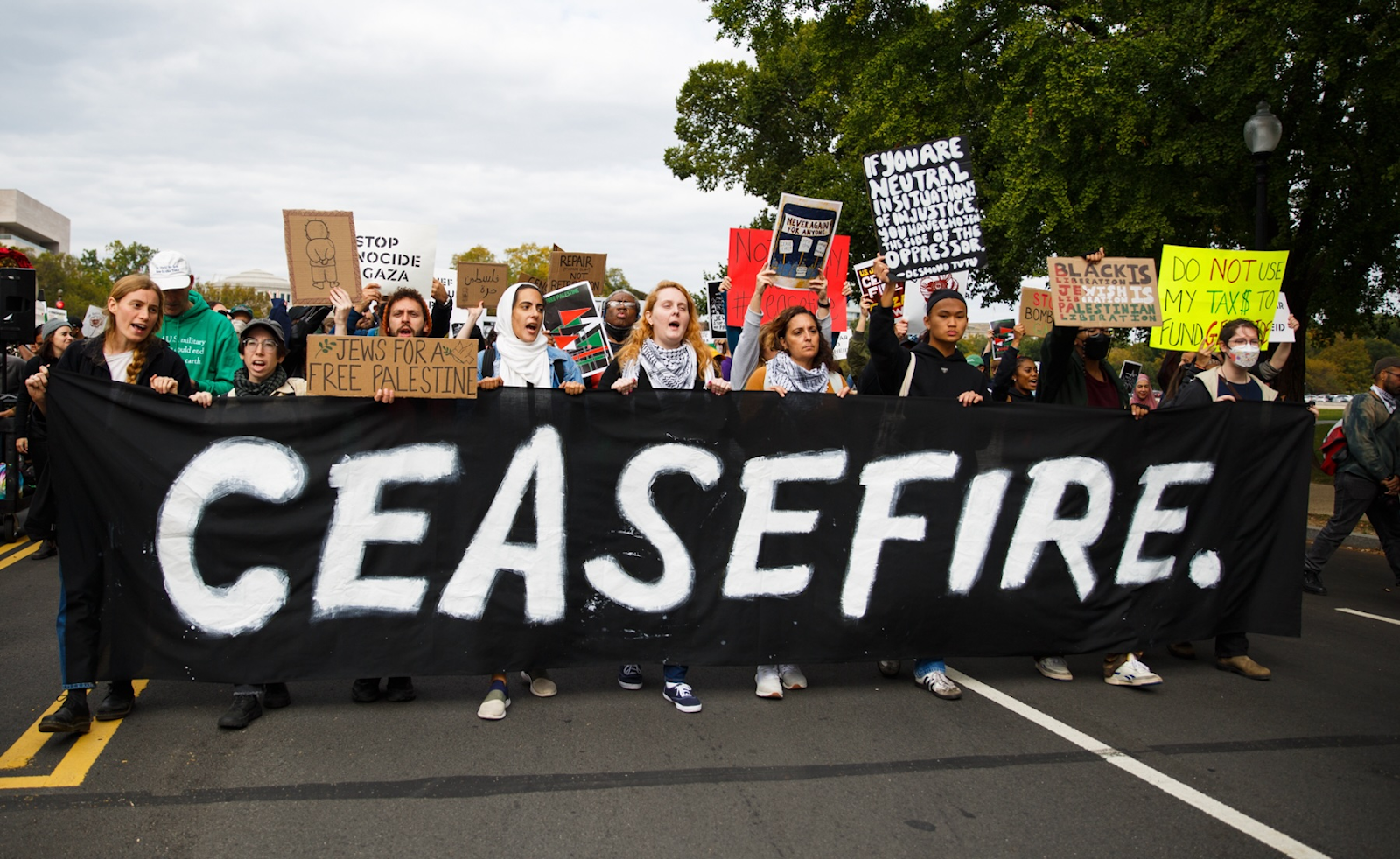
Fast forward to today. The capitalist class has further consolidated its power in higher education since the Great Recession of 2008, the Occupy Movement of 2011, the protests around police violence in 2014, and in response to the police murdering of George Floyd in 2020. Today campuses are alive with debate about Israel’s war on Gaza and political influentials are seeking to squelch that debate.

Boards of trustees and their advisers in think tanks and political organizations have used economic and political shocks to demand greater control over and efficiency in the production and teaching of knowledge. Economically programs that are not justified as good “investments” have become vulnerable to termination. Humanities programs now have to prove their utility to the STEM disciplines (science, technology, engineering, and mathematics) to survive. And, with the war in the Middle East, politicians, trustees, and administrators are once again interfering in the educational processes of the university. (The similarities with the McCarthyite period of the 1940s and 1950s are chilling).

Finally, just as academic critics of child labor, anti-union policies, World War I, and financial speculation a hundred years ago faced censure and unemployment, universities are being pressured to circumscribe accepted debates. While the higher-education system has extended academic freedom and provided job security for some through tenure, attacks on these provisions are spreading as the twenty-first century reconstruction of American higher education proceeds.  From Florida to Indiana (the current SB 202 bill in the Indiana legislature would circumscribe tenure and what is taught in the classroom), politicians are committed to destroying the academic freedom, and the free exchange of ideas, that has made universities a haven for the pursuit of knowledge useful for the advancement of humanity.


https://www.lulu.com/shop/harry-targ-and-daniel-morris/from-upton-sinclairs-goose-step-to-the-neoliberal-university/paperback/product-vzdwyk.html?page=1&pageSize=4


Monday, February 5, 2024

MALCOLM AND MANNING

Black History Month: Some Remembrances

Harry Targ

(A Rag Blog repost from July 18, 2011)


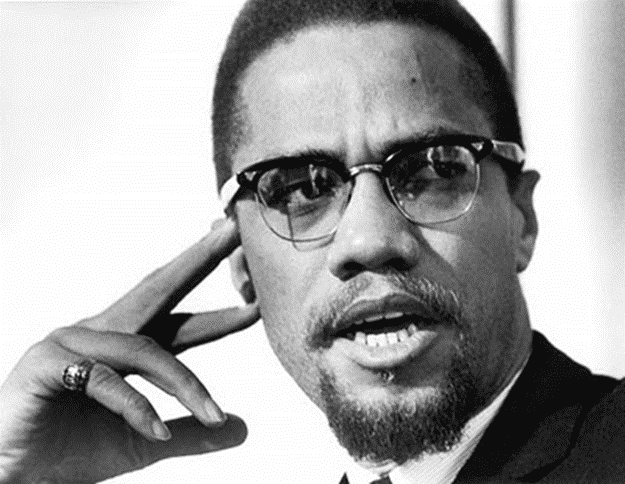
Image of Malcolm X, above, from The Daily Grind. Manning Marable from NewsOne.

“And finally, I am deeply grateful to the real Malcolm X, the man behind the myth, who courageously challenged and transformed himself, seeking to achieve a vision of a world without racism. Without erasing his mistakes and contradictions, Malcolm embodies a definitive yardstick by which all other Americans who aspire to a mantle of leadership should be measured.” Manning Marable, Malcolm X, A Life of Reinvention, 2011, 493).

Manning Marable: Scholar/Activist

Professor Manning Marable was a member of the Political Science and Sociology Departments at Purdue University during the 1986-87 academic year. His scholarship, activism, and ground-breaking books and articles inspired faculty and students even though his stay at our university was brief. His classic theoretical work, How Capitalism Underdeveloped Black America, along with over 20 books and hundreds of articles, inspired social science scholarship on class, race, and gender.

His weekly essays, "Along the Color Line," were published in over 250 community newspapers and magazines for years. He once told me that writing for concerned citizens about public issues was the most rewarding work he ever did. He was a role model for all young, concerned and committed scholar/activists.

I just finished reading the powerful biography of Malcolm X authored by Manning Marable. My encounter with this book was as fixating and transforming as I remember my reading of Malcolm’s autobiography in the 1960s.

On Malcolm X in the Classroom

While I lack the deep sense of Malcolm X’s impact on African American politics and cultural identity that others have, I feel compelled to write something about this reading experience. (Bill Fletcher’s review and analysis of the Marable biography provides much expertise on the subject. “Manning Marable and the Malcolm X Biography Controversy: A Response to Critics," from The Black Commentator, July 7, 2011.)

During my first year at Purdue University in north central Indiana in 1968, I requested to teach a course called “Contemporary Political Problems.” Since I was on the cusp of becoming a political activist in belated response to the civil rights and antiwar movements, I thought I could use this course to have an extended conversation with students about where we needed to be going intellectually and politically.

My plan was to assign a series of books that reflected different left currents, politically and culturally, and get us all to reflect on their value for understanding 1968 America and what to do about it. We read Abbie Hoffman, Ken Kesey, Herbert Marcuse, the Port Huron and Weatherman statements, and The Autobiography of Malcolm X.

While my students and I embraced, endorsed, or rejected various of these authors, we were profoundly impacted by the power of Malcolm X’s personal biography and his transformations from the streets to the international arena. As the word got out about the course, and largely because of Malcolm X, sectors of the Purdue campus got the word that there was a new “radical” in the Political Science department. (Therefore, I owe my growing enrollments to Malcolm X).

More important, during the second semester in which I taught the course, I had a very quiet and respectful African American student in the class. He was a member of Purdue’s track team. One day, after he showed up at the local airport sporting a very thin, almost invisible, mustache the track coach ordered him off the plane. Why? Because he had unauthorized facial hair. His modest symbolic act, growing the mustache, and the universities response to his words and deed, set off extended protest activities by African American students in support of him over several weeks.

Shortly before this incident, we had spent a couple of weeks in class discussing Malcolm X’s autobiography. During one class period this very quiet person announced to the rest of us that we should consider ourselves lucky that he chose to participate in this class.

I saw him 40 years later for a fleeting moment. He remembered me and said that he had read Malcolm X’s autobiography for the first time in my class. The student’s emerging boldness and his articulated sense of pride must have had something to do with his reading of Malcolm X.

Manning Marable’s Biography of Malcolm X

Reflecting on the Marable biography, I was struck by the capacity of people to change their ways of thinking, their ideologies, and their practice. Marable attributes some of Malcolm X’s development to his conscious desire to reinvent himself and to do so as he told his life story to Alex Haley, his autobiographical collaborator.

Despite the world of racism, repression, and theological rigidity Malcolm encountered, Marable records how Malcolm X’s experience and practical political work were in fact transforming.

Different people gleaned different things from reading Malcolm X’s autobiography, and the same is true of a reading of Manning Marable’s stirring and frank biography. While those of us on the left were most inspired by the last two years of Malcolm X’s life, my student was probably impacted as much by Malcolm’s developing sense of pride and self-worth in a society that demeaned and ridiculed people of color

Reading Malcolm and Marable reminds us that, while we bring change through our organizational affiliations, each individual can have a role to play in achieving that change. Not all of us can be Malcolm X, Che Guevara, Dolores Huerta, or Mother Jones. But we can make a difference.

In addition, Manning Marable makes a particularly strong case for Malcolm X as an internationalist. The United Nations had adopted a Declaration on Human Rights in 1948 but human rights discourse was not part of the language of international relations until Malcolm X demanded the international community address the issue.

For Malcolm X, United States racism, while violating the civil rights of its Black and Brown citizens, was also violating the fundamental human rights of peoples at home and abroad. At the time of his assassination, Malcolm X was working to build a coalition of largely former colonial states to demand that each and every country, and particularly the United States, respect the human rights of all peoples. Multiple problems including racism, poverty, disease, hunger, political repression, and sexual abuse were problems at the root of twentieth century human circumstance AND the United States was a major violator of human rights.

Marable described in great detail Malcolm X’s frenetic travels through Africa and the Middle East to build a coalition of Black and Brown peoples to demand in the United Nations and every other political forum the establishment of human rights. Bombing Vietnamese people and killing Black children in Birmingham were part of the same problem.

And, this campaign was being launched at the very same time that the countries of the Global South were struggling to construct a non-aligned movement to retake the resources, wealth, and human dignity that had been stripped from peoples by colonialism, neocolonialism, and imperialism. This was the position that Dr. Martin Luther King came to in 1967, as articulated in his famous speech at Riverside Church in New York. Malcolm X was introducing this global human rights project in 1964.

Marable’s Malcolm X therefore transformed himself from a minor street hustler to a Black Muslim to a visible world leader advocating a global human rights agenda. This is the Malcolm X that has meant so much to us over the years, along with his insistence that Black and Brown people be accorded respect everywhere and that they should honor and respect themselves.

But, Marable carefully documents Malcolm X’s flaws as well as his strengths. He, at various times, was anti-Semitic, misogynistic, not unsympathetic to violence, and a man engaged in intense, sometimes petty, political struggles with his organizational colleagues.

Manning Marable humanizes Malcolm X. Humanizing our heroes makes our efforts to pass the messages and symbols of the past to newer generations of activists more convincing. Young people do not need to see progressive heroes as untainted by their own humanity. And when we present those who make a contribution to building a better world to new generations, the examples of their flaws make it clear that no one is beyond personal and political redemption.

Finally, the biographer, Manning Marable, as my statement at the outset suggests, was a profoundly important scholar/activist. Marable used his historical knowledge, social scientific analytical skills, and political values to craft a career of writing and activism that impacted his students, his academic colleagues, and his fellow socialists in the struggle for a better world.

Telling Malcolm X’s story was Marable’s way of advocating for fundamental social change in a deeply troubled world.


Thursday, February 1, 2024

Dr. King Speaks: Economic Consequences of the Capitalist/War System

Black History Month: Some Remembrances

Harry Targ


Dr. Martin Luther King, in his famous speech at Riverside Church in New York City, April 4, 1967, spoke of the devastating consequences of the Vietnam War on the Vietnamese people and the poor and oppressed at home. To him, the carnage of war not only destroyed the targets of war (their economies, their land, their cultures) but the costs also misallocated the resources of the nation-states which initiated wars.

Every health and welfare provision of the government, local, state, and federal, was limited by resources allocated for the war system. Health care, education, transportation, jobs, wages, campaigns to address enduring problems of racism, sexism, homophobia, environmental revitalization, and non-war related scientific and technological research were reduced almost in direct proportion to rising military expenditures.

Over half the US federal budget goes to military spending past and current. And the irony is that the money that is extracted from the vast majority of the population of the United States goes to military budgets that enhance the profits of the less than one percent of the population who profit from the war system as it exists 

“I speak for the poor of America who are paying the double price of smashed hopes at home, and death and corruption in Vietnam.”

Since 1967 when he made that speech, Dr. King would surely have added a long list of other wars to the Vietnam case: wars in Central America and South America, the Middle East, Asia, and Africa. and the more than 1,000 bases and outposts where US troops or hired contractors are fighting wars on behalf of capitalist expansion. Meanwhile the gaps between rich and poor people on a worldwide basis have increased dramatically with some twenty percent of the world’s population living below World Bank defined poverty lines.


RACISM ON THE CAMPUS: THE STRUGGLE CONTINUES (A revised repost from November 15, 2015)

Black History Month: Some Purdue Remembrances

Harry Targ

                                                    Journal and Courier photo

 If there is no struggle, there is no progress. Frederick Douglass

The problem of the twentieth century is the problem of the color line. W.E.B. DuBois

What a proud contrast to the environments that appear to prevail at places like Missouri and Yale. Mitch Daniels

All across the country students, black and white, hit the streets and the campus malls to protest racism; structural and interpersonal. One thousand students rallied at Purdue University on Friday, November 13, 2014 to show solidarity with students at the University of Missouri and to announce 13 demands they were making to address racism at Purdue; a racism that the university president says no longer exists.

Of course nationally and locally the struggle for social and economic justice is historic. Rev. William Barber, leader of the Moral Mondays Movement, points to the “Three Reconstructions” in post-Civil War American history. The First Reconstruction occurred in the 1860s and 1870s when black and white farmers and workers came together to write constitutions and to create a new democratic Southern politics. The hope this first reconstruction raised for a truly democratic America was dashed by a shift to the right of the federal government, the reemergence of the old Southern ruling class, and the rise of a brutal violent terrorist organization, the Ku Klux Klan. Racist policies, coupled with terrorism, instilled formal racial segregation in the South and subtle forms of institutionalized racism throughout the rest of the country. (A later rendition of the KKK dominated Indiana politics in the 1920s).

The Second Reconstruction, Barber asserts, was inspired by the Brown vs. Board of Education Supreme Court decision which declared that segregated schools were unconstitutional. With militant sectors of labor, a grassroots Southern civil rights movement revived all across the country. In the 1960s, it culminated in civil rights legislation that outlawed racial segregation and guaranteed voting rights. Also the “war on poverty” was launched. Shortly after these victories, the Republican Party presidential candidate Richard Nixon employed the so-called “Southern Strategy” to shift federal and state politics to the right. The forerunners of today’s Tea Party (and Trump supporting MAGA) rightwing reaction expanded their political power at the federal and state levels.

Rev. Barber believes that, with the movement that elected President Obama, there  emerged a Third Reconstruction. It featured the mobilization of  masses of people--blacks and whites, men and women, gays and straights, blue collar and white collar workers, young and old, people of faith and those who choose no faith--coming together to reconstitute the struggle for the achievement of a truly democratic vision. This vision is of a society that is participatory, egalitarian, and economically and psychologically fulfilling.

The resurgence of protests on college campuses over the last decade, although narrowly focused, represents the contemporary form of the kinds of struggles for social justice Frederick Douglass talked about.  For example, on the campus of Purdue University, the struggle for racial justice has a long history. For the first 60 years of the twentieth century the African American population was less than one percent of the student body.  The numbers of African American students grew to a few hundred in the 1960s. And in the context of the Second Reconstruction and activism around civil rights and opposition to the war in Vietnam, some students organized a “Negro History Study Group” (which later became the Black Student Union). In 1968, to dramatize what they saw as institutional racism coupled with an environment of racial hostility, more than 150 Black students carrying brown bags marched to the Executive Building. At the building they took bricks from the bags. The bricks were piled up and a sign “Or the Fire Next Time,” was set next to the bricks. The students submitted a series of demands including the development of an African American Studies Program and a Black Cultural Center. 

The demonstration was dramatic. The demands clear. The justice of their motivation was unassailable. Administrators and faculty set up committees to discuss the protests. And in the short run, only minor changes were implemented, such as Purdue’s 1968 hiring of the first African American professor in Liberal Arts. 

One year later, after an African American member of the track team was castigated for wearing a mustache and his verbal response led to his arrest, Black students launched another protest march with more demands. This time the Administration and the Board of Trustees authorized the establishment of the Black Cultural Center, which today is an educational, social, and architectural hub of the campus. In 1973, Antonio Zamora, educator, accomplished musician, and experienced administrator was hired to lead the campus effort to make the BCC the vital embodiment of the university that it has become. One of the leaders of the 1969 protest, Eric McCaskill, told then President Hovde by phone during the protest march and visit to the Executive Building: “We are somebody. I am somebody.”

https://omeka.cla.purdue.edu/s/investigating-150-years/page/civil-rights-protests-in-1960s

History of protests at Purdue shows 'another world is possible' | City & State | purdueexponent.org

Forty-six years later one thousand similarly motivated students rallied together on Friday, November 13, 2014 on the Purdue campus. They expressed outrage at the systematic violence against people of color throughout the society and the perpetuation of racism in virtually every institution. On the Purdue campus they protested the lack of full, fair representation of African Americans on the faculty and in the student body, a climate on and off campus that perpetuates racism, and the continuation of all the old stereotypes of minority students that has prevailed for years. They also shared their solidarity with the students of the University of Missouri and they made it crystal clear their disagreement with the statement by the Purdue University President that the Purdue campus was different.

The organizers provided thirteen demands including:

-an acknowledgement by the President of Purdue University that a hostile and discriminatory environment still exists at Purdue

-the reinstatement of a Chief Diversity Officer with student involvement in the hiring process

-the creation of a “required comprehensive awareness curriculum”

-the establishment of a campus police advisory board

-a 30 percent increase of underrepresented minorities in the student body and on the faculty by 2019-2020

-greater representatives of minority groups on student government bodies

Frederick Douglass was correct.  Progress requires struggle. DuBois is still correct about the twenty-first century as he was about the prior one: the problem of our day remains “the color line.” And many of those who observed, participated in, and applauded the organizers of protests in 1968, 2015 and today at Purdue recognize  that the struggles are long, the victories sometimes transitory, and each generation of activists is participating in a process of fundamental change that will move society in a more humane direction. The generations of Purdue students of the 1960s and the twenty-first century are linked in a chain for justice.


                                                    WBAA Photo

Wednesday, January 31, 2024

THREATS TO ACADEMIC FREEDOM ARE ESCALATING

Harry Targ


Letter to the Editor: Resolution Defending Academic Freedom As It Relates to Teaching About Race, Gender, Sexuality, and Critical Race Theory - The Heights (bcheights.com)

(“Meanwhile, Kenneth Griffin, a megadonor who gave Harvard so much money that it named its largest graduate school after him last year, said at a conference Tuesday that elite universities now produce “whiny snowflakes” instead of “leaders and problem solvers” because of their excessive focus on “microaggressions [and] a DEI agenda.” The Boston Globe, January 31, 2024).


David Horowitz launched an assault on higher education in 2005, not too dissimilar to the McCarthyite attacks on higher education in the 1950s. He and a variety of organizations such as the National Association of Scholars (NAS) sought to purge higher education of critical thought.

Another round of more sophisticated and highly resourced attacks on higher education were expanded in the twenty-first century by the Koch Foundation State Policy Networks (SPN). In this case, state organizations were created, rightwing politicians were supported for key administrative posts in universities, particularly university presidencies, and Boards of Trustees representing huge corporations and banks acted more assertively to destroy the rich diversity of educational experiences that had been inspired by the 1960s.

With the rise of the far-rightwing forces around former President Trump, combining corporate elites, religious fundamentalists, extreme free market advocates, and military contractors, the attacks today on education, K through university, have become fierce.

Now political puppets have launched attacks on education in state houses and the halls of Congress. Critical Race Theory, rather than being a short-hand description for a body of scholarship, has been redefined as ideology. Politicians running for office talk about the Civil War without mentioning slavery as a root cause.

Charges of antisemitism are being used to challenge expressions of intellectual and political points of view on campuses.

Presidents at our most prestigious universities, women and persons of color, are attacked for defending academic freedom.

The whole edifice of what John Stuart Mill described a long time ago as “the marketplace of ideas” is under assault. To borrow from a book title about the 1950s by Marty Jezer, we are returning to a new “Dark Ages.”

It is time for those who oppose racism, exploitation of workers, patriarchy, environmental spoilation, and other social ills to stand up in defense of freedom of speech, education, and the celebration of diversity and debate.


The Bookshelf

CHALLENGING LATE CAPITALISM by Harry R. Targ

Challenging Late Capitalism