Tuesday, March 21, 2023

REMEMBERING “VETERANS UNPLUGGED: A HOOSIER ANTI-WAR ACTIVIST CONNECTS RETURNING VETERANS TO THE 99%”

Harry Targ

Thursday, December 1, 2011


 “I grew up in Chicago and Northwest Indiana. Working-class family, father was a Union Ironworker…mother was a stay at home Mom.” Vince Emanuele joined the Marines after graduating from high school. “I came out of boot camp a hard chargin’ Devil Dog.” He served in the Marines from 2003 until 2005 stationed in California, Kuwait, and Iraq. His eight-month deployment in Iraq involved him in street patrols, looking for snipers and land mines “…along with shooting at innocent civilians, destroying their property and beating up prisoners….” 

While in Iraq the fascination with war that he had acquired as a kid playing video games dissipated. His father sent him reading material--Noam Chomsky, Gore Vidal, Hunter Thompson, the Nation--and he and friends began to reflect on what they were doing in Iraq. He came to the view that the war was “illegal, immoral, unjustified, and unneeded.” He was not spreading “democracy” or “peace” and the U.S. war effort was not winning the “hearts and minds” of the Iraqi people.

After returning to the U.S., Emanuele joined Iraq Veterans Against the War, began organizing vets in Indiana and Illinois, created a weekly radio show called “Veterans Unplugged” which was available on-line, and became a prominent activist for social, economic, and political justice in the heartland of America while finishing an undergraduate political science degree.

Emanuele spoke on a panel organized by the Lafayette Area Peace Coalition in November, 2011. He elaborated on the the current plight of veterans, particularly veterans who served in the two longest wars in U.S. history, Afghanistan and Iraq. While acknowledging that the current military force chose to enlist in regular army or reserve units, the 21st century enticement to serve was really an “economic draft.” With declining incomes, wages, job opportunities, and rising educational costs, more and more men and women, he said, have seen military service as the only escape from lives of economic marginalization.

He spoke of the culture of militarization to which every new recruit was exposed: a process of dehumanization; the spread of racism, particularly targeting stereotypes of Muslims; sexism; and homophobia. In reality the military experience of young people, Emanuele said, involves placing raw, uneducated, teenagers in a war zone, with weapons and a license to kill. The victims of the actions of these raw recruits, schooled in video games and super-patriotism, were the millions of Iraqi and Afghan citizens who most fervently wanted the young foreigners off their land.

Emanuele presented some figures on the impacts of military service on returning veterans. (According to the Bureau of Labor Statistics in 2010 there were 20.2 million men and 1.8 million women who had served in the military). In 2011, Emanuele reported;

-Rates of unemployment of returning veterans from Afghanistan and Iraq are higher than in the non-veteran population, both men and women

-African-American vets experience double the unemployment rate of white vets

 -80,000 returning veterans are currently homeless (56 % of homeless vets are African American or Latinos)

-20% to 50% of 21st century returning veterans suffer some form of Post Traumatic Stress Syndrome (an estimated 350,000 to 1 million vets)

-1,000 returning vets attempt suicide each month.

Emanuele, connected the plight of returning veterans to the military/industrial/complex and imperial wars. As a member of Iraq Veterans Against the War, he highlighted the long tradition of soldiers resisting participation in unjust wars. He referred to patterns of resistance to war running throughout U.S. history:

-In 1781 the Pennsylvania militia mutinied against war profiteers and for food

-Between the 1870s and the 1890s, National Guard soldiers often refused to fire on striking workers

-In 1919 unknown numbers of U.S. soldiers refused orders to go fight against the Bolsheviks who had come to power in Russia

-Thousands of World War I veterans, known as the Bonus Army, assembled in Washington D.C. in 1932 to demand back pay due them from their active duty experience.

-From 1964-75 a massive GI anti-Vietnam war resistance movement emerged with over 300 GI anti-war newspapers produced, 10 % of all Vietnam era soldiers going AWOL or deserting, and a broad array of other forms of anti-war resistance, and opposition to military recruiting.

Emanuele stressed the commonality of experience and vision that is shared by most veterans with the Occupy Movement. He suggested that peace and justice activists must understand that returning veterans are a vital part of the 99% movement committed to radically restructure American society. He argued that the 99%, including vets, must see the vital connections between the global capitalist system, the military/industrial complex and the pain and suffering that have generated war and economic insecurity in the twenty-first century.

Emanuele ended his talk with reference to the frank admission of General Smedley Butler who oversaw the effort to crush the army of Augusto Sandino in Nicaragua in the early 1930s. Butler admitted that he, as a Marine General, had served as an instrumentality of Wall Street, putting down popular rebellions in the service of profit. To learn more about Veterans Against the War see http://ivaw.org/ 


Monday, March 20, 2023

REFLECTIONS ON US FOREIGN POLICY TWENTY YEARS AFTER THE IRAQ WAR WAS LAUNCHED

Foreign Policy Lies Lead to War

July 25, 2003

By Harry Targ

On August 2, 1964, North Vietnamese armed motor boats attacked two U.S. naval vessels off the coast of North Vietnam. The administration of Lyndon Johnson defined the attacks as an unprovoked act of North Vietnamese aggression.

Two days later it was announced that another attack on U.S. ships in international waters had occurred and the U.S. responded with air attacks on North Vietnamese targets. President Johnson then took a resolution he had already prepared to the Congress of the United States. The so-called Gulf of Tonkin resolution declared that the Congress authorizes the president to do what he deemed necessary to defend U.S. national security in Southeast Asia. Only two Senators voted "no." Over the next three years the U.S. sent 500,000 troops to Vietnam to carry out a massive air and ground war in both the South and North of the country.

Within a year of the so-called Gulf of Tonkin incidents, evidence began to appear indicating that the August 2 attack was provoked. The two U.S. naval vessels were in North Vietnamese coastal waters orchestrating acts of sabotage in the Northern part of Vietnam. More serious, evidence pointed to the inescapable conclusion that the second attack on August 4 never occurred.

President Johnson's lies to the American people about the Gulf of Tonkin contributed to the devastating decisions to escalate a U.S. war in Vietnam that cost 57,000 U.S. troop deaths and upwards of three million Vietnamese deaths.


Forty years later, George W. Bush and his key aides put together a package of lies about Iraq- imports of uranium from Niger, purchases of aluminum rods which supposedly could be used for constructing nuclear weapons, development of biological and chemical weapons, and connections between Saddam Hussein and Osama Bin Laden.

As the Vietnamese and Iraqi cases show, foreign policies built on lies can lead to imperial wars, huge expenditures on the military, economic crises at home, and military casualties abroad.

The American people must insist that their leaders tell the truth about the U.S. role in the world.

 ******************************************************************************

Joe Biden Was Instrumental in Launching the Iraq War

The Real News Network

https://youtu.be/ksKHQZwyKw8

 *************************************************************************** 

Lies and war!

Harry Targ: Posted on September 4, 2014 by Thorne Dreyer


U.S. administrations ever since Truman have justified aggressive foreign policies by lying and distorting the realities behind complex international relationships.


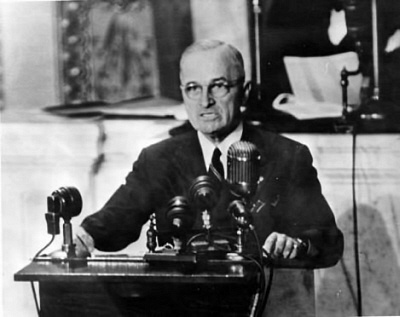
Harry Truman delivers his Truman Doctrine speech before a joint session of Congress, March 12, 1947. Image from American Rhetoric.

 Post-modernists talk about “discourses,” “narratives,” “tropes,” and verbal “deconstructions.” They should be commended for suggesting how words are used to mobilize, inspire, deceive, promote self-interest, and, too often, justify killing everywhere.

Former Arkansas Senator, J. William Fulbright in describing how he was tricked by his old friend President Lyndon Baines Johnson to support a resolution authorizing escalating war in Vietnam said: “A lie is a lie. There is no other way to put it.”


The story can begin any time. As World War Two was ending, the Greek government constructed by Great Britain after the Nazis were defeated was engaged in an effort to crush a rebellion by activists who objected to their newly imposed rulers. The Greek rebels included former anti-fascists freedom fighters, some of whom were Communists or Socialists. The British, no longer able to support the repression of the Greek Left in what was a civil war, called on the Americans for help.

In February 1947, Truman foreign policy advisers met to discuss what to do about the Greek civil war and the threat of “Communism” spreading along the Mediterranean. The Republican chair of the Senate Foreign Relations Committee, Arthur Vandenberg, attending the meeting. said he would support U.S. military and economic aid for the unpopular Greek government. But, he said, tell the President he better “scare hell out of the American people.”

One month later, President Truman gave his famous Truman Doctrine speech to the congress and the American people. He warned the American people, who until that time still had positive feelings toward the Soviet people, that the United States and the “free world” were going to be engaged in a long-term struggle against the forces of “international communism.”

The Truman Doctrine was about a global struggle between the forces of good threatened by the forces of evil.

The Truman Doctrine was not about nations and movements with different interests and ideologies but rather a global struggle between the forces of good threatened by the forces of evil.

United States administrations ever since have justified aggressive foreign policies by lying and distorting the realities behind complex international relationships. In addition, when a politician, a journalist, a scholar, or a whole peace movement criticizes targeting nations and movements as diabolical and security threats, these critics are challenged as weak, indecisive, cowardly, and, even worse, stalking horses for the vile enemy or enemies.

Campaigns of propaganda masquerading as truth have been a constant feature of international relations, particularly since World War Two. The reality of U.S. struggles against demonized enemies tells a sobering story. Deaths in wars and interventions in which the United States participated from 1945 until 1995 totaled about 10 million people. These figures, extracted from the valuable research of Ruth Sivard, (World Military and Social Expenditures, 1996) do not include injuries and forced migrations of millions of people fleeing combat zones. Nor do these figures include the wasteful trillions of dollars of military expenditures and environmental damage resulting from a war system.


Now the United States and its allies are presenting scenarios justifying war based upon a new round of lies and distortions.

And in the leadup to the Iraq war in 2003, the United States and its allies in NATO  presented scenarios to justify war based upon a new round of lies and distortions. In the Persian Gulf whole nations were constructed by European colonial powers after World War One. As the next World War ended, the United States agreed to provide arms and protection to the Saudi monarchs in exchange for oil.

The U.S. identified client regimes to support its interests in the region, from the former Shah of Iran, to the state of Israel, to various so-called Islamic fundamentalist groups including what became Al Qaeda, to leaders the U.S. once supported such as Saddam Hussein and Nouri al-Maliki in Iraq. In the 21st century, the stability of whole countries, Iraq and Libya for example, was destroyed by United States interventions costing many million deaths and injuries and many more people fleeing violence.

Now the latest enemy, ISIS, the Islamic State of Iraq and Syria, is portrayed as a monster movement that beheads its prisoners and murders masses of people who do not share its religious ideology. While there is enough data to suggest that ISIS is engaging in cruel violence against its enemies, that violence is being used to justify bombing campaigns against alleged enemy targets. War-hungry hawks inside the beltway particularly those with ready access to mainstream media demand that President Obama expand bombing, transfer more arms to so-called friends, and recruit militant opponents of ISIS to even the score.

Since this new enemy, even more scary than the Communists of the 20th century, includes a handful of Americans, they claim, the territory of the United States is threatened by global terror. The rhetoric calling for a global war against this presumably global threat is escalating. Those who raise questions about why ISIS is as popular as it is, what its grievances are, why there is hatred for the West, particularly the United States, in the region, and whether the application of military force would make matters better or worse, are drowned out by those who built careers based on arguments about the inevitability of war and violence and the need to kill for the greater good.

The other apocryphal narrative of the day comes from Eastern Europe.

The United States participated covertly in the overthrow of a dictatorial but elected regime in Ukraine. After the elected leader fled, those with ties to historic fascist parties gained influence in a newly created government.

Ukrainians from the eastern part of the country with ties of politics, culture, and language to Russia rebelled against the new central government in Kiev which wants to join Western military and economic organizations. Kiev has launched a brutal assault on the separatists in the East. The dominant narrative in Washington and the mainstream media is not about the coup in Kiev, the descendants of fascists in the government, but the Russians who want to move westward across Central Europe, reestablishing the old Soviet Bloc.

Indeed, Russia is giving material aid to the separatists, although information about what kind comes only from Washington and Kiev. Little attention is given to the NATO vision of expanding its military alliance eastward, ultimately to besiege a threatened Russia. Even less attention is given to the fact that Kiev oligarchs wish to incorporate Ukraine into the European Union.

In other words, a country with a divided population in terms of culture and politics engaged in a violent civil war has been transformed by politicians, pundits, and media sources into a narrative of a struggling Ukraine democracy challenged by an aggressive Russia, the descendent of the twentieth century demon, the former Soviet Union. (For a more detailed discussion of United States/Russian/ Ukraine relations in 2013-2014 see Harry Targ, “Pushing for Starvation at Home and War Abroad: A Time to Resist,” Diary of a Heartland Radical, March 28, 2014).


Getting back to Senator Vandenberg’s advice to President Truman about how to gain support of the American people for moral/military crusades, leaders and media are warning about a new global terrorist threat and a renewed post-Soviet threat from Russia, a new Cold War. The intensity of the selling job is testament to the good sense of the American people who continue to say “no more wars.”


*************************************************************************************


Expanding the ‘Iraq Syndrome’


                                Image from 
Democratic Underground.

Cooperation over conflict: We need to expand the ‘Iraq Syndrome’

As we reflect on the 10-year anniversary of the launching of the Iraq War, the madmen inside the beltway are talking about increasing U.S. military involvement abroad.


By Harry Targ | The Rag Blog | March 20, 2013


In a November/December 2005 Foreign Affairs article, “The Iraq Syndrome,” I argued that there would likely be growing skepticism about the notions that “the United States should take unilateral military action to correct situations or overthrow regimes it considers reprehensible but that present no immediate threat to it, that it can and should forcibly bring democracy to other nations not now so blessed, that it has the duty to rid the world of evil, that having by far the largest defense budget in the world is necessary and broadly beneficial, that international cooperation is of only very limited value, and that Europeans and other well-meaning foreigners are naive and decadent wimps.”


Most radically, I went on to suggest that the United States might “become more inclined to seek international cooperation, sometimes even showing signs of humility.”

— John Mueller, “The Iraq Syndrome Revisited,” Foreign Affairs, March 28, 2011


David Halberstam reported in his important book, The Best and the Brightest, that President Roosevelt directed his State Department to develop a position on what United States foreign policy toward Indochina should be after the World War in Asia was ended. Two choices were possible in 1945: support the Vietnamese national liberation movement that bore the brunt of struggle against Japanese occupation of Indochina or support the French plan to reoccupy the Indochinese states of Vietnam, Cambodia, and Laos.


As the Cold War escalated the United States rejected Ho Chi Minh’s plea for support for independence and began funding the French in their effort to reestablish colonialism in Indochina. When the French were defeated by the Viet Minh forces in 1954, the United States stepped in and fought a murderous war until the collapse of the U.S. South Vietnamese puppet regime in 1975.

Paralleling the struggle for power in Indochina, competing political forces emerged on the Korean Peninsula after the World War. With the Soviet Union and China supporting the North Koreans and the United States supporting a regime created by it in the South, a shooting war, a civil war, between Koreans ensued in 1950 and continued until an armistice was established in 1953. That armistice, not peace, continues to this day as a war of words and periodic provocations.

Political scientist John Mueller analyzed polling data concerning the support for U.S. military action in Korea and Vietnam, discovering that in both wars there was a steady and parallel decline in support for them. Working class Americans were the most opposed to both wars at every data point. Why? Because working class men and women were most likely to be drafted to fight and their loved ones the most likely to suffer the pain of soldiers coming home dead, scarred, or disabled.

Polling data from the period since the onset of the Iraq war followed the pattern Mueller found in reference to Korea and Vietnam. In all three cases levels of support for U.S. war-making declined as the length of the wars increased and casualties rose. The American people typically gave the presidents some flexibility when the wars started and the rally-round-the-flag phenomenon prevailed. But then resistance grew.

Throughout the period from the end of the Vietnam War until the 1990s, each presidential administration was faced with what foreign policy elites called “the Vietnam Syndrome.” This was a pejorative term these elites used to scornfully describe what they correctly believed would be the resistance to foreign military interventions that they periodically wished to initiate.

President Reagan wanted to invade El Salvador to save its dictatorship and to overthrow the Sandinista regime in Nicaragua. He would have preferred to send troops to Angola to defend the anti-communist forces of Jonas Savimbi of UNITA.

To overcome the resistance to launching what could become another Vietnam quagmire, policymakers had to engage in “low intensity conflict,” covert operations that would minimize what the American people could learn about what their government was doing and who it was supporting. Reagan did expand globally and sent troops to tiny Granada, but even Reagan’s globalism, militarism, and interventionism were somewhat constrained by the fear of public outrage.

President George Herbert Walker Bush launched a six-month campaign to convince the American people that military action was needed to force Iraqi troops out of Kuwait. Despite a weak endorsement of such action by the Congress, the American people supported Gulf War I because casualties were small and the war lasted only a month. During a press conference announcing the Gulf War’s end in February 1991, Bush proclaimed that “at last we licked the Vietnam Syndrome.”

Clinton knew better. He limited direct U.S. military action to supporting NATO bombing in the former Yugoslavia in 1995, bombed targets in Iraq in so-called “no-fly zones in 1998,” bombed Serbia in a defense of Kosovo in 1999, and used economic embargoes to weaken so-called “rogue states” throughout his eight years in office.

It was President George Walker Bush who launched long and devastating wars in Afghanistan in 2001 and Iraq in 2003. The Bush administration used the sorrow and anger of the American people after the 9/11 terrorist acts to lie, deceive, aggress, and qualitatively increase the development of a warfare state.

As Mueller has suggested, an “Iraq Syndrome” had surfaced by 2005 as the lies about that war became public, the war costs were headed toward trillions of dollars in expenditures, and troop deaths and disabilities escalated. And of course an historically repressive society, Iraq, was so destroyed that U.S. troops left it in shambles with hundreds of thousands dead, disabled, and in abject poverty.

As we reflect on the 10-year anniversary of the launching of the Iraq War in March 2003, the madmen inside the beltway are talking about increasing U.S. military involvement in Syria, not “taking any options off the table” in Iran, and threatening North Korea.

Meanwhile the United States is beefing up its military presence in the Pacific to “challenge” rising Chinese power, establishing AFRICOM to respond to “terrorism” on the African continent, and speaking with scorn about the leadership in Latin America of recently deceased Hugo Chavez.

The American people must escalate commitment to its “syndromes,” demanding in no uncertain terms an end to United States militarism. Mueller’s call for a U.S. foreign policy that emphasizes cooperation over conflict motivated by humility over arrogance is the least the country can do to begin the process of repairing the damage it has done to global society.


 Photograph by David Bacon

Sunday, March 19, 2023

Remembering the early years of the Iraq War

 WHY THE WAR ON IRAQ AND WHAT SHOULD CITIZENS DO ABOUT IT?

Harry Targ, Iraq Public Forum-January 19, 2006. Purdue University


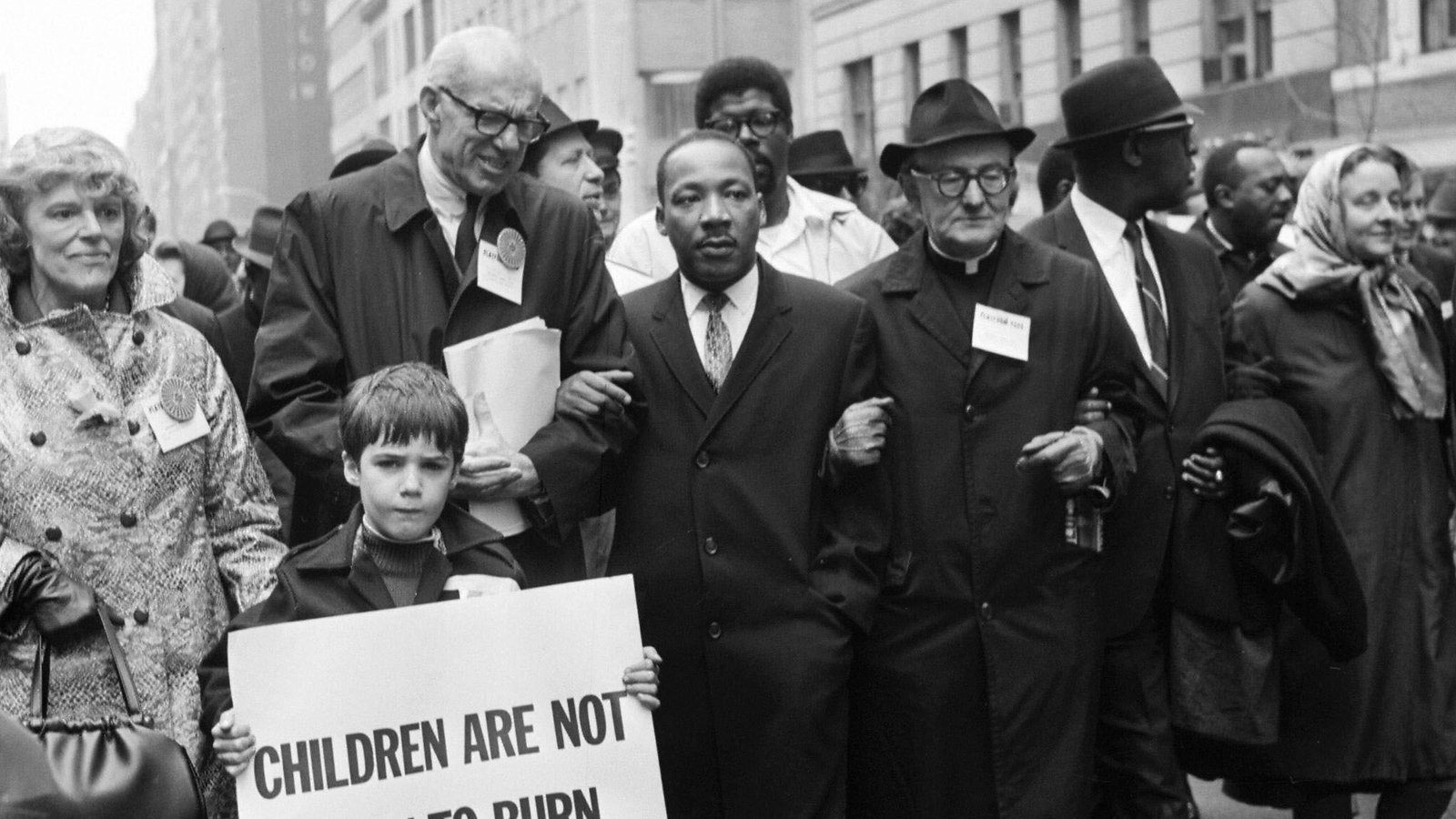
At a critical juncture in the escalation of the Vietnam War, Dr. Martin Luther King Jr. spoke at the Riverside Church on April 4, 1967 describing the fundamental connections between war overseas and poverty at home:

Somehow this madness must cease. We must stop now. I speak for those whose land is being laid waste, whose homes are being destroyed, whose culture is being subverted. I speak for the poor of America who are paying the double price of smashed hopes at home and death and corruption in Vietnam. I speak as a citizen of the world, for the world as it stands aghast at the path we have taken.”

I would like to speak tonight about what has motivated United States foreign policy in the 20th century, what Dr. King called “this madness,” and what motivates the policy today in Iraq, Afghanistan, and across the globe. . I would like to say some things about the impacts this policy has on Iraqis and other peoples who have been the target of our attention and also on the people of our own country. Finally, I would like to discuss short and long-term foreign policy alternatives, we, as citizens must embrace to challenge “this madness.”

First, according to historians such as William Appleman Williams, the United States has pursued dominant influence in the world ever since the 1890s. After conquering the North American continent and exterminating its inhabitants, American policy has been shaped by the pursuit of markets, invest opportunities, cheap labor, and vital natural resources, in short profit.

With the expansion of industrial capitalism, securing access to cheap oil became particularly important. From agreements with the ruling oligarchy in Saudi Arabia during World War 11, to the overthrow of Mohammed Mossadegh in Iran for nationalizing his countries oil, to the severing of relations with an radical Iraqi regime in 1958, to the wars against Iraq in 1991 and 2003, oil has figured prominently in U.S. policy. 

And as historian Loren Baritz has argued, U.S. policymakers have defined these economically driven global and interventionist policies in moral terms. President Truman spoke of the threat of totalitarian communism to the free world in his famous Truman Doctrine speech of March 12,1947. One week earlier, in a less familiar speech at Baylor University, he asserted that economics and foreign policy were inextricably connected and that the United States was committed to creating a global market economy in the post-war world..  Thirty-five years later President Reagan, borrowing from our Puritan ancestors, that the United States was a “city on a hill.” We were destined by God to transform the world. President Clinton also mixed economics and morality repeatedly reiterating his commitment to create “market democracies” around the world.  

The impacts of this century long search for what Williams called, “the Open Door,” the drive to economically penetrate the globe has meant pain, suffering, and waste for peoples everywhere including the United States. U.S. marines invaded Central American and the Caribbean some 25 times between 1900 and 1933. During the fifty years since World War 2 the U.S. has threatened to use force or send troops on at least 40 occasions, spent $3 trillion on the military, participated in wars between 1945 and 1995 in which 10 million people died, and lost at least 100,000 of its own soldiers killed in action with 10 times than that t number becoming casualties.

It was in this historical context, that President Bush responded to the terrorist attack on 9/11 by launching  a new global crusade, replacing communism with a “war on terrorism,” and justifying  “preemptory” attacks on any country or people we would define as a possible threat to U.S. national security. The Pentagon defined an “arc of instability” running from the northern parts of South America through North Africa, the Middle East, the Persian Gulf, and East Asia. They said the United States had to develop small, mobile military bases all across the globe (Chalmers Johnson estimated some 700 bases existed in 60 countries) with new technologies that would make the U.S. fighting force more capable of quickly intervening in self-defined trouble spots. Successful operations in Afghanistan and Iraq would solidify the presence, power, and control of strategic resources and institutionalize this strategy of “last remaining superpower.”

The policies during the Clinton Administration differed in tactics but not in substance. It  sought to increase the U.S. presence in the Gulf by starving the Iraqi regime of Saddam Hussein. Economic sanctions  led to a 60 percent decline in the GDP of the country and the economic embargo cost the lives of about one million Iraqis, mostly children under the age of five. However, supporters of the lobby group, Project for the New American Century (PNAC), including Dick Cheney, Paul Wolfowitz, Donald Rumsfeld, Scooter Libby, and other Bush policymakers, demanded that Clinton do more, make war on Iraq. As soon as 9/11 happened, these neo-conservatives launched a campaign to convince President Bush to make war on Iraq even though the latter had nothing to do with 9/11 and everyone, from the CIA, to the media, to UN inspectors, knew that Iraq, after a decade of US and British bombing, economic sanctions, and rigorous inspections had no weapons of mass destruction.


Secretary of State Colin Powell speaking 
before the United Nations claiming Iraq was developing weapons of mass destruction.

The war on Afghanistan began in October, 2001 and the war in Iraq in March 2003. The impacts (from 2001 to 2006 alone) are devastating:

-Experts estimate that the costs of the war in Iraq could exceed $700 billion; with operational costs per month topping $5.6 billion. 2006 DOD spending will approach $600 billion.

 -Maintaining current force levels in Iraq and Afghanistan would require doubling the federal budget deficit over the next decade.

-210,000 of the National Guard’s 330,000 soldiers have served in Iraq and Afghanistan, with mobilizations averaging 460 days.

 -Almost 30,000 Iraqi civilians have been killed in the war; about 100,000 wounded.

 -155 Iraqi security forces have died every month since January, 2005 and at least 50 suicide attacks have occurred per month.

 -Over 2,200 U.S. soldiers have died in Iraq and about 14,000 wounded.

-Four supplemental spending bills for Iraq totaling $204.4 billion could have purchased any of the following: 46 billion uninsured people receiving health care; the salaries of 3.5 million elementary school teachers; 27 million places for Head Start children 1.8 million housing units, 24,000 new elementary schools; 39 million university scholarships, or 3.2 million port container inspectors. And what could this money have done to rebuild the Gulf Coast.

And for all the human suffering brought on by this needless war, the Iraqi adventure is a quagmire: resistance to U.S. occupation has grown enormously; foreign terrorists apparently are operating in the country who were not their before March, 2003; and ethnic tensions and violence have increased. The efficacy of international organizations has been undermined by the U.S. rejection of diplomacy. And the United States is hated all around the world. And despite the glowing reports about elections and construction projects, peace will not have a ghost of a chance of arriving in Iraq until the United States ends its military occupation.

What can we do about this “madness?” Citizens must increase their opposition to this war. They must demand that the United States begin a phased withdrawal, over a short time, of all U.S. troops from Iraq. This process should be done in conjunction with negotiations with sectors of the discernable Iraqi resistance, active diplomatic intervention of the Arab League or the Organization of the Islamic Conference, and UN peacekeepers. US phased withdrawal should involve moving troops from the center of Iraq to border areas, downsizing the U.S. embassy, establishing an economic reconstruction fund, hiring Iraqi construction firms to complete the rebuilding of the country, dismantling U.S. military bases, and making it clearer that Iraqis will gain control of their oil. This “Policy of Phased Withdrawal” will not guarantee immediate peace and tranquility. Nor will it necessarily reduce all tensions between Kurds, Shias, and Sunnis. What it will do is extricate the United States, the number one motivation and target of violence in the country.

And in the long run, Americans must pressure their leaders to embrace foreign and domestic policies that promote peace and justice. At the time of his assassination Dr. King was organizing a Poor People’s Campaign, a mass movement to end war, racism, and economic misery. That project still needs to be completed.

**********************************************************************

And Twenty Years Since the Iraq War began: COSTS OF THE U.S.-LED WAR IN IRAQ, 2003-2023

“March 19-20, 2023 marks 20 years since United States forces invaded Iraq to oust dictator Saddam Hussein, under the false claim that his regime was manufacturing weapons of mass destruction. The ensuing war, in which U.S. ground presence peaked in 2007 with over 170,000 soldiers, caused massive death, destruction, and political instability in Iraq. Among the consequences was the increase of sectarian politics, widespread violence and the rise of the Islamic State militant group with its terror attacks throughout the Middle East. Though the U.S. government officially ended its Iraq war in 2011, the repercussions of the invasion and occupation as well as subsequent and ongoing military interventions have had an enormous human, social, economic, and environmental toll. An estimated 300,000 people have died from direct war violence in Iraq, while the reverberating effects of war continue to kill and sicken hundreds of thousands more.” https://watson.brown.edu/costsofwar/2022/IraqWarCosts


Thursday, March 16, 2023

Warmaking, Cognitive War, and Branding Reality


We live in a World of Cognitive Warfare

 A recent document prepared by the North Atlantic Treaty Organization (NATO)  suggested that “in cognitive warfare, the human mind becomes the battlefield. The aim is to change not only what people think, but how they think and act. Waged successfully, it shapes and influences individual and group beliefs and behaviors to favor an aggressor's tactical or strategic objectives.”

https://www.nato.int/docu/review/articles/2021/05/20/countering-cognitive-warfare-awareness-and-resilience/index.html)

This NATO document, of course, is addressing the world of international relations but the concept of “cognitive warfare” seems to parallel efforts “to change not only what people think, but how they think and act.” This project animates the efforts of media conglomerates-print, electronic, social media platforms. Changing how people think and act has its historic roots in campaigns to convince citizens to support wars, consume cigarettes, forget climate disasters, and to find flaws in populations because of class, race, gender, sexual preference, and/or religion. Creating images of enemies is central to launching wars. The processes of “branding” are similar in all realms of human experience.


Perhaps challenging the process of “branding” should be on the agenda for all those who seek a more humane society. Break up “branding machines.” Democratize the ability to describe and express experiences. And, in the educational sphere, teach students to analyze brands and to evaluate their relative accuracy.

The Bookshelf

CHALLENGING LATE CAPITALISM by Harry R. Targ

Challenging Late Capitalism